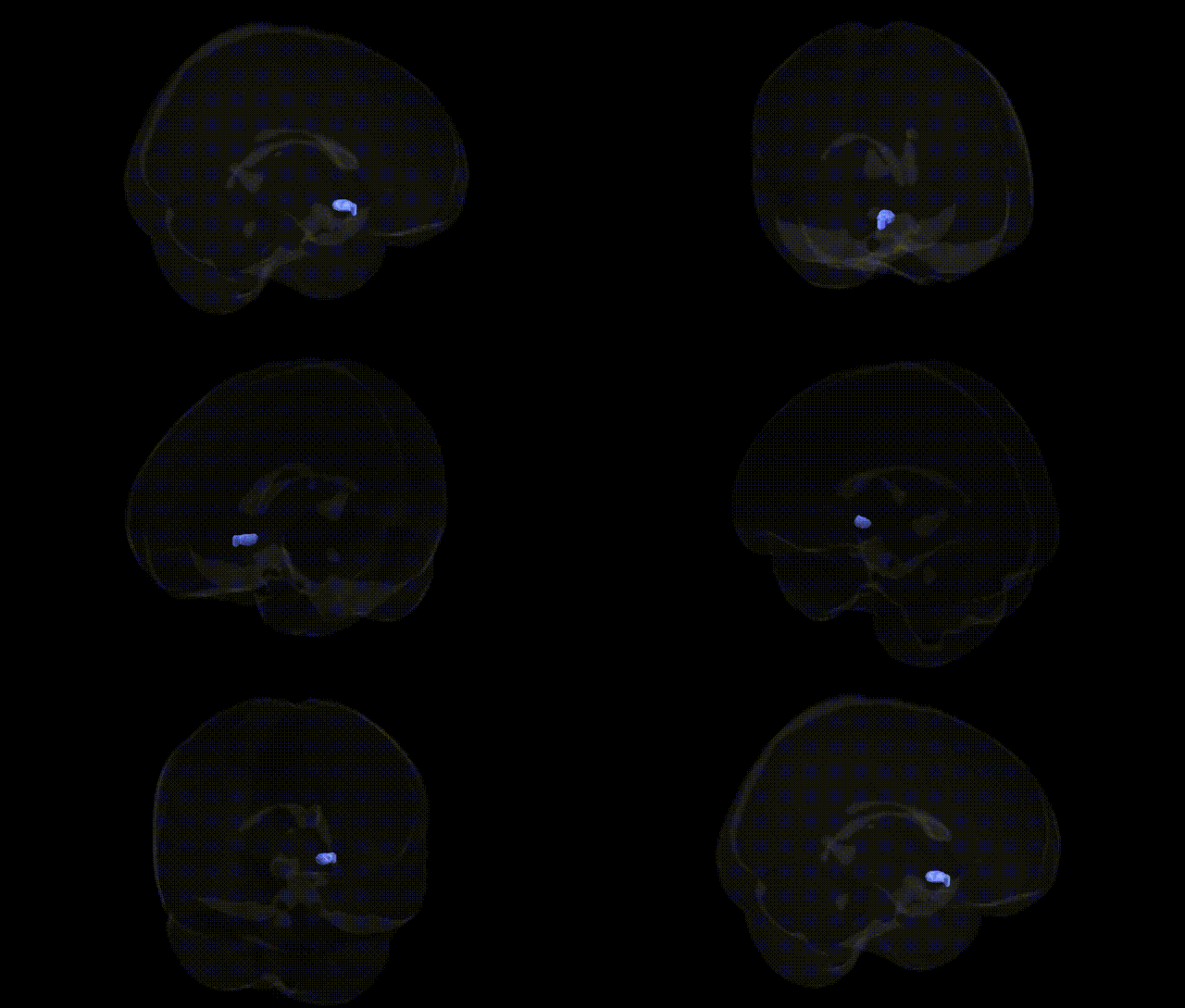
The bilateral Left Cerebrum.Sub-lobar.Gray Matter region in the Talairach 2 mm Atlas refers to gray matter structures located beneath the cortical lobes of the left cerebral hemisphere, primarily including components of the basal ganglia (such as the caudate nucleus and putamen), the claustrum, and parts of the limbic system (including segments of the amygdala). These sub-lobar structures are involved in the integration and modulation of motor control, procedural learning, reward processing, emotional regulation, and associative cognitive functions, acting as critical hubs that relay and refine information between the cerebral cortex, thalamus, and brainstem. As a functional group, this gray matter region contributes to the coordination of voluntary movement, habit formation, and affective responses, and is implicated in neuropsychiatric and movement disorders when structurally or functionally altered. There is no single direct Wikipedia article for “Left Cerebrum.Sub-lobar.Gray Matter,” but a closely related structure is the Basal ganglia.
The bilateral Left Cerebrum sub-lobar gray matter region in the Talairach 2 mm atlas encompasses deep structures such as the insula, claustrum, and adjacent subcortical gray matter, which have been implicated in multiple genetic studies, particularly through neuroimaging GWAS of regional cortical thickness, surface area, and subcortical volume. Large consortia such as ENIGMA and UK Biobank have identified common variants near genes involved in neurodevelopment, synaptic function, and axonal guidance (e.g., LRP1B, CNTNAP2, DCC, and various glutamatergic and GABAergic pathway genes) that influence gray matter characteristics within this territory, often in the context of whole-brain or lobar analyses. Insular and neighboring sub-lobar gray matter have repeatedly emerged as altered in psychiatric and neurological disorders—most notably major depressive disorder, schizophrenia, bipolar disorder, autism spectrum disorder, substance use disorders, and frontotemporal and Alzheimer’s dementias—where risk variants (such as those in CACNA1C, GRIN2A, DRD2, and APOE) show imaging-genetic correlations with reduced or reconfigured gray matter in these regions. Polygenic risk scores for schizophrenia, depression, and cognitive traits (general intelligence, educational attainment) have also been associated with structural and functional variation in left sub-lobar gray matter, supporting a role for this region as a convergence point where distributed genetic influences on emotion regulation, salience processing, interoception, and higher-order cognition manifest as measurable anatomical and connectivity changes.
Overview generated by GPT-4o (2026).
Region ID: 385
Hemisphere: bilateral
Atlas: Talairach labels 2mm
Full Quality Version: Download MP4
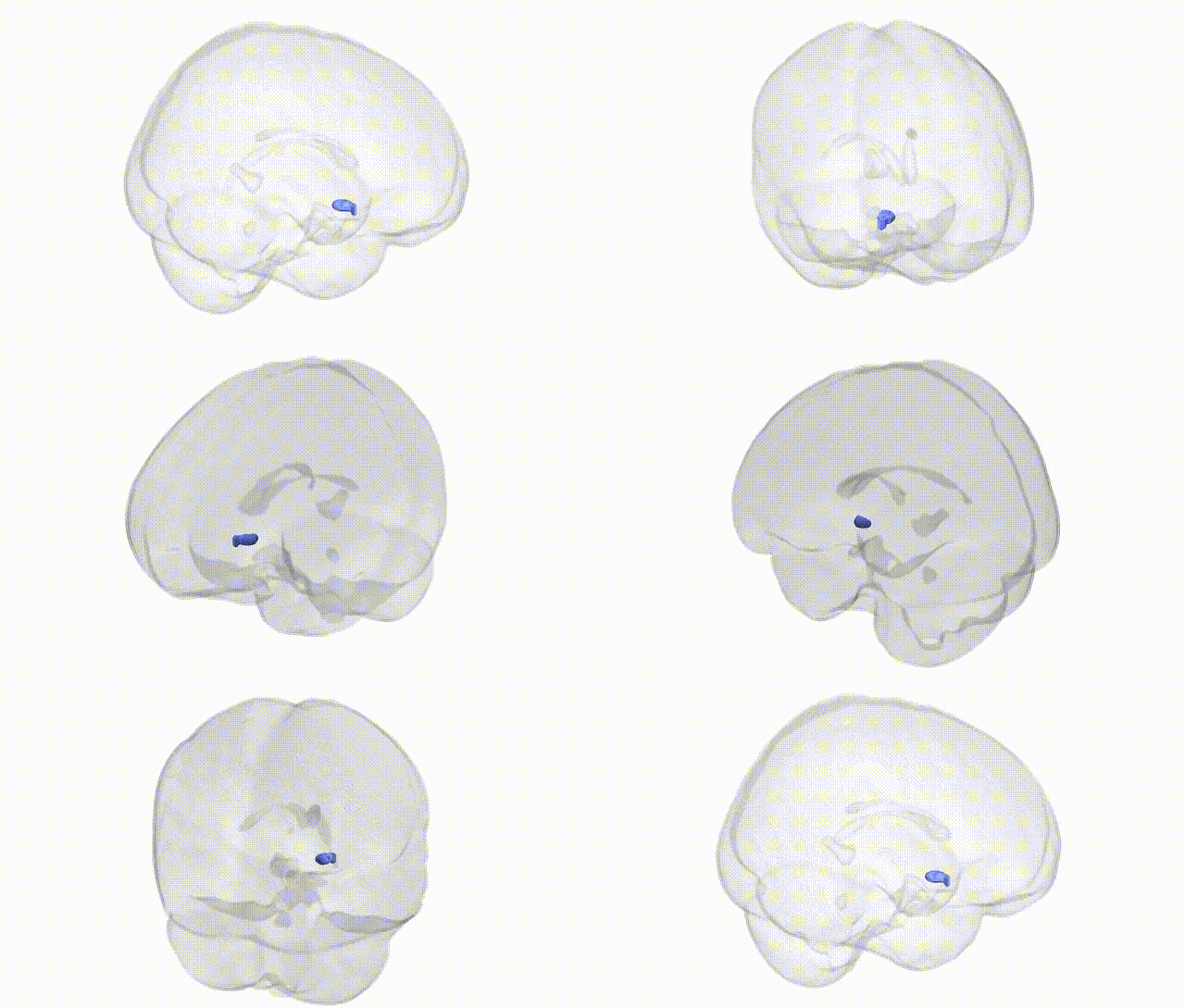
Full Quality Version: Download MP4
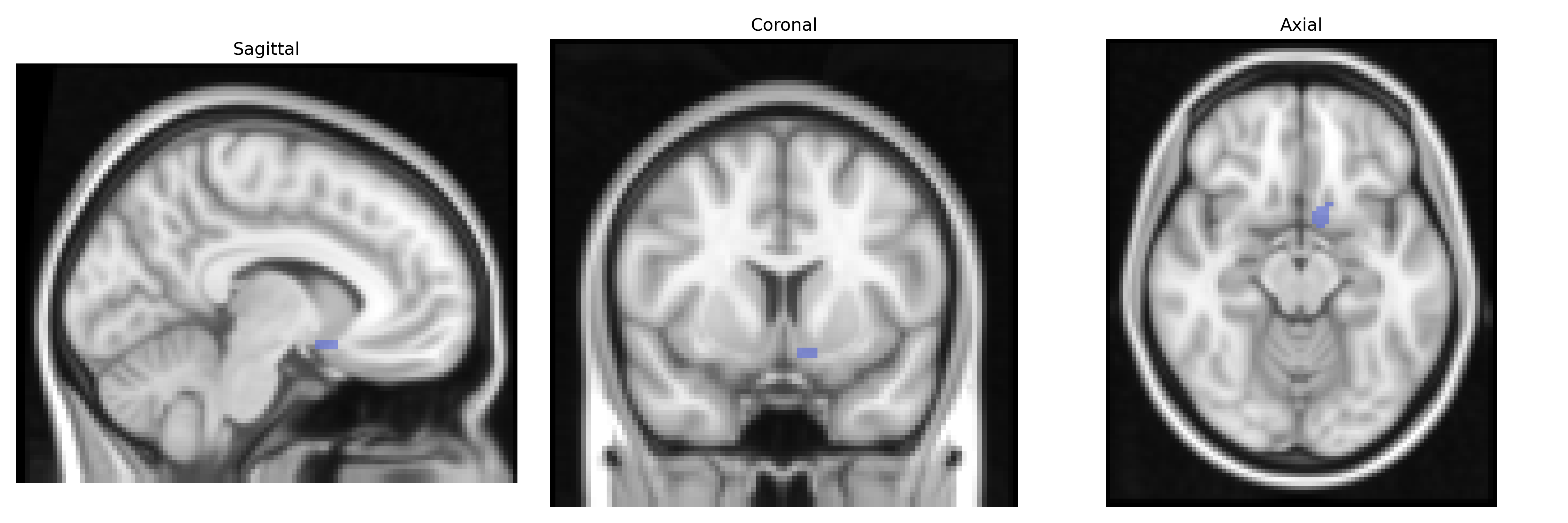
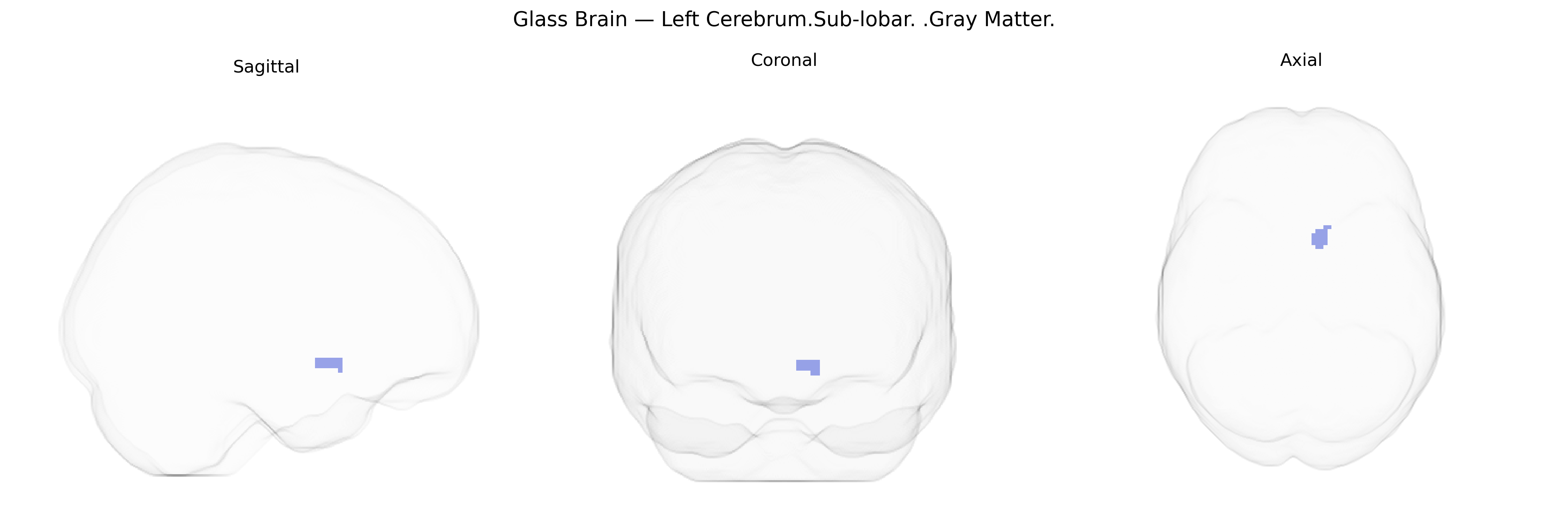
Wali Sidiqyar*, Gaurav Rudravaram*, Elyssa M. McMaster, Trent M. Schwartz, Adam M. Saunders, Kurt G. Schilling, Bennett A. Landman "Introducing SPINS: A Shared Public Visualization Library of Neuroanatomical Structures." Medical Imaging with Deep Learning- short paper
This resource is licensed under CC0 1.0 Universal (Public Domain).