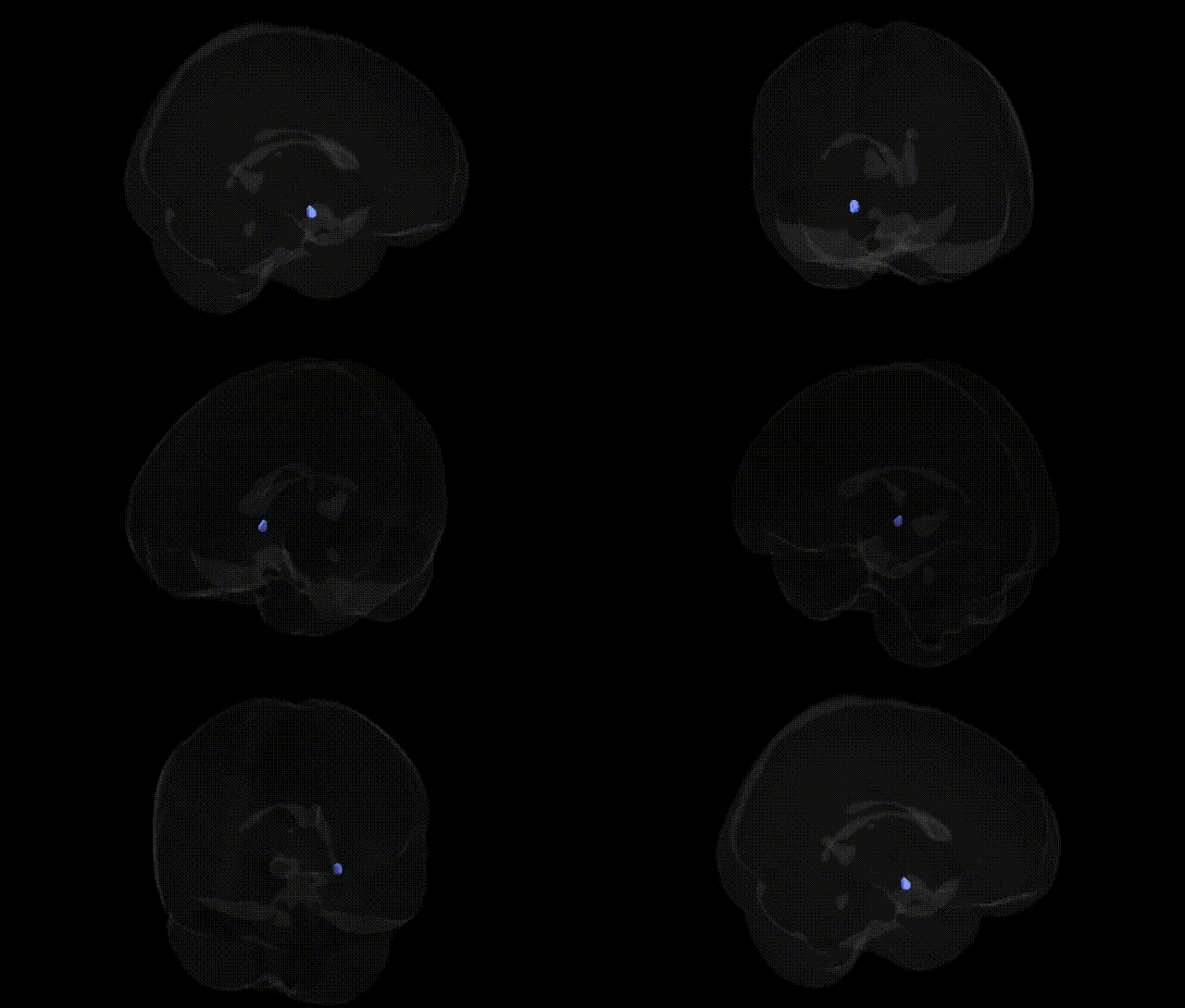
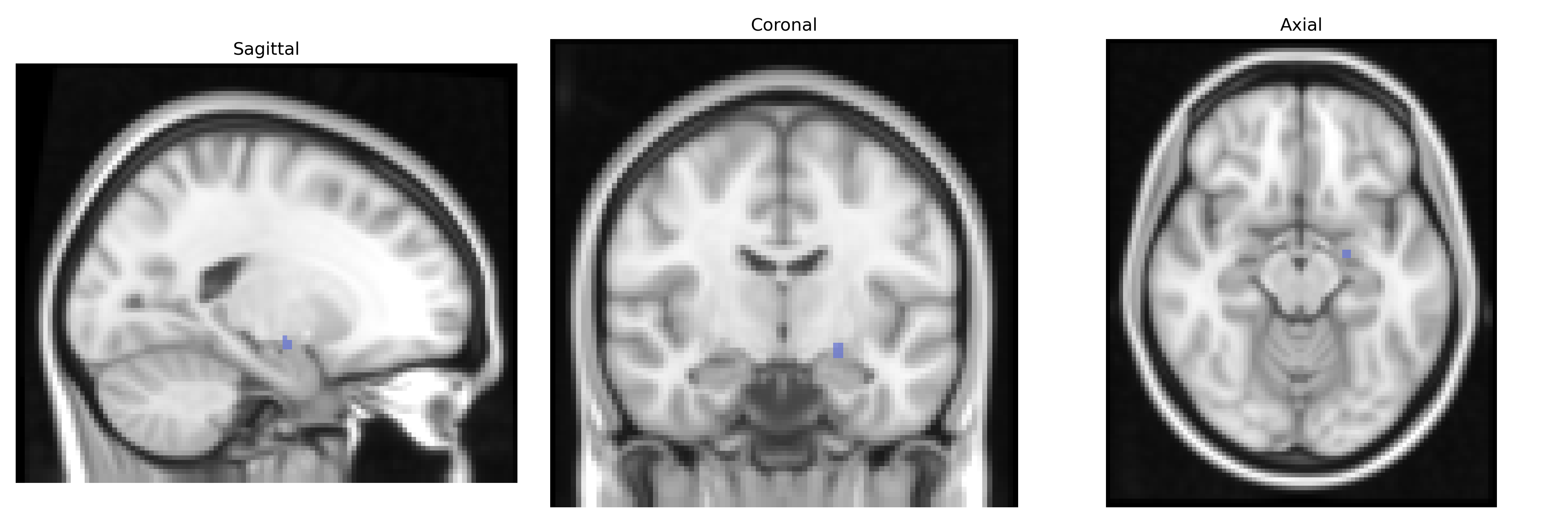
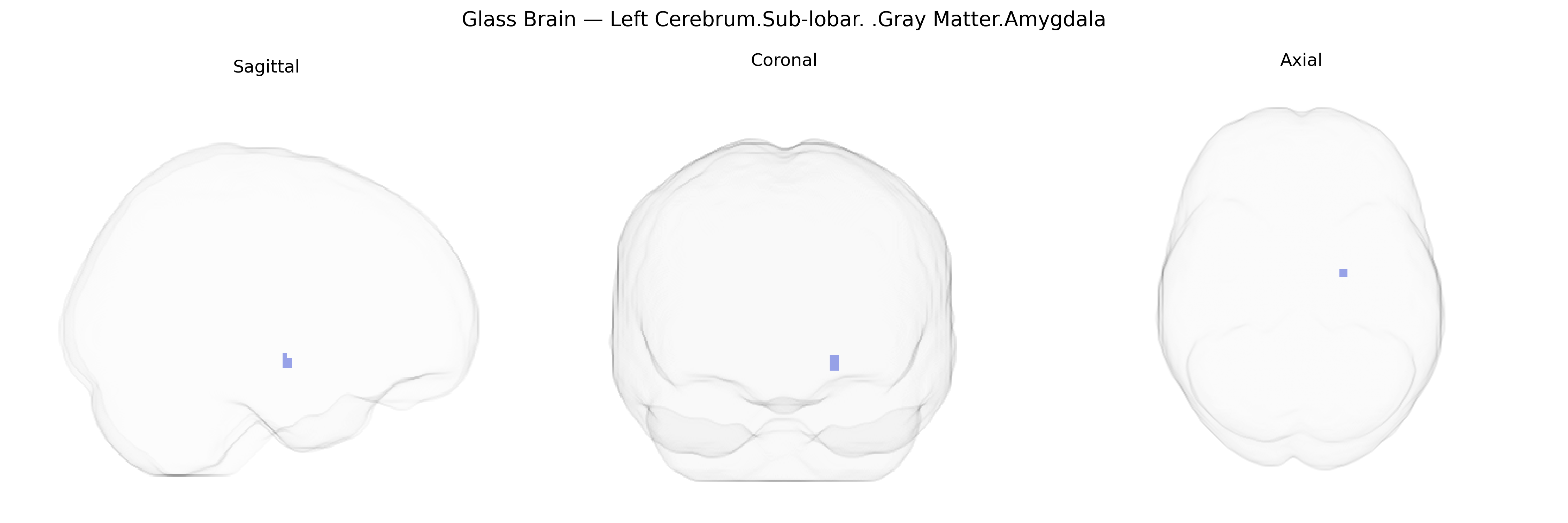
The bilateral Left Cerebrum.Sub-lobar.Gray Matter.Amygdala, as defined in the Talairach 2 mm Atlas, refers to the paired amygdaloid complex located deep within the medial temporal lobes of the cerebral hemispheres, beneath the cortical surface (sub-lobar) and composed primarily of gray matter nuclei. The amygdala is a key component of the limbic system and is critically involved in emotional processing, particularly fear and threat detection, as well as in emotional learning, memory modulation, and social behavior. It receives multimodal sensory input from cortical and subcortical regions and projects extensively to hypothalamic, brainstem, and prefrontal areas, thereby influencing autonomic, endocrine, and behavioral responses. Structurally, it comprises multiple nuclei (including basolateral, centromedial, and cortical groups) that support distinct but interconnected functions related to affect, decision-making under uncertainty, and the emotional tagging of memories.
Genetic associations for the bilateral Left Cerebrum.Sub-lobar.Gray Matter.Amygdala region, as defined in the Talairach 2 mm atlas, largely mirror findings from GWAS and imaging-genetics studies implicating the amygdala in psychiatric and behavioral phenotypes. Variants in genes involved in synaptic function, stress response, and neurodevelopment—such as BDNF (e.g., Val66Met), SLC6A4 (serotonin transporter-linked polymorphic region), COMT, and FKBP5—have been linked to amygdala structure and reactivity, particularly in the context of anxiety, depression, and post-traumatic stress disorder. Large neuroimaging GWAS consortia (e.g., ENIGMA) have identified common variants near genes like HRK and SLC39A8 associated with amygdala volume, and polygenic risk scores for major depressive disorder, schizophrenia, bipolar disorder, and autism spectrum disorder show correlations with amygdala morphology or functional activation patterns. Additional studies connect amygdala-related genetic variation to traits such as neuroticism, threat sensitivity, emotion regulation, and social behavior, supporting a role for this region as a key genetically influenced hub in affective and stress-related neurocircuitry.
Overview generated by GPT-4o (2026).
Region ID: 356
Hemisphere: bilateral
Atlas: Talairach labels 2mm
Full Quality Version: Download MP4
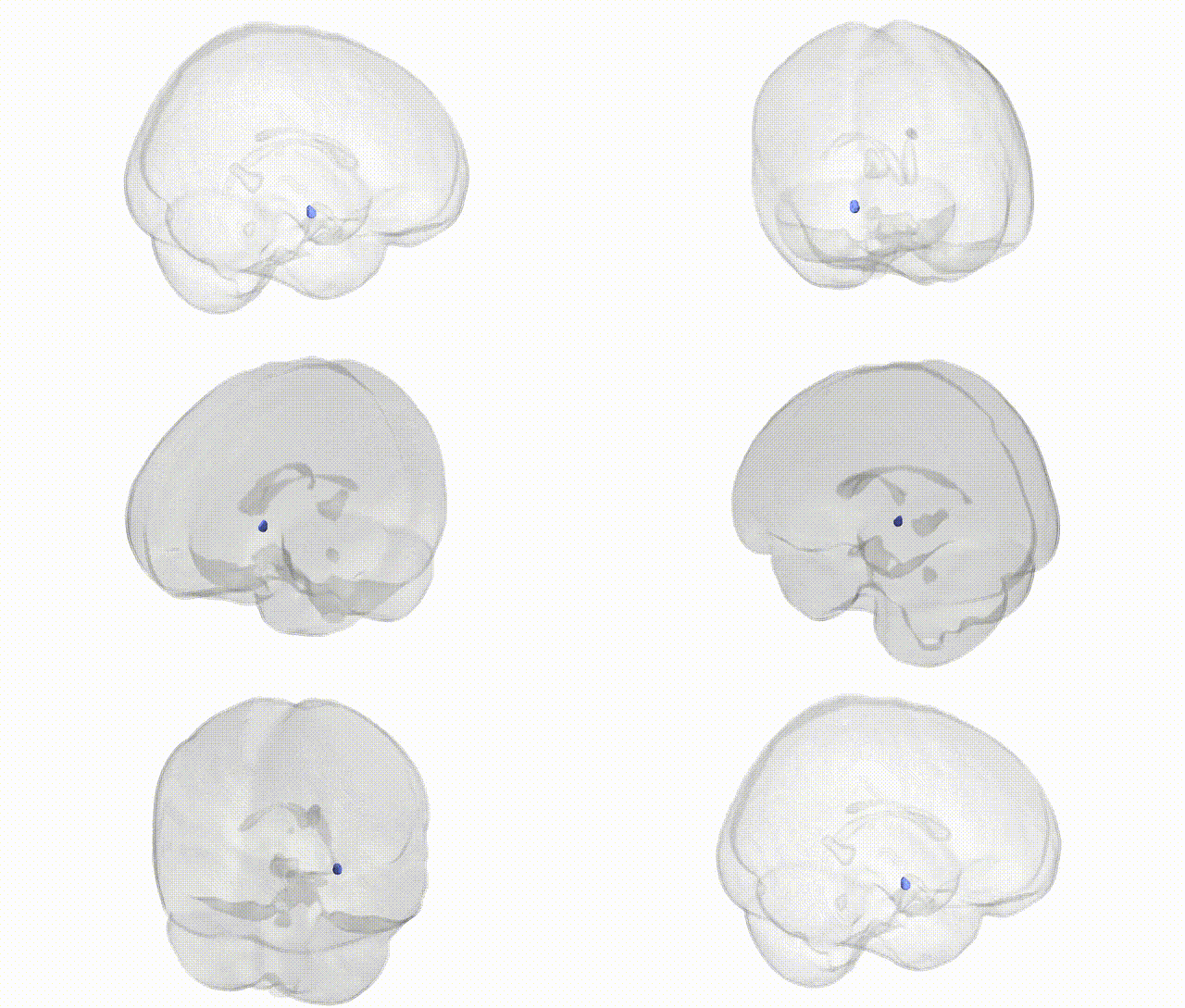
Full Quality Version: Download MP4
Wali Sidiqyar*, Gaurav Rudravaram*, Elyssa M. McMaster, Trent M. Schwartz, Adam M. Saunders, Kurt G. Schilling, Bennett A. Landman "Introducing SPINS: A Shared Public Visualization Library of Neuroanatomical Structures." Medical Imaging with Deep Learning- short paper
This resource is licensed under CC0 1.0 Universal (Public Domain).