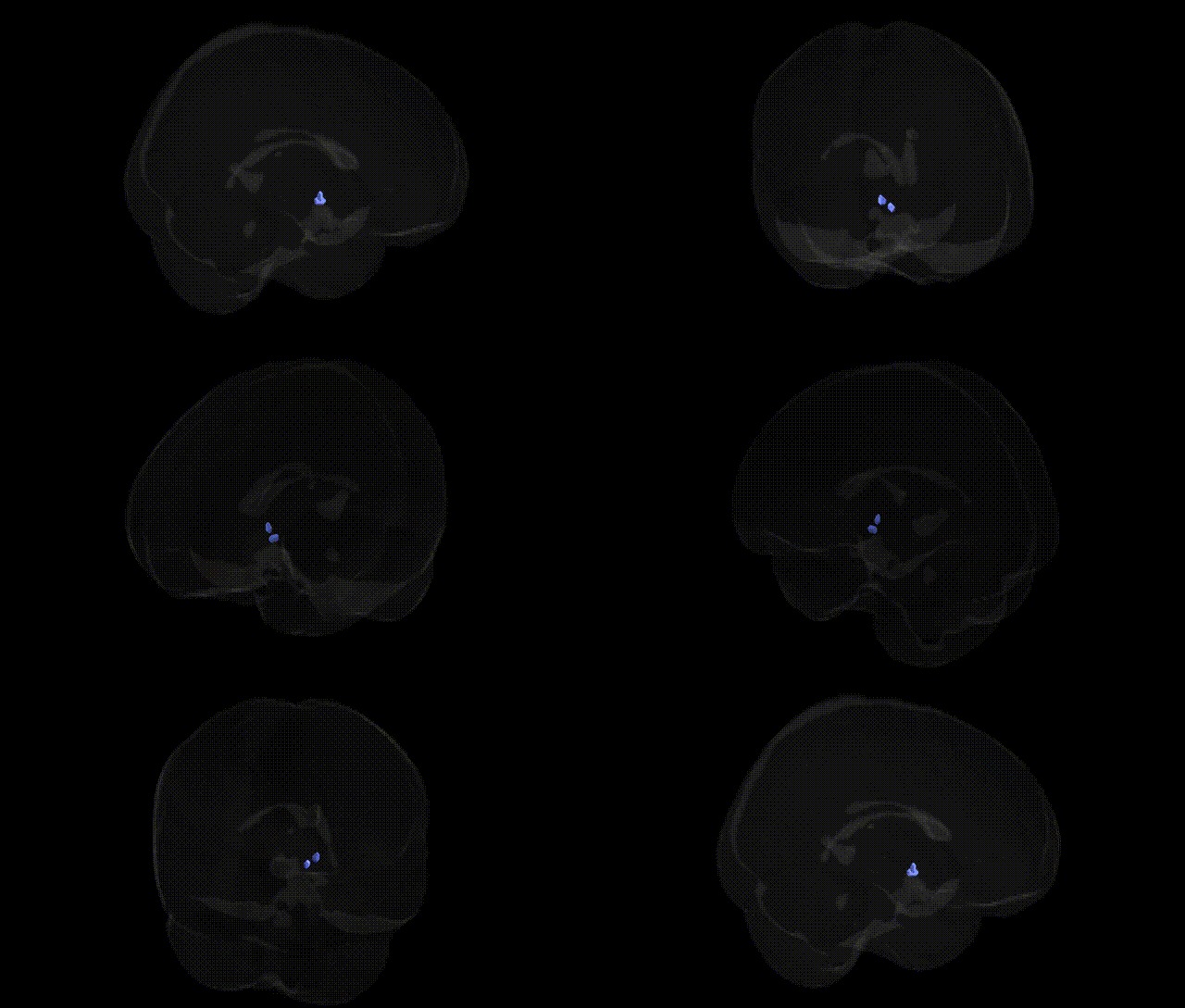
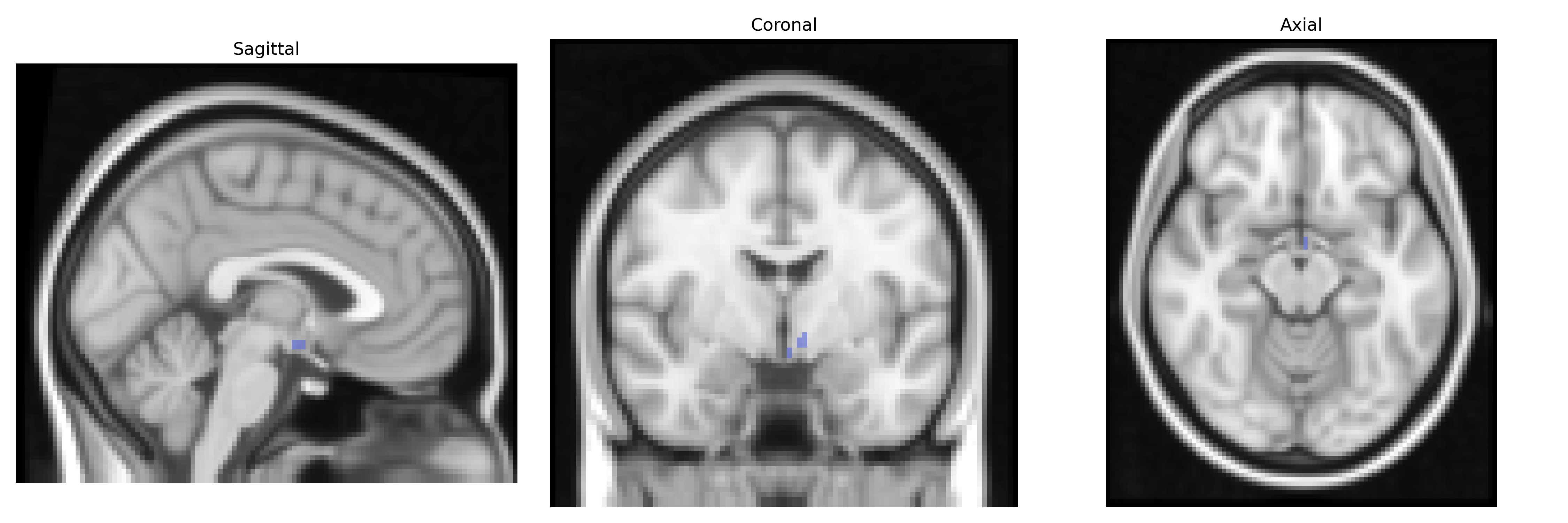
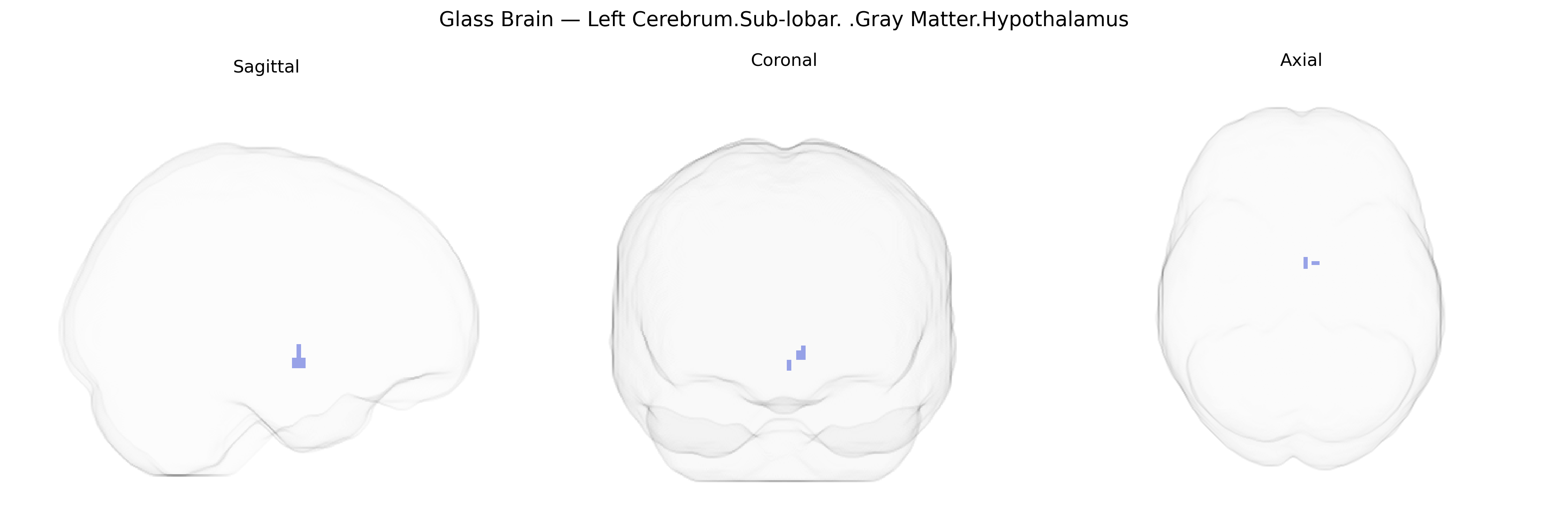
The bilateral Left Cerebrum.Sub-lobar.Gray Matter.Hypothalamus, as defined in the Talairach 2 mm Atlas, corresponds to the hypothalamic gray matter situated in the ventral diencephalon beneath the thalamus, bordering the third ventricle and adjacent to structures such as the optic chiasm and mammillary bodies. This region is a key autonomic and neuroendocrine control center, integrating signals from limbic, cortical, and brainstem areas to regulate homeostatic processes including circadian rhythms, thermoregulation, feeding and energy balance, fluid intake, and cardiovascular function. It houses nuclei that govern the hypothalamic–pituitary axis, modulate stress responses, and contribute critically to reproductive and sexual behaviors. Functionally, the hypothalamus serves as an interface between the nervous and endocrine systems, coordinating behavioral and physiological adjustments essential for survival and internal stability. Hypothalamus
The hypothalamus, a sub-lobar gray matter structure of the left cerebrum in the Talairach 2 mm atlas, has been implicated in numerous genetic associations through imaging genetics and GWAS of brain structure and related traits. Large-scale GWAS of subcortical volumes (e.g., ENIGMA, UK Biobank) have identified loci near genes such as KDM4A, MAPT, SH2B3, and others that influence hypothalamic or closely adjacent region volumes, reflecting genetic control over neuroendocrine and homeostatic circuitry. Genetic variants in leptin (LEP), leptin receptor (LEPR), melanocortin-4 receptor (MC4R), FTO, and BDNF have been linked, via imaging and functional studies, to hypothalamic activation and morphology in the context of obesity, appetite regulation, and metabolic traits. Polygenic risk for major depressive disorder, schizophrenia, bipolar disorder, and anxiety has been associated with altered hypothalamic structure or function, with implicated genes including CRHR1, FKBP5, and other stress-axis regulators that modulate hypothalamic-pituitary-adrenal (HPA) activity. Variants affecting circadian rhythm genes (e.g., CLOCK, PER3) and reproductive hormone signaling (e.g., GNRHR, KISS1/KISS1R) have also been indirectly tied to hypothalamic function through GWAS of sleep, chronotype, and reproductive traits. While most GWAS report bilateral or global hypothalamic or subcortical measures rather than lateralized (left-only) findings, the bilateral hypothalamus emerges consistently as a key node where genetic variation influences metabolic, endocrine, stress-response, and psychiatric phenotypes.
Overview generated by GPT-4o (2026).
Region ID: 363
Hemisphere: bilateral
Atlas: Talairach labels 2mm
Full Quality Version: Download MP4
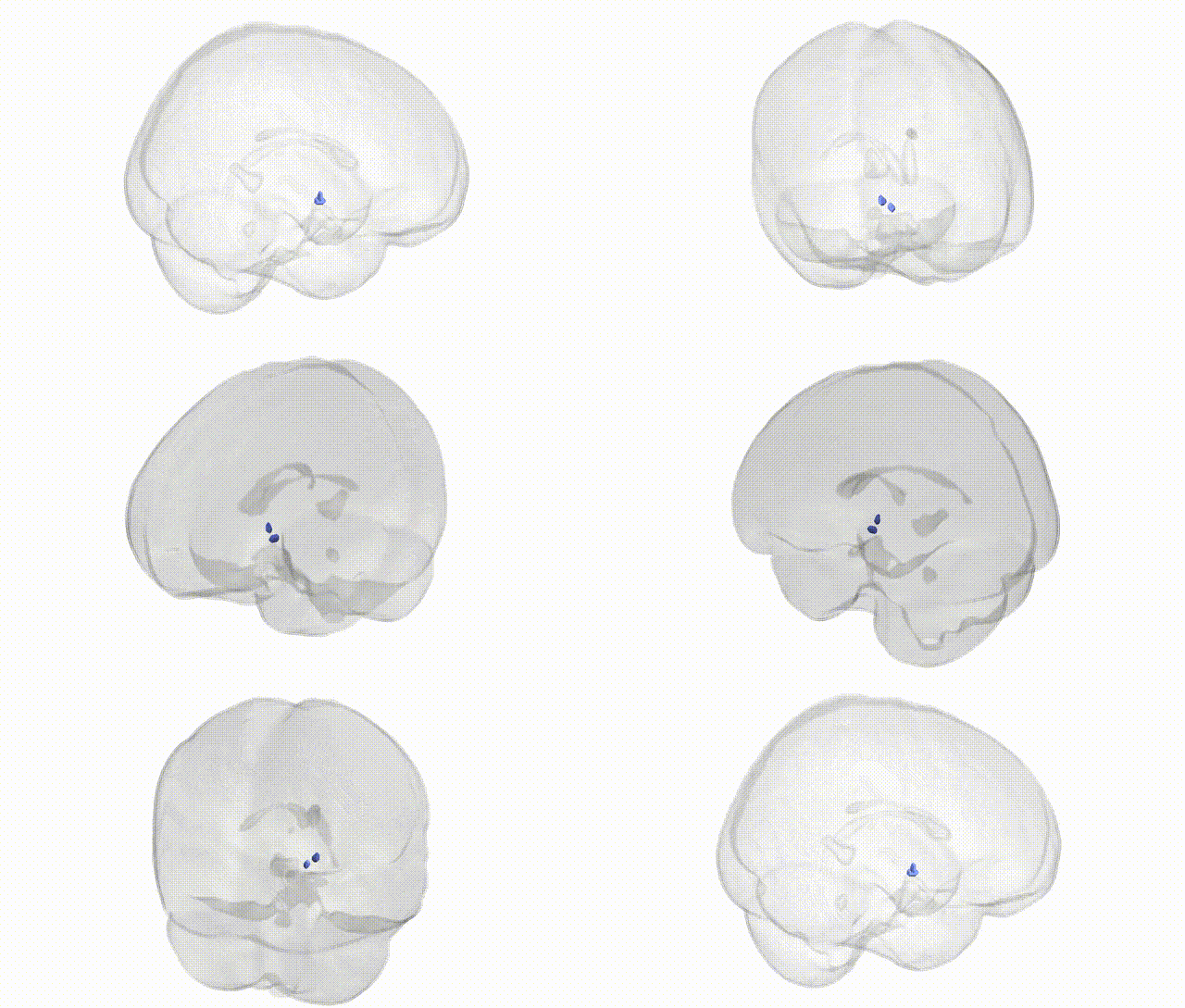
Full Quality Version: Download MP4
Wali Sidiqyar*, Gaurav Rudravaram*, Elyssa M. McMaster, Trent M. Schwartz, Adam M. Saunders, Kurt G. Schilling, Bennett A. Landman "Introducing SPINS: A Shared Public Visualization Library of Neuroanatomical Structures." Medical Imaging with Deep Learning- short paper
This resource is licensed under CC0 1.0 Universal (Public Domain).