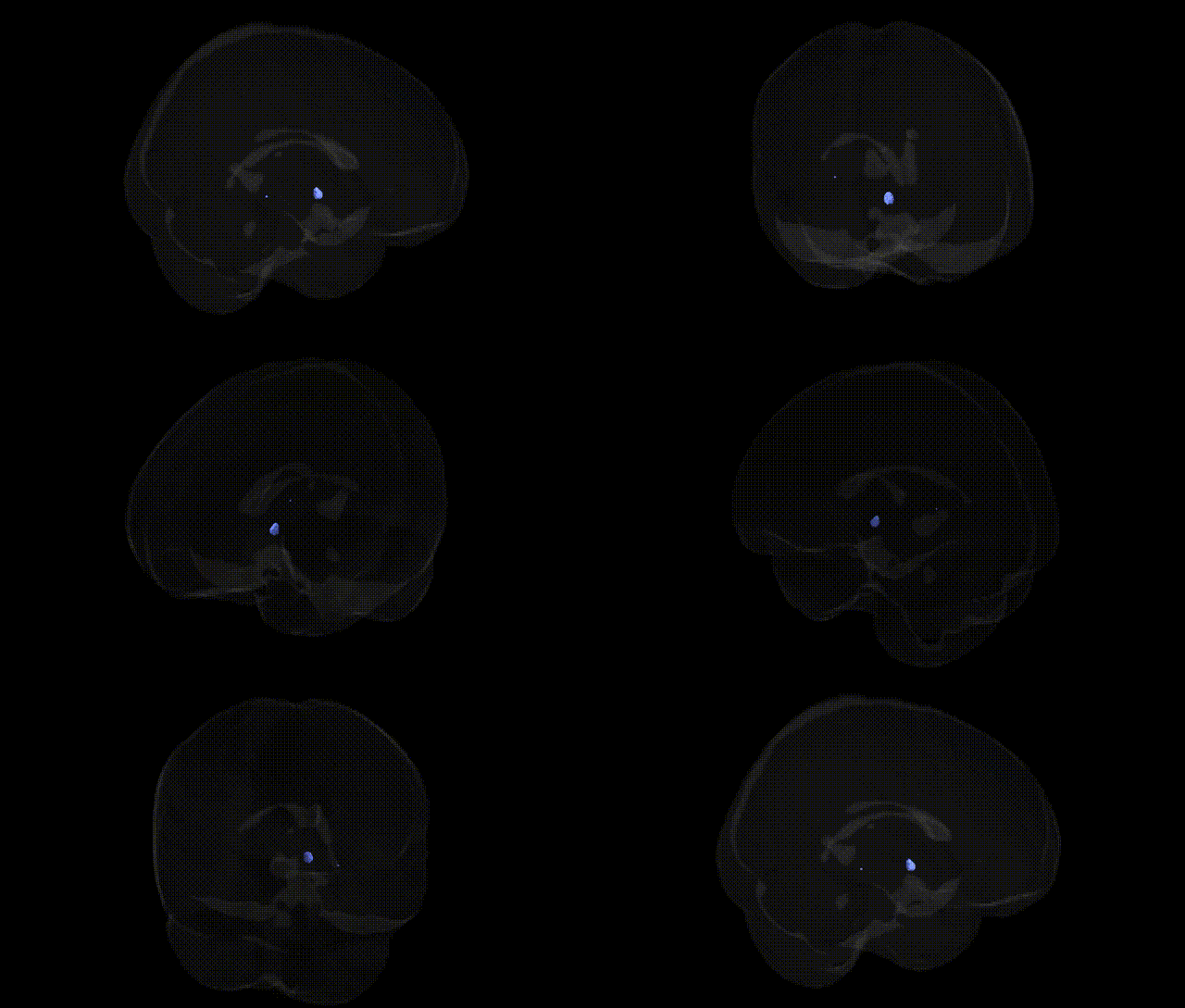
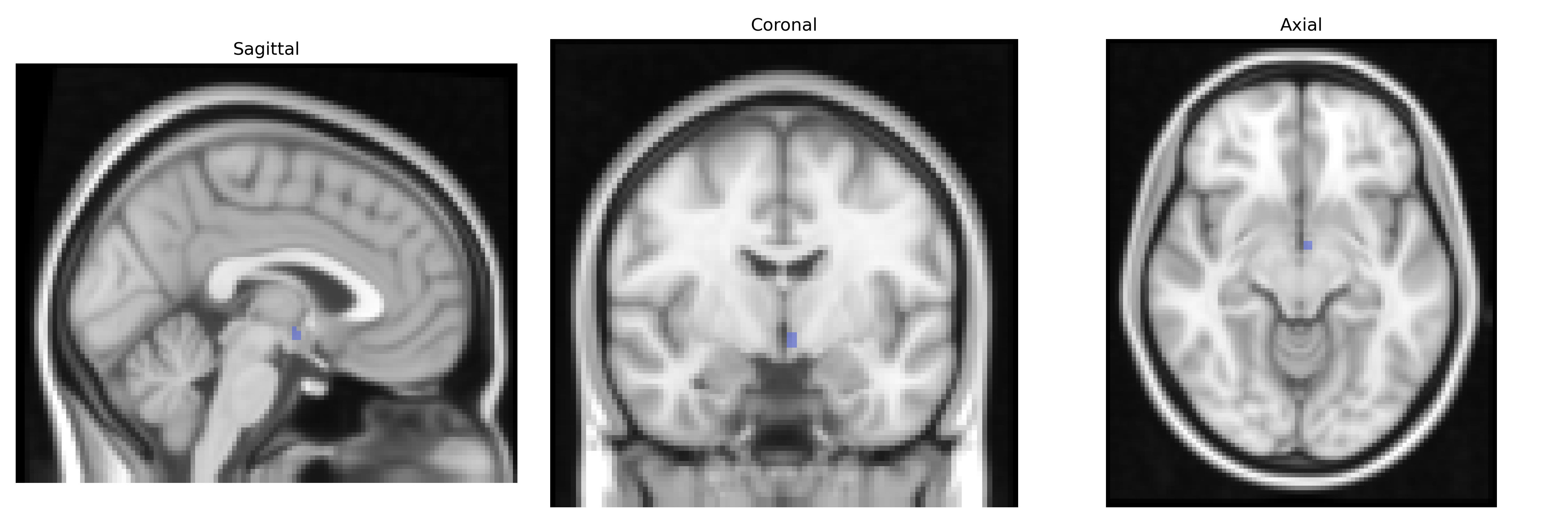
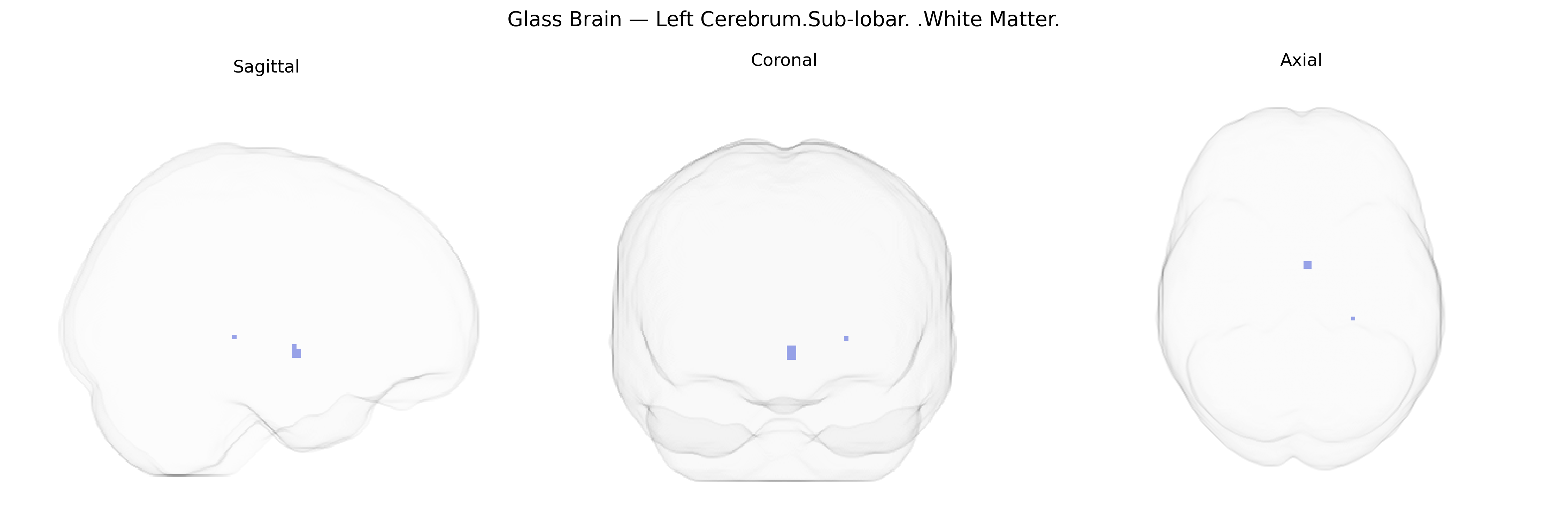
The bilateral Left Cerebrum Sub-lobar White Matter refers to deep intra-hemispheric myelinated fiber tracts located beneath the cortical mantle and outside the major lobar gray matter structures of the left cerebral hemisphere. This region comprises association fibers that interconnect cortical areas within the left hemisphere, commissural fibers that contribute to interhemispheric communication, and projection fibers linking cortical regions with subcortical nuclei, brainstem, and spinal cord. Functionally, sub-lobar white matter supports efficient neural signal transmission necessary for higher cognitive processes, language, sensorimotor integration, and coordination of distributed neural networks. There is no direct link for “Left Cerebrum Sub-lobar White Matter”; a related structure is Cerebral white matter.
Genetic associations specific to the bilateral Left Cerebrum.Sub-lobar.White Matter region in the Talairach 2 mm atlas are not typically reported at that fine-grained parcellation level, but numerous GWAS and imaging-genetics studies implicate variants that broadly influence cerebral white matter microstructure and connectivity, which include sub-lobar tracts in the left hemisphere. Common variants near genes such as ZNF804A, CACNA1C, DISC1, NRG1, and CNTNAP2 have been associated with altered white matter integrity and connectivity patterns in major psychiatric disorders, especially schizophrenia, bipolar disorder, and autism spectrum disorder, often involving fronto-subcortical and temporo-parietal pathways traversing sub-lobar regions. Large-scale diffusion MRI GWAS (e.g., UK Biobank–based studies) have identified loci near FOXO3, DPYSL5, DCC, RELN, and myelin-related genes (MAG, MBP, PLP1) that are associated with fractional anisotropy, mean diffusivity, and neurite density across widespread white matter, including internal capsule, corona radiata, and deep sub-lobar fibers. These genetic effects on white matter structure have been linked in turn to cognitive traits (intelligence, processing speed, educational attainment), risk for neurodegenerative diseases (Alzheimer’s disease, multiple sclerosis), and mood and anxiety disorders, suggesting that the left sub-lobar white matter region participates in genetically influenced networks underlying cognition, psychiatric risk, and brain aging, even though associations are generally reported at tract or whole-brain white matter levels rather than atlas-specific labels.
Overview generated by GPT-4o (2026).
Region ID: 461
Hemisphere: bilateral
Atlas: Talairach labels 2mm
Full Quality Version: Download MP4
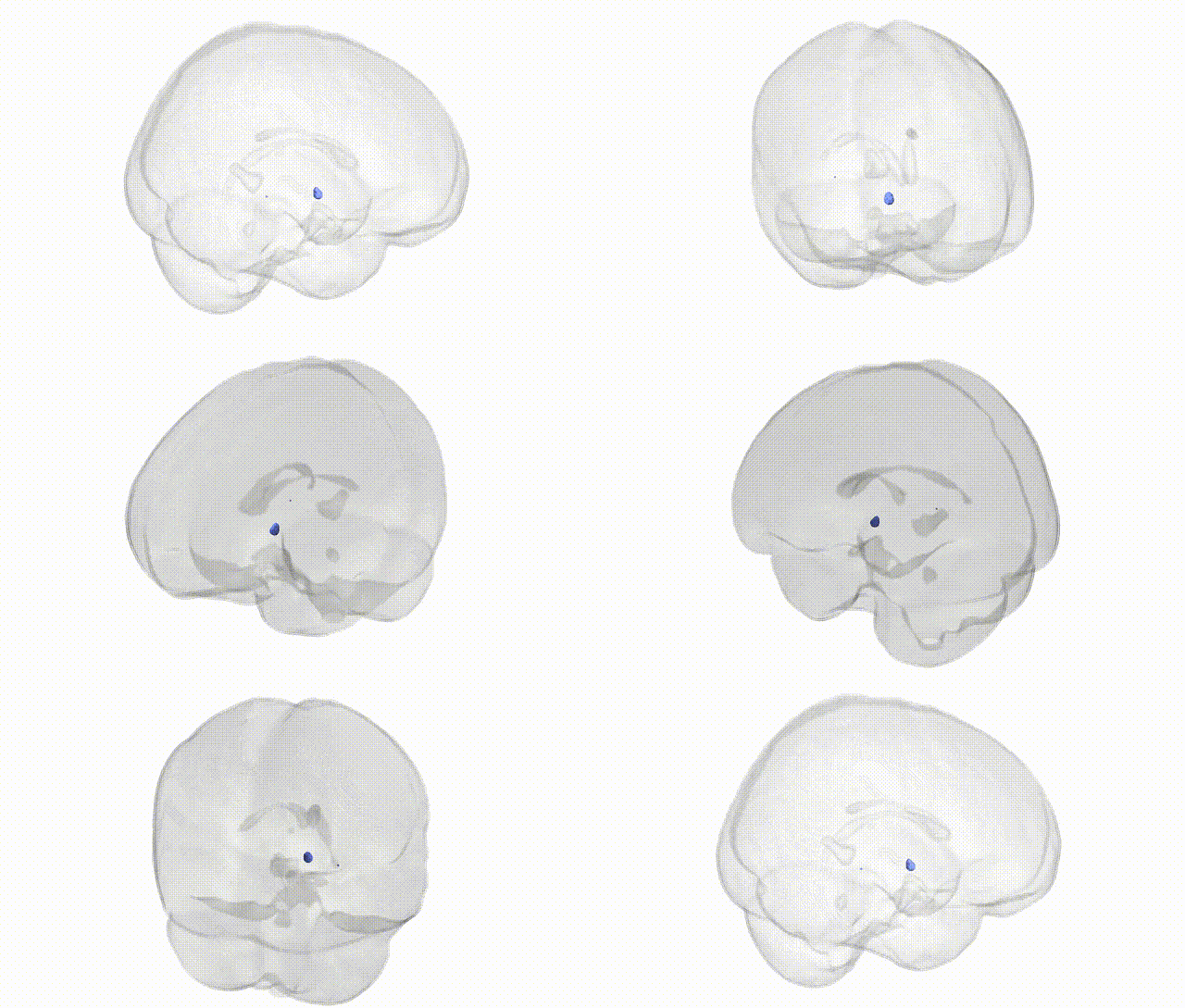
Full Quality Version: Download MP4
Wali Sidiqyar*, Gaurav Rudravaram*, Elyssa M. McMaster, Trent M. Schwartz, Adam M. Saunders, Kurt G. Schilling, Bennett A. Landman "Introducing SPINS: A Shared Public Visualization Library of Neuroanatomical Structures." Medical Imaging with Deep Learning- short paper
This resource is licensed under CC0 1.0 Universal (Public Domain).