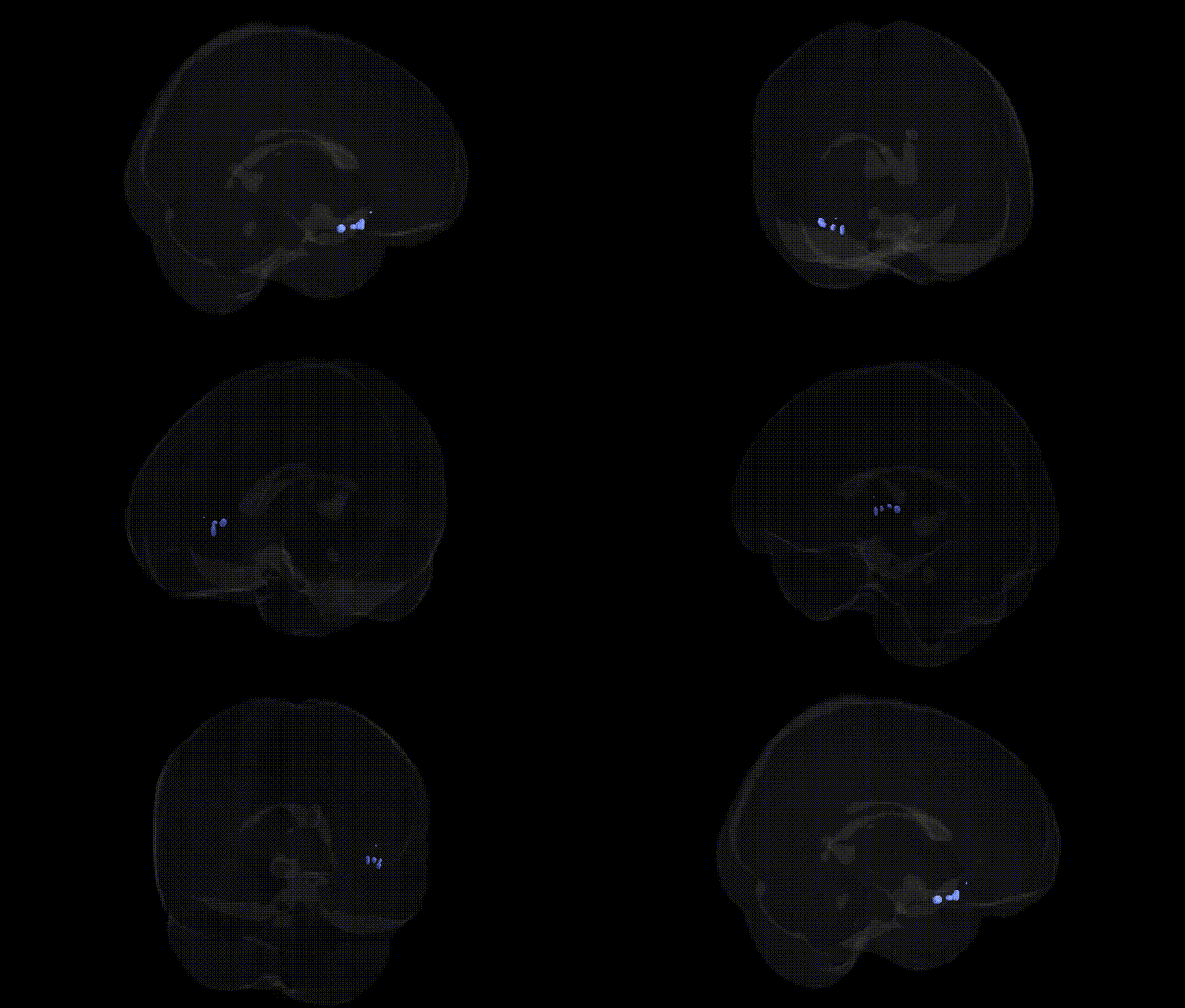
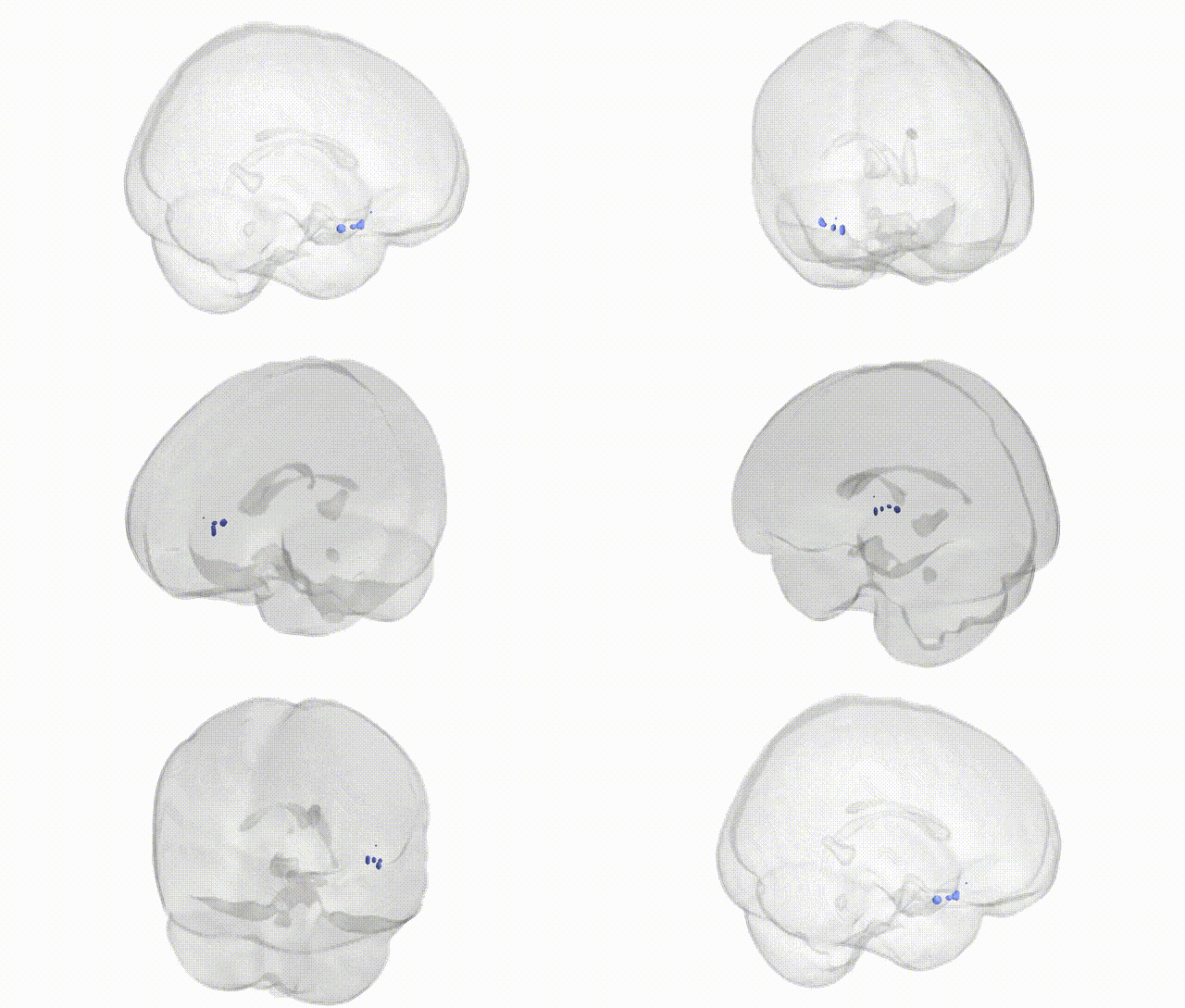
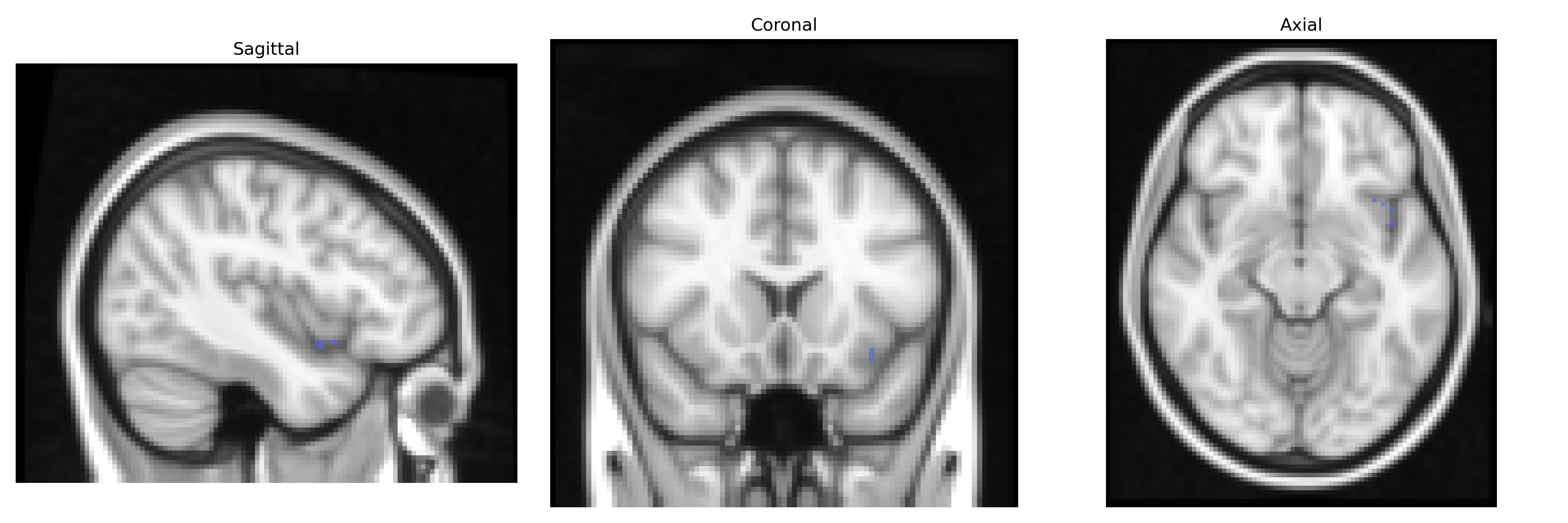
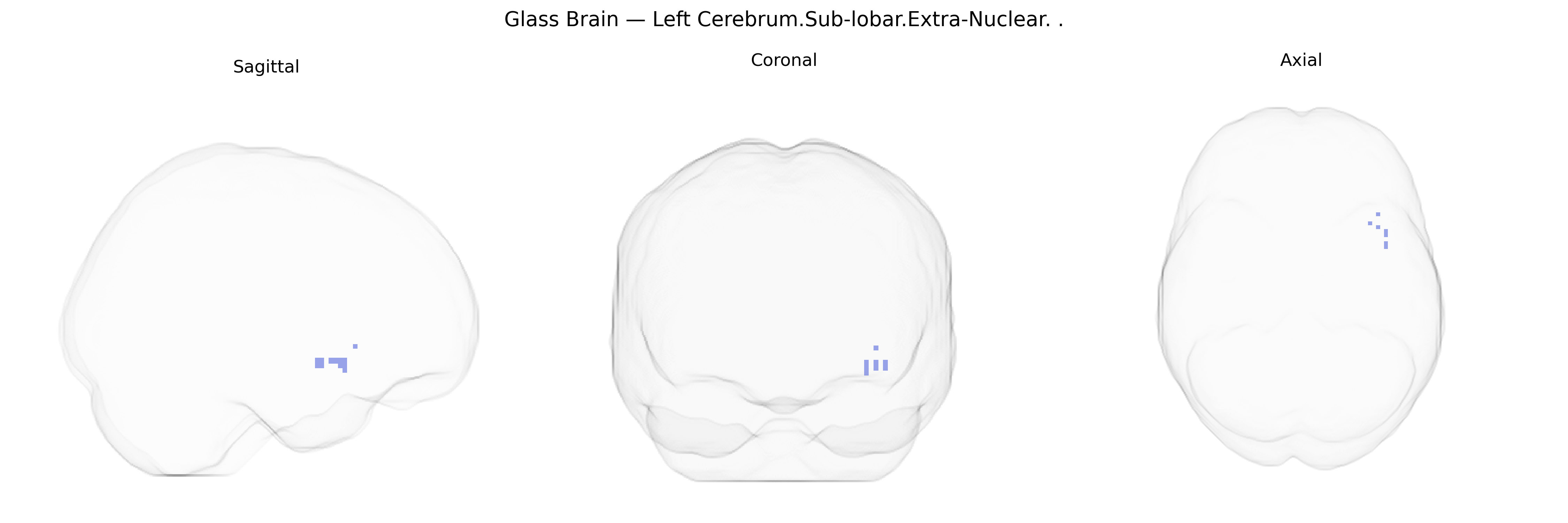
The bilateral Left Cerebrum.Sub-lobar.Extra-Nuclear region, as defined in the Talairach 2 mm Atlas, refers to subcortical territories in the left hemisphere that lie outside the classical nuclear complexes (such as the basal ganglia nuclei and thalamic nuclei), encompassing white matter pathways, periventricular zones, and other non-nuclear sub-lobar structures involved in long-range connectivity between cortical and deep gray matter regions. Functionally, these extra-nuclear areas contribute to the integration and transmission of neural signals that support motor coordination, sensory processing, and higher cognitive functions by serving as conduits and relay regions rather than primary processing nuclei. There is no direct link for “Extra-Nuclear” as a standalone structure; a closely related and encompassing structure is the Cerebrum.
Genetic associations specifically targeting the bilateral Left Cerebrum.Sub-lobar.Extra-Nuclear region in the Talairach 2 mm atlas are not well characterized, as most imaging genetics and GWAS studies use broader functional or anatomical parcels (e.g., basal ganglia, thalamus, insula, or white-matter tracts) rather than Talairach sub-lobar “extra-nuclear” designations. However, genes implicated in subcortical and periventricular white matter, basal ganglia circuitry, and thalamo-cortical connectivity—such as variants in CACNA1C, COMT, DRD2, and multiple loci influencing intracranial volume and subcortical structures identified in ENIGMA and UK Biobank GWAS—have been associated with traits and disorders that depend on these sub-lobar networks, including schizophrenia, bipolar disorder, major depression, ADHD, and movement disorders. Polygenic risk scores for neuropsychiatric conditions frequently correlate with volumetric and microstructural measures in adjacent basal ganglia and periventricular regions (e.g., caudate, putamen, internal capsule), which overlap spatially with extra-nuclear Talairach labels, and GWAS of white-matter integrity (FA, MD) identify numerous loci in neurodevelopmental and myelination pathways (e.g., genes involved in axon guidance, oligodendrocyte function) whose effects likely extend into these sub-lobar territories. Overall, genetic influences on this Talairach-defined extra-nuclear region are currently inferred indirectly through broader subcortical and white-matter imaging genetics findings rather than through region-specific GWAS.
Overview generated by GPT-4o (2026).
Region ID: 378
Hemisphere: bilateral
Atlas: Talairach labels 2mm
Full Quality Version: Download MP4
Full Quality Version: Download MP4
Wali Sidiqyar*, Gaurav Rudravaram*, Elyssa M. McMaster, Trent M. Schwartz, Adam M. Saunders, Kurt G. Schilling, Bennett A. Landman "Introducing SPINS: A Shared Public Visualization Library of Neuroanatomical Structures." Medical Imaging with Deep Learning- short paper
This resource is licensed under CC0 1.0 Universal (Public Domain).