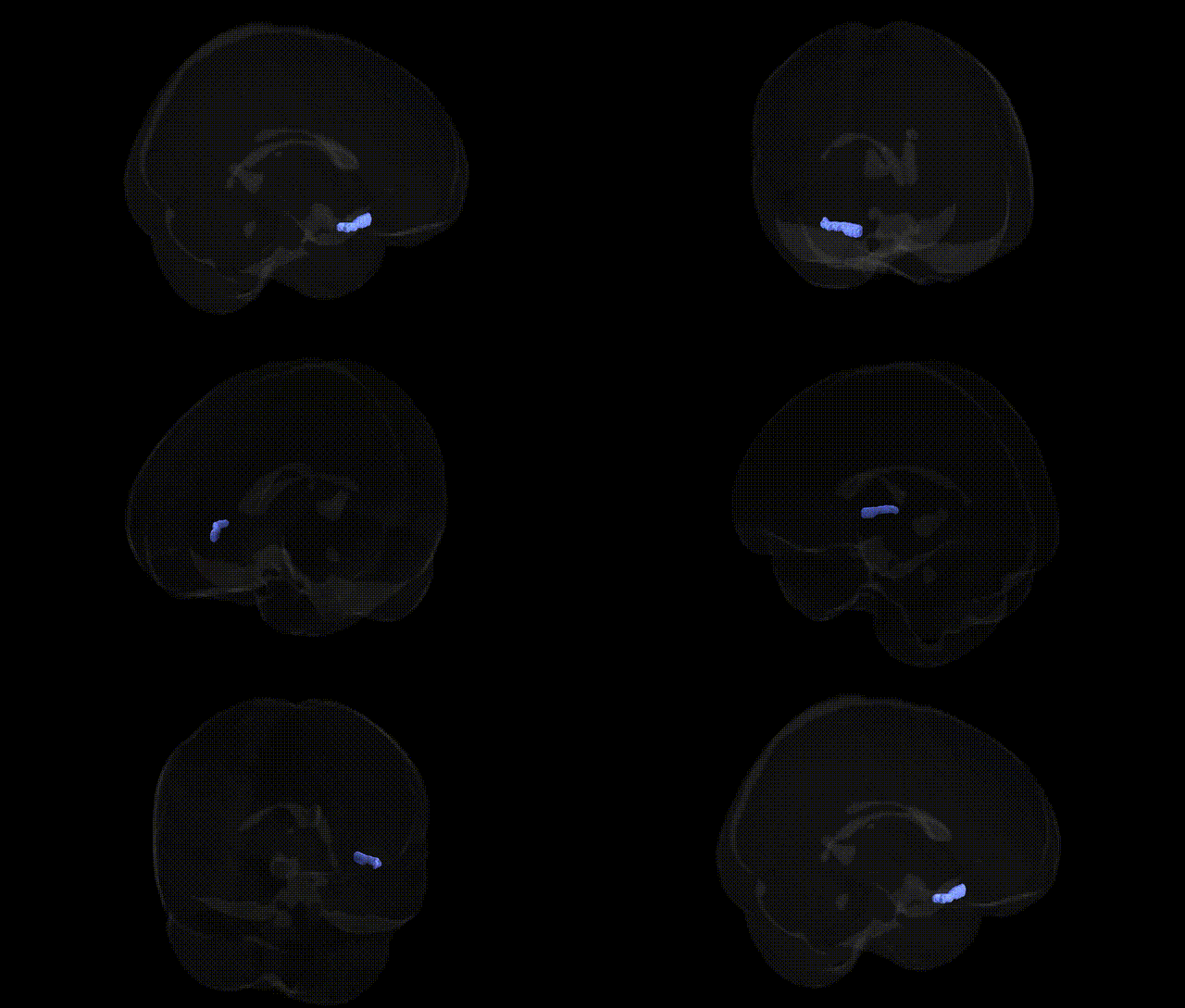
Bilateral Left Cerebrum.Sub-lobar.Extra-Nuclear.Gray Matter.Brodmann area 13 corresponds to the insular cortex, a paralimbic region buried within the lateral sulcus and covered by portions of the frontal, parietal, and temporal opercula. Brodmann area 13 is involved in multimodal integration of visceral, somatosensory, and emotional information, contributing to interoception, autonomic regulation, affective processing, and aspects of decision-making and social cognition. Cytoarchitectonically, it exhibits granular to dysgranular cortical organization consistent with association cortex, and functionally it is a key node within the salience and limbic networks, linking internal bodily states with higher-order cognitive and emotional processes. Insular cortex
Brodmann area 13, a key subdivision of the insular cortex within the sub-lobar extra-nuclear gray matter of the left cerebrum, has been implicated in multiple genetic and GWAS findings through its roles in interoception, emotion, and salience processing rather than via Talairach-specific analyses. Large-scale imaging genetics studies (e.g., ENIGMA, UK Biobank) have associated common variants in genes influencing cortical thickness and surface area—such as those near HMGA2, KCNK2, and various neurodevelopmental loci—with structural variation in insular regions overlapping BA13, though findings are typically reported at the level of “insula” or “fronto-insular” cortex rather than the precise Talairach label. GWAS of psychiatric and behavioral traits, including major depressive disorder, schizophrenia, bipolar disorder, anxiety, addiction phenotypes, and neuroticism, often implicate genes and pathways (synaptic signaling, glutamatergic and GABAergic transmission, neuroimmune processes) whose downstream effects include altered structure or function of the insula/BA13 in case–control imaging studies. Functional genomics and transcriptomic atlases (e.g., Allen Brain Atlas) show differential expression of genes related to neurotransmission, interoceptive processing, and autonomic regulation in insular cortex, supporting a genetic basis for BA13’s involvement in affective and somatic symptom disorders, pain sensitivity, and eating and substance-use disorders. However, no robust, widely replicated GWAS has yet identified variants uniquely or specifically mapped to bilateral BA13 as defined in the Talairach 2 mm atlas; current evidence is indirect, linking polygenic risk for complex psychiatric and behavioral traits to structural and functional alterations in insula-based circuits that include this region.
Overview generated by GPT-4o (2026).
Region ID: 369
Hemisphere: bilateral
Atlas: Talairach labels 2mm
Full Quality Version: Download MP4
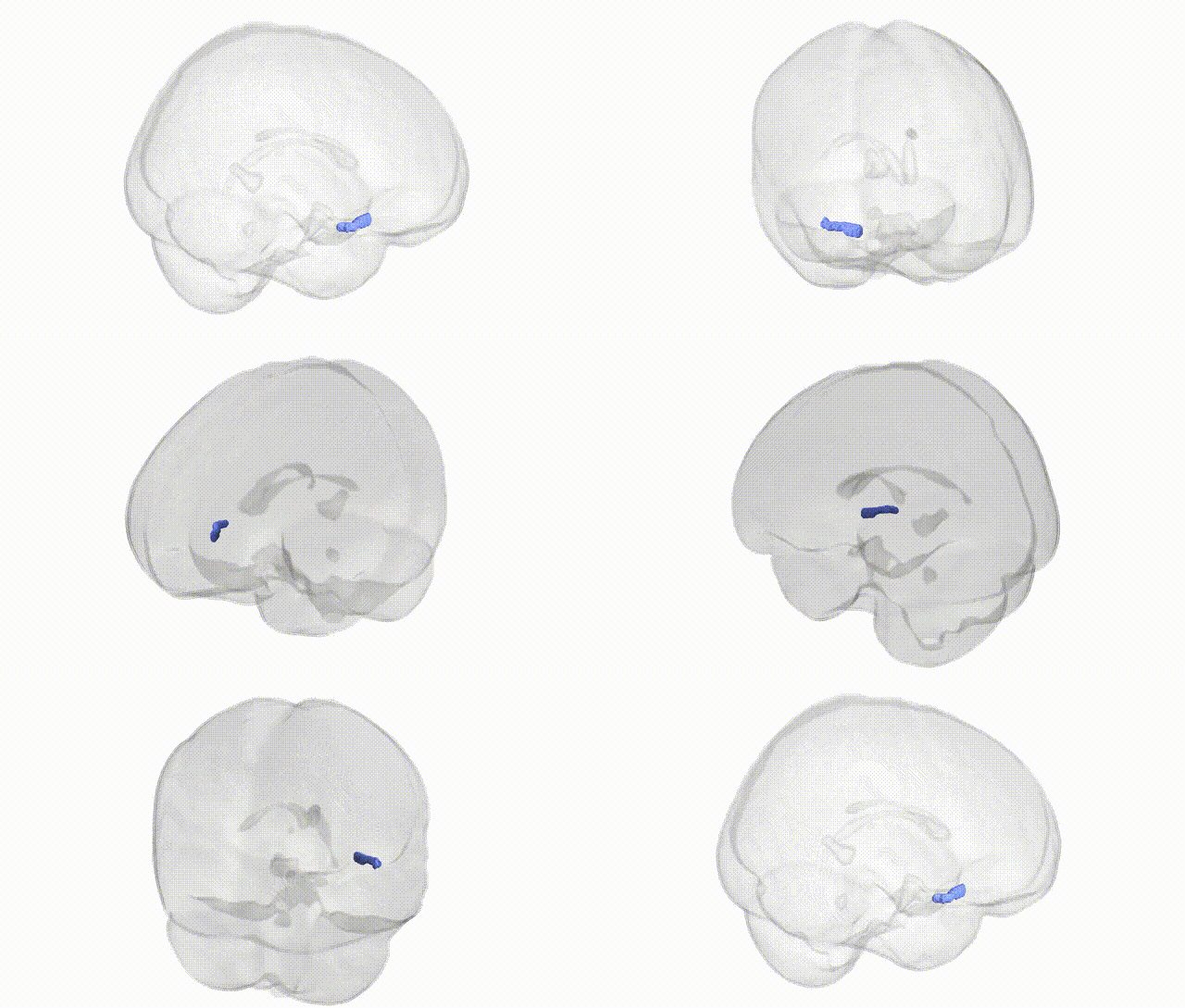
Full Quality Version: Download MP4
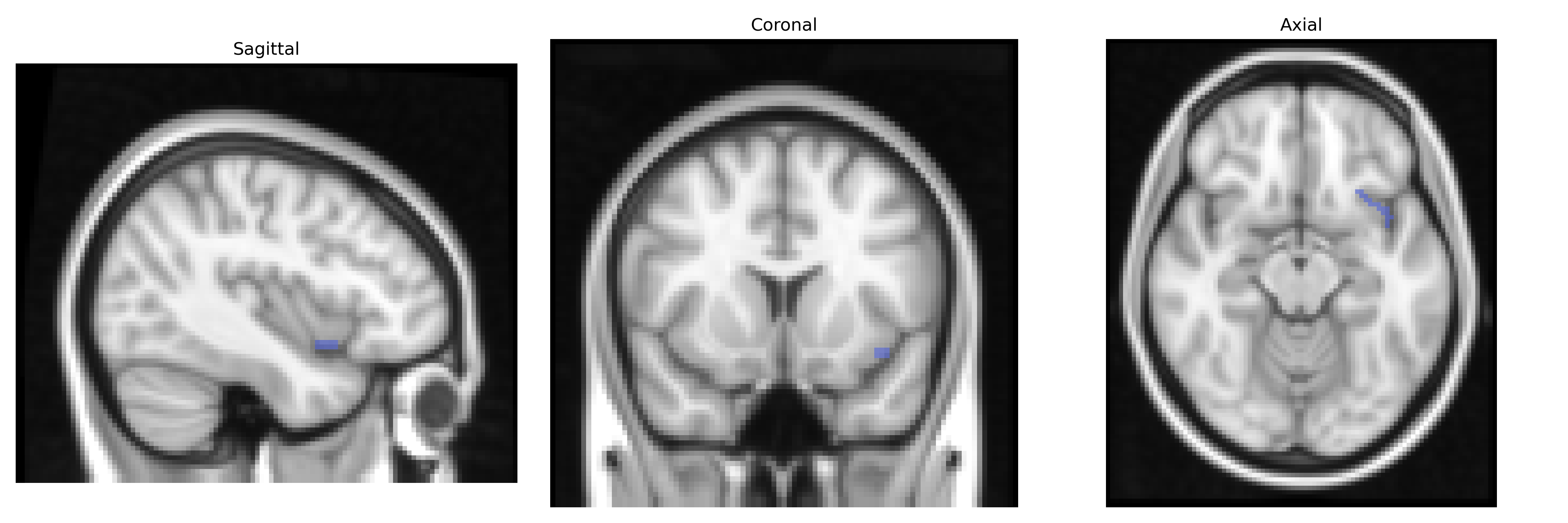
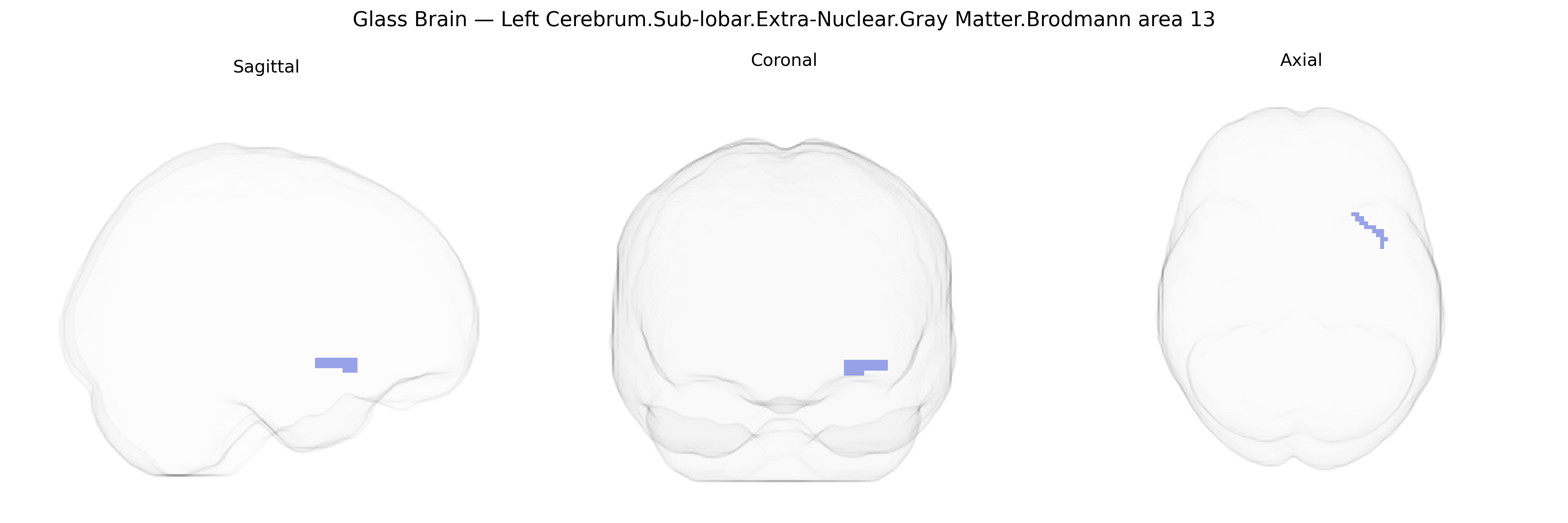
Wali Sidiqyar*, Gaurav Rudravaram*, Elyssa M. McMaster, Trent M. Schwartz, Adam M. Saunders, Kurt G. Schilling, Bennett A. Landman "Introducing SPINS: A Shared Public Visualization Library of Neuroanatomical Structures." Medical Imaging with Deep Learning- short paper
This resource is licensed under CC0 1.0 Universal (Public Domain).