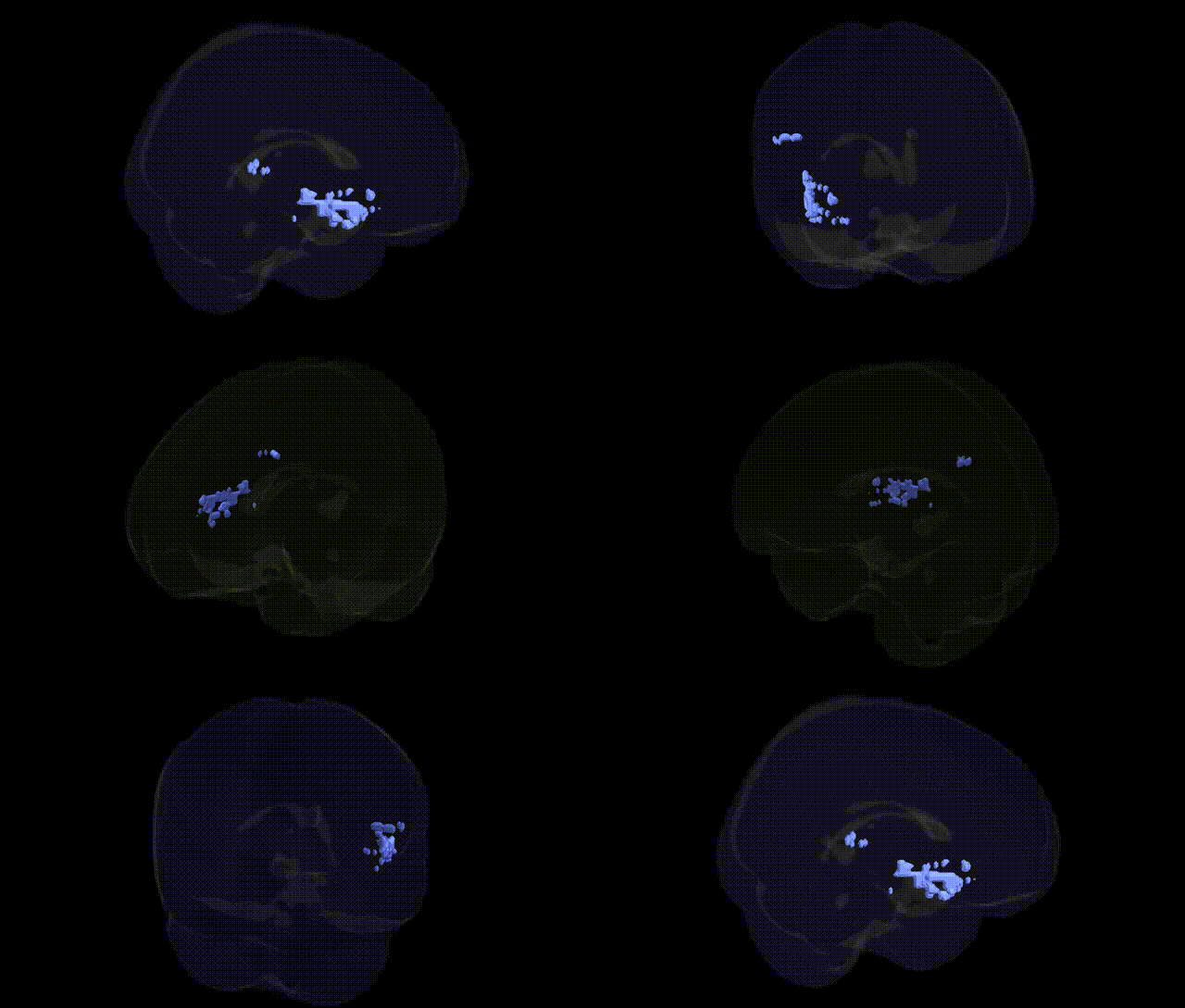
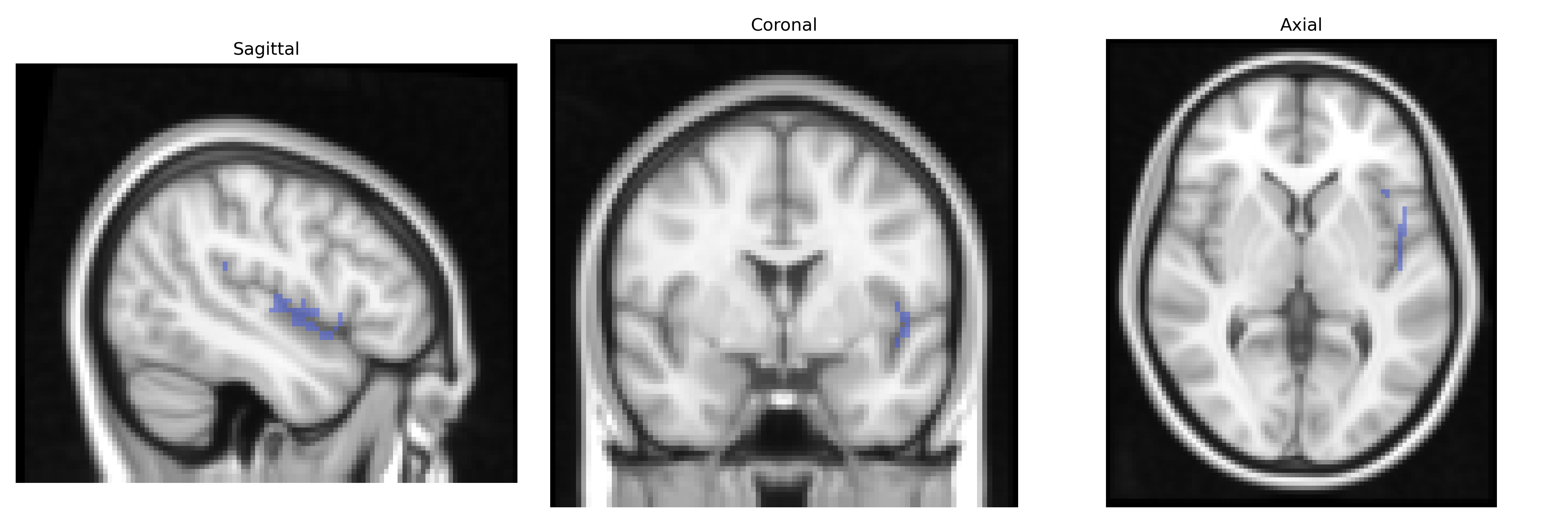
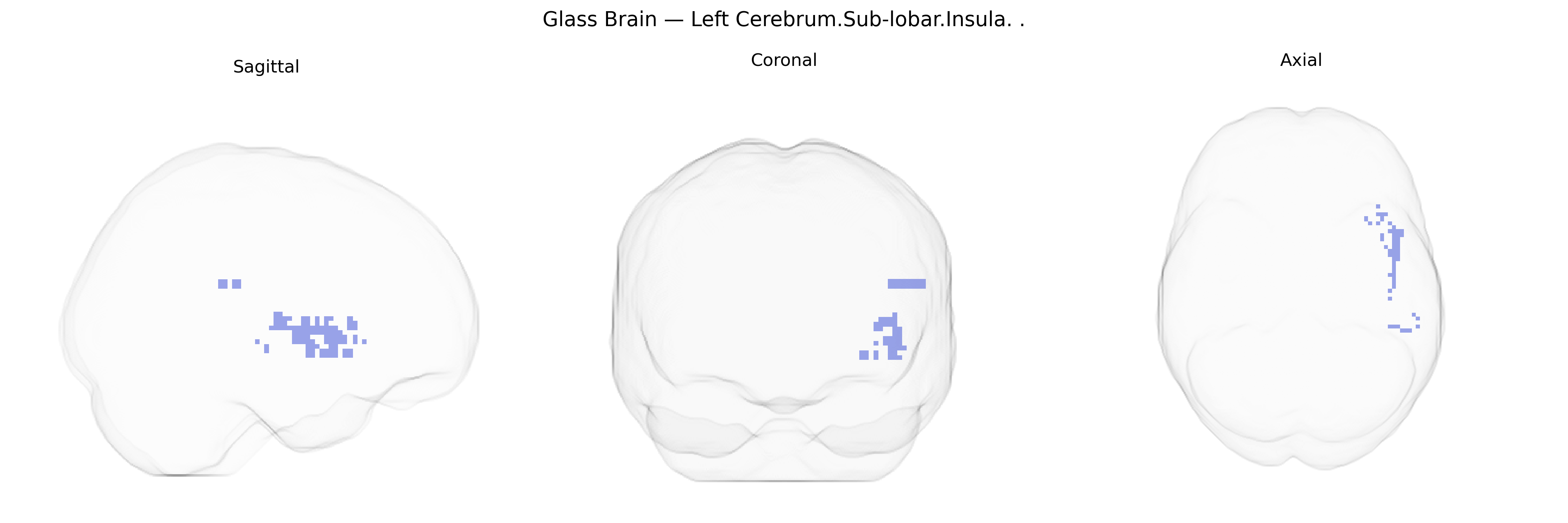
The bilateral Left Cerebrum.Sub-lobar.Insula refers to the insular cortex located deep within the lateral sulcus of the left cerebral hemisphere, beneath the frontal, parietal, and temporal opercula. As a sub-lobar structure, it is involved in integrating interoceptive, visceral, emotional, and sensory information, contributing to functions such as taste perception, autonomic regulation, pain processing, risk evaluation, and aspects of self-awareness and social-emotional cognition. The insula plays a key role in salience detection and switching between large-scale brain networks, including those supporting attention and executive control, and is implicated in various neuropsychiatric and neurological conditions due to its dense connectivity with limbic, frontal, and sensory regions. Insular cortex
The bilateral left insular cortex (Talairach: Left Cerebrum.Sub-lobar.Insula) has been implicated in genetic associations across multiple psychiatric, neurological, and behavioral traits, largely through imaging genetics and GWAS of brain structure and function. Twin and SNP-based heritability studies show that insular volume and cortical thickness are moderately heritable, with common variants in genes related to synaptic function, neurodevelopment, and cortical patterning (for example, in or near BDNF, GRIN2B, and several glutamatergic and GABAergic pathway genes) contributing to inter-individual variation. Large-scale GWAS of brain morphology (e.g., ENIGMA and UK Biobank–based studies) have identified loci influencing insular cortical thickness and surface area, although most signals are polygenic and shared with other association cortex regions rather than insula-specific. Functionally, the insula’s role in salience processing, interoception, and affect regulation is reflected in convergent genetic findings: risk variants for schizophrenia, bipolar disorder, major depressive disorder, and autism spectrum disorder—many mapped to synaptic and neurodevelopmental genes and captured by polygenic risk scores—have been associated with altered insular structure or connectivity in neuroimaging follow-ups. Similarly, GWAS of traits such as anxiety, substance use (including nicotine and alcohol dependence), pain sensitivity, eating behavior, and cardiovascular/autonomic traits have shown that risk alleles often predict insula-related functional changes (e.g., altered activation during interoceptive or craving tasks), supporting a genetically mediated link between insular circuitry and these phenotypes, although specific locus-to-region causal pathways remain incompletely resolved.
Overview generated by GPT-4o (2026).
Region ID: 448
Hemisphere: bilateral
Atlas: Talairach labels 2mm
Full Quality Version: Download MP4
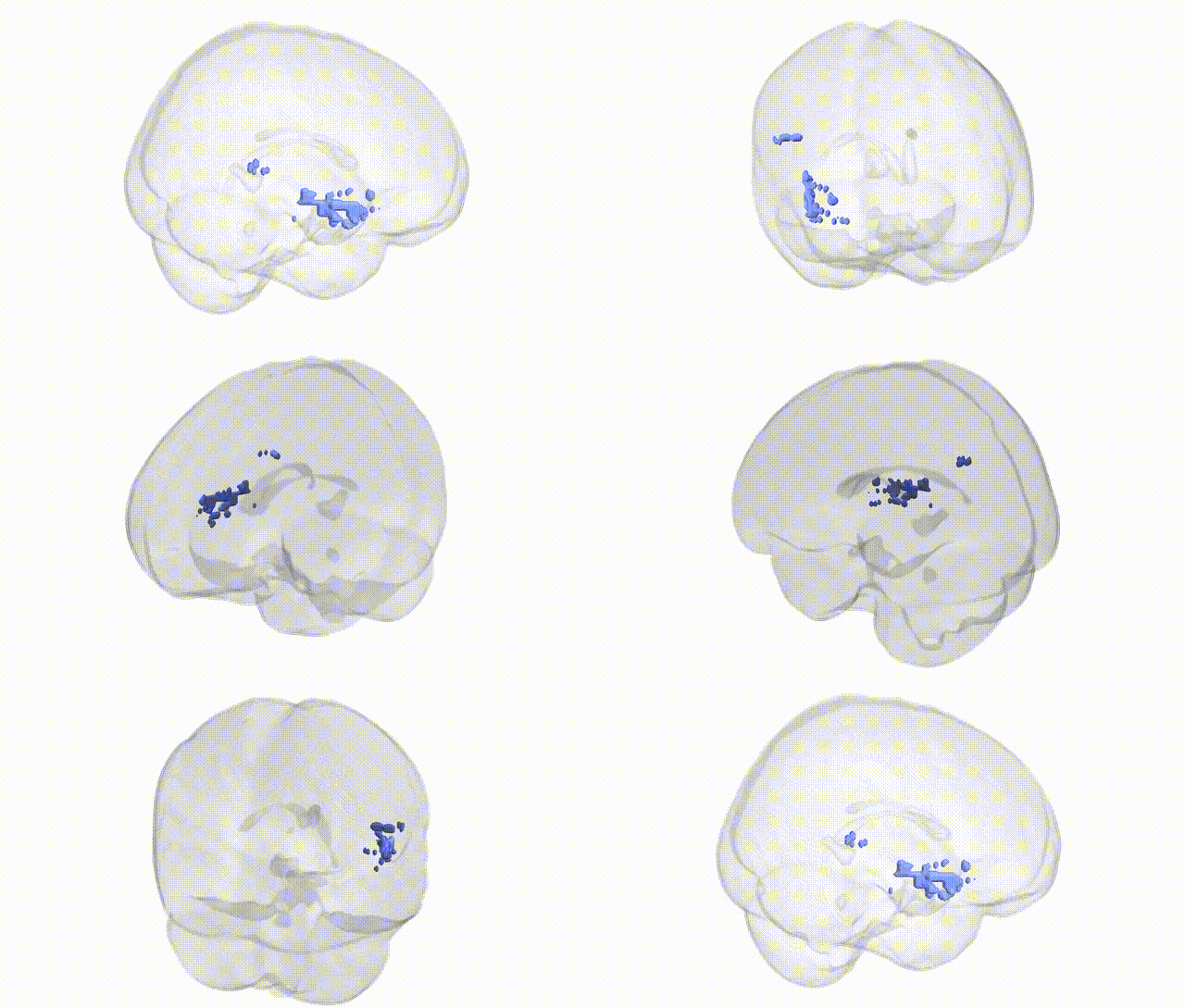
Full Quality Version: Download MP4
Wali Sidiqyar*, Gaurav Rudravaram*, Elyssa M. McMaster, Trent M. Schwartz, Adam M. Saunders, Kurt G. Schilling, Bennett A. Landman "Introducing SPINS: A Shared Public Visualization Library of Neuroanatomical Structures." Medical Imaging with Deep Learning- short paper
This resource is licensed under CC0 1.0 Universal (Public Domain).