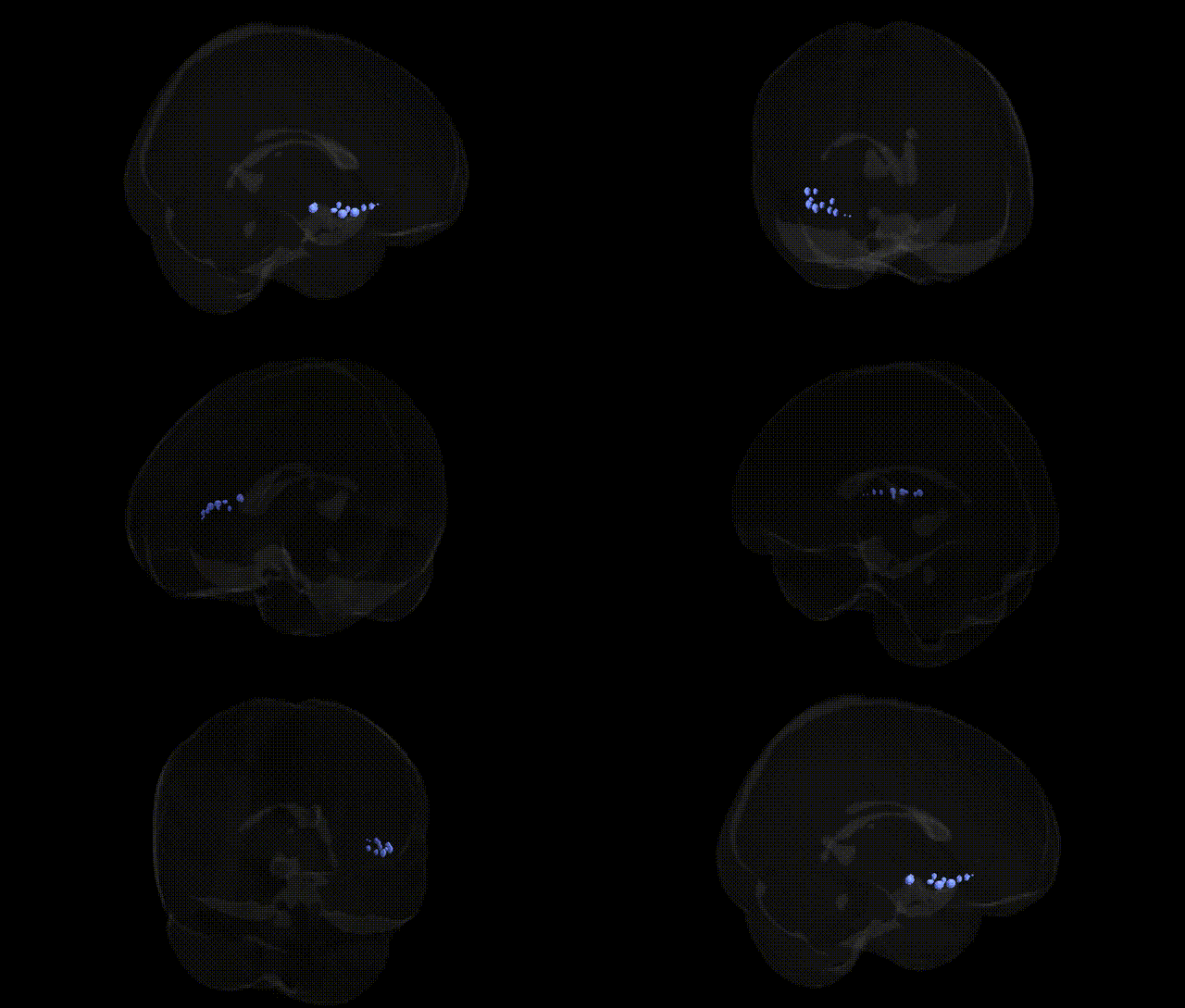
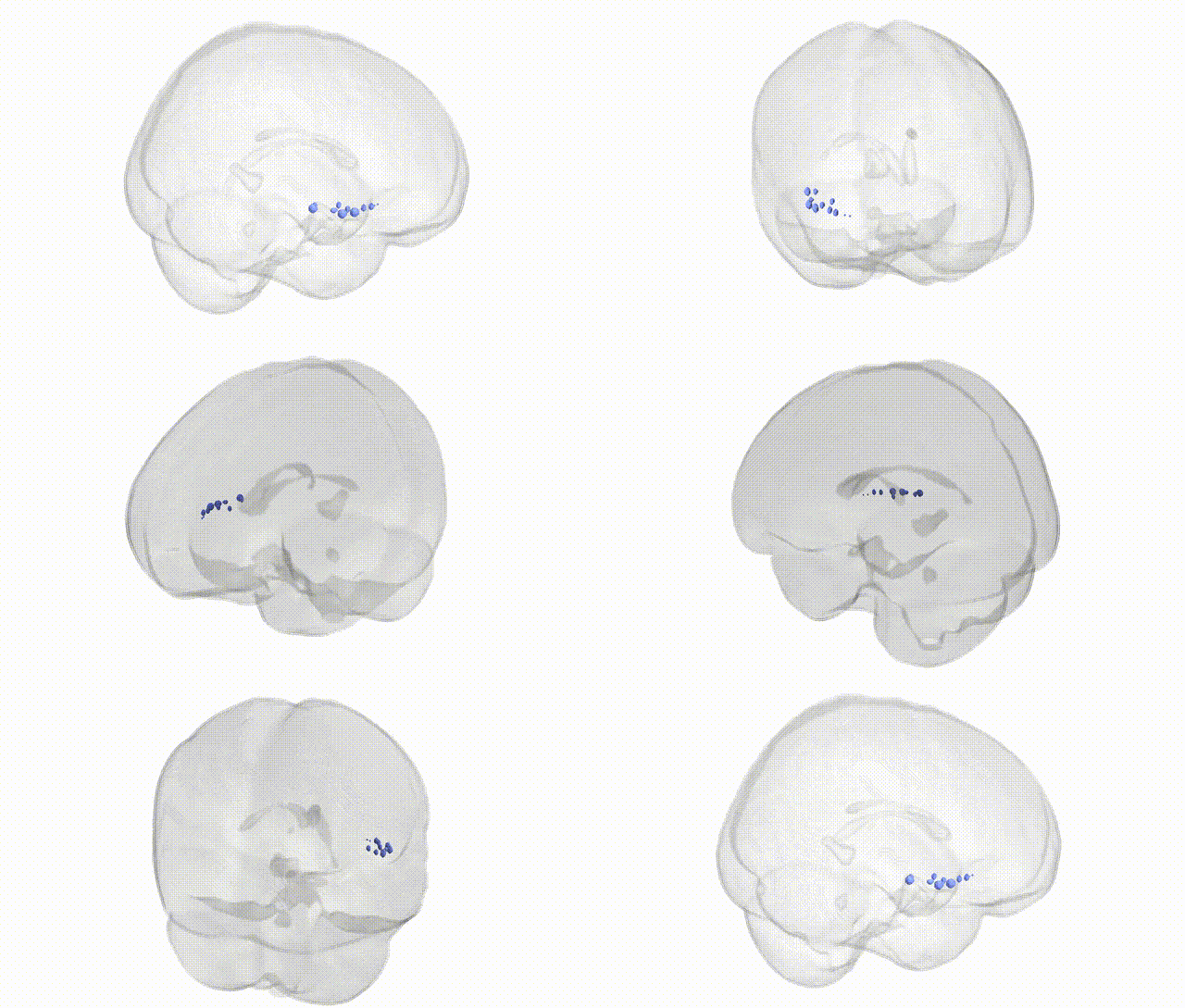
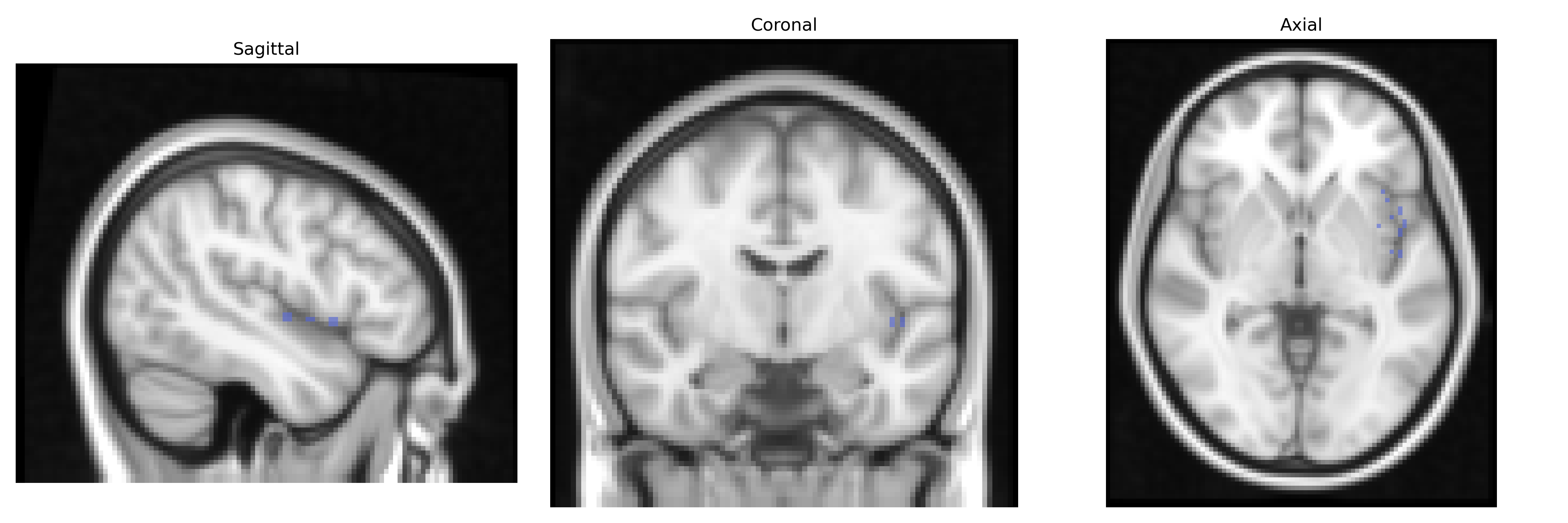
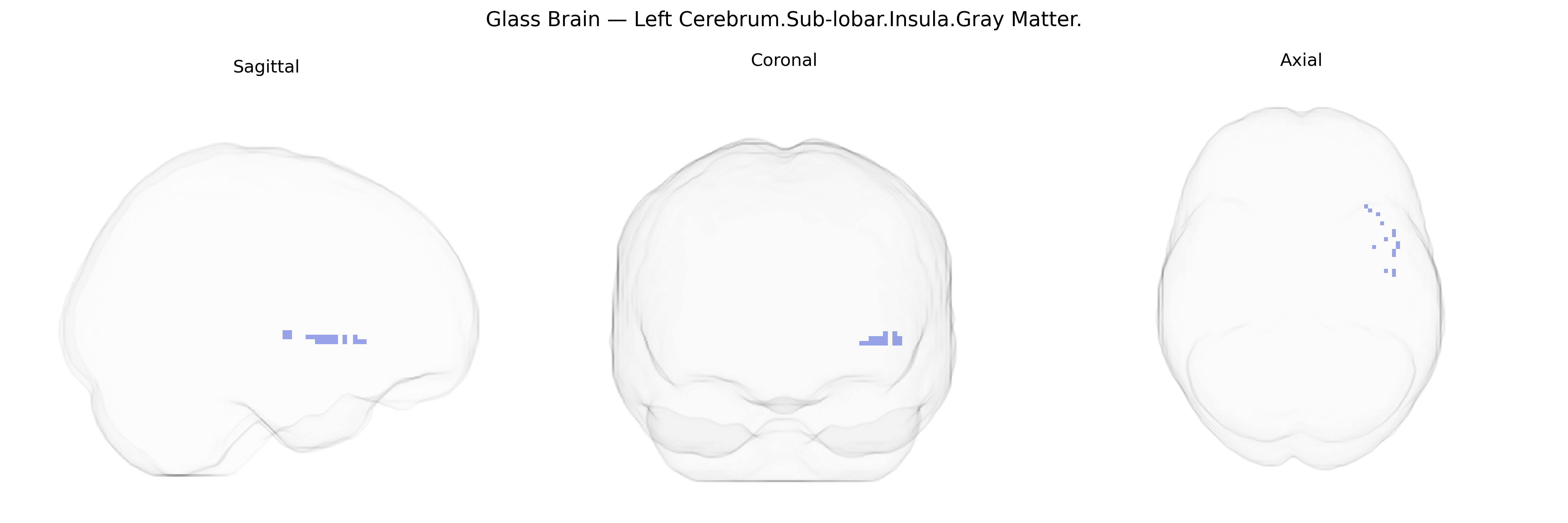
The bilateral Left Cerebrum.Sub-lobar.Insula.Gray Matter corresponds to the cortical gray matter of the insular lobe situated deep within the lateral sulcus, covered by the frontal, parietal, and temporal opercula. The insula integrates multimodal sensory, autonomic, and emotional information, playing key roles in interoception (representation of internal bodily states), pain perception, gustatory processing, visceral regulation, and components of emotional awareness and social cognition. Functionally, it forms part of the salience network, contributing to the detection and integration of behaviorally relevant stimuli and dynamic switching between large-scale brain networks supporting attention and cognition. Hemispheric differences have been reported, with lateralization patterns involving language, affective processing, and autonomic control.
Insular cortex
The bilateral left insular cortex (Talairach “Left Cerebrum.Sub-lobar.Insula.Gray Matter”) has been implicated in multiple genetic and GWAS findings, primarily through imaging-genetics and large-scale neuroimaging consortia such as ENIGMA and UK Biobank. Variants in genes involved in neuronal development, synaptic function, and cortical patterning (including but not limited to CACNA1C, ZNF804A, and common polygenic architectures captured by schizophrenia and bipolar disorder risk scores) have been associated with insular gray matter volume or cortical thickness, and these structural measures often mediate or parallel genetic risk for psychotic and mood disorders. GWAS of brain morphology have identified loci where alleles correlate with insular cortical surface area and volume, some overlapping with regions implicated in pain sensitivity, interoception, and addiction-related traits. Insular structure and function, shaped partly by common genetic variation, has been linked to vulnerability to major depressive disorder, anxiety, substance use (especially nicotine and alcohol dependence), and eating disorders, as well as traits such as neuroticism, risk-taking behavior, and pain perception. These findings suggest that the genetic architecture influencing insular gray matter contributes to broader networks underlying emotional regulation, salience processing, and bodily awareness that are altered across multiple psychiatric and behavioral phenotypes.
Overview generated by GPT-4o (2026).
Region ID: 592
Hemisphere: bilateral
Atlas: Talairach labels 2mm
Full Quality Version: Download MP4
Full Quality Version: Download MP4
Wali Sidiqyar*, Gaurav Rudravaram*, Elyssa M. McMaster, Trent M. Schwartz, Adam M. Saunders, Kurt G. Schilling, Bennett A. Landman "Introducing SPINS: A Shared Public Visualization Library of Neuroanatomical Structures." Medical Imaging with Deep Learning- short paper
This resource is licensed under CC0 1.0 Universal (Public Domain).