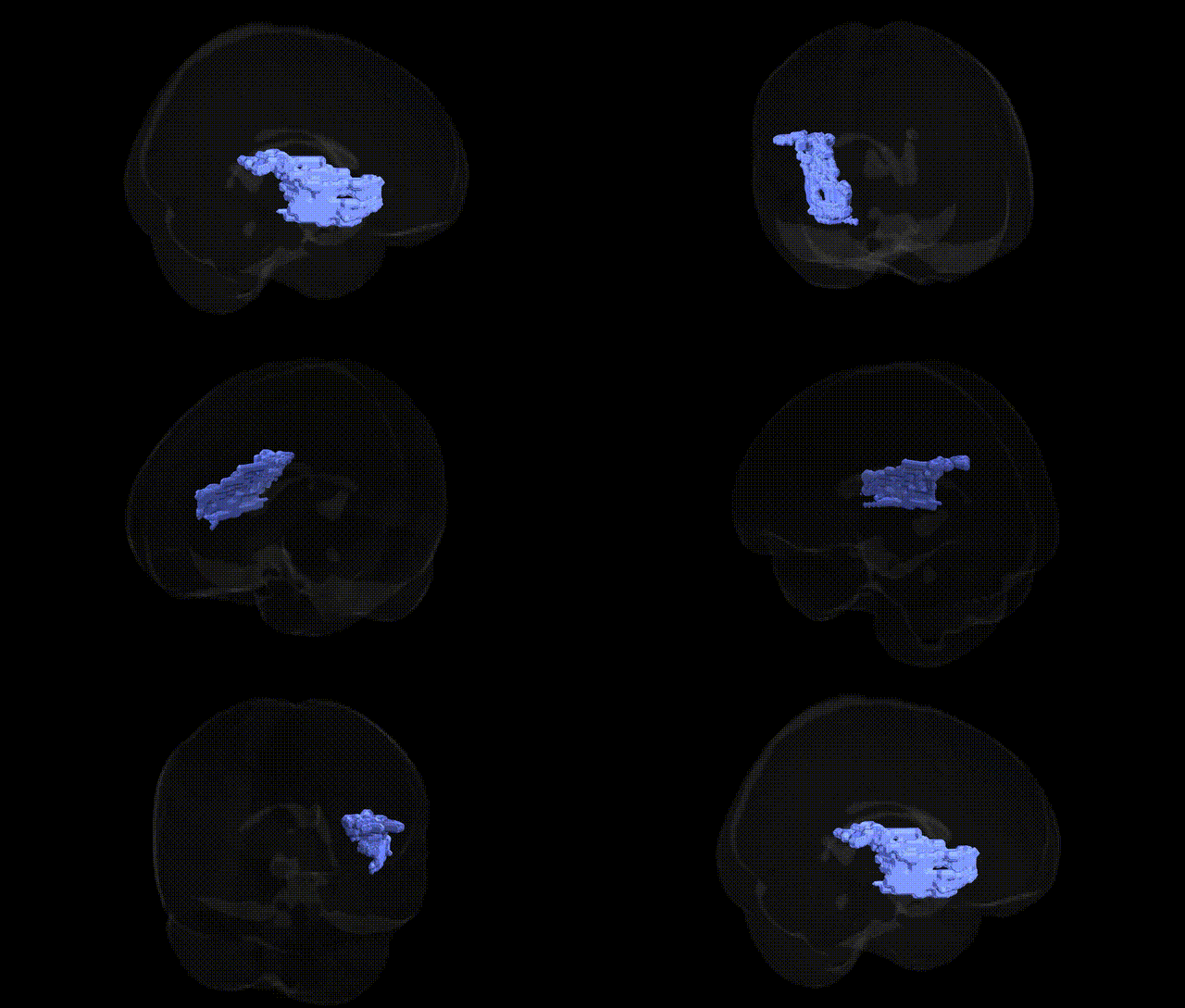
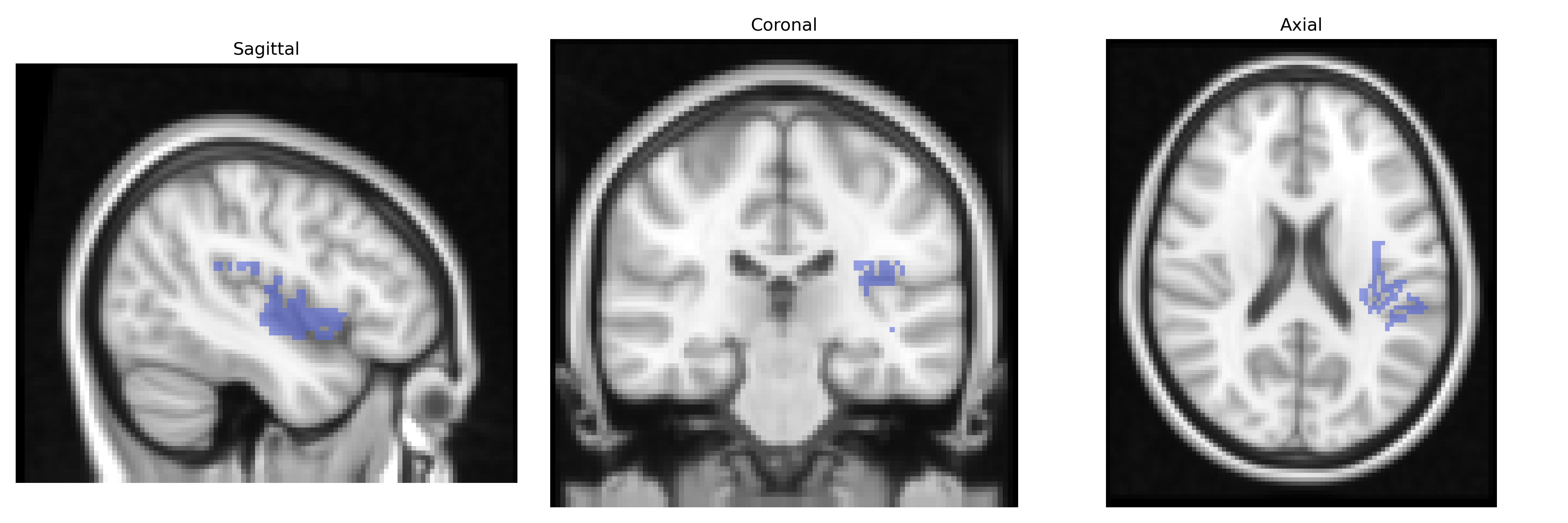
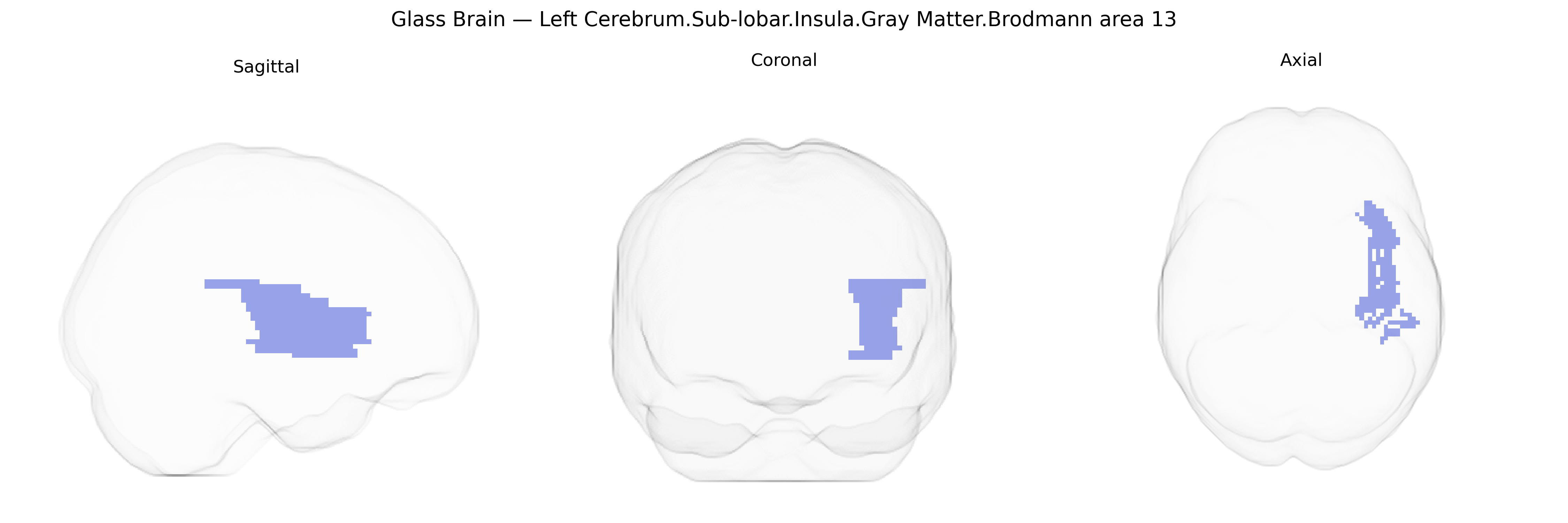
The bilateral Left Cerebrum.Sub-lobar.Insula.Gray Matter.Brodmann area 13 corresponds to a portion of the anterior insular cortex situated deep within the lateral sulcus, covered by the frontal, parietal, and temporal opercula. Brodmann area 13 is implicated in integrating interoceptive, visceral, and emotional information, contributing to autonomic regulation, subjective feeling states, and higher-order processes such as decision-making and social–emotional evaluation. This region receives multimodal inputs from limbic, prefrontal, somatosensory, and gustatory areas, and participates in networks supporting salience detection and cognitive control. In the Talairach 2 mm Atlas, its bilateral designation reflects homologous insular territories in both hemispheres, which may show functional lateralization but share core roles in affective and homeostatic integration. There is no direct link for Brodmann area 13; related article: Insular cortex.
The bilateral left insular cortex (sub-lobar, Brodmann area 13) has been implicated in multiple genetically influenced traits and disorders through imaging genetics and GWAS studies linking structural and functional measures of the insula to specific loci and polygenic profiles. Variants in genes affecting neurodevelopment and synaptic signaling—such as CACNA1C, ZNF804A, and DISC1—have been associated with altered insular gray matter volume and connectivity in schizophrenia and bipolar disorder, while polygenic risk scores for major depressive disorder and anxiety disorders frequently correlate with insula morphology and activity, particularly in networks subserving interoception, emotion, and salience processing. GWAS of brain imaging phenotypes (e.g., UK Biobank and ENIGMA) have identified heritable influences on insular cortical thickness and surface area, with signals in loci involved in cortical patterning (e.g., genes near 14q23 and 15q14 implicated in global cortical structure) and glutamatergic and GABAergic pathways, although many specific associations do not map uniquely to BA13. Genetic risk for addiction-related traits, including alcohol use disorder and nicotine dependence, has been linked to insula volume and reactivity, with variants in dopaminergic and opioid system genes contributing to individual differences in insula-based craving and risk processing. In autism spectrum conditions and social cognition traits, common variants in genes such as CNTNAP2 and those within the oxytocin system have been associated with atypical insular activation and connectivity, reflecting the region’s role in social-emotional integration. Overall, GWAS and candidate-gene imaging studies converge on the insula—though not always specifically BA13—as a genetically modulated hub in circuits underlying affective regulation, interoceptive awareness, salience detection, and vulnerability to psychiatric disorders.
Overview generated by GPT-4o (2026).
Region ID: 447
Hemisphere: bilateral
Atlas: Talairach labels 2mm
Full Quality Version: Download MP4
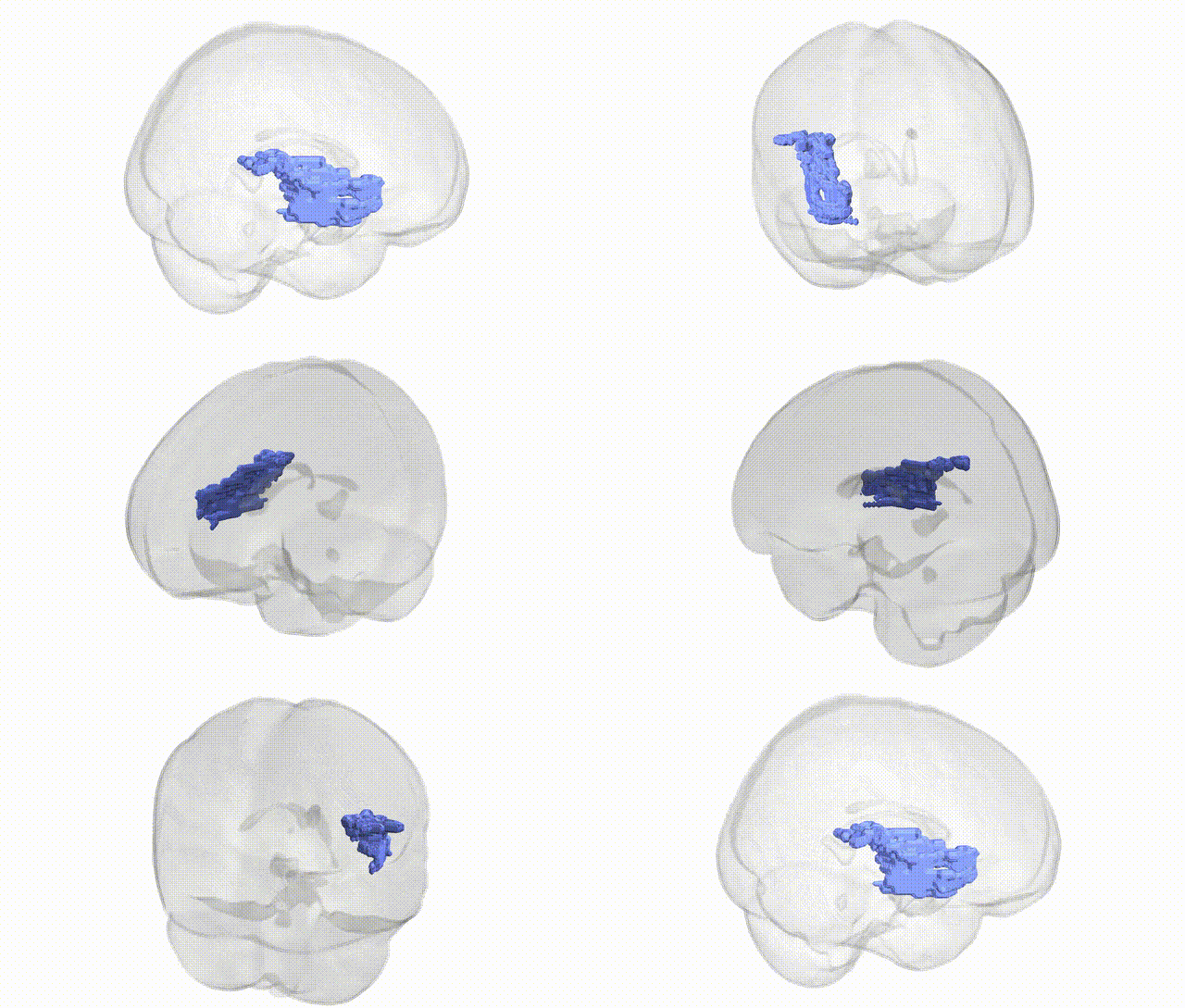
Full Quality Version: Download MP4
Wali Sidiqyar*, Gaurav Rudravaram*, Elyssa M. McMaster, Trent M. Schwartz, Adam M. Saunders, Kurt G. Schilling, Bennett A. Landman "Introducing SPINS: A Shared Public Visualization Library of Neuroanatomical Structures." Medical Imaging with Deep Learning- short paper
This resource is licensed under CC0 1.0 Universal (Public Domain).