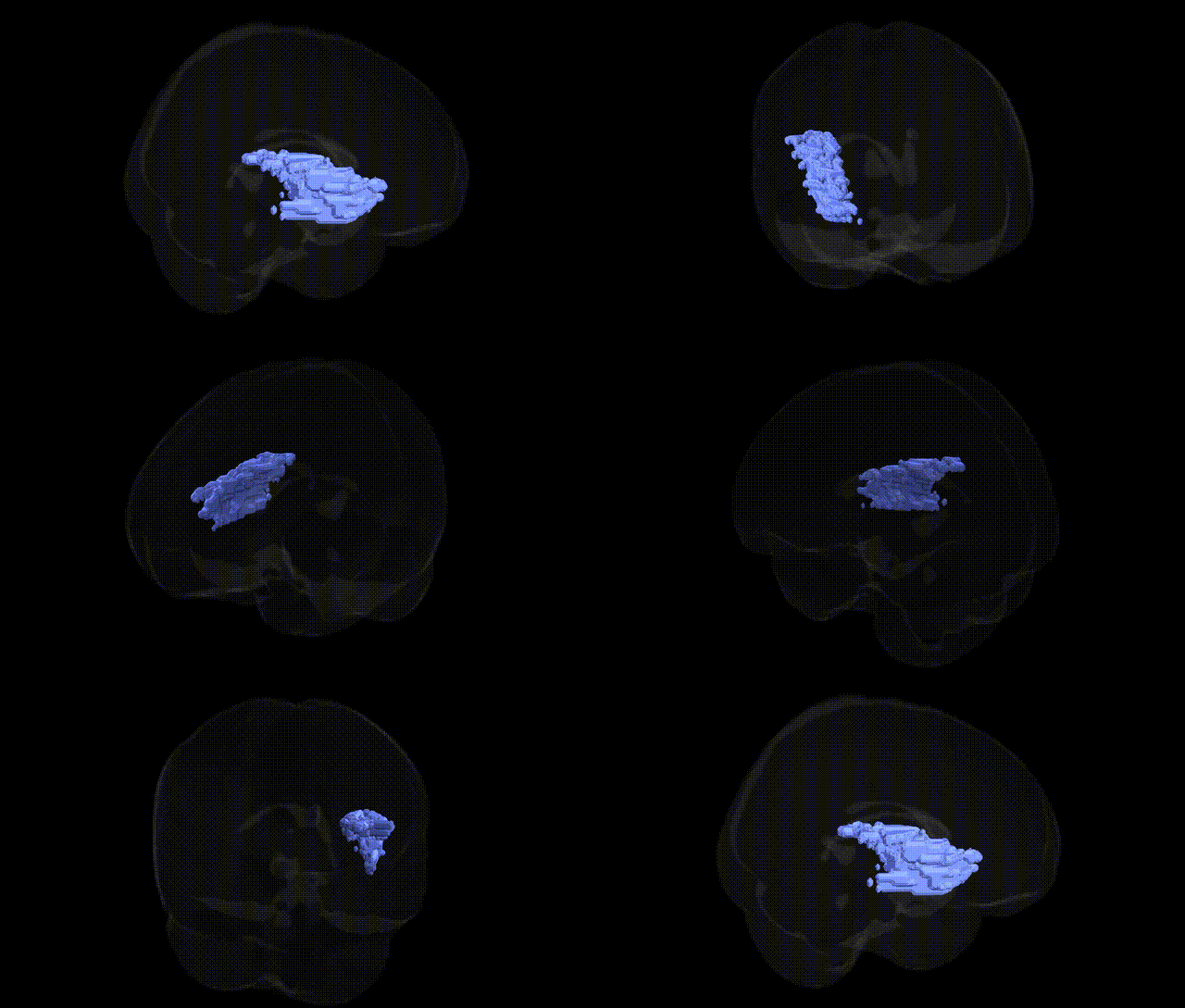
The bilateral Left Cerebrum.Sub-lobar.Insula.White Matter corresponds to subcortical fiber pathways underlying the insular cortex, a multimodal integration hub buried deep within the lateral sulcus. These insular white matter tracts interconnect the insula with frontal, temporal, parietal, and limbic regions, supporting functions such as interoception, autonomic regulation, emotional processing, pain perception, and aspects of cognitive control and salience detection. As part of the sub-lobar compartment, this white matter mediates bidirectional communication between the insular gray matter and distributed cortical and subcortical networks, including connections to the amygdala, basal ganglia, and prefrontal cortex, thus contributing to the integration of internal bodily states with external sensory and affective information. There is no direct link for insular white matter; related cortical region: Insular cortex.
The bilateral left insular white matter, as defined in the Talairach 2 mm atlas, has been implicated in a range of genetic associations primarily via imaging genetics and GWAS of brain structure, connectivity, and psychiatric or neurologic phenotypes. Variants in genes related to synaptic plasticity and neurodevelopment, such as BDNF (e.g., Val66Met), DISC1, and NRG1, have been associated with insular cortical thickness and white matter microstructure, often in the context of schizophrenia, bipolar disorder, and major depressive disorder, where altered insular connectivity is a reproducible finding. Large-scale GWAS of white matter integrity measured by diffusion tensor imaging (DTI), including studies from ENIGMA and UK Biobank, have linked common variants in genes influencing myelination and axon guidance (e.g., loci near genes such as CNTNAP2, neurodevelopmental and oligodendrocyte-related genes) to fractional anisotropy and mean diffusivity within insular-associated tracts, although these findings are typically reported for broader fronto-temporal or association fibers rather than Talairach-specific insular labels. Insular white matter has also shown genetic correlations with traits such as neuroticism, risk for anxiety and mood disorders, and pain sensitivity, consistent with the insula’s role in interoception and affective processing; in some cases, polygenic risk scores for depression, schizophrenia, and autism spectrum disorder have been associated with altered insular structure or connectivity. Additionally, GWAS of stroke and small vessel disease have identified genetic variants that affect white matter hyperintensity burden and microstructural damage involving insular regions among other territories, linking vascular risk loci to insular white matter integrity. Overall, while few studies target the “Left Cerebrum.Sub-lobar.Insula.White Matter” label specifically, convergent genetic evidence from structural, connectivity, and clinical GWAS supports the insular white matter as a genetically influenced hub relevant to psychiatric vulnerability, pain and interoceptive traits, and cerebrovascular pathology.
Overview generated by GPT-4o (2026).
Region ID: 439
Hemisphere: bilateral
Atlas: Talairach labels 2mm
Full Quality Version: Download MP4
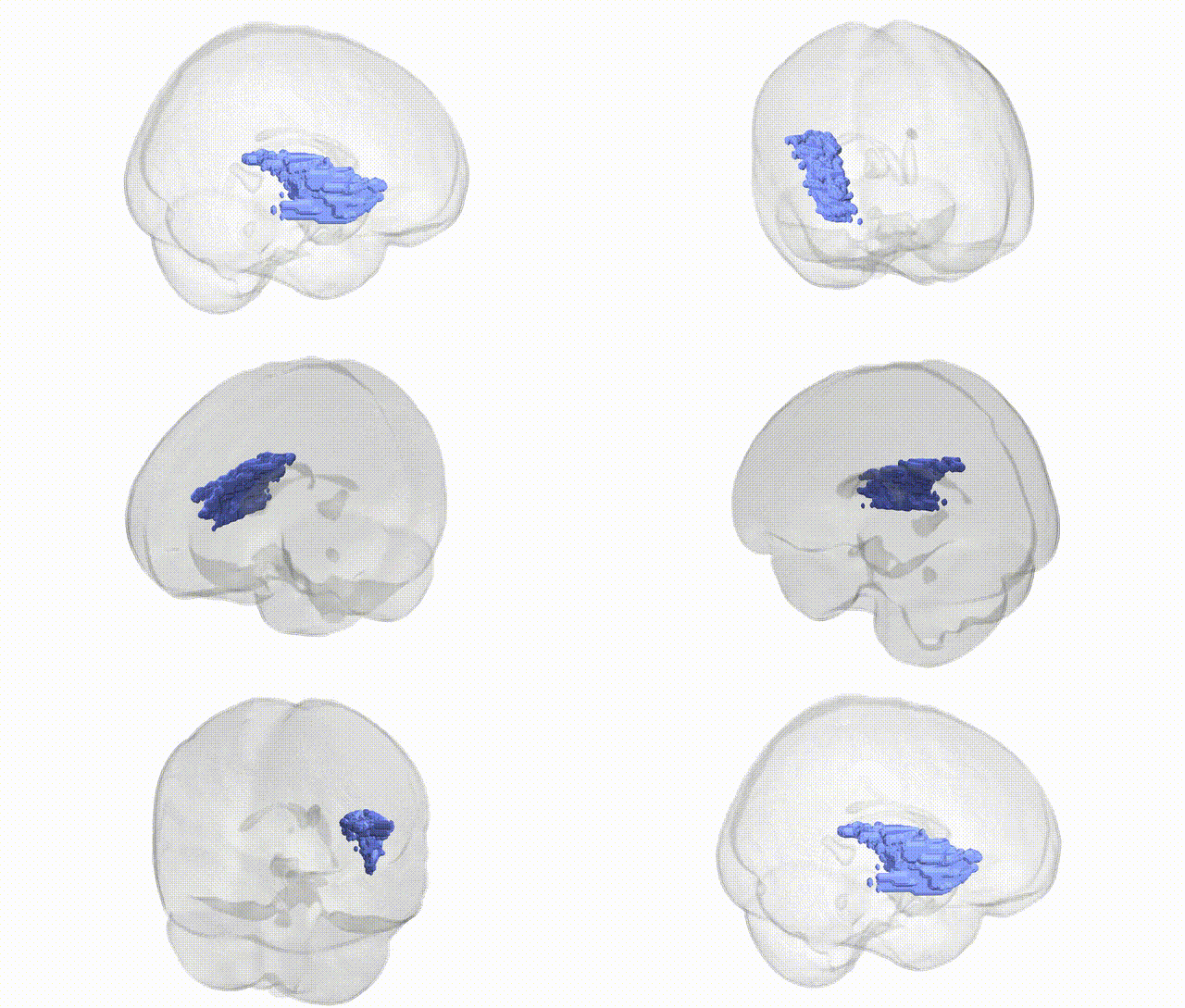
Full Quality Version: Download MP4
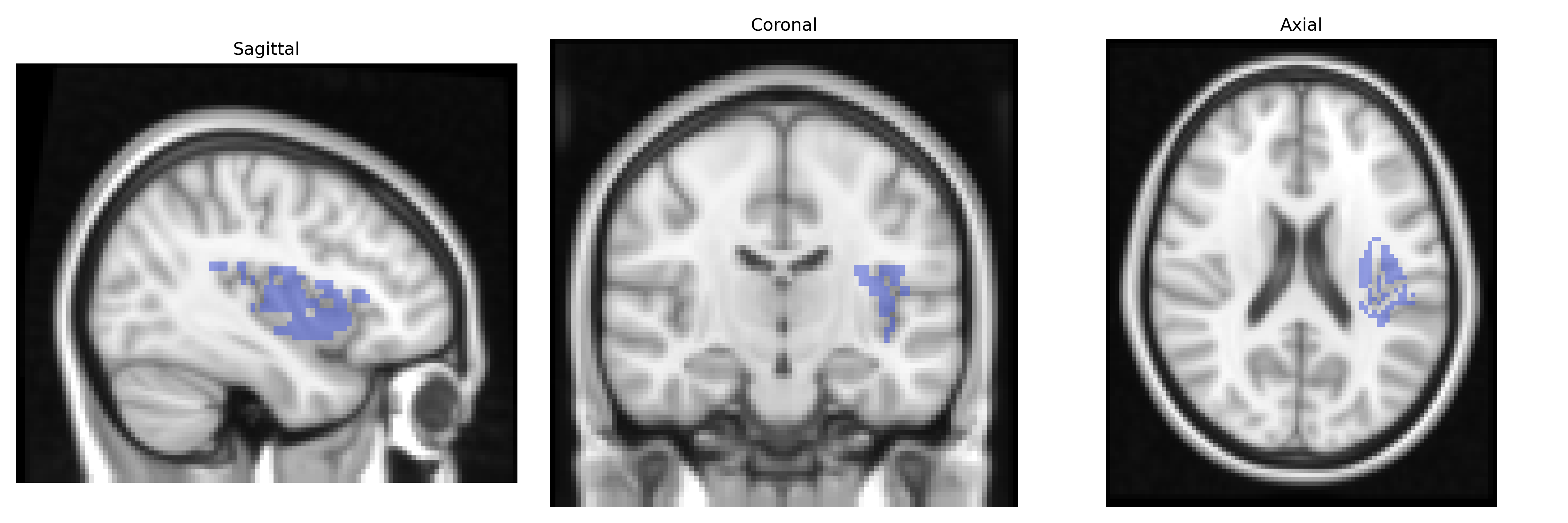
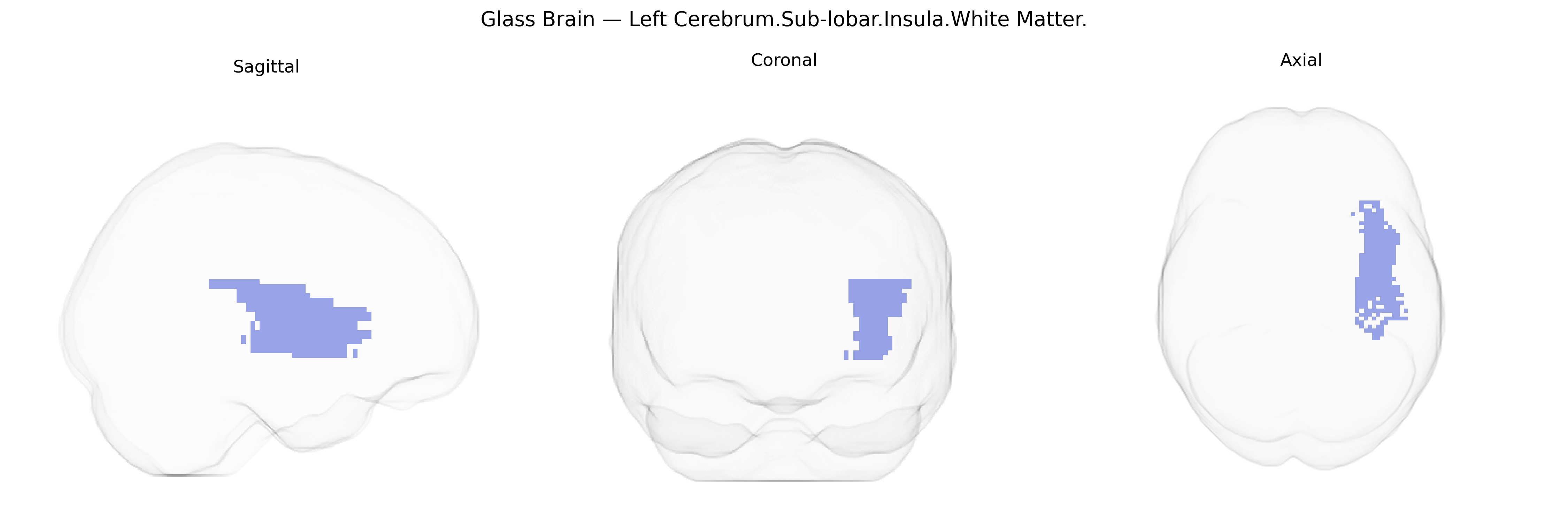
Wali Sidiqyar*, Gaurav Rudravaram*, Elyssa M. McMaster, Trent M. Schwartz, Adam M. Saunders, Kurt G. Schilling, Bennett A. Landman "Introducing SPINS: A Shared Public Visualization Library of Neuroanatomical Structures." Medical Imaging with Deep Learning- short paper
This resource is licensed under CC0 1.0 Universal (Public Domain).