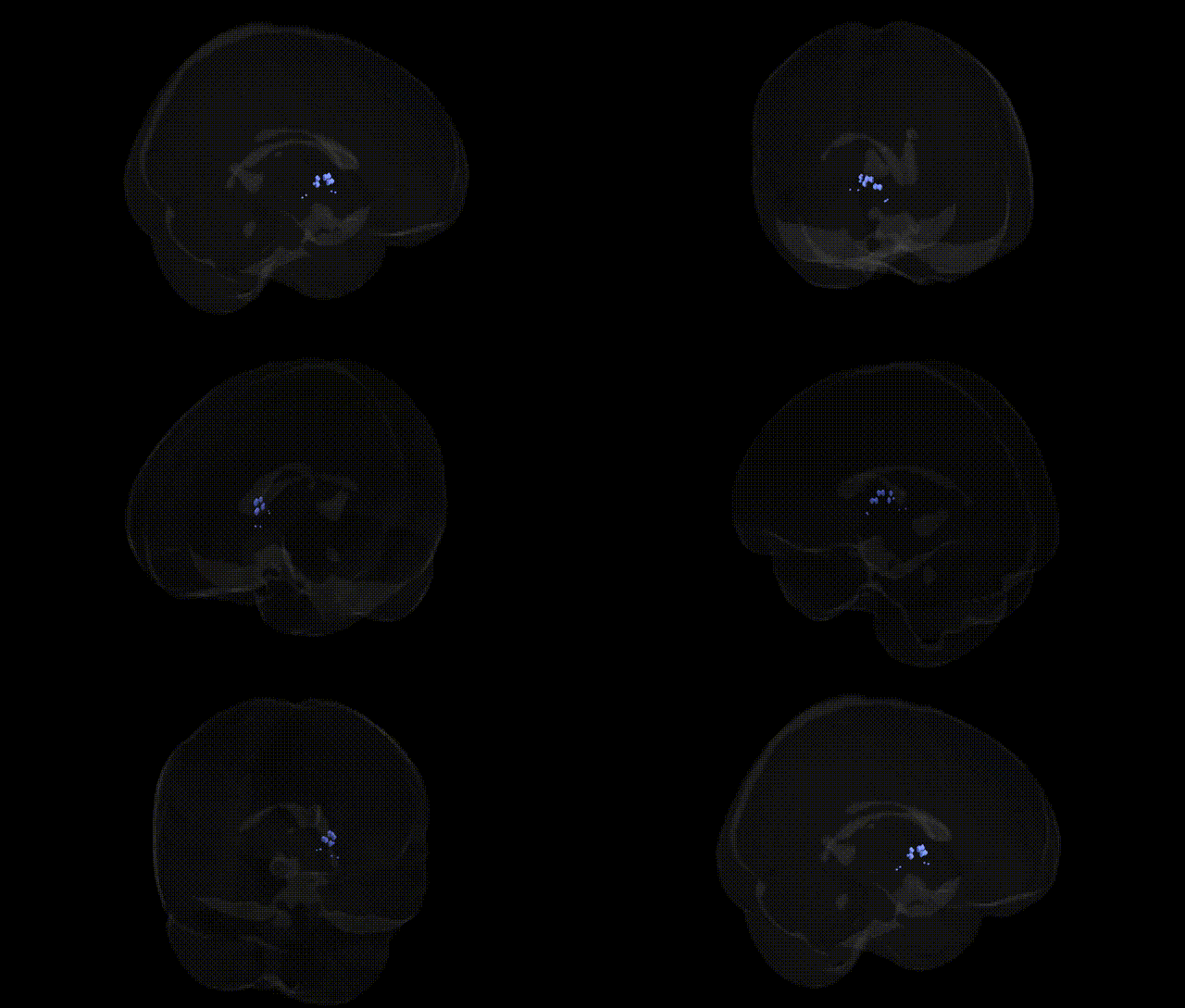
The bilateral Left Cerebrum.Sub-lobar.Lentiform Nucleus.Gray Matter, as defined in the Talairach 2 mm atlas, refers to gray matter within the lentiform nucleus of the basal ganglia located subcortically in the left cerebral hemisphere, encompassing both the putamen and the globus pallidus. This structure plays a key role in motor control, procedural learning, and aspects of cognition and emotion through its extensive connections with the motor, premotor, and prefrontal cortices, as well as with thalamic and brainstem nuclei. Functionally, the lentiform nucleus participates in the modulation of voluntary movement, movement initiation and inhibition, and the refinement of motor patterns, and it is critically involved in cortico-striato-pallido-thalamo-cortical loops. Pathological alterations of this region are implicated in movement disorders such as Parkinson’s disease, dystonia, and Huntington’s disease, as well as in certain neuropsychiatric conditions. There is no direct Wikipedia article for “Lentiform nucleus”; see the closely related structure Putamen.
The lentiform nucleus gray matter (primarily putamen and globus pallidus within the basal ganglia) has been implicated in multiple genetic studies, particularly GWAS of brain structure and neuropsychiatric traits. Large-scale imaging genetics consortia (e.g., ENIGMA, UK Biobank) have identified common variants near genes involved in neurodevelopment, synaptic function, and axonal guidance (such as KIAA0586, DCC, DGKB, and several loci in glutamatergic and dopaminergic pathways) that associate with putamen volume and basal ganglia morphology, which are closely aligned with the Talairach lentiform labels. These structural measures show partial genetic overlap with risk variants for Parkinson’s disease, schizophrenia, bipolar disorder, major depressive disorder, attention-deficit/hyperactivity disorder, obsessive–compulsive disorder, and substance use disorders, consistent with the lentiform nucleus’ role in motor control, habit learning, and reward processing. Polygenic risk scores for psychiatric conditions and addictive behaviors frequently correlate with lentiform and broader striatal volumes, while rare variant and monogenic movement disorder genes (e.g., HTT in Huntington’s disease, ATP1A3, GNB1) produce pronounced basal ganglia abnormalities that encompass the lentiform nucleus. Overall, GWAS and candidate-gene work converge on a view of the lentiform nucleus as a genetically sensitive hub in cortico-striato-thalamo-cortical circuits whose structure and function are modulated by diverse neurodevelopmental and neurodegenerative risk alleles.
Overview generated by GPT-4o (2026).
Region ID: 501
Hemisphere: bilateral
Atlas: Talairach labels 2mm
Full Quality Version: Download MP4
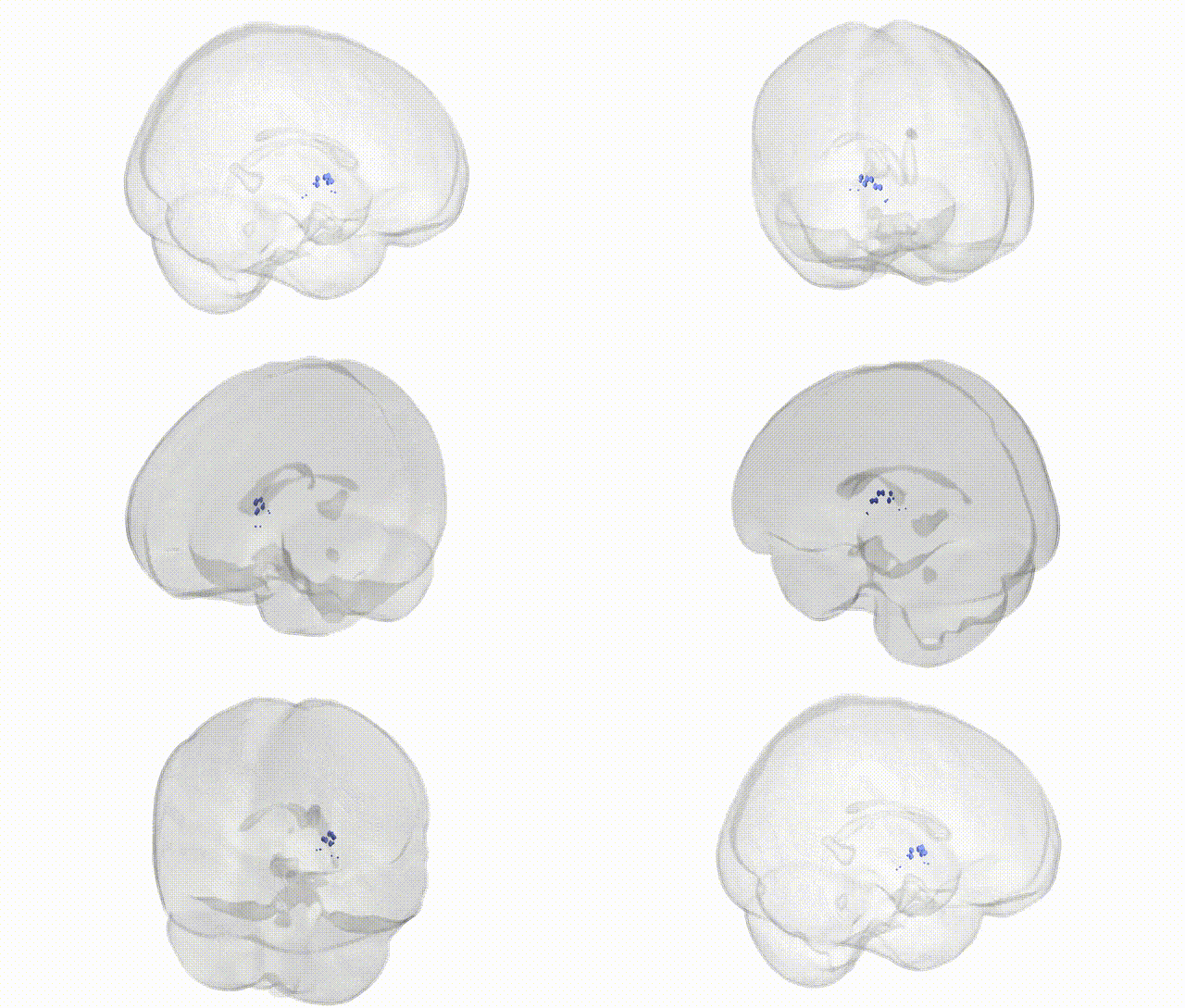
Full Quality Version: Download MP4
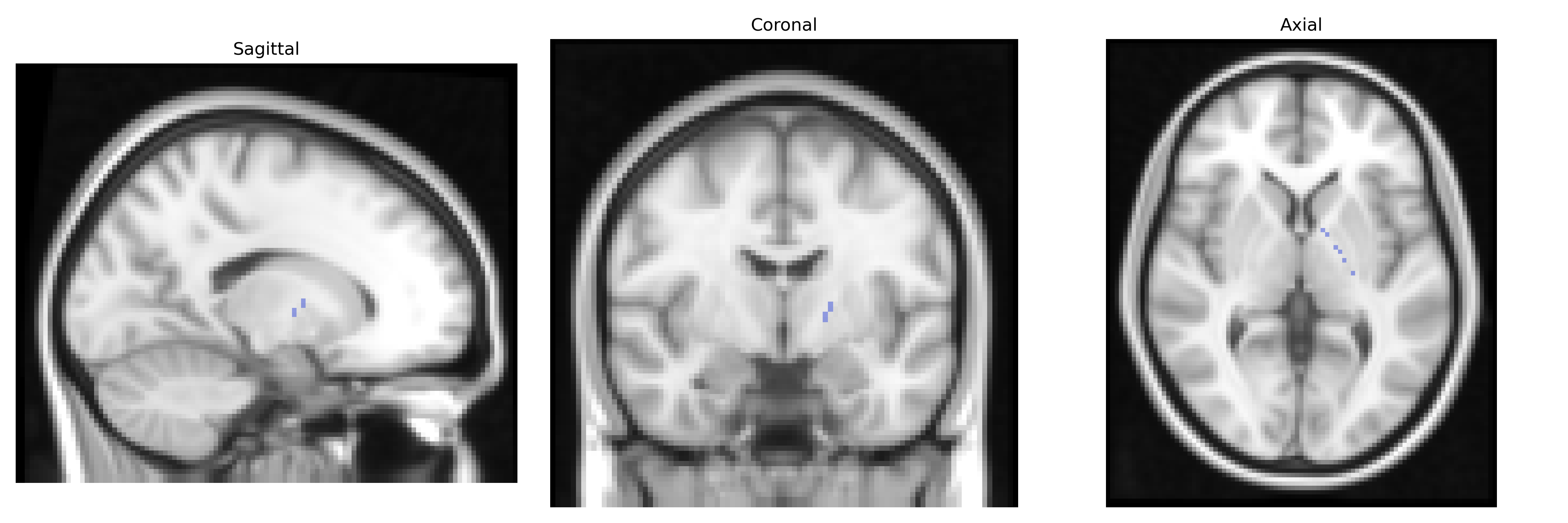
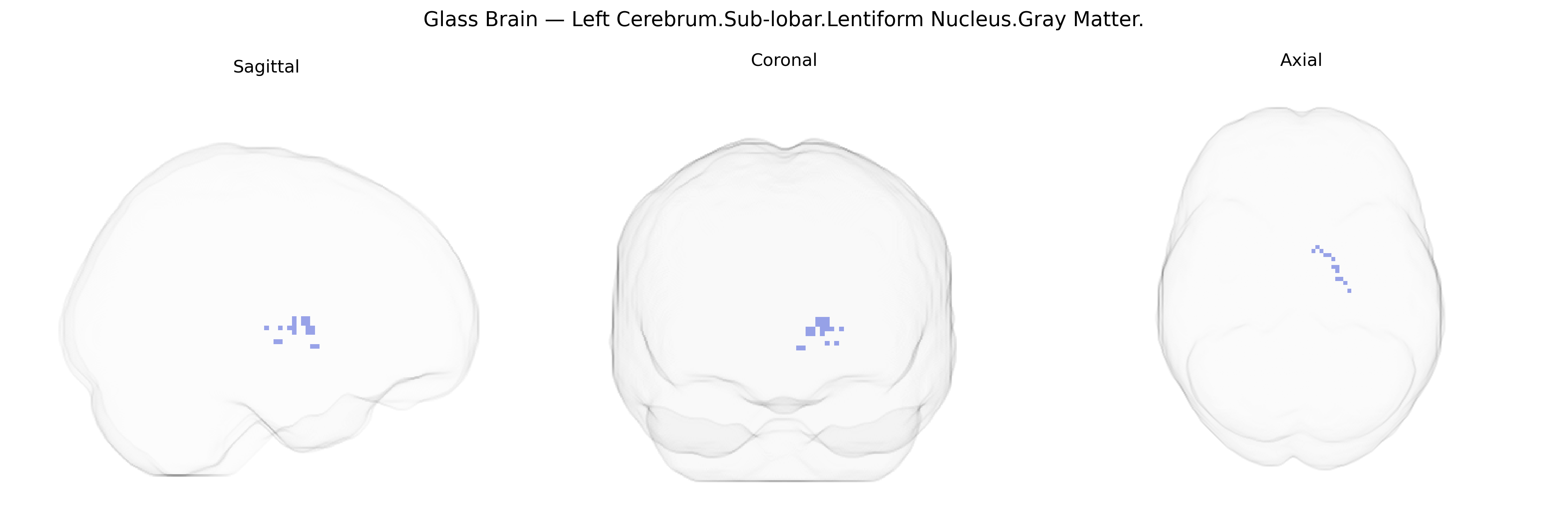
Wali Sidiqyar*, Gaurav Rudravaram*, Elyssa M. McMaster, Trent M. Schwartz, Adam M. Saunders, Kurt G. Schilling, Bennett A. Landman "Introducing SPINS: A Shared Public Visualization Library of Neuroanatomical Structures." Medical Imaging with Deep Learning- short paper
This resource is licensed under CC0 1.0 Universal (Public Domain).