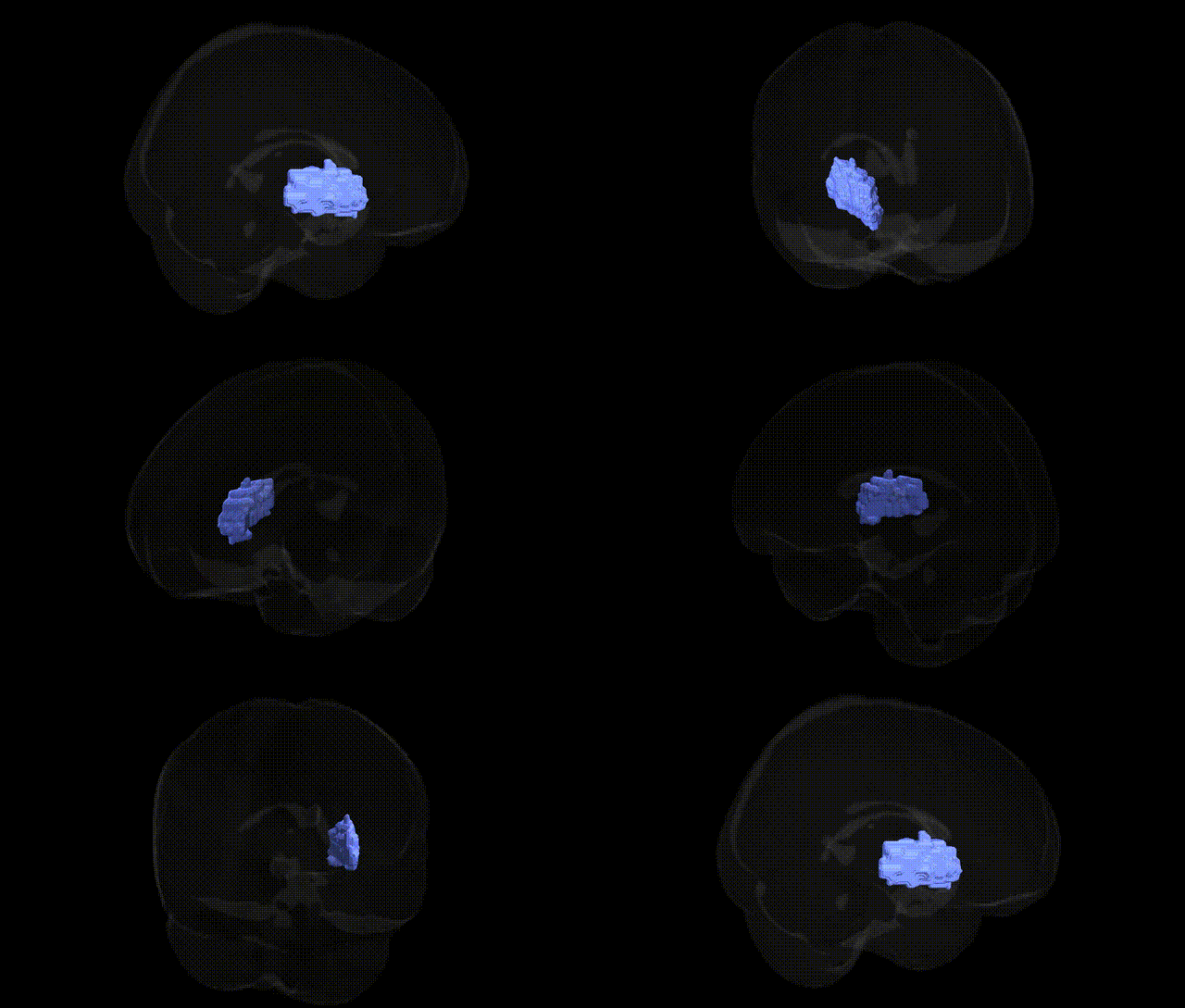
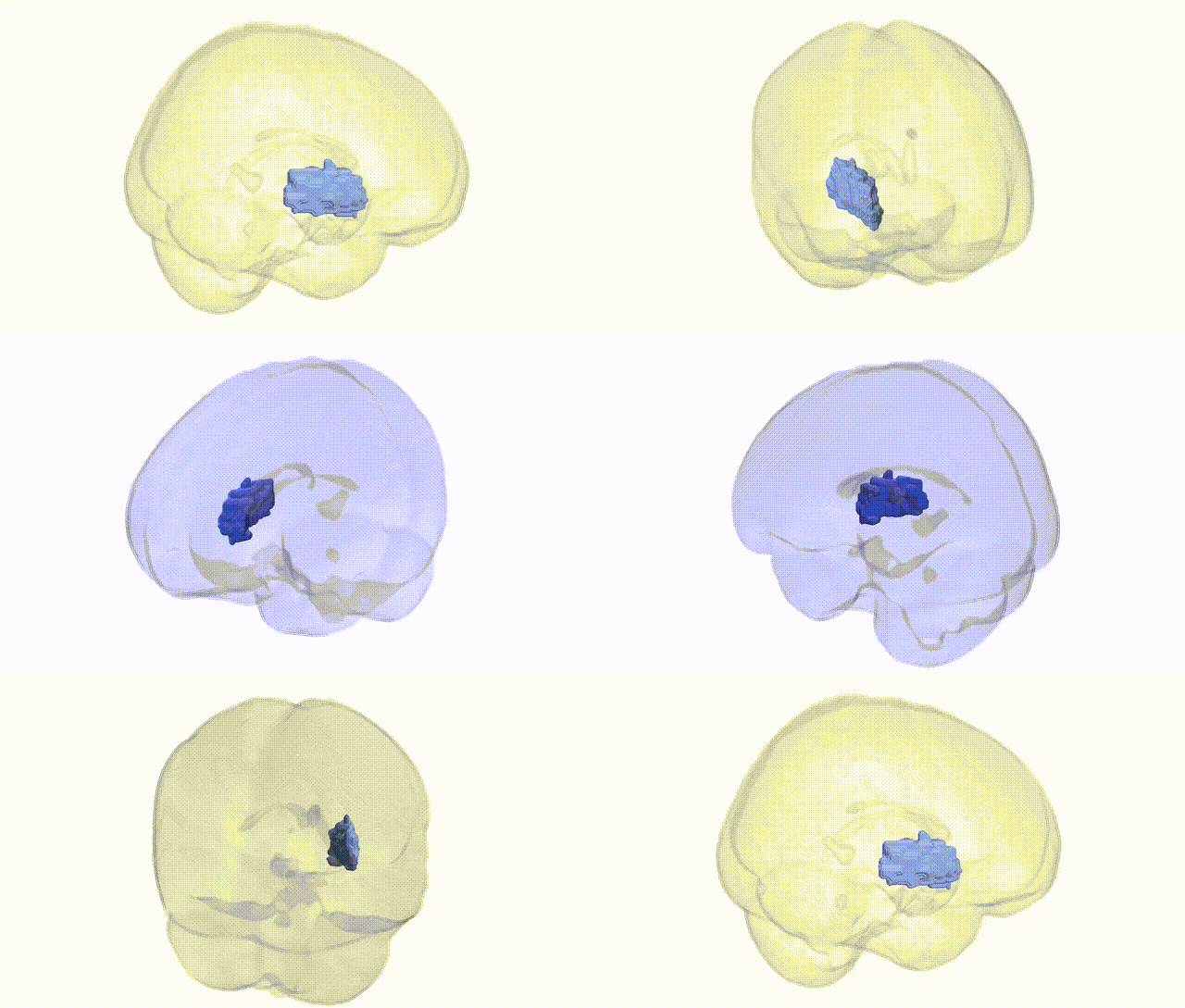
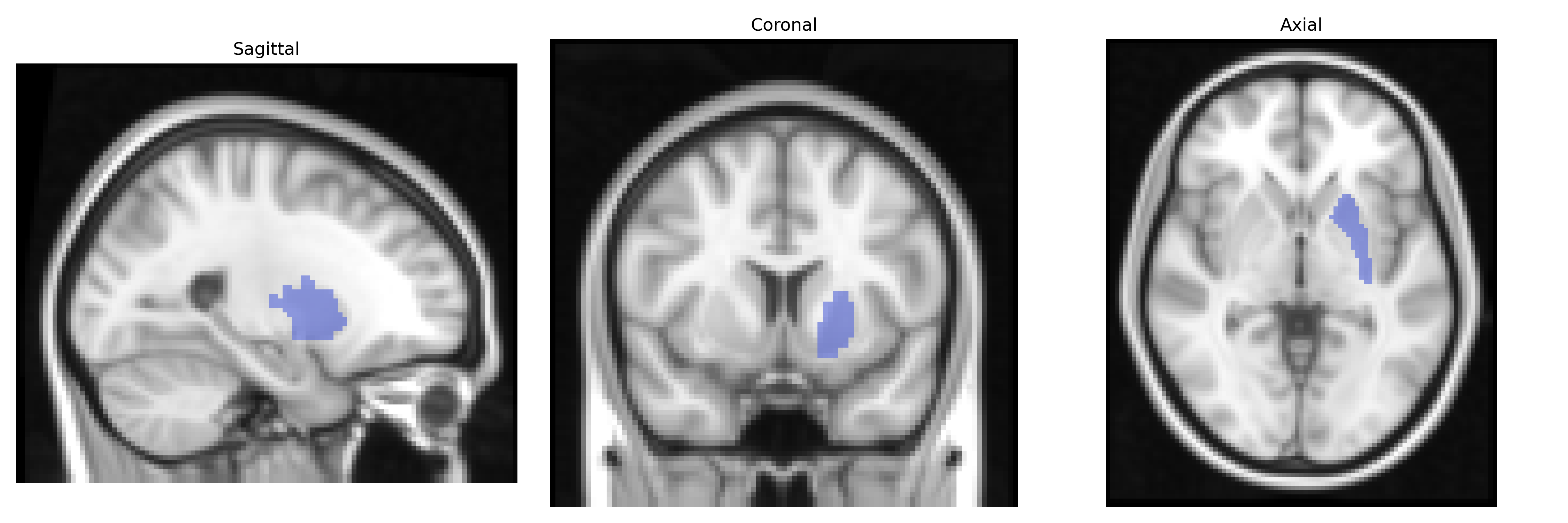
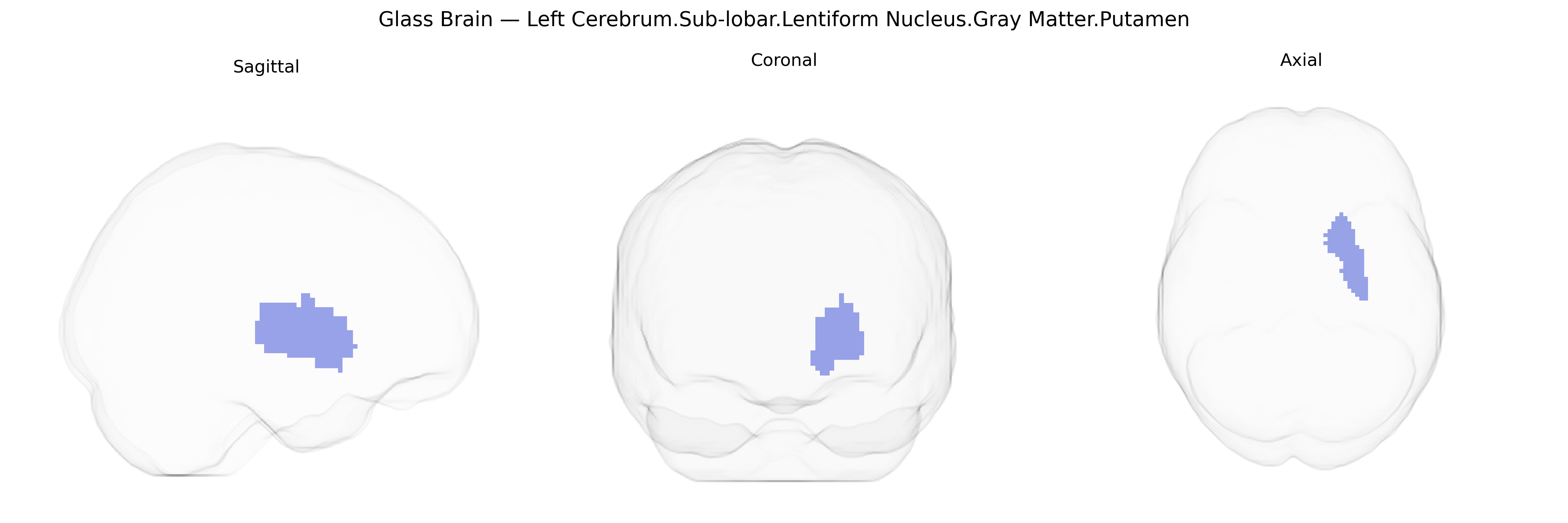
The bilateral Left Cerebrum.Sub-lobar.Lentiform Nucleus.Gray Matter.Putamen corresponds to the left putamen, a major gray-matter component of the lentiform nucleus within the basal ganglia of the sub-lobar telencephalon. Composed primarily of medium spiny GABAergic neurons, the putamen receives dense excitatory glutamatergic input from motor, premotor, and somatosensory cortices, as well as modulatory dopaminergic input from the substantia nigra pars compacta. It plays a key role in motor planning, execution, and habit formation, integrating cortical signals and participating in cortico-striato-pallido-thalamo-cortical loops that fine-tune voluntary movement. Dysfunction of the putamen is implicated in movement disorders such as Parkinson’s disease, Huntington’s disease, and dystonia, as well as in certain cognitive and affective circuits. Putamen
The left putamen, part of the lentiform nucleus in the sub-lobar gray matter of the cerebrum, has been repeatedly implicated in genetic studies of brain structure and neuropsychiatric traits. Large-scale GWAS of subcortical brain volumes (e.g., ENIGMA and UK Biobank) have identified multiple loci influencing putamen volume, including variants near genes such as KNTC1, DCC, SLC39A8, and PLEKHM1, with polygenic architecture overlapping general brain size, cognitive performance, and educational attainment. Putamen-specific volumetric measures show genetic correlations with neurodevelopmental and psychiatric disorders, including schizophrenia, bipolar disorder, major depressive disorder, ADHD, and obsessive–compulsive disorder, and structural changes in the putamen are associated with risk alleles in dopamine-related genes (e.g., DRD2, COMT) and glutamatergic signaling pathways. GWAS of Parkinson’s disease, Huntington’s disease, and dystonia indirectly implicate the putamen via genes involved in basal ganglia function (such as SNCA, LRRK2, HTT, TOR1A), with disease-associated variants often correlating with MRI-derived putamen atrophy or functional alteration. Additional genetic studies link putamen measures to nicotine and alcohol dependence, obesity and BMI, impulsivity, and reward-related traits through variants in dopaminergic and opioid systems (e.g., OPRM1), as well as polygenic scores for addiction and externalizing behavior, underscoring the putamen’s role as a genetically modulated hub for motor control, habit formation, and reinforcement learning.
Overview generated by GPT-4o (2026).
Region ID: 379
Hemisphere: bilateral
Atlas: Talairach labels 2mm
Full Quality Version: Download MP4
Full Quality Version: Download MP4
Wali Sidiqyar*, Gaurav Rudravaram*, Elyssa M. McMaster, Trent M. Schwartz, Adam M. Saunders, Kurt G. Schilling, Bennett A. Landman "Introducing SPINS: A Shared Public Visualization Library of Neuroanatomical Structures." Medical Imaging with Deep Learning- short paper
This resource is licensed under CC0 1.0 Universal (Public Domain).