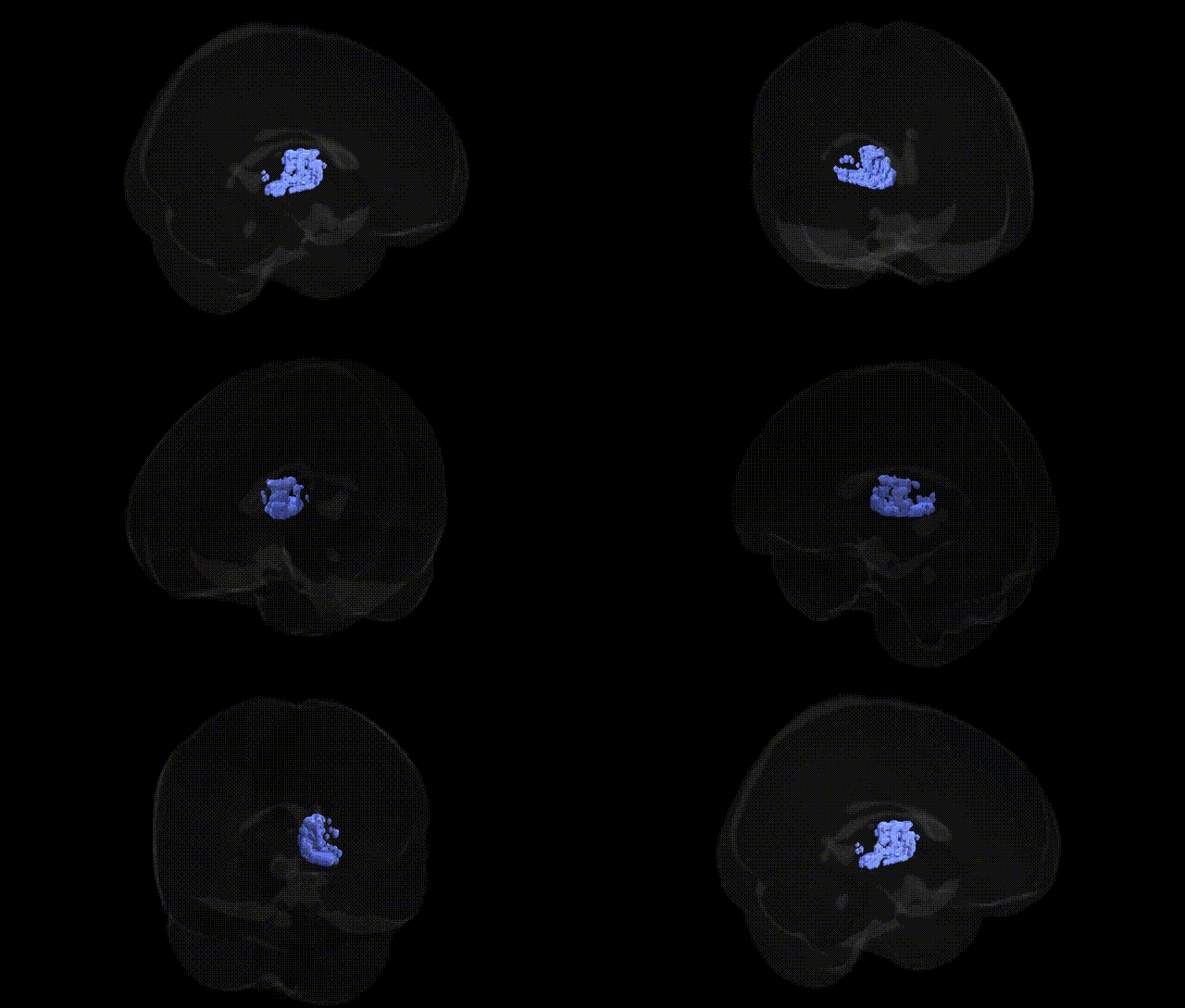
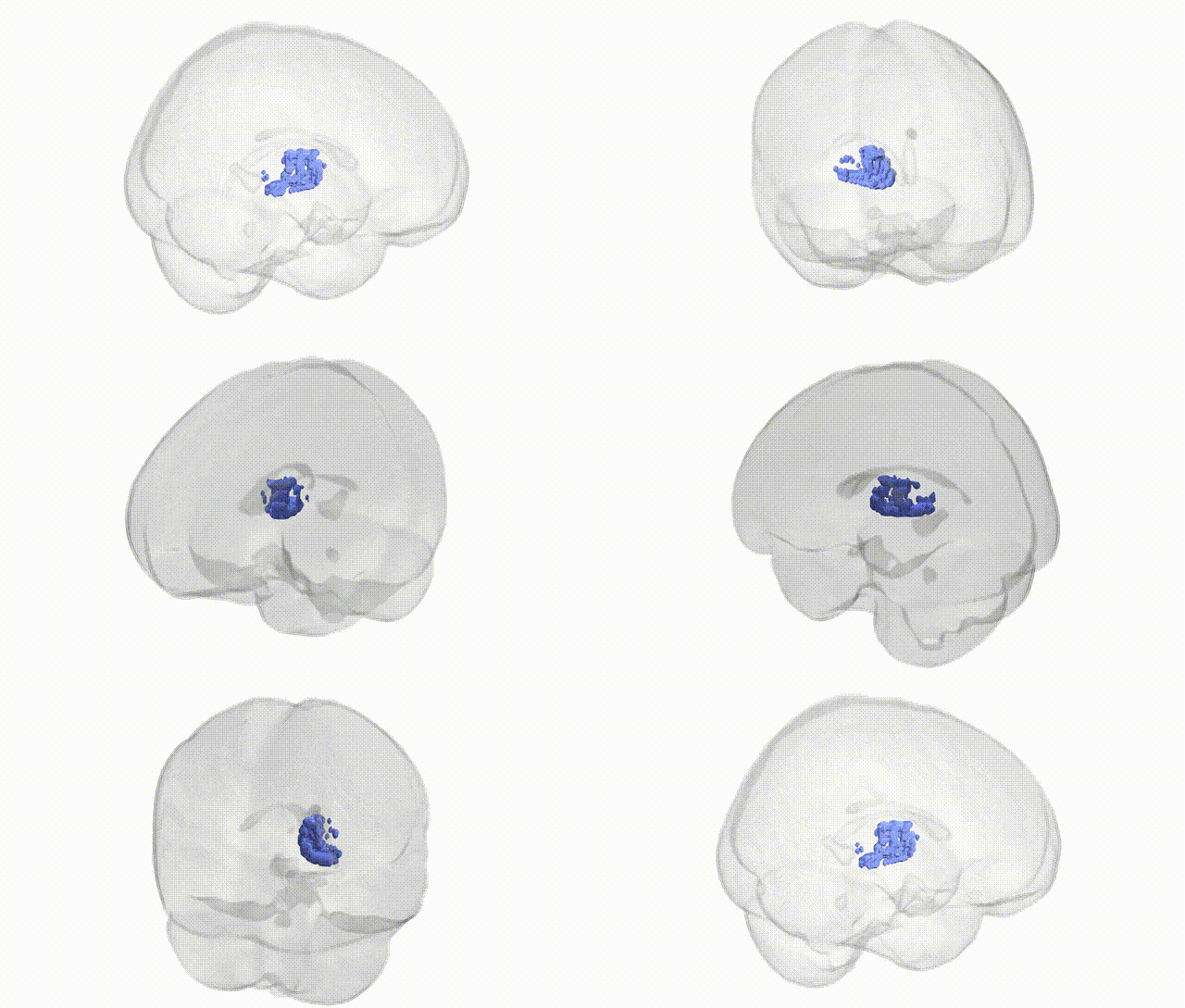
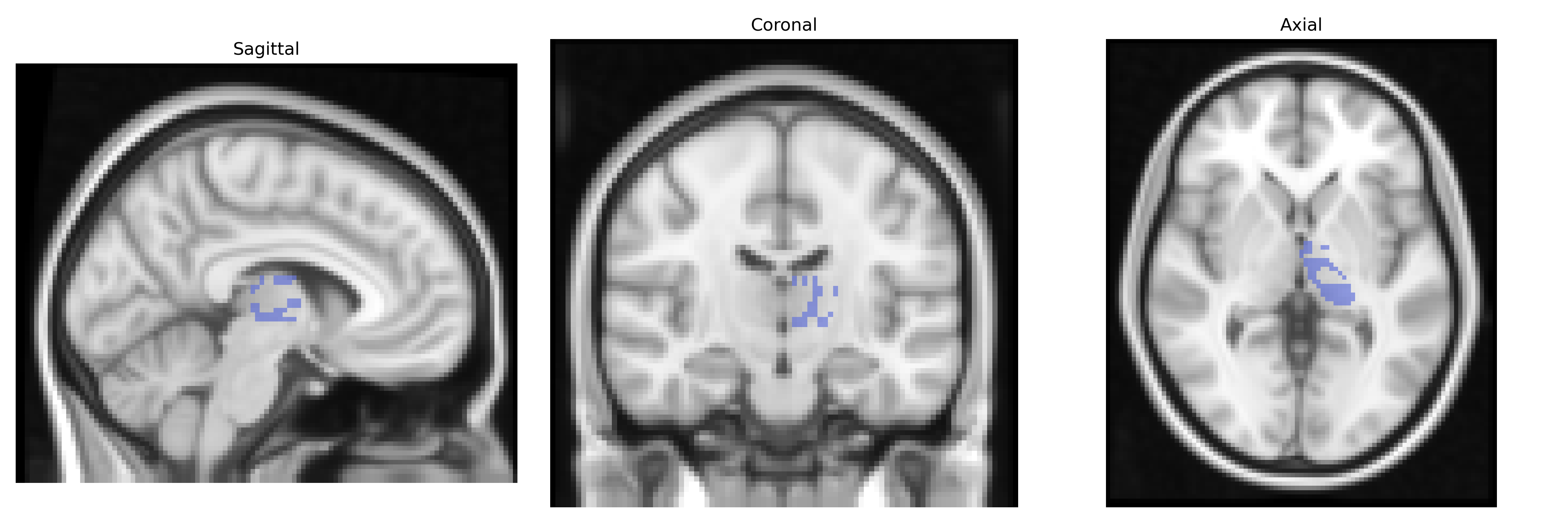
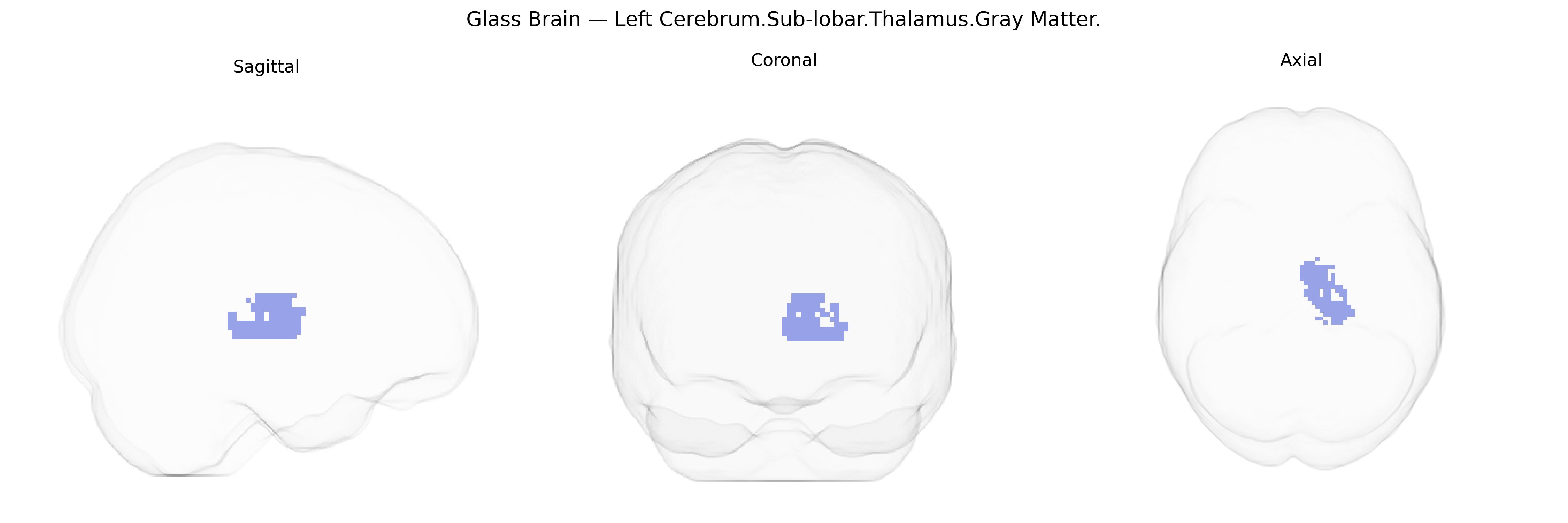
The bilateral Left Cerebrum.Sub-lobar.Thalamus.Gray Matter refers to the paired thalamic nuclei situated deep within the left cerebral hemisphere, forming part of the diencephalon and composed predominantly of gray matter neuronal cell bodies. The thalamus serves as a major relay and integrative hub for sensory (excluding olfaction), motor, and associative information traveling between subcortical structures and the cerebral cortex, with distinct nuclei participating in pathways for somatosensation, vision, audition, motor control, arousal, and higher cognitive functions. Functionally, the left thalamus in particular is critically involved in language processing, verbal memory, and aspects of executive control due to its connections with left-hemisphere cortical association areas. As a sub-lobar structure, it lies medial to the basal ganglia and lateral ventricles, and its integrity is essential for normal consciousness, attention, and coordinated cortical activity.
Thalamus
The bilateral left thalamus gray matter (Talairach 2 mm Atlas, sub-lobar region) is a central relay structure whose volume, microstructure, and functional connectivity show substantial heritability and have been repeatedly implicated in genome-wide association studies (GWAS). Large neuroimaging genetics consortia (e.g., ENIGMA, UK Biobank) have identified common variants in genes involved in neurodevelopment, synaptic transmission, and axonal guidance—such as those near DLG2, CACNA1C, GRIN2A, and SLC6A4—that correlate with thalamic volume or integrity. Thalamic morphology has been genetically associated with multiple neuropsychiatric and neurologic disorders, including schizophrenia, bipolar disorder, major depressive disorder, ADHD, and epilepsy, where risk alleles often converge on glutamatergic and GABAergic signaling pathways that influence thalamocortical circuits. GWAS of cognitive traits (general intelligence, processing speed, working memory) and sleep-related phenotypes (insomnia, chronotype) have also linked thalamic structure and function to variants in genes regulating synaptic plasticity and circadian rhythms. Additionally, polygenic risk scores for psychiatric disorders and neurodegeneration (e.g., Alzheimer’s disease) show associations with thalamic volume and connectivity, suggesting that genetic architectures underlying these conditions partly act through thalamic gray matter organization.
Overview generated by GPT-4o (2026).
Region ID: 529
Hemisphere: bilateral
Atlas: Talairach labels 2mm
Full Quality Version: Download MP4
Full Quality Version: Download MP4
Wali Sidiqyar*, Gaurav Rudravaram*, Elyssa M. McMaster, Trent M. Schwartz, Adam M. Saunders, Kurt G. Schilling, Bennett A. Landman "Introducing SPINS: A Shared Public Visualization Library of Neuroanatomical Structures." Medical Imaging with Deep Learning- short paper
This resource is licensed under CC0 1.0 Universal (Public Domain).