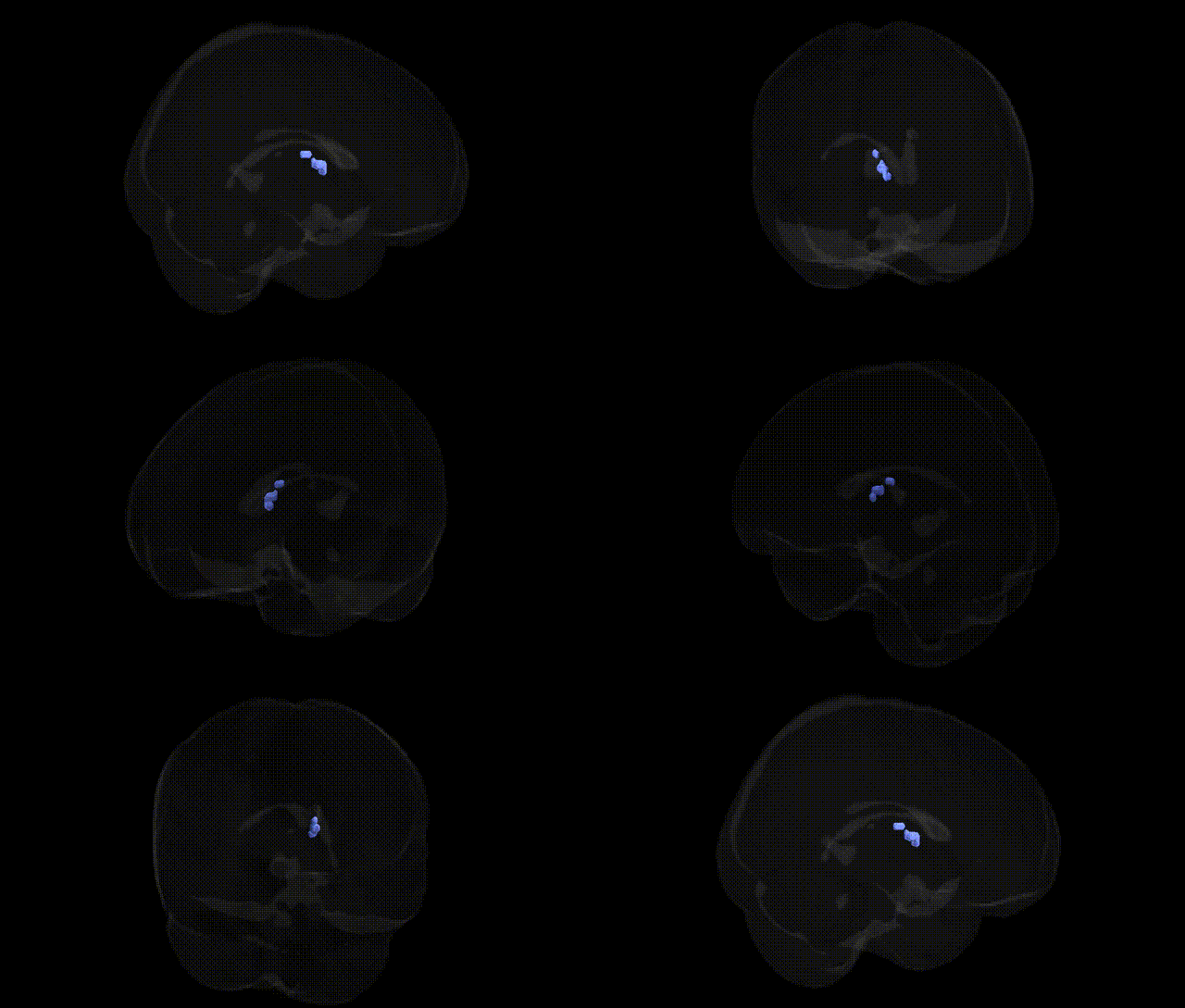
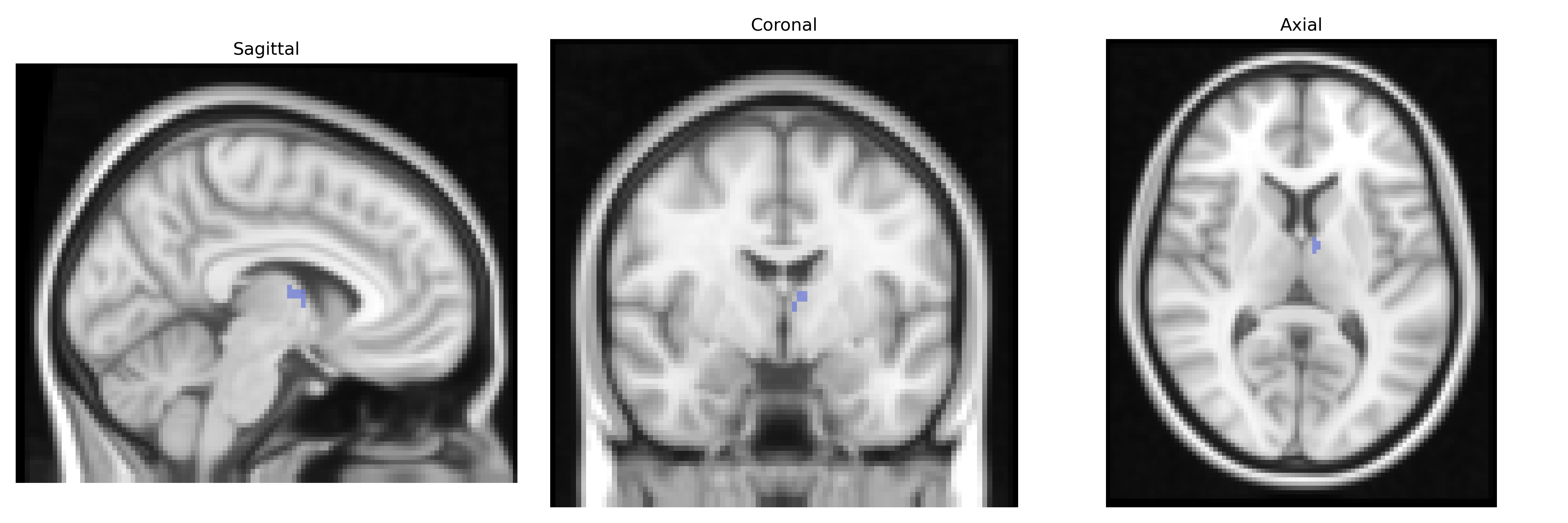
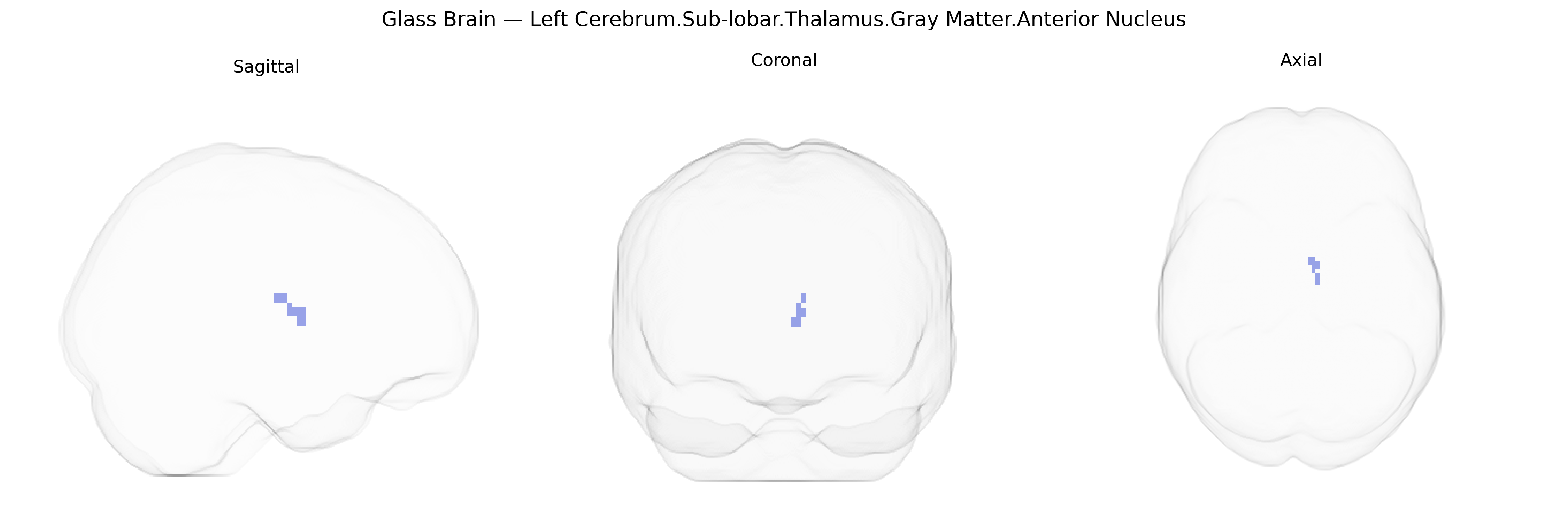
The bilateral Left Cerebrum.Sub-lobar.Thalamus.Gray Matter.Anterior Nucleus corresponds to the anterior nucleus of the thalamus, a key component of the limbic thalamic nuclei situated within the sub-lobar gray matter of the left cerebral hemisphere. This nucleus receives major input from the mammillary bodies via the mammillothalamic tract and projects predominantly to the cingulate gyrus, forming an essential node in the Papez circuit involved in memory processing and emotional regulation. Functionally, it contributes to episodic memory, spatial navigation, and affective behaviors, and its disruption has been implicated in amnestic syndromes and certain neuropsychiatric conditions. There is no direct link; see the related structure Thalamus.
The anterior nuclei of the thalamus, part of the sub-lobar gray matter in the left cerebrum (Talairach labels 2 mm Atlas), are strongly implicated in memory, spatial navigation, and limbic circuitry, and genetic studies have linked variation in this region to multiple traits and disorders. Large-scale brain imaging GWAS have identified associations between thalamic volume, including anterior nuclei, and common variants in genes involved in neurodevelopment, synaptic function, and cell adhesion (e.g., variants in genes near EPHA1, TENM4, SLC39A8, and MAPT), as well as polygenic influences from schizophrenia, bipolar disorder, and major depressive disorder risk loci. GWAS of thalamic structure and connectivity have also implicated genes involved in glutamatergic and GABAergic signaling and cortical–subcortical circuit formation, supporting a genetic overlap with disorders such as schizophrenia, autism spectrum disorder, and ADHD, where thalamic abnormalities are frequently reported. Familial and candidate-gene studies of epilepsy, particularly limbic and temporal lobe epilepsy, have highlighted the anterior thalamic nuclei within seizure networks, with neuromodulation trials targeting these nuclei informed by genetic evidence of network-level vulnerability rather than single-gene effects. In Alzheimer’s disease and other dementias, risk alleles in APOE and genes involved in tau and amyloid processing have been associated with structural and functional changes across limbic circuits, including anterior thalamic nuclei, in imaging genetics analyses. Overall, the bilateral anterior thalamic nuclei emerge in genetic studies as a key hub where polygenic influences on cognition, memory, mood regulation, and psychosis converge, with structural and functional measures of this region serving as intermediate phenotypes linking common genetic variation to neuropsychiatric and neurodegenerative disease risk.
Overview generated by GPT-4o (2026).
Region ID: 686
Hemisphere: bilateral
Atlas: Talairach labels 2mm
Full Quality Version: Download MP4
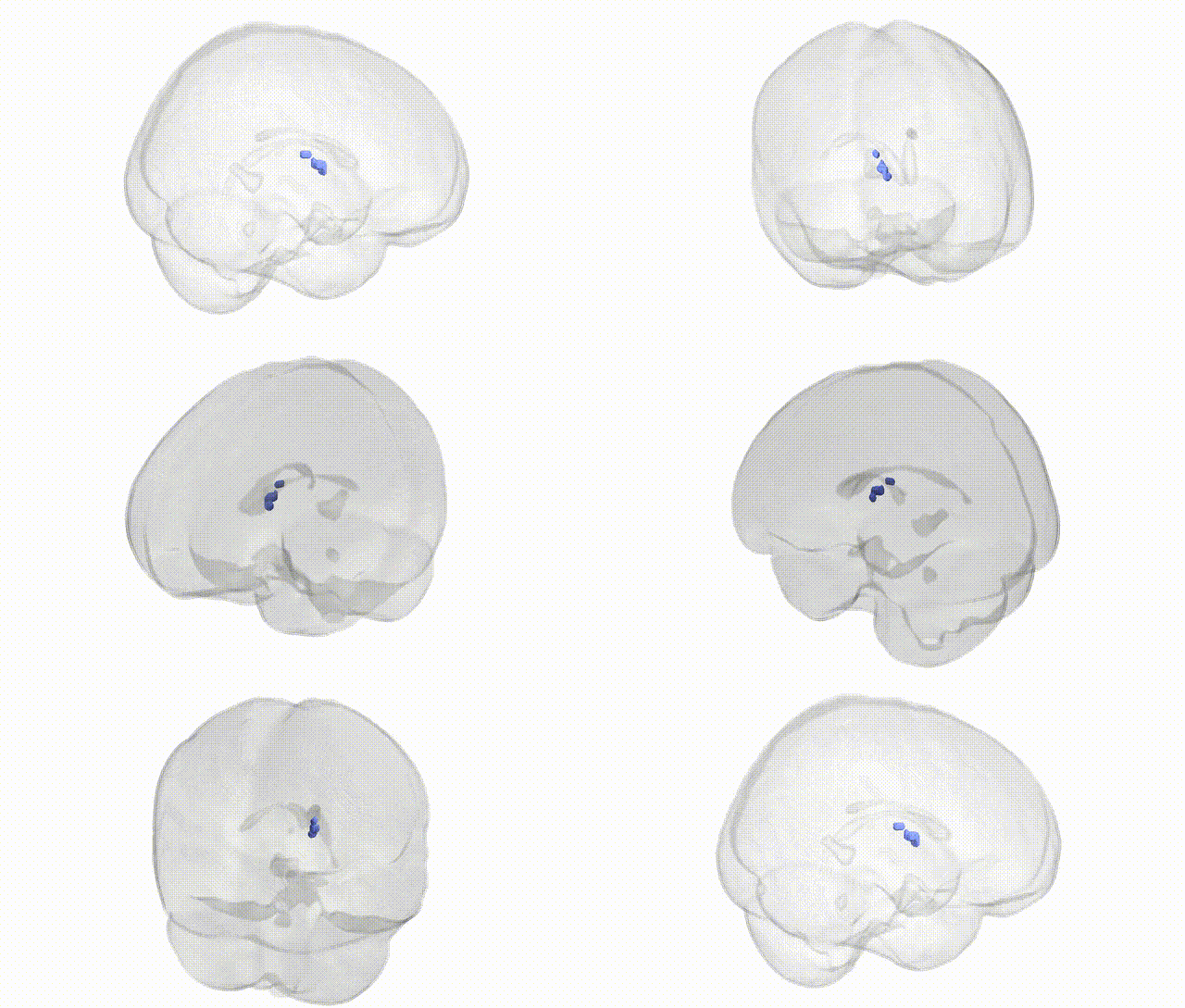
Full Quality Version: Download MP4
Wali Sidiqyar*, Gaurav Rudravaram*, Elyssa M. McMaster, Trent M. Schwartz, Adam M. Saunders, Kurt G. Schilling, Bennett A. Landman "Introducing SPINS: A Shared Public Visualization Library of Neuroanatomical Structures." Medical Imaging with Deep Learning- short paper
This resource is licensed under CC0 1.0 Universal (Public Domain).