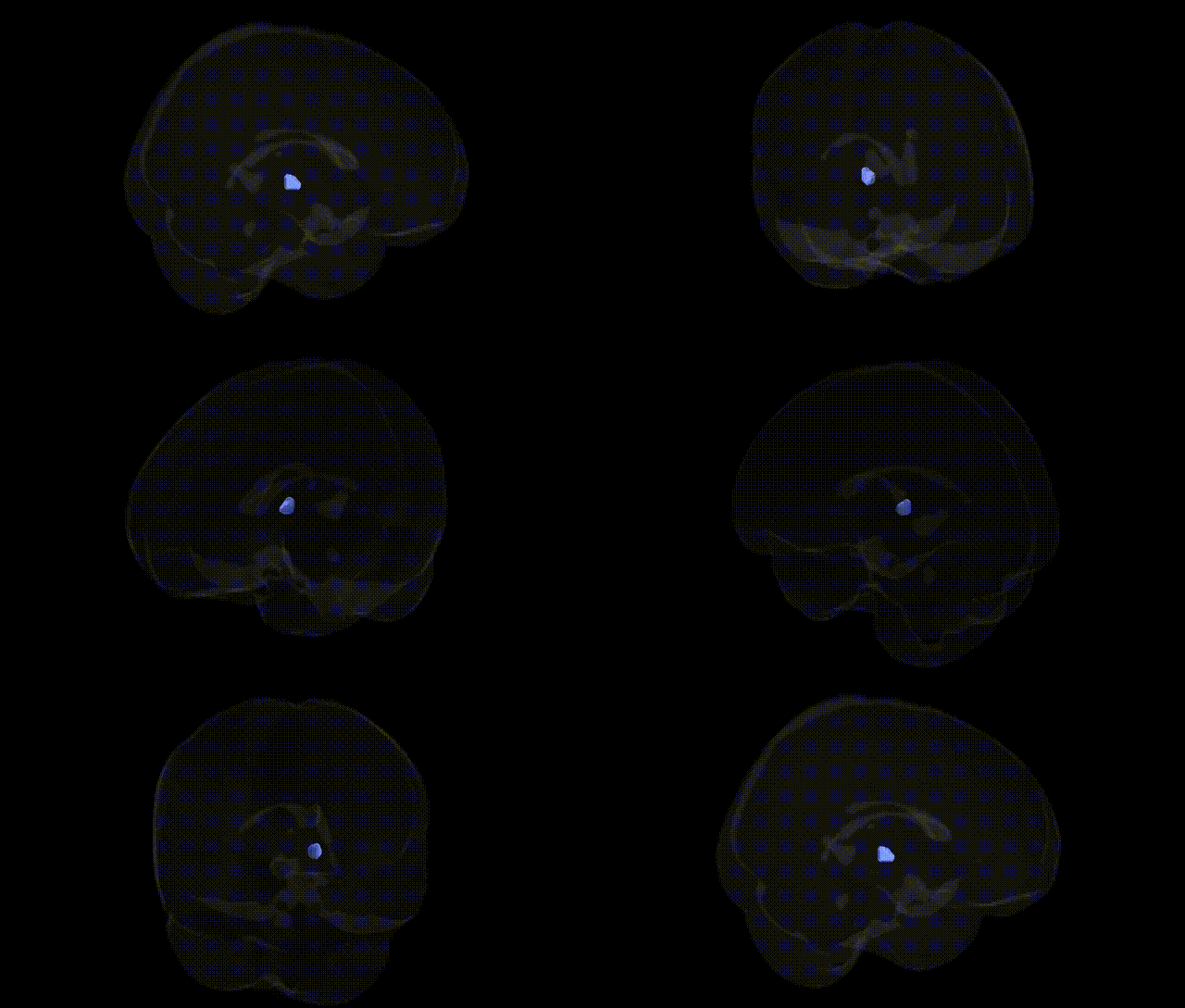
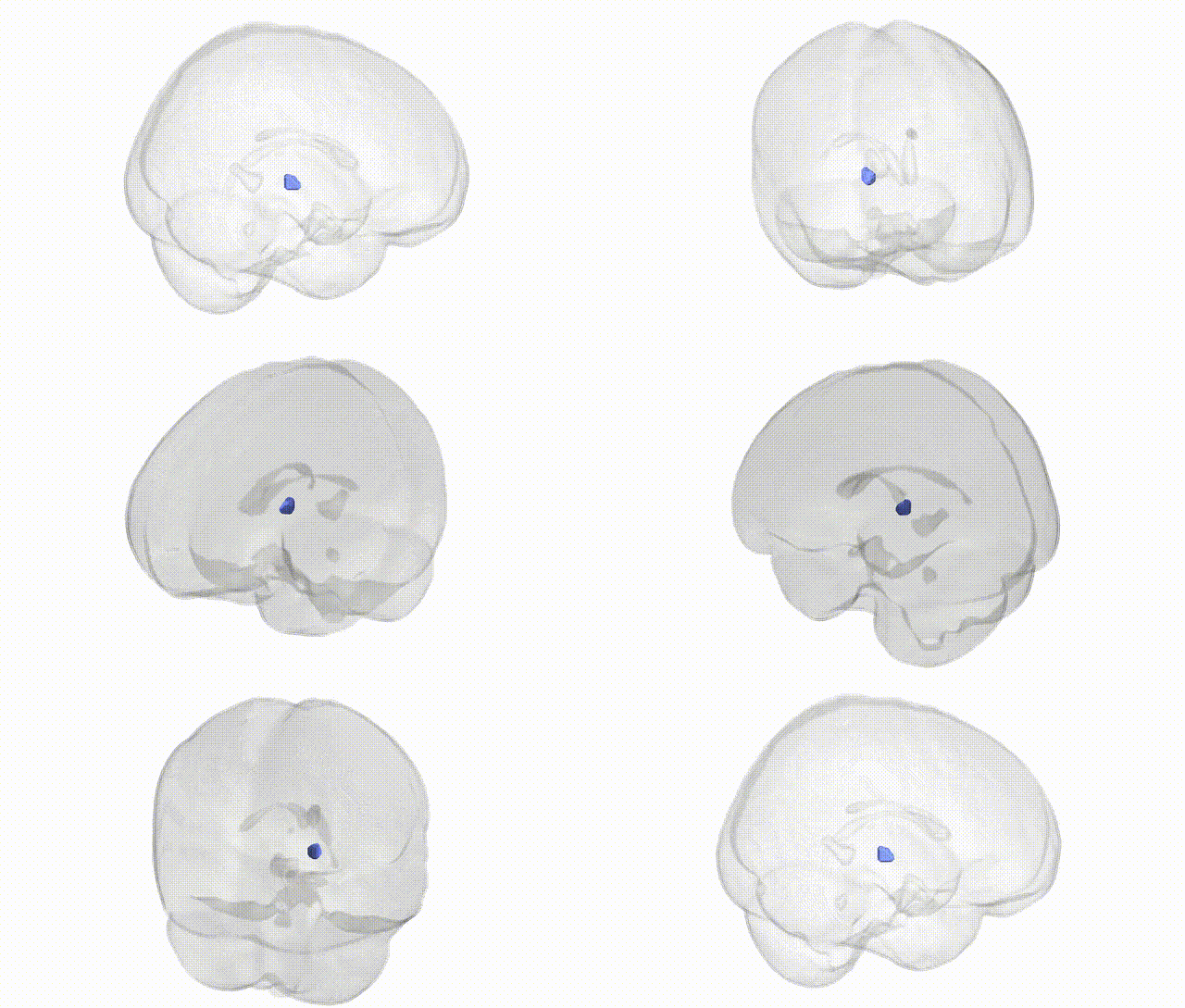
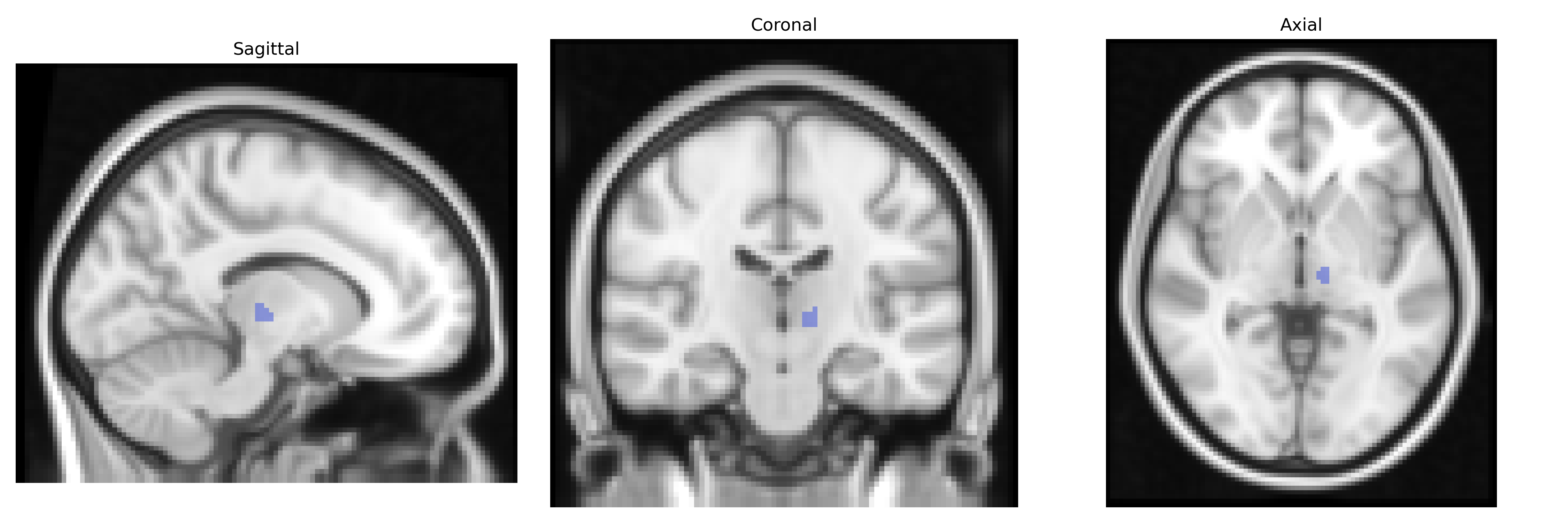
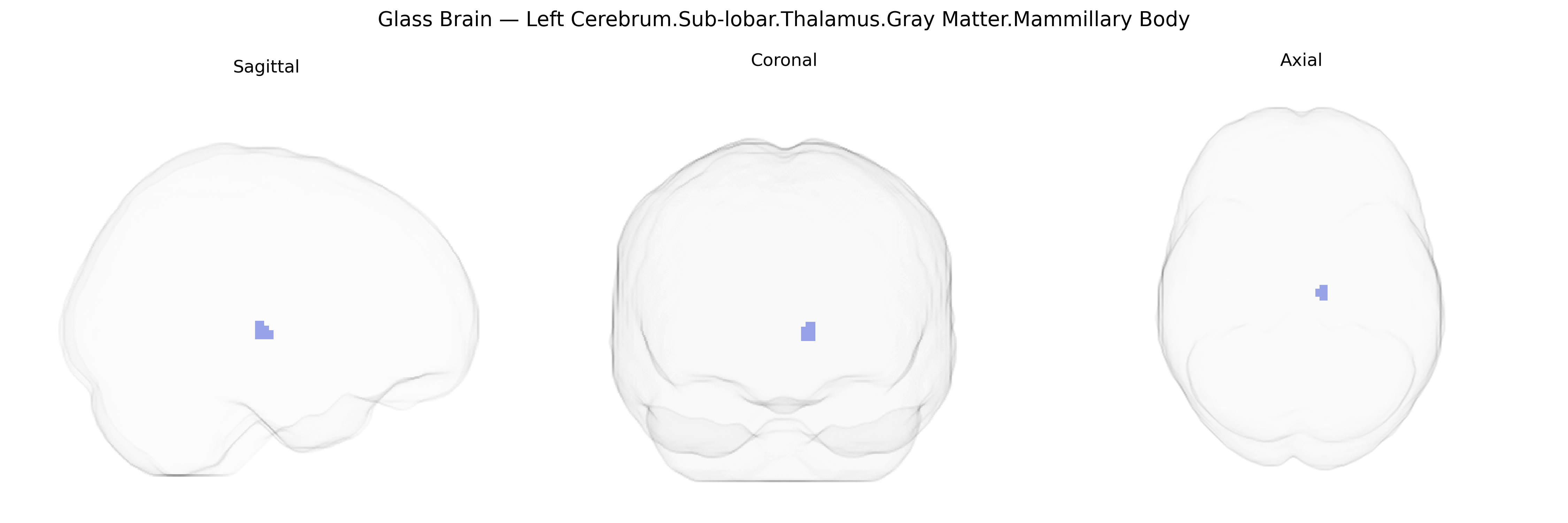
The bilateral Left Cerebrum.Sub-lobar.Thalamus.Gray Matter.Mammillary Body region in the Talairach 2 mm atlas corresponds to the mammillary bodies, a pair of small rounded structures on the undersurface of the brain that form part of the hypothalamus within the diencephalon. Composed of gray matter nuclei, the mammillary bodies play a key role in the limbic system, particularly in memory processing and recollection, as they serve as a relay between the hippocampal formation (via the fornix) and the anterior thalamic nuclei, contributing to the Papez circuit. Damage to this region is classically associated with memory deficits, including those seen in Wernicke–Korsakoff syndrome. There is no direct link for this exact Talairach label; a closely related structure is the Mammillary body.
The mammillary bodies, small hypothalamic structures closely integrated with the thalamus and limbic circuit rather than the cerebral cortex proper, have been implicated in genetic studies primarily through their role in memory and neuropsychiatric disease rather than direct GWAS signals on their volume. Variants affecting the broader limbic diencephalon—especially genes involved in thalamic-hypothalamic development (e.g., NKX2-1, PAX6, and other transcription factors) and axonal guidance (such as ROBO and SLIT family genes)—are linked to structural and connectivity abnormalities that encompass mammillary body pathways, though these associations are typically reported at the level of hippocampal–diencephalic circuits rather than the mammillary bodies alone. Neurodevelopmental syndromes and congenital malformations (including some forms of septo-optic dysplasia and diencephalic malformations) can show mammillary body hypoplasia in the context of mutations in genes regulating forebrain patterning. In large-scale brain MRI GWAS (e.g., UK Biobank-based studies) thalamic and hypothalamic volumes have been associated with loci near genes such as SLC39A8, MAPT, and others involved in neurodevelopment, neurodegeneration, and synaptic function, and although mammillary bodies are not typically segmented as separate GWAS phenotypes, these findings likely reflect genetic influences on the broader diencephalic-limbic network that includes them. Clinically, mammillary body damage is classically associated with amnestic syndromes such as Wernicke–Korsakoff syndrome, but this is driven primarily by environmental/nutritional factors (thiamine deficiency) rather than common genetic variants, and specific GWAS signals for mammillary body gray matter volume within the Talairach labels 2mm atlas have not yet been clearly reported in the literature.
Overview generated by GPT-4o (2026).
Region ID: 581
Hemisphere: bilateral
Atlas: Talairach labels 2mm
Full Quality Version: Download MP4
Full Quality Version: Download MP4
Wali Sidiqyar*, Gaurav Rudravaram*, Elyssa M. McMaster, Trent M. Schwartz, Adam M. Saunders, Kurt G. Schilling, Bennett A. Landman "Introducing SPINS: A Shared Public Visualization Library of Neuroanatomical Structures." Medical Imaging with Deep Learning- short paper
This resource is licensed under CC0 1.0 Universal (Public Domain).