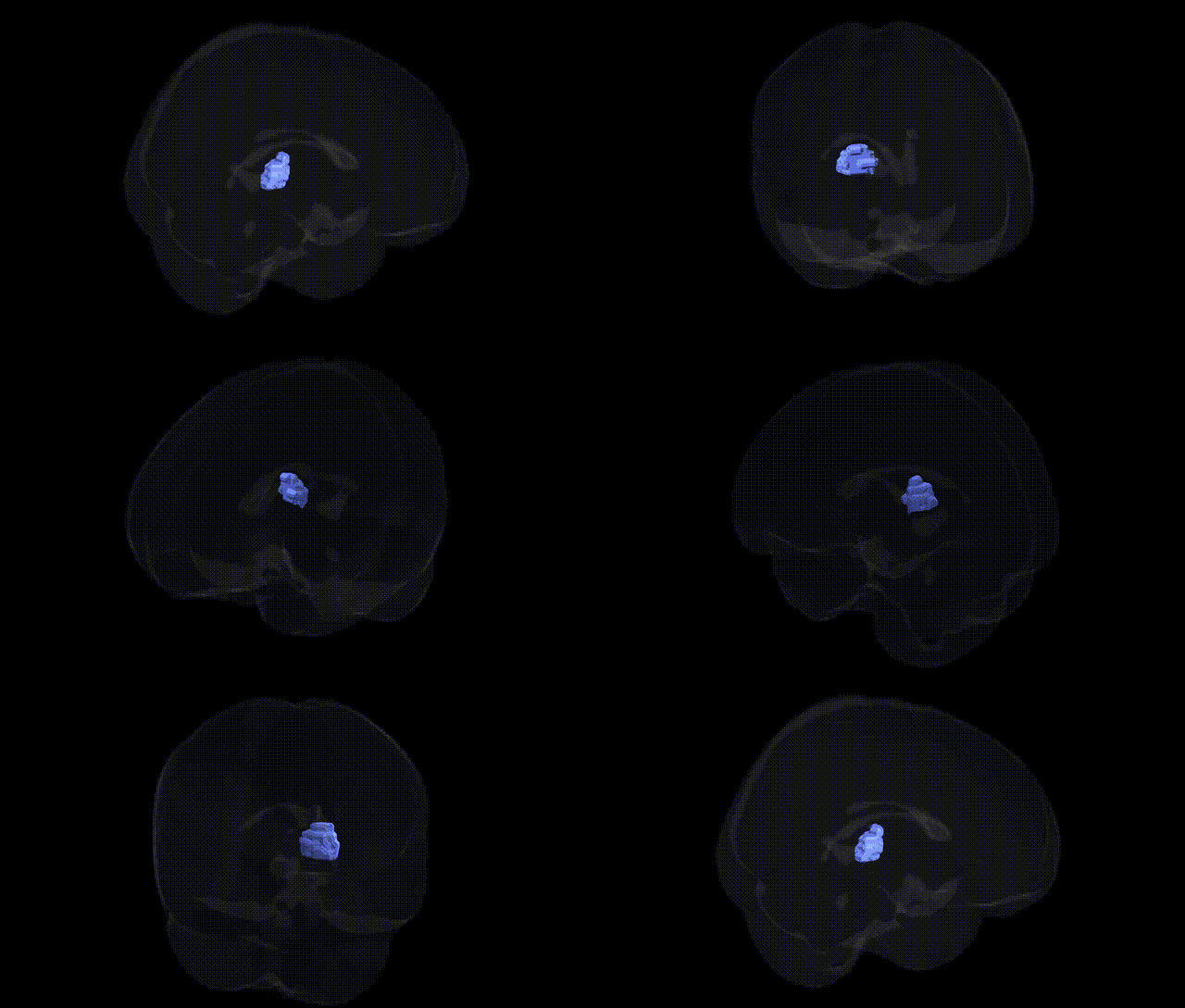
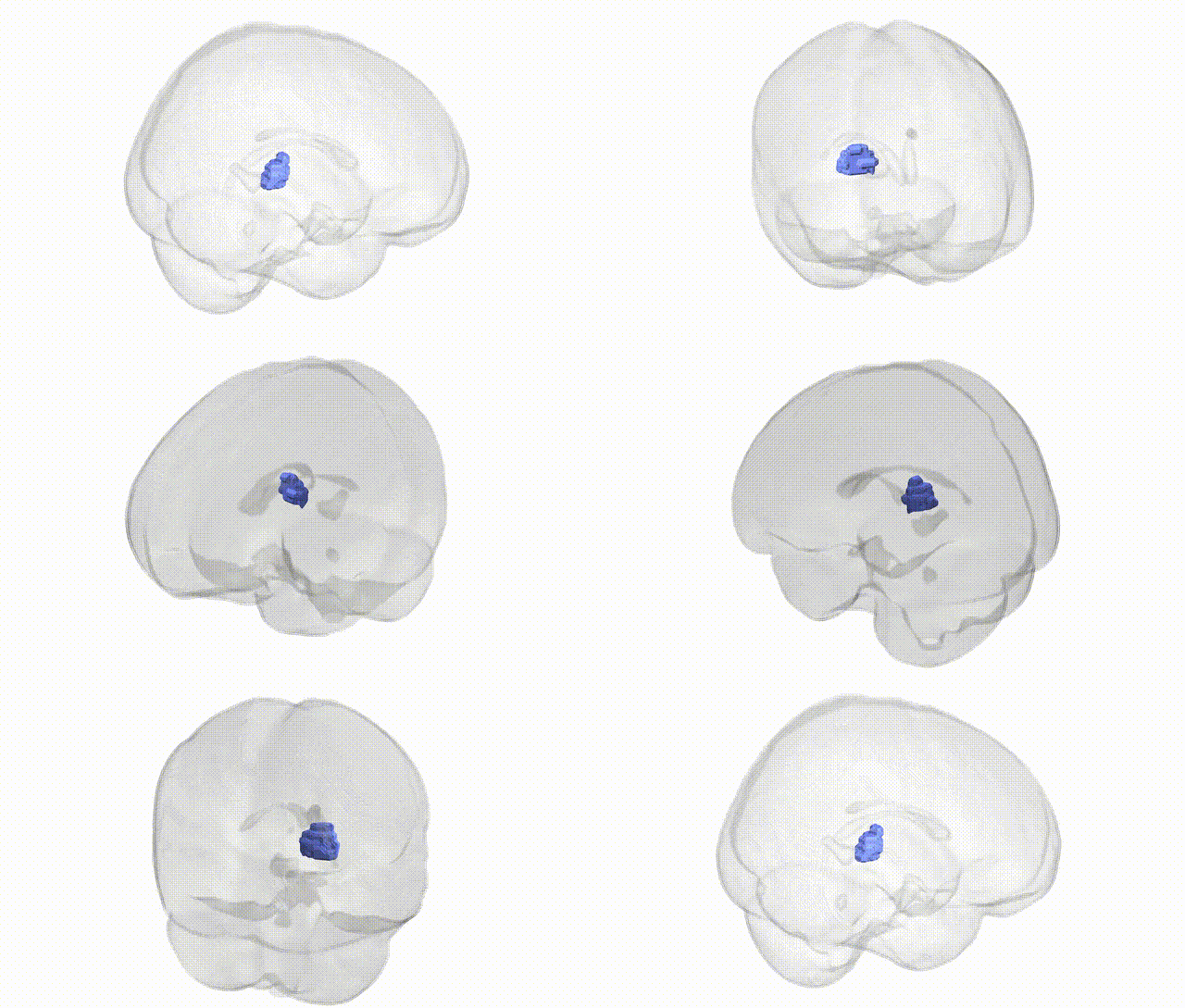
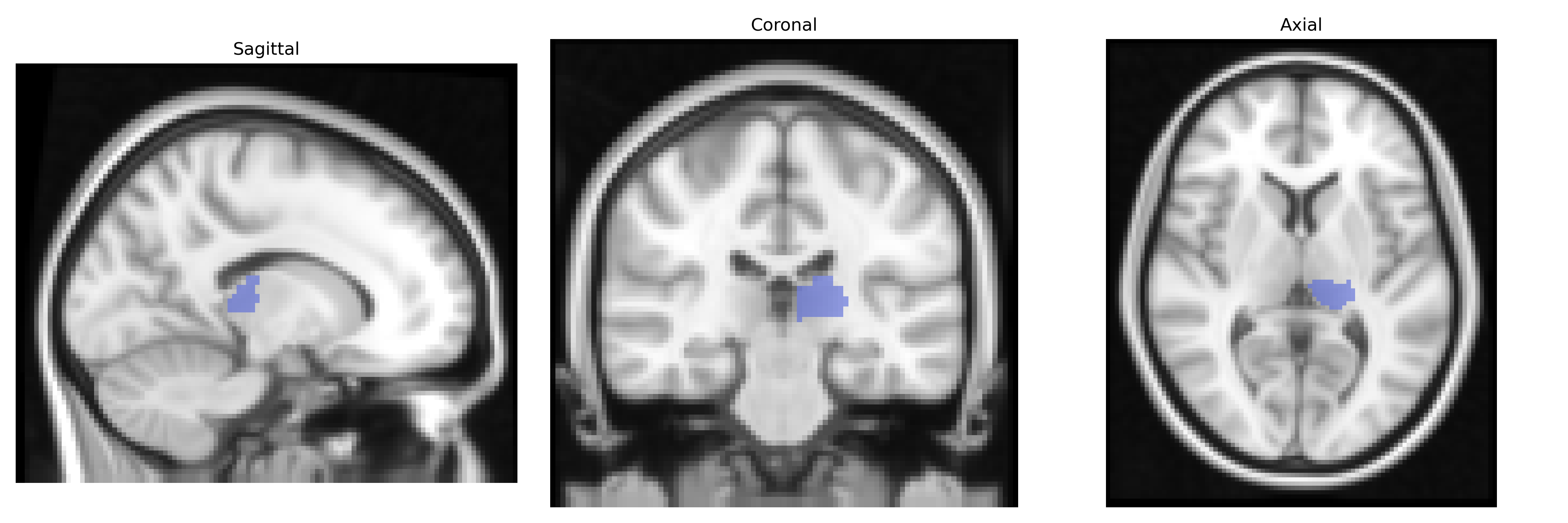
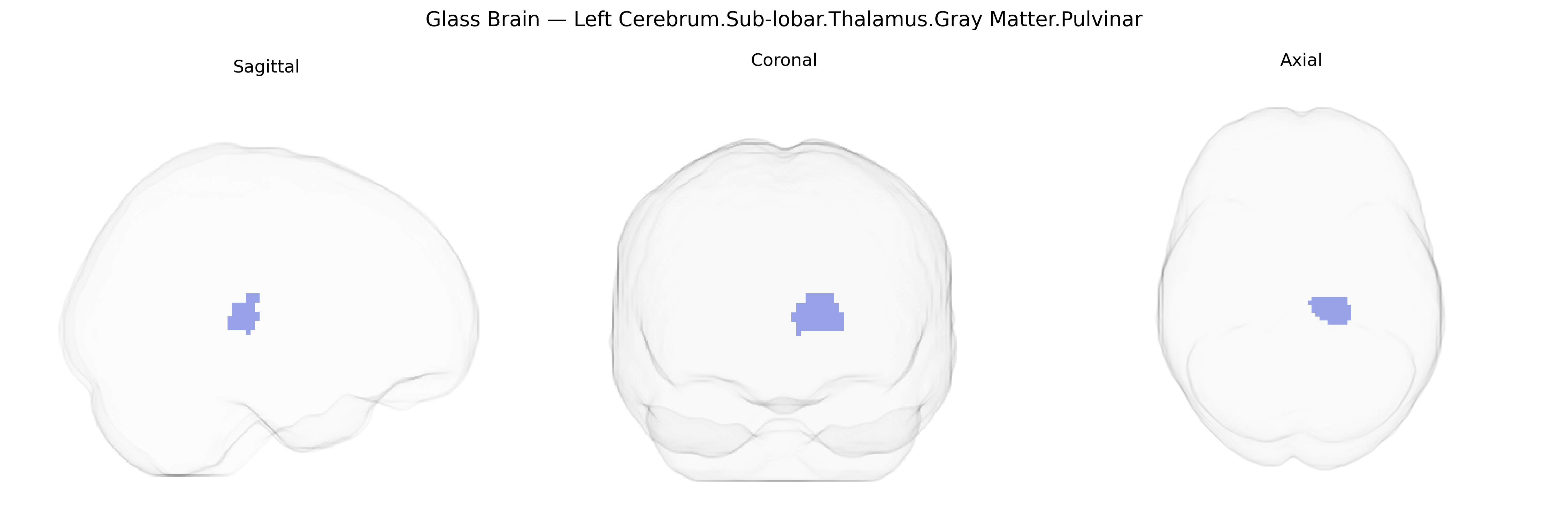
The bilateral Left Cerebrum.Sub-lobar.Thalamus.Gray Matter.Pulvinar region corresponds to the pulvinar nucleus of the thalamus, a large posterior thalamic complex involved in higher-order visual processing, attention, and multisensory integration. Structurally, the pulvinar is subdivided into multiple subnuclei that form extensive reciprocal connections with association cortices, particularly in parietal, temporal, and occipital lobes, supporting visuospatial attention, saccadic eye control, and the coordination of cortical networks during perception and cognition. Functionally, the pulvinar modulates cortical signal transmission, filters behaviorally relevant stimuli, and contributes to the synchronization of neural activity across distributed cortical areas. Damage or dysfunction in this region has been associated with deficits in visual attention, neglect syndromes, and altered sensory integration. There is no direct link for this precise Talairach label; a related structure is the Pulvinar.
The pulvinar nucleus of the thalamus, a sub-lobar gray matter region within the left cerebrum as defined by the Talairach 2 mm atlas, has been implicated in multiple genetic and genome-wide association (GWAS) findings through its role in attention, visual processing, and higher-order cognitive and affective integration. Although few GWAS target pulvinar volume or function specifically, imaging genetics studies show that common variants in genes modulating glutamatergic and GABAergic signaling (e.g., GRIN2B, GAD1), synaptic plasticity (BDNF), and monoaminergic transmission (COMT, 5-HTTLPR/SLC6A4) influence thalamic activation patterns and connectivity, including pulvinar–cortical circuits. Polygenic risk scores for schizophrenia, bipolar disorder, and major depressive disorder have been associated with thalamic dysconnectivity, and structural MRI–GWAS of thalamic nuclei report heritable variation in volume linked to loci involved in neurodevelopment, axon guidance, and synaptic organization, suggesting an indirect genetic contribution to pulvinar morphology. Pulvinar-related networks mediating attention and salience have been implicated in ADHD and autism spectrum disorder via variants in genes such as CNTNAP2, NRXN1, and other synaptic/neuronal adhesion loci, while GWAS of cognitive traits and educational attainment point to thalamocortical pathways that include the pulvinar as a relay node. Overall, genetic associations involving the pulvinar tend to emerge via imaging-genetics and systems-level analyses of thalamocortical circuits rather than from GWAS focused exclusively on this specific subnuclear region.
Overview generated by GPT-4o (2026).
Region ID: 622
Hemisphere: bilateral
Atlas: Talairach labels 2mm
Full Quality Version: Download MP4
Full Quality Version: Download MP4
Wali Sidiqyar*, Gaurav Rudravaram*, Elyssa M. McMaster, Trent M. Schwartz, Adam M. Saunders, Kurt G. Schilling, Bennett A. Landman "Introducing SPINS: A Shared Public Visualization Library of Neuroanatomical Structures." Medical Imaging with Deep Learning- short paper
This resource is licensed under CC0 1.0 Universal (Public Domain).