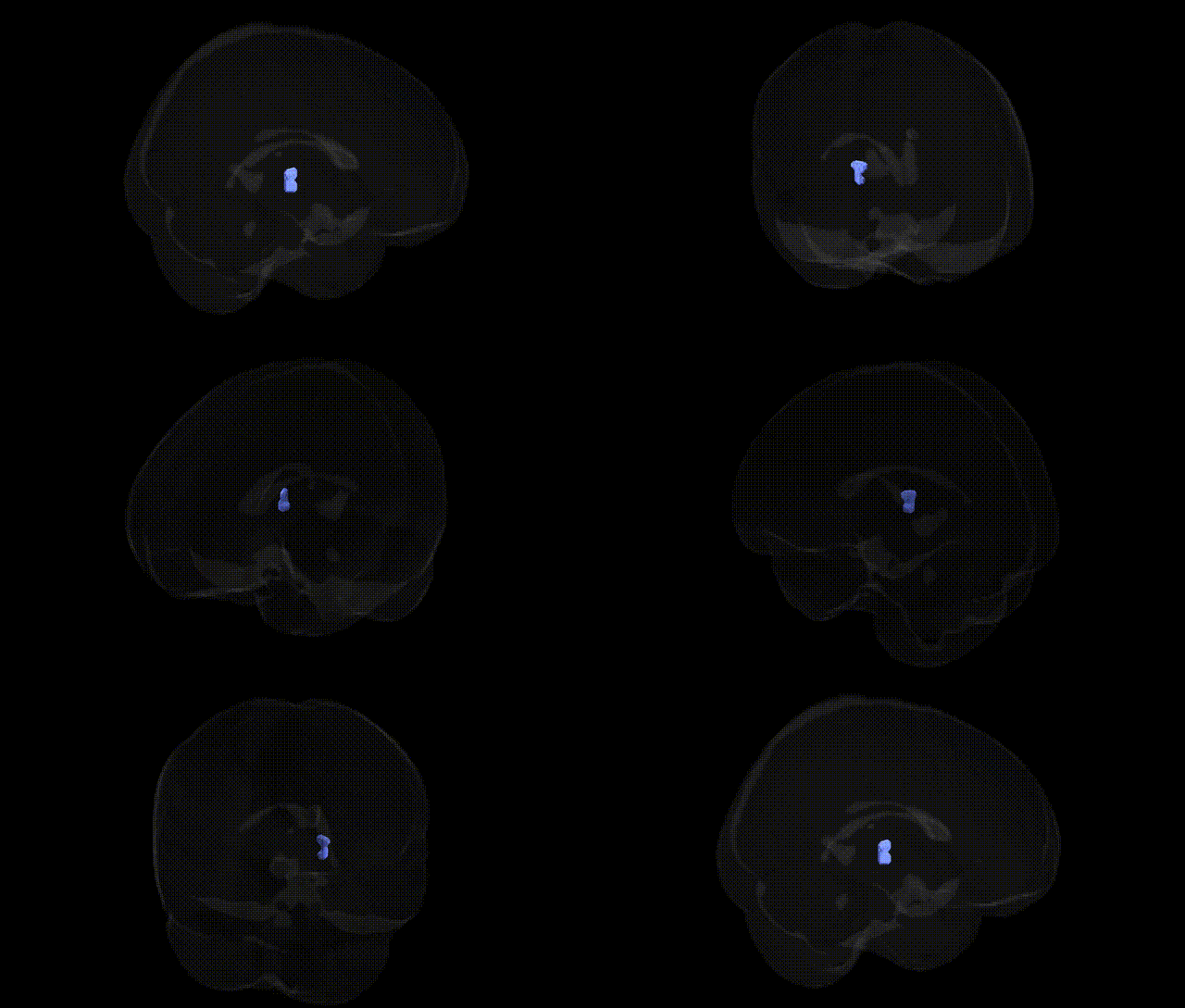
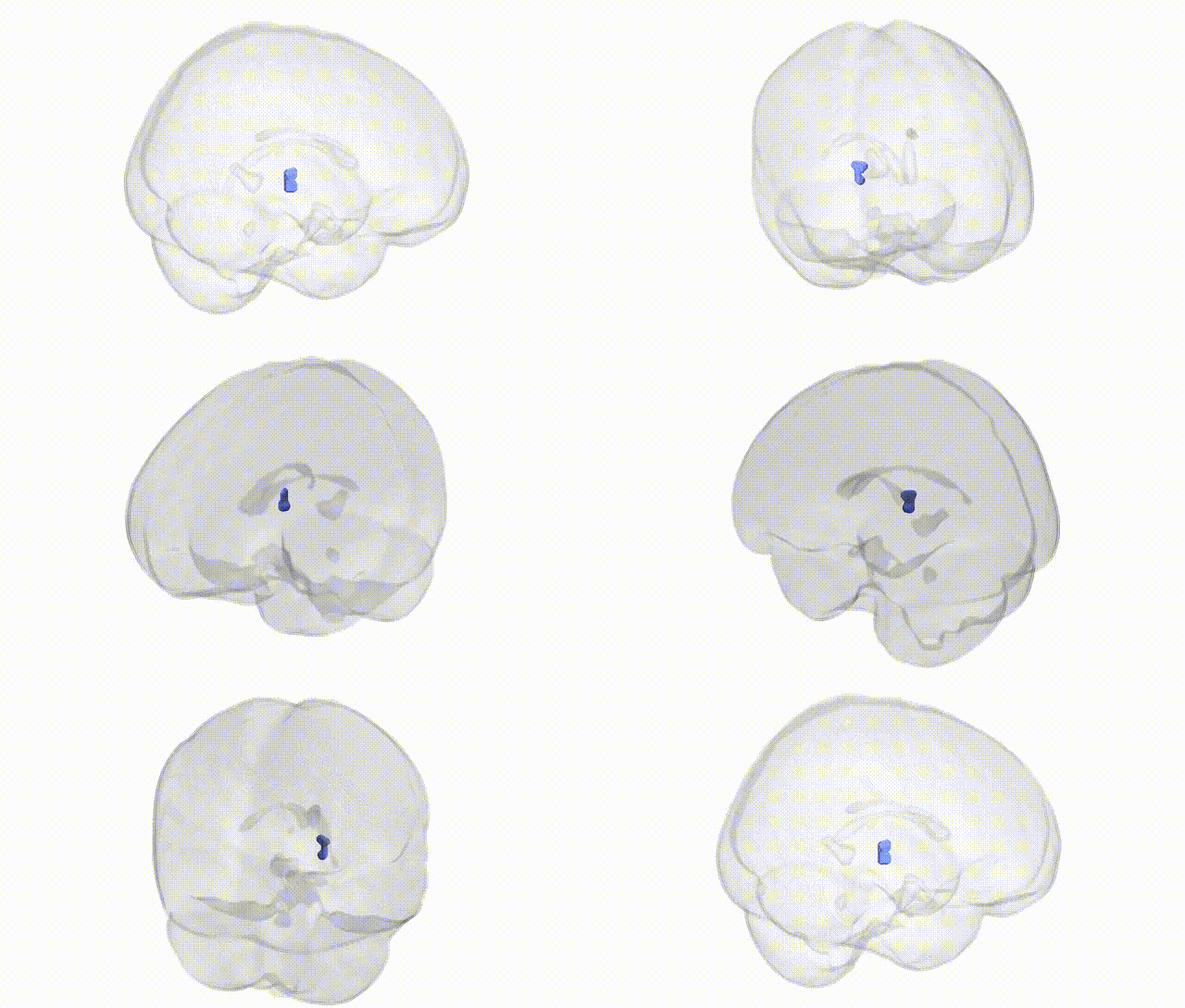
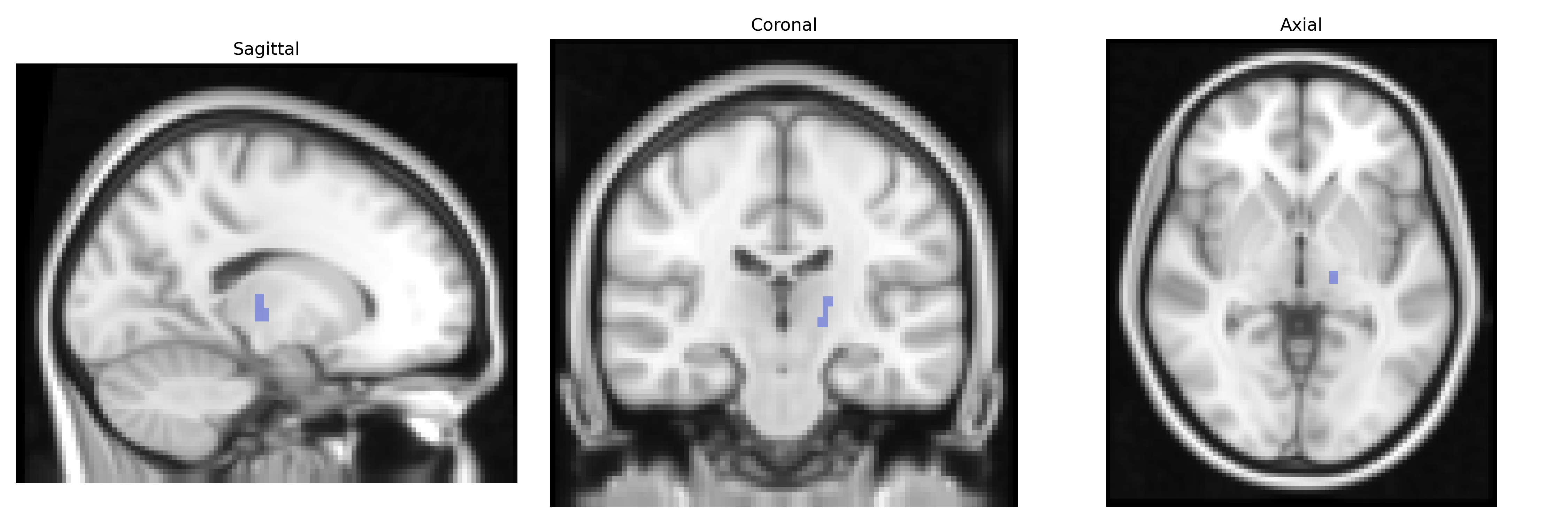
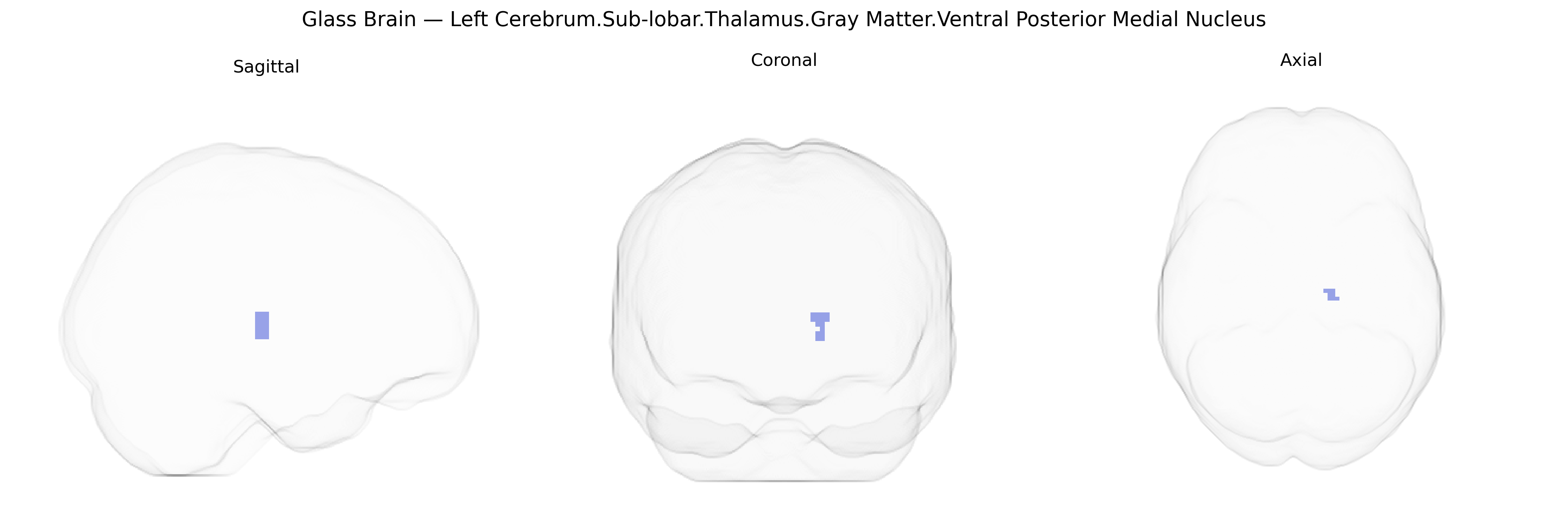
The bilateral Left Cerebrum.Sub-lobar.Thalamus.Gray Matter.Ventral Posterior Medial Nucleus corresponds to the ventral posteromedial nucleus (VPM), a sensory relay nucleus of the thalamus specialized for processing somatosensory information from the face and head. It receives afferent input predominantly from the trigeminal lemniscus and taste pathways, integrating modalities such as fine touch, pain, temperature, and gustatory signals before transmitting them mainly to the primary somatosensory cortex (postcentral gyrus), particularly its face representation. Functionally, the VPM plays a critical role in facial tactile perception, orofacial nociception, and taste discrimination, and lesions in this region can produce characteristic sensory deficits restricted to the contralateral face and oral structures. There is no direct Wikipedia article specifically for the “ventral posterior medial nucleus,” but it is described within the context of the Thalamus.
The ventral posterior medial (VPM) nucleus of the thalamus, a key somatosensory relay for craniofacial and orofacial inputs, has been implicated indirectly in several genetic and neuroimaging GWAS frameworks, although few studies target this nucleus specifically. Large-scale brain imaging GWAS from consortia such as ENIGMA and UK Biobank have linked common variants in genes involved in neurodevelopment and synaptic function (e.g., CACNA1C, BDNF, GRIN2B, FOXP2, and genes in the MAPK and axon guidance pathways) to thalamic gray matter volume and microstructure, with bilateral thalamic measures often treated as composite rather than nucleus-specific phenotypes. Polygenic risk for schizophrenia, bipolar disorder, and major depression has been associated with altered thalamic volumes and thalamo-cortical connectivity, and post hoc analyses sometimes highlight sensory relay nuclei, including VPM, within affected thalamic regions. In chronic pain, migraine, and trigeminal neuralgia, GWAS-implicated loci in ion channels and pain-processing genes (such as SCN9A and CACNA1A) converge on networks that include VPM as a central node for nociceptive and tactile facial input, though the association is network-level rather than nucleus-specific. Neurodevelopmental and language-related genetic variants (e.g., in FOXP2 and CNTNAP2) have shown associations with thalamo-cortical circuitry integrity, with some diffusion and functional imaging studies suggesting that somatosensory thalamic nuclei, including VPM, contribute to sensorimotor integration underlying speech articulation. Overall, genetic associations currently relate to the bilateral ventral posterior medial nucleus largely through broader thalamic volume or connectivity phenotypes and pain or psychiatric trait GWAS, rather than through focused genetic studies on this specific Talairach-defined sub-lobar thalamic region.
Overview generated by GPT-4o (2026).
Region ID: 580
Hemisphere: bilateral
Atlas: Talairach labels 2mm
Full Quality Version: Download MP4
Full Quality Version: Download MP4
Wali Sidiqyar*, Gaurav Rudravaram*, Elyssa M. McMaster, Trent M. Schwartz, Adam M. Saunders, Kurt G. Schilling, Bennett A. Landman "Introducing SPINS: A Shared Public Visualization Library of Neuroanatomical Structures." Medical Imaging with Deep Learning- short paper
This resource is licensed under CC0 1.0 Universal (Public Domain).