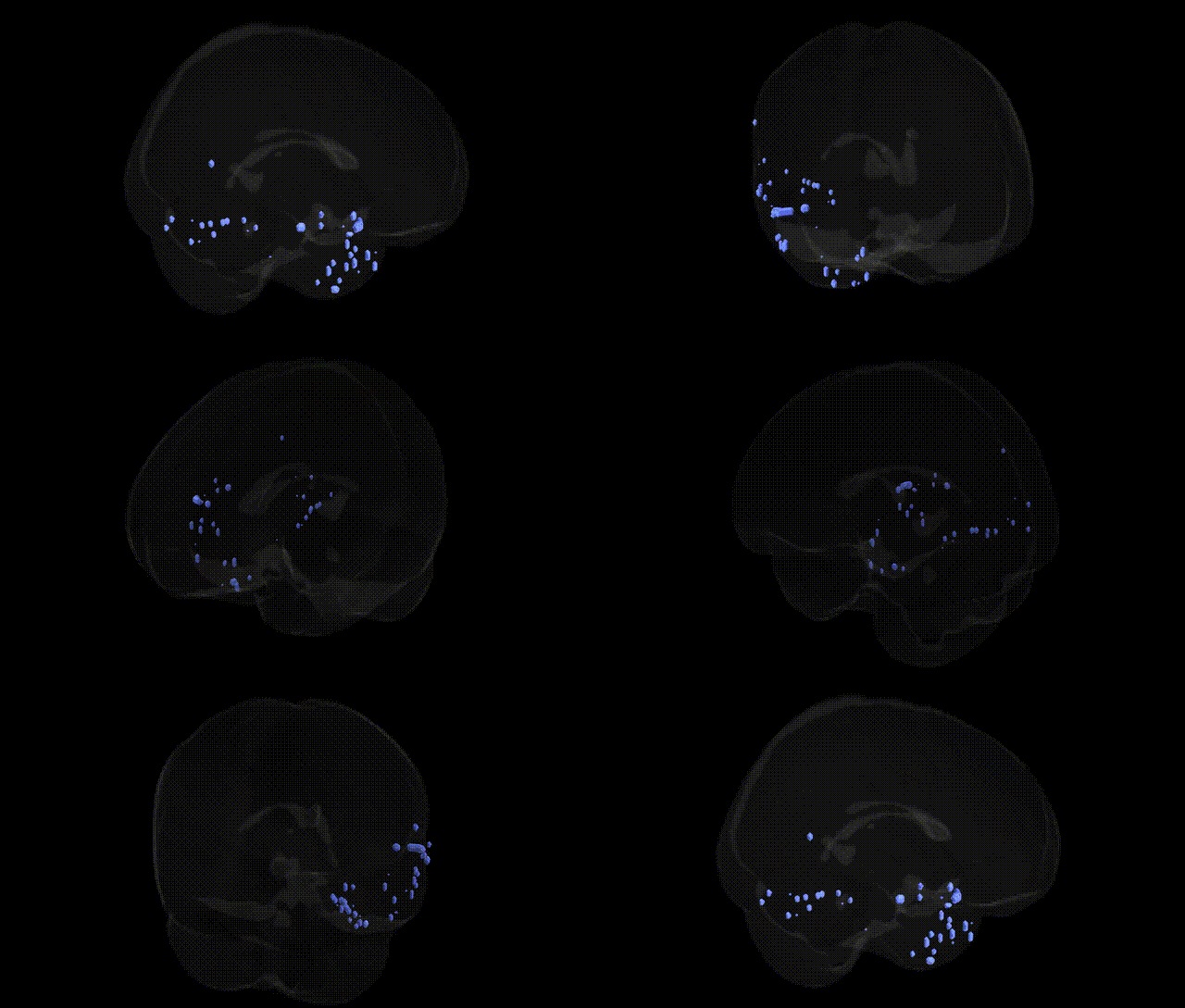
The bilateral left cerebrum temporal lobe corresponds to cortical and subcortical regions in the left temporal lobe, including portions of the superior, middle, and inferior temporal gyri, temporal pole, and deeper structures such as parts of the hippocampal formation and amygdala. Functionally, this territory is critically involved in auditory perception, speech and language processing (particularly in the dominant left hemisphere, encompassing Wernicke’s area and adjacent association cortex), semantic memory, and aspects of visual object recognition. The anterior temporal regions contribute to social and emotional processing and the integration of multimodal sensory information, while medial temporal components support episodic memory encoding and retrieval. Lesions in the left temporal lobe can produce receptive aphasia, impair semantic knowledge, and disrupt verbal memory, reflecting the dense integration of auditory, linguistic, and mnemonic functions within this region.
The bilateral left temporal lobe, encompassing regions involved in language, memory, and social cognition, has been implicated in a variety of genetic associations across GWAS and candidate-gene studies, though most findings map to functions or disorders rather than directly to Talairach-defined anatomical labels. Common variants in genes related to synaptic function and neurodevelopment—such as CNTNAP2, FOXP2, GRIN2B, and several glutamatergic and GABAergic pathway genes—have been linked to structural and functional differences in left temporal regions, particularly in language-related cortices. Large-scale imaging genetics consortia (e.g., ENIGMA) have identified polygenic influences on temporal lobe cortical thickness and surface area, with significant heritability and associations across many loci of small effect. GWAS of reading ability, dyslexia, and language impairment have frequently implicated left temporal systems, with risk alleles in genes like DCDC2, KIAA0319, and ROBO1 associated with altered activation or structure in left temporo-parietal and temporal cortices. Psychiatric GWAS for schizophrenia, bipolar disorder, and major depression point to polygenic architectures that include variants influencing temporal lobe morphology and connectivity, while autism spectrum disorder risk genes (e.g., NRXN1, SHANK3, SCN2A) show convergent effects on temporal regions involved in social and language processing. Additionally, GWAS of Alzheimer’s disease and temporal lobe epilepsy implicate loci such as APOE, TREM2, and various ion-channel and synaptic genes that modulate vulnerability of temporal structures, including medial and lateral temporal areas, to neurodegeneration or seizure activity. However, these associations typically reference broader temporal lobe or functionally defined regions rather than the specific Talairach 2 mm atlas label of the bilateral left cerebrum temporal lobe.
Overview generated by GPT-4o (2026).
Region ID: 10
Hemisphere: bilateral
Atlas: Talairach labels 2mm
Full Quality Version: Download MP4
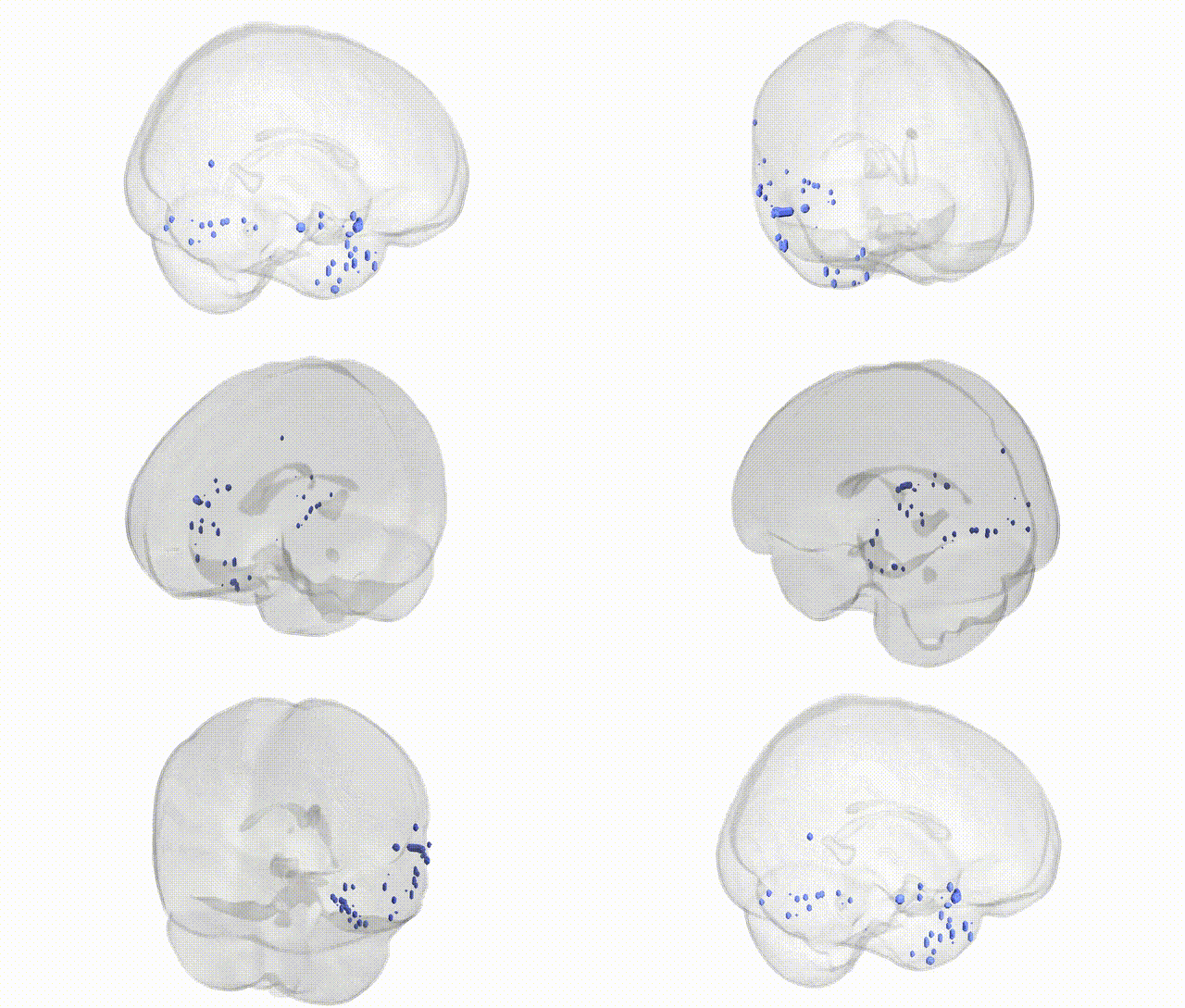
Full Quality Version: Download MP4
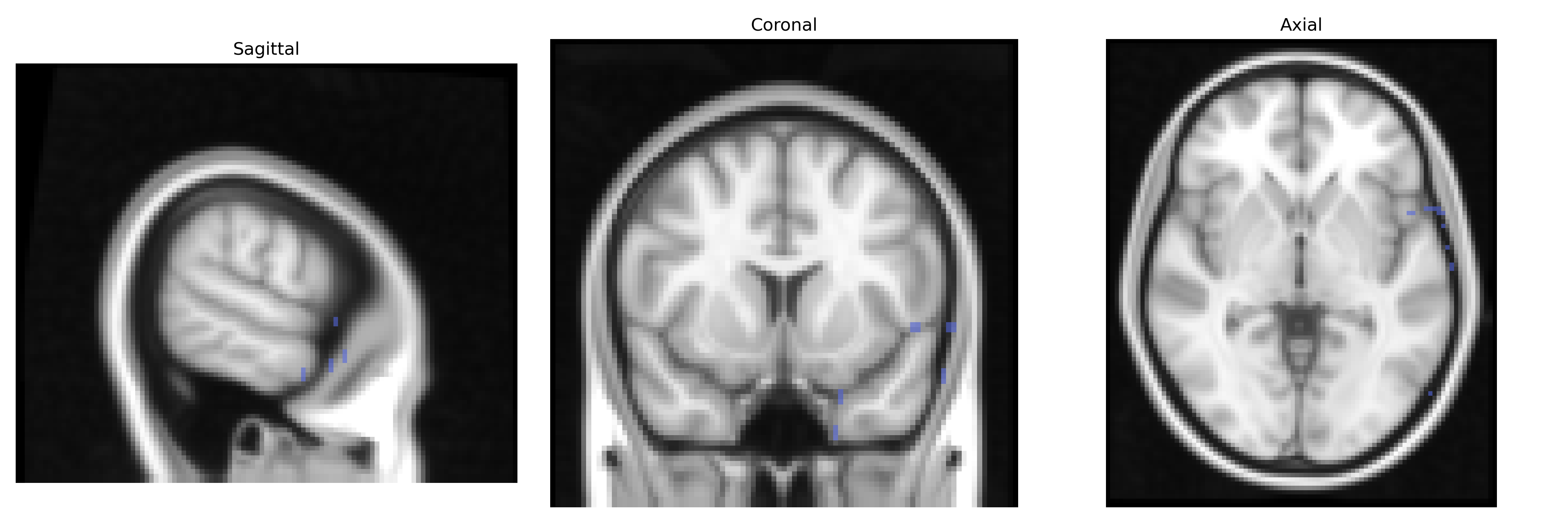
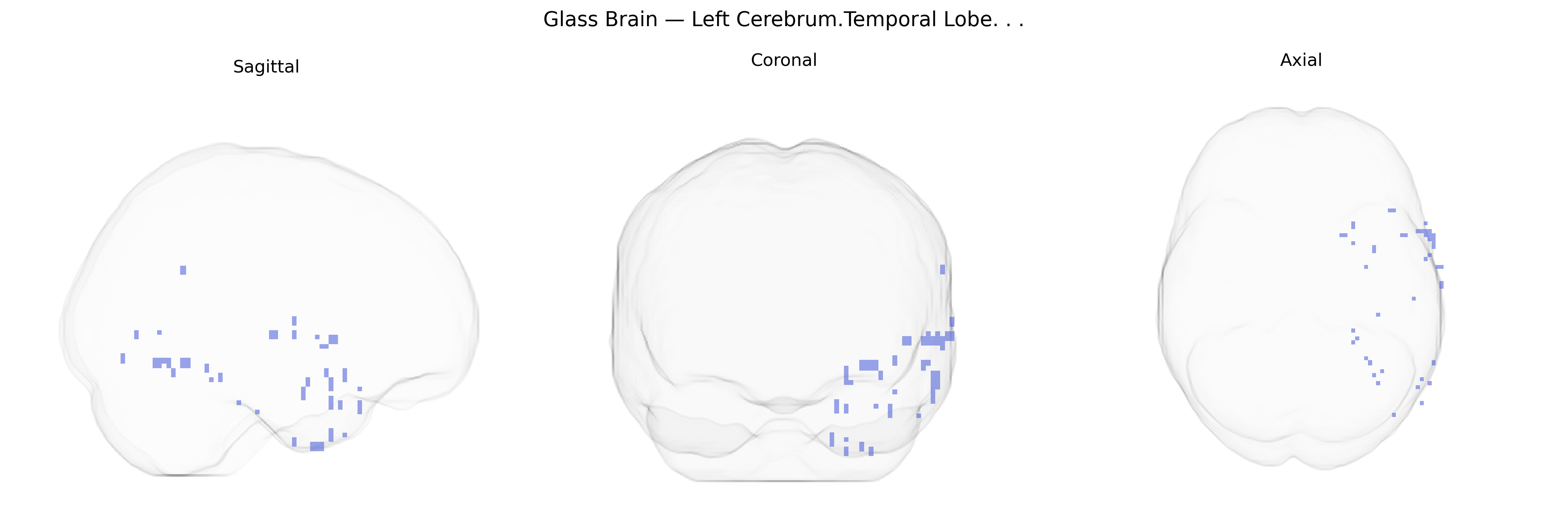
Wali Sidiqyar*, Gaurav Rudravaram*, Elyssa M. McMaster, Trent M. Schwartz, Adam M. Saunders, Kurt G. Schilling, Bennett A. Landman "Introducing SPINS: A Shared Public Visualization Library of Neuroanatomical Structures." Medical Imaging with Deep Learning- short paper
This resource is licensed under CC0 1.0 Universal (Public Domain).