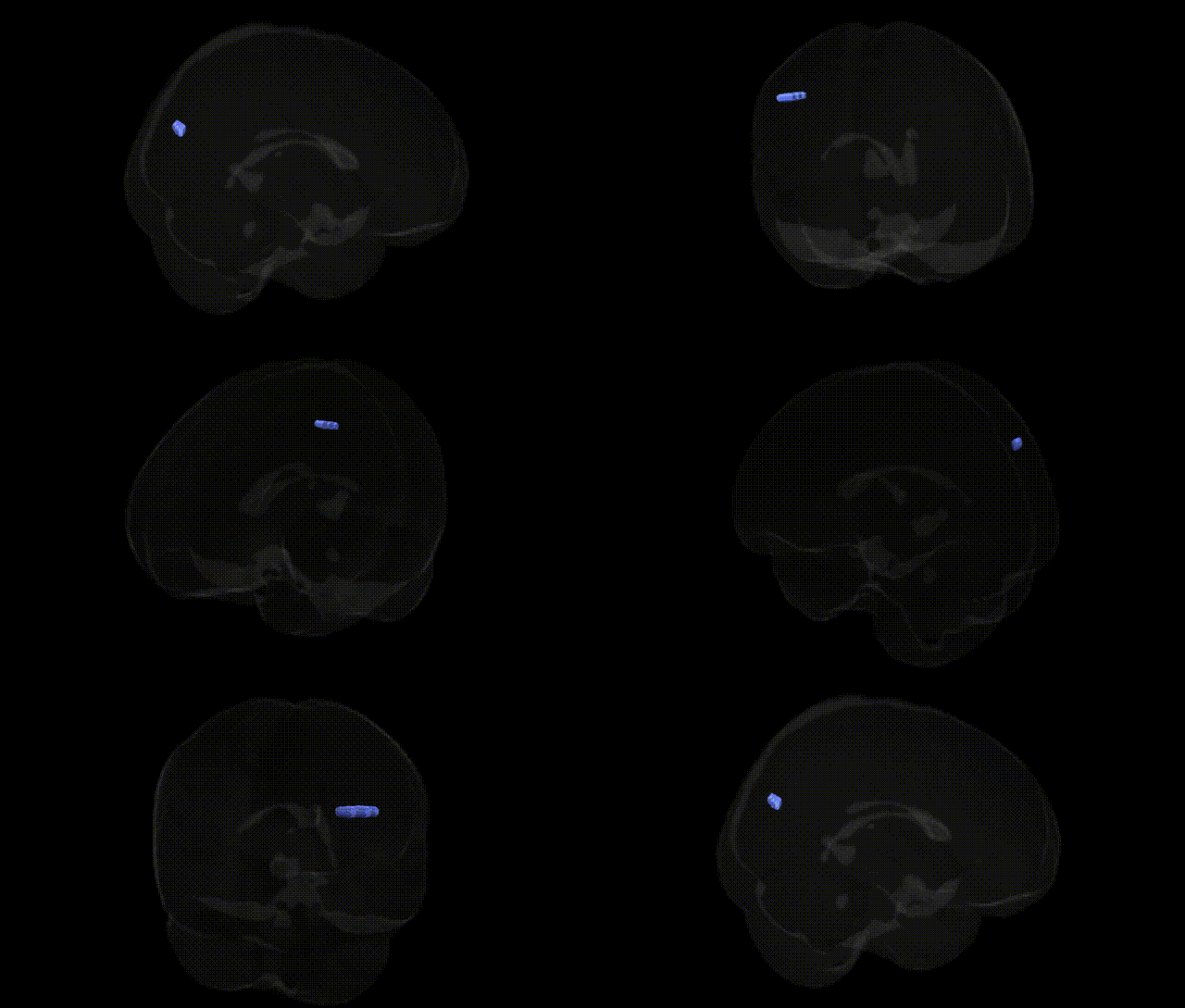
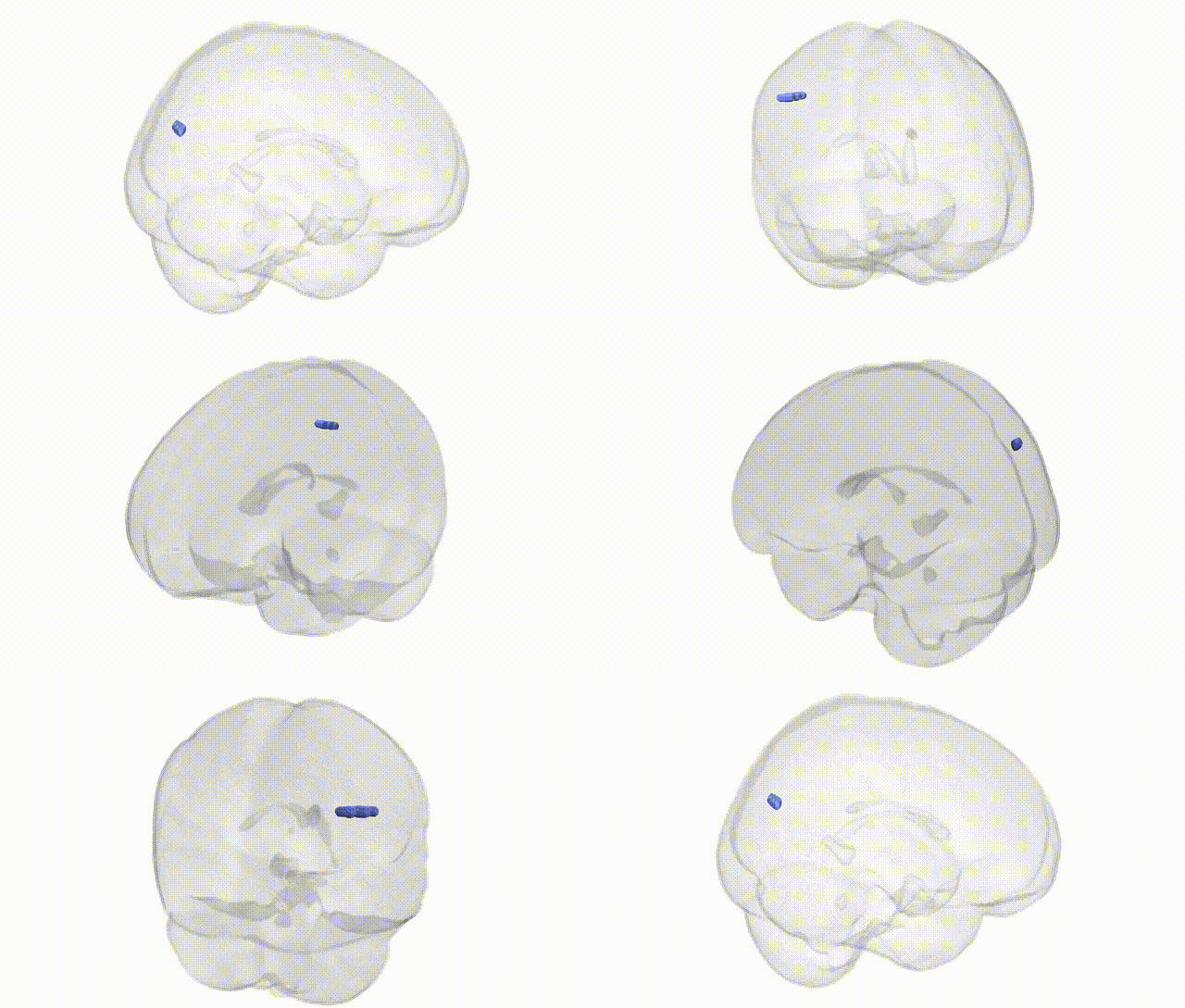
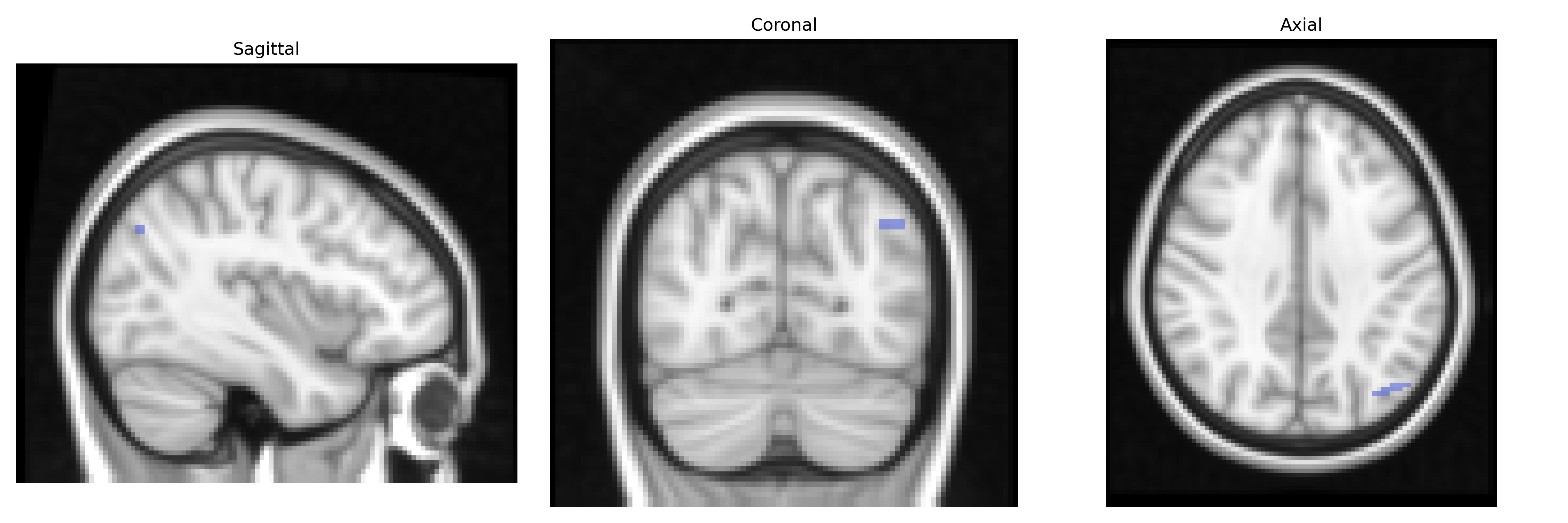
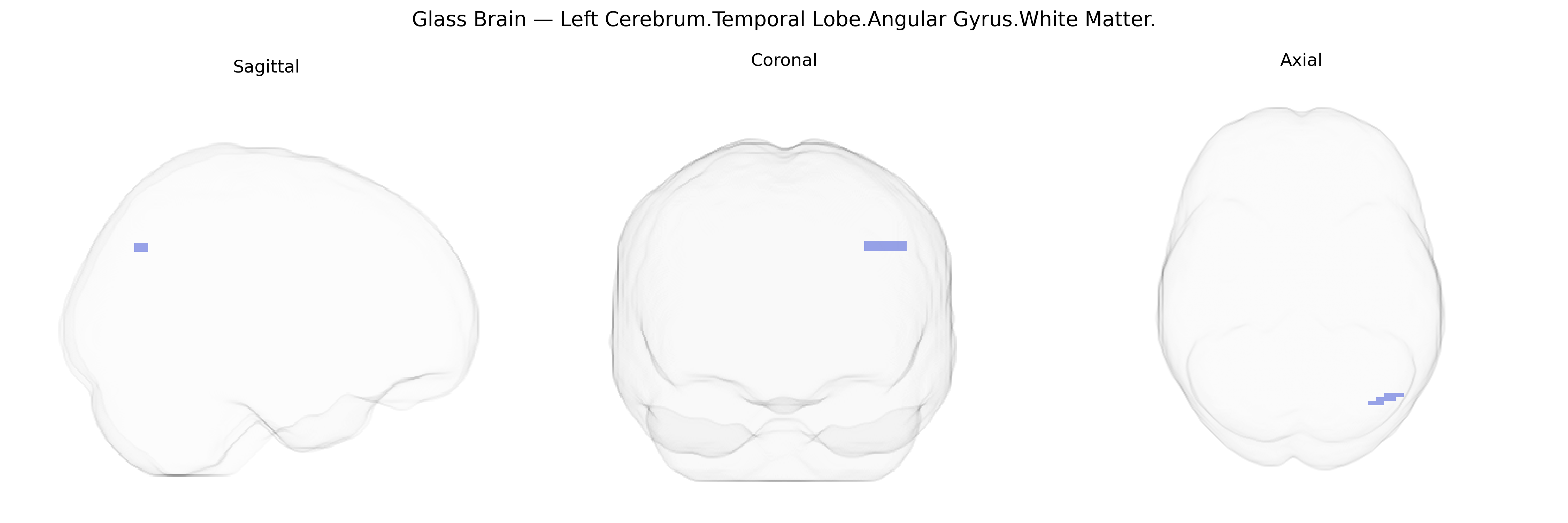
The bilateral Left Cerebrum.Temporal Lobe.Angular Gyrus.White Matter corresponds to the deep subcortical fiber tracts underlying the angular gyrus, a heteromodal association region situated at the junction of the temporal, parietal, and occipital lobes. These white matter pathways include portions of long-range association bundles such as the superior longitudinal fasciculus and potentially the arcuate fasciculus, which interconnect temporal language and auditory regions with parietal and frontal areas involved in language processing, reading, and complex semantic integration. Functionally, this white matter substrate supports the transfer and coordination of multimodal information (visual, auditory, and somatosensory) required for higher cognitive functions such as language comprehension, number processing, and aspects of spatial cognition. Although the white matter itself does not generate cortical processing, its integrity is critical for efficient communication among distributed cortical networks centered on the angular gyrus.
Angular gyrus
The bilateral left temporal lobe angular gyrus white matter, as defined in the Talairach 2 mm atlas, has been implicated in genetic studies largely through its role in language, reading, numerical cognition, and higher-order association networks, though most GWAS and imaging-genetics findings reference gray-matter structure or functional connectivity rather than this specific white-matter parcel. Variants near CNTNAP2, FOXP2, DCDC2, KIAA0319, and ROBO1 have been associated with dyslexia, language impairment, and altered temporo-parietal connectivity involving angular gyrus pathways, while common variants affecting myelination and axon guidance (e.g., in ERBB4, NRG1, MAG, and genes in the neuregulin and netrin signaling pathways) have been linked to global white-matter microstructure measures that include temporo-parietal tracts passing through or adjacent to this region. Large-scale GWAS of brain imaging phenotypes (UK Biobank and ENIGMA) have identified polygenic influences on fractional anisotropy and mean diffusivity in association fibers such as the superior longitudinal fasciculus and middle longitudinal fasciculus, which connect temporal and parietal areas encompassing the angular gyrus and show genetic correlations with general cognitive ability, educational attainment, and reading performance. Additional associations involve neurodevelopmental and psychiatric conditions—autism spectrum disorder, schizophrenia, and ADHD—where risk variants in synaptic and neurodevelopmental genes (e.g., CACNA1C, GRIN2A, NRXN1, and multiple glutamatergic and GABAergic pathway genes) are linked to atypical temporo-parietal connectivity and white-matter organization, sometimes overlapping with angular gyrus networks implicated in theory of mind, semantic processing, and attention. However, there are currently no well-established GWAS loci specifically reported for “left cerebrum temporal lobe angular gyrus white matter” as an isolated atlas-defined ROI; genetic associations generally emerge at the level of broader tracts and cortical networks that traverse or functionally engage this region rather than being unique to this particular Talairach parcel.
Overview generated by GPT-4o (2026).
Region ID: 961
Hemisphere: bilateral
Atlas: Talairach labels 2mm
Full Quality Version: Download MP4
Full Quality Version: Download MP4
Wali Sidiqyar*, Gaurav Rudravaram*, Elyssa M. McMaster, Trent M. Schwartz, Adam M. Saunders, Kurt G. Schilling, Bennett A. Landman "Introducing SPINS: A Shared Public Visualization Library of Neuroanatomical Structures." Medical Imaging with Deep Learning- short paper
This resource is licensed under CC0 1.0 Universal (Public Domain).