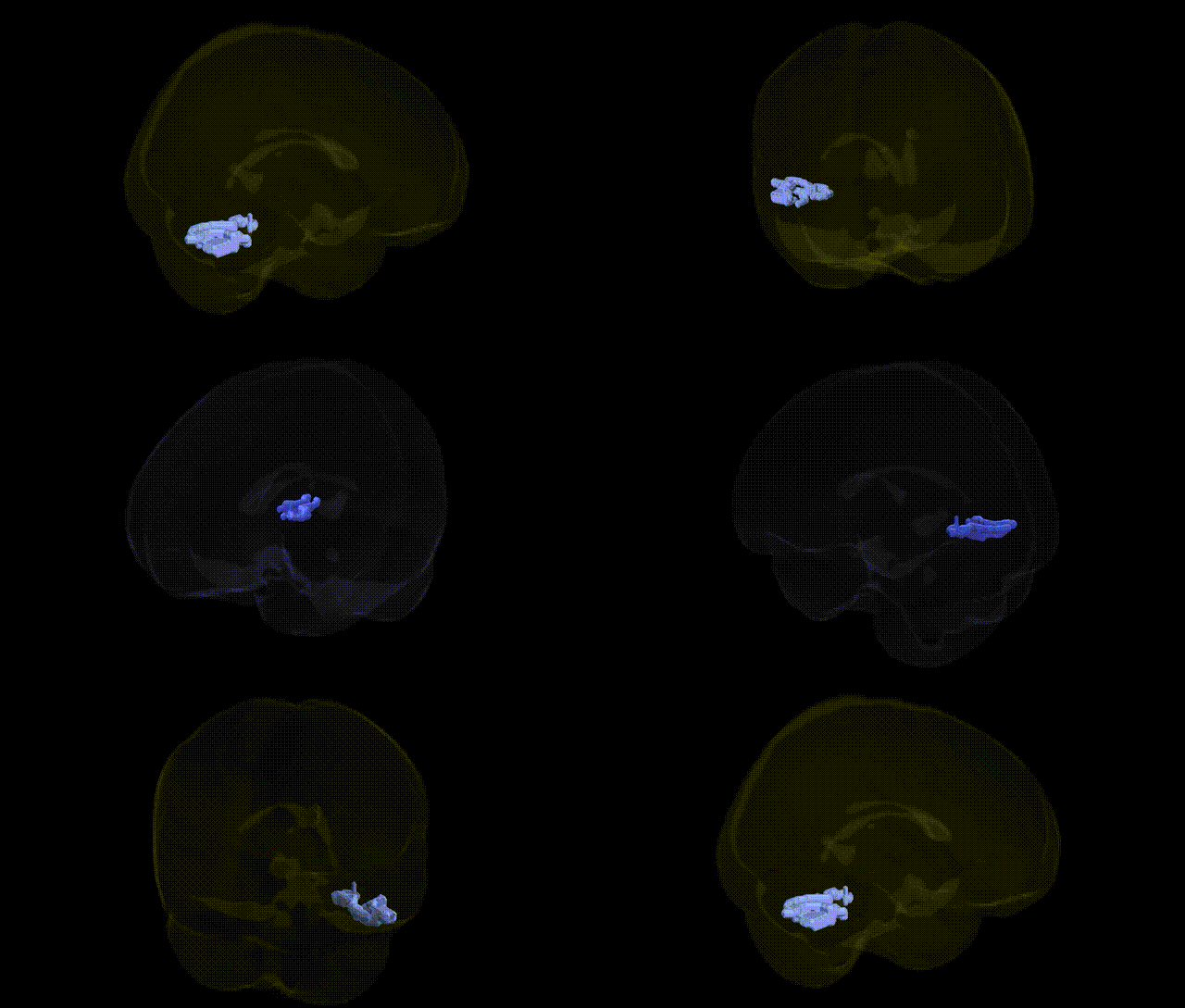
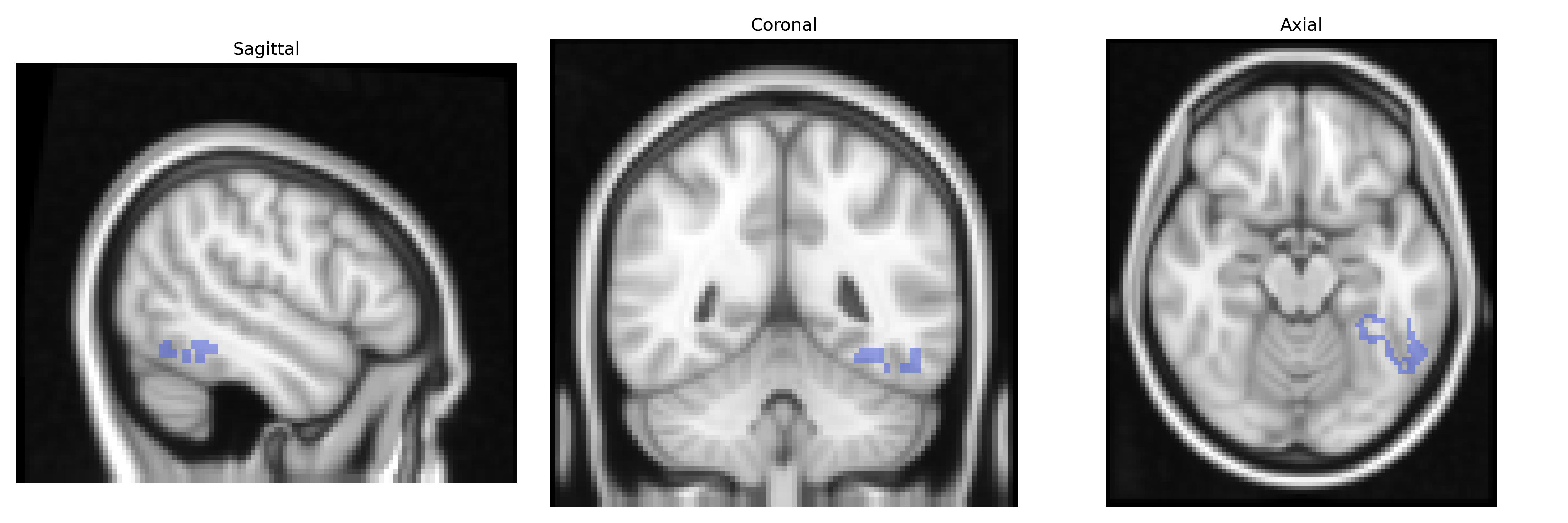
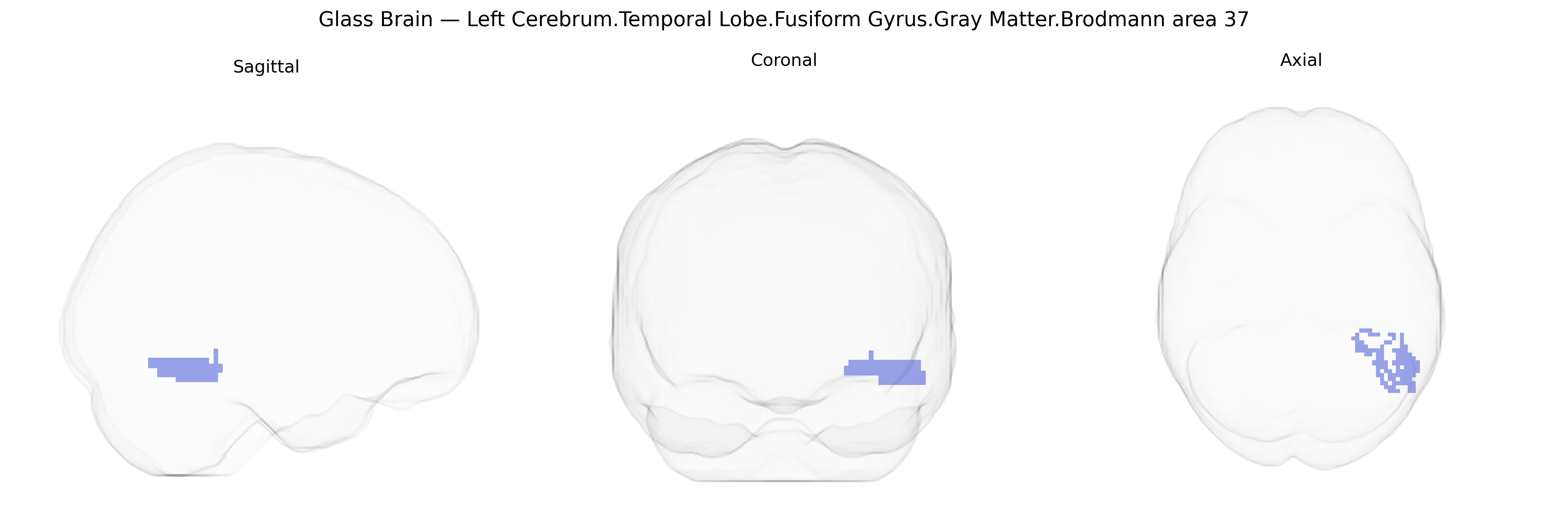
The bilateral Left Cerebrum.Temporal Lobe.Fusiform Gyrus.Gray Matter.Brodmann area 37 corresponds to a cortical region in the posterior fusiform gyrus of the temporal lobe, primarily involved in high-level visual processing and multimodal integration. Brodmann area 37 is associated with recognition of complex visual stimuli, including faces, objects, and written words, and contributes to semantic processing by linking visual input to stored conceptual knowledge. Neuronal populations in this gray matter region form part of the ventral visual stream (“what” pathway), connecting with occipital and anterior temporal areas to support perceptual categorization and memory retrieval. Lesions in this area have been implicated in visual agnosias and deficits in face and word recognition, underscoring its role in integrating visual form with meaning. There is no direct Wikipedia article for this exact composite label; a closely related structure is Fusiform gyrus.
The bilateral left fusiform gyrus (BA37) gray matter region has been repeatedly implicated in genetic studies of reading, language, and high-level visual processing, with GWAS and imaging-genetics work linking its structure and function to several neurodevelopmental and neuropsychiatric traits. Variants in genes associated with dyslexia and reading ability (e.g., DCDC2, KIAA0319, ROBO1, CNTNAP2) have been related to cortical volume or activation differences in left fusiform/occipitotemporal regions that encompass BA37, often termed the “visual word form area.” Polygenic risk for schizophrenia, bipolar disorder, and major depression has been associated with altered fusiform gyrus thickness or surface area in large ENIGMA and UK Biobank imaging-GWAS analyses, and common variants near genes such as GRM3, CACNA1C, and ZNF804A have been linked to fusiform and adjacent temporal lobe morphology or activation during face and emotion processing. GWAS of face recognition and social cognition have highlighted the fusiform face area within BA37, with polygenic influences from loci related to synaptic function and neurodevelopment (including regions near NRXN1 and other synapse-related genes) contributing to individual differences in face memory and autistic traits, consistent with fusiform hypoactivation seen in autism spectrum disorder. Additional GWAS of general cognitive ability, educational attainment, and brain volumetric measures have identified widespread polygenic effects on temporal and fusiform gray matter, indicating that this region’s structure and connectivity are shaped by many common variants of small effect that jointly influence reading, language, social perception, and vulnerability to mood and psychotic disorders.
Overview generated by GPT-4o (2026).
Region ID: 208
Hemisphere: bilateral
Atlas: Talairach labels 2mm
Full Quality Version: Download MP4
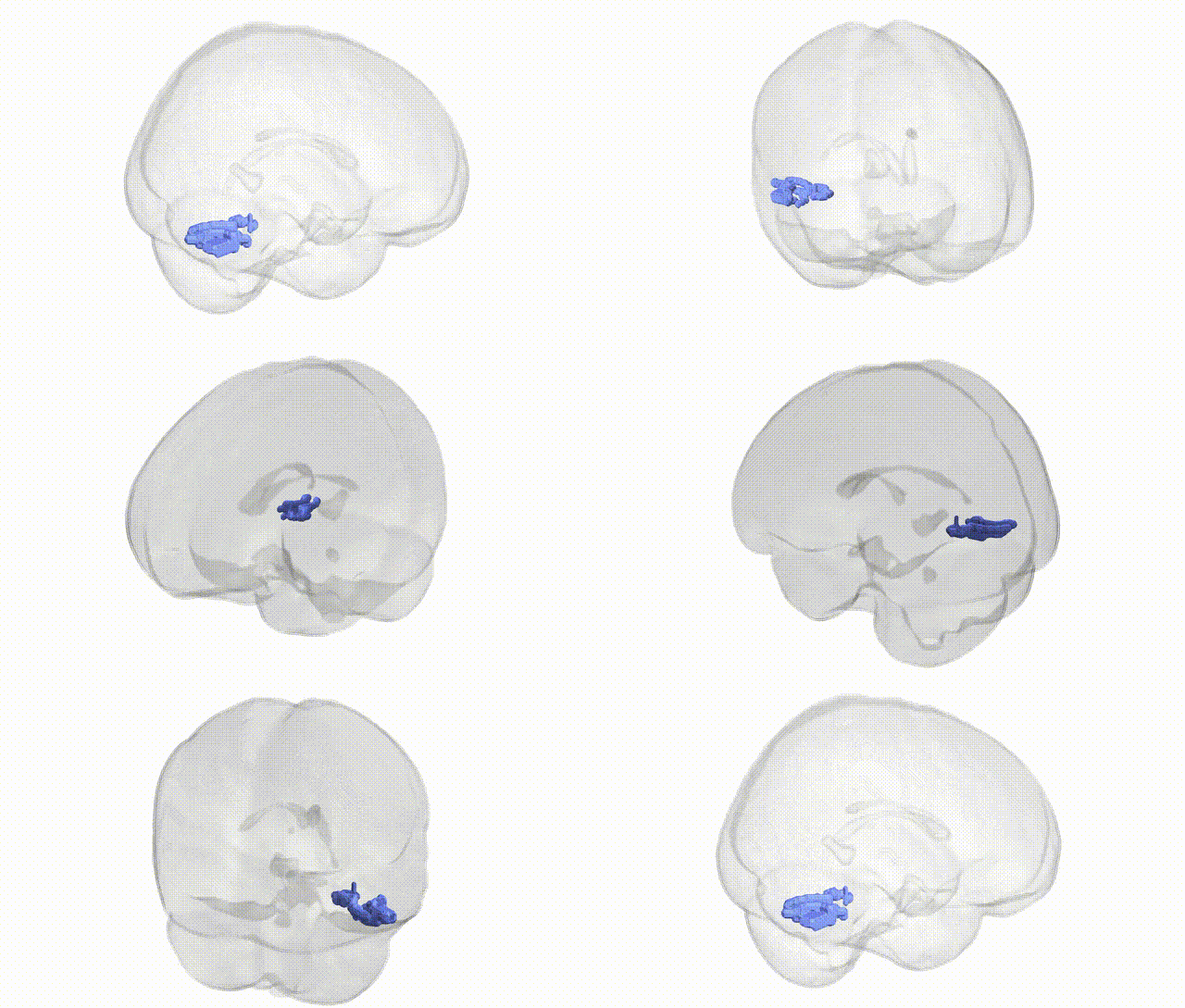
Full Quality Version: Download MP4
Wali Sidiqyar*, Gaurav Rudravaram*, Elyssa M. McMaster, Trent M. Schwartz, Adam M. Saunders, Kurt G. Schilling, Bennett A. Landman "Introducing SPINS: A Shared Public Visualization Library of Neuroanatomical Structures." Medical Imaging with Deep Learning- short paper
This resource is licensed under CC0 1.0 Universal (Public Domain).