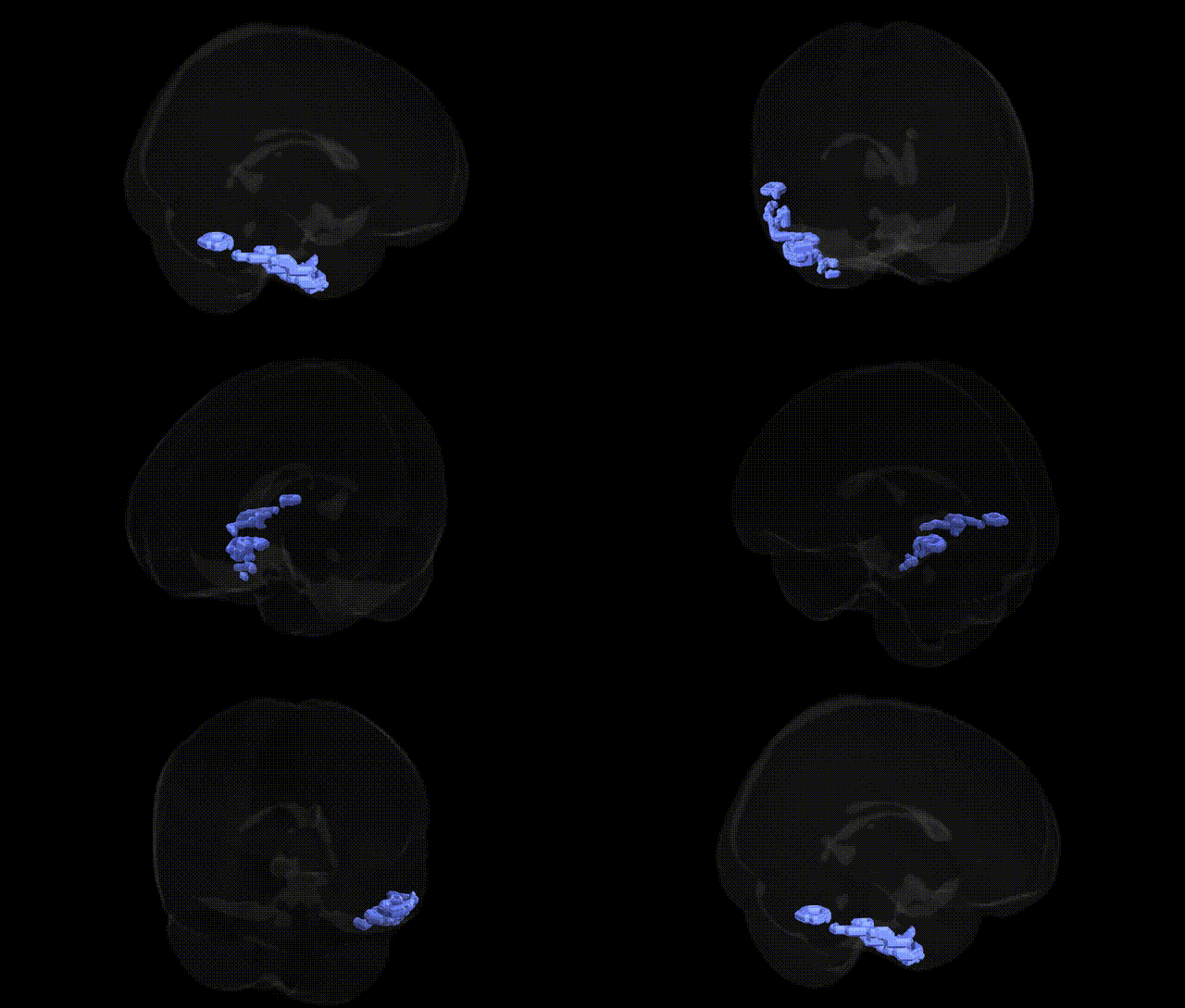
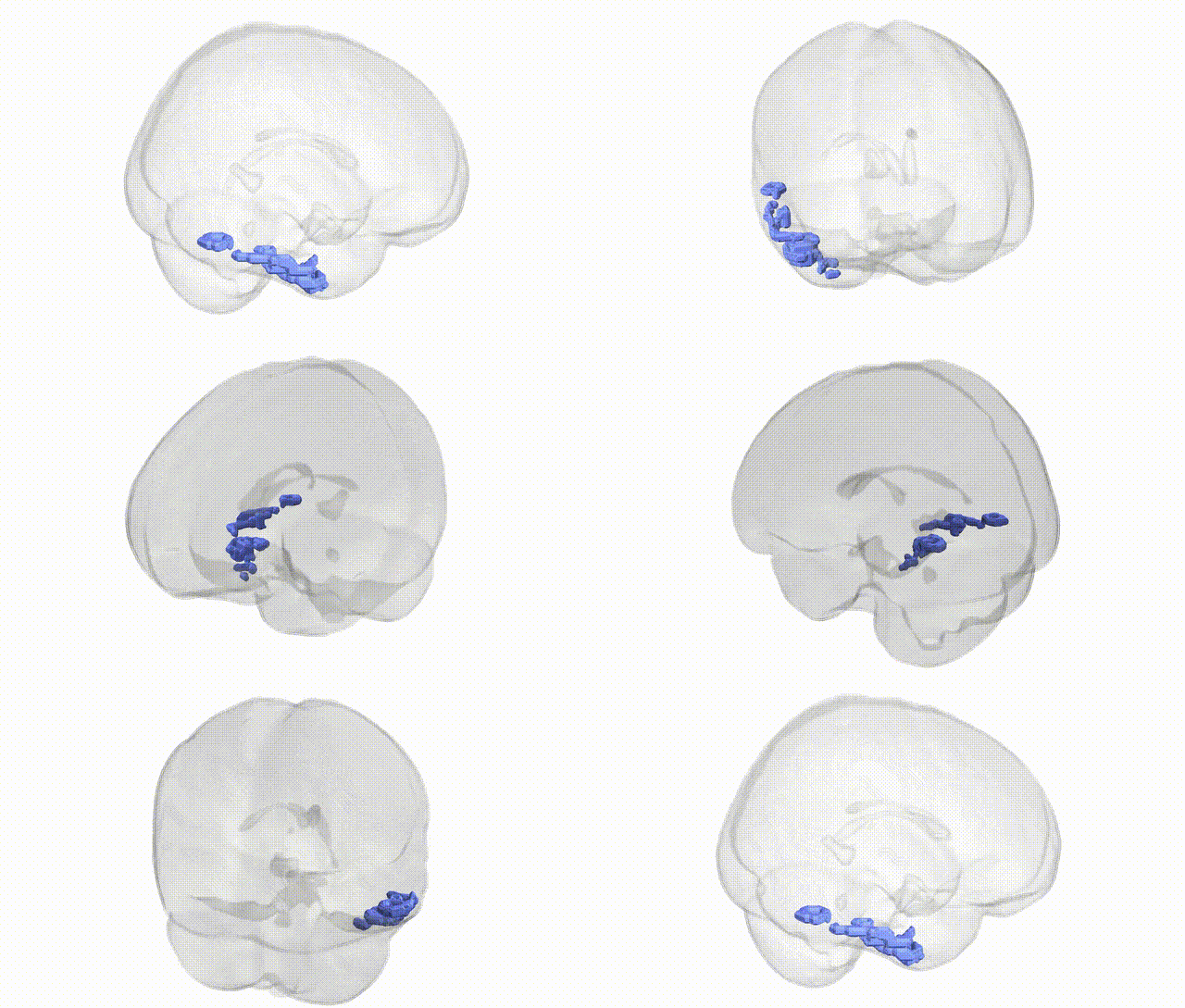
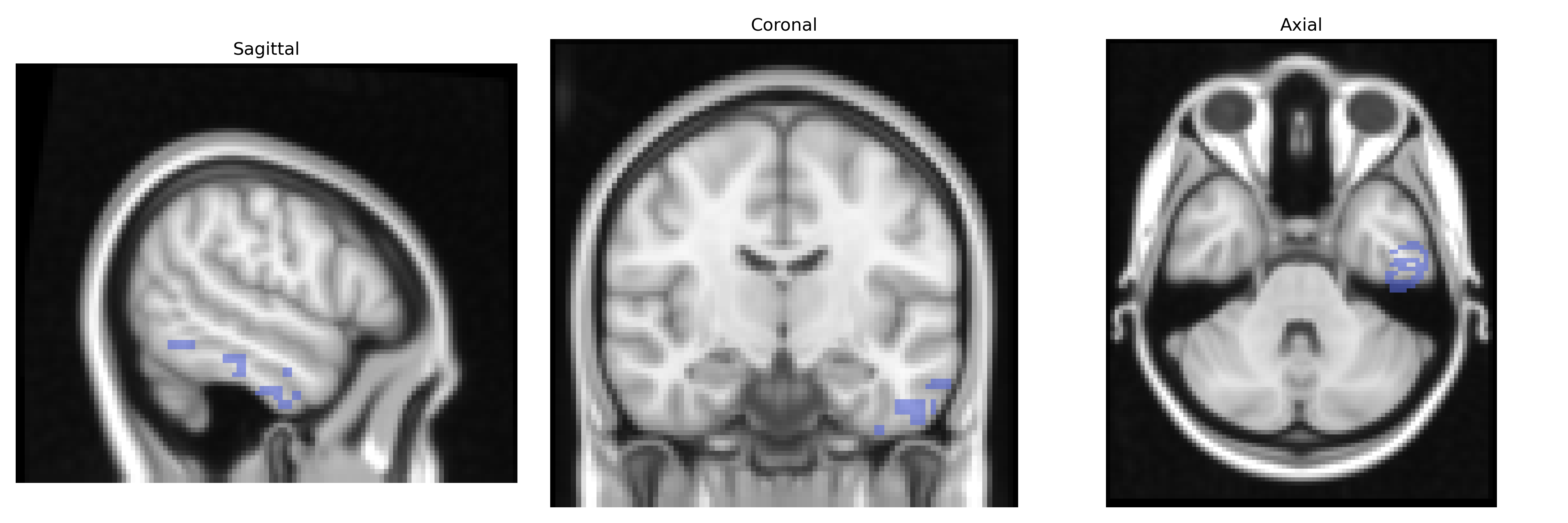
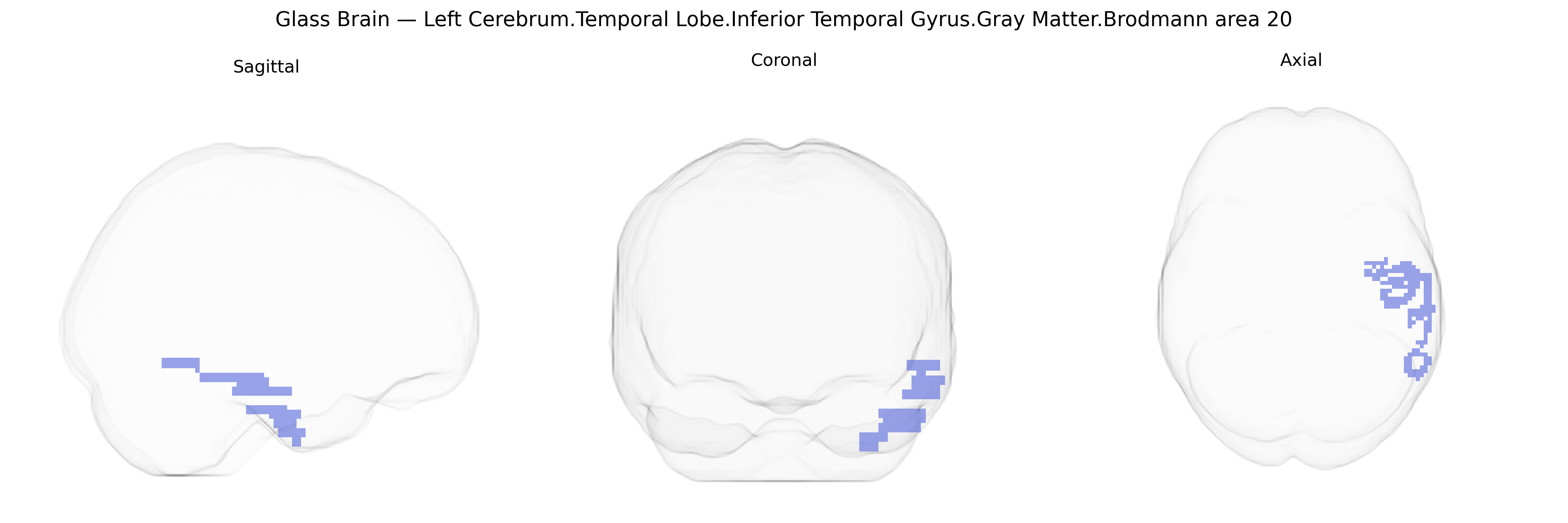
The bilateral Left Cerebrum.Temporal Lobe.Inferior Temporal Gyrus.Gray Matter.Brodmann area 20 corresponds to a ventral temporal cortical region involved primarily in high-level visual processing, including object recognition and the integration of complex visual features into coherent percepts. Situated in the inferior temporal gyrus of the left hemisphere, BA20 forms part of the ventral visual stream and contributes to semantic processing by linking visual inputs with stored conceptual representations, thus participating in language-related functions such as naming and comprehension of visually presented objects. Its gray matter contains pyramidal neurons organized in six cortical layers typical of association cortex, with extensive reciprocal connections to adjacent temporal areas, occipital visual regions, and limbic structures. There is no direct Wikipedia article for Brodmann area 20; a closely related structure is the inferior temporal gyrus: Inferior Temporal Gyrus.
The bilateral inferior temporal gyrus (ITG; Brodmann area 20) of the left temporal lobe has been implicated in genetic studies of higher-order visual processing, language, and social cognition, though most evidence comes from broader temporal or occipitotemporal measures rather than this specific Talairach-defined parcel. GWAS of cortical thickness and surface area have identified multiple loci (e.g., variants near genes involved in neurodevelopment and synaptic function such as MAPT, KIAA0586, and others) that influence temporal and inferior temporal morphology, with some overlap with risk loci for schizophrenia, bipolar disorder, and major depression, suggesting shared genetic architecture between temporal lobe structure and psychiatric disorders. Neuroimaging–genetics work in autism spectrum disorder and prosopagnosia has linked ITG and adjacent fusiform regions to genes affecting synaptic adhesion and neuronal migration (e.g., NRXN, NLGN families), consistent with this area’s role in face and object recognition. Temporal lobe structure, including inferior temporal cortex, has also been associated with Alzheimer’s disease and frontotemporal dementia risk genes (such as APOE and MAPT), reflecting vulnerability of higher-order visual and semantic networks to neurodegeneration. In language-related GWAS and candidate gene studies, left temporal and inferior temporal activations during reading and semantic tasks show associations with variants in CNTNAP2, FOXP2-related networks, and common polygenic influences on educational attainment and cognitive performance, indicating that BA20 participates in genetically influenced circuits for visual word processing and semantic integration. Overall, genetic findings point to polygenic influences on gray matter volume and function in this region that intersect with pathways for neurodevelopment, synaptic plasticity, and neurodegenerative disease, but highly specific associations to the exact “Left Cerebrum.Temporal Lobe.Inferior Temporal Gyrus.Gray Matter.Brodmann area 20” Talairach label remain limited, with most results reported at the level of larger temporal lobe or occipitotemporal territories.
Overview generated by GPT-4o (2026).
Region ID: 8
Hemisphere: bilateral
Atlas: Talairach labels 2mm
Full Quality Version: Download MP4
Full Quality Version: Download MP4
Wali Sidiqyar*, Gaurav Rudravaram*, Elyssa M. McMaster, Trent M. Schwartz, Adam M. Saunders, Kurt G. Schilling, Bennett A. Landman "Introducing SPINS: A Shared Public Visualization Library of Neuroanatomical Structures." Medical Imaging with Deep Learning- short paper
This resource is licensed under CC0 1.0 Universal (Public Domain).