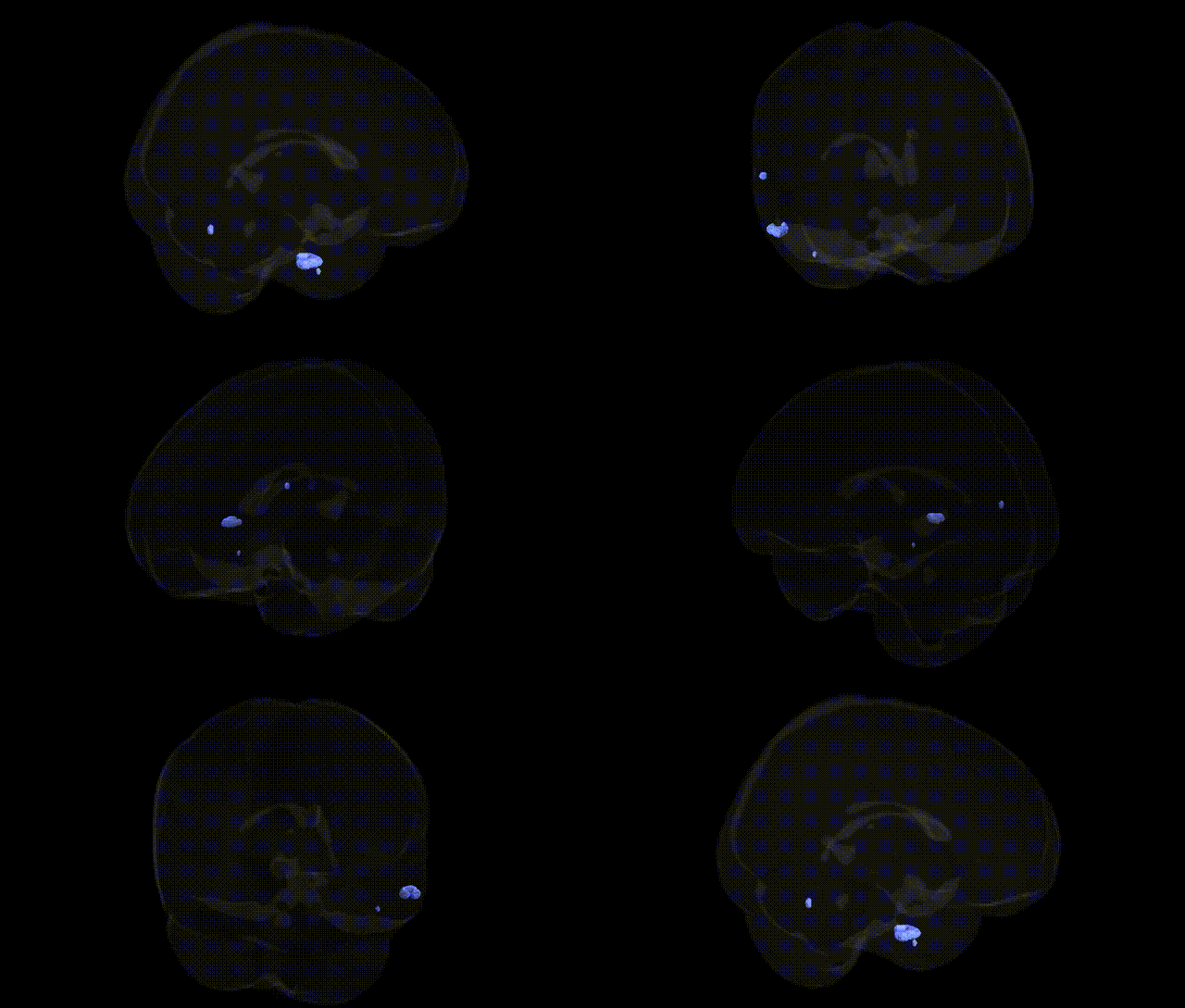
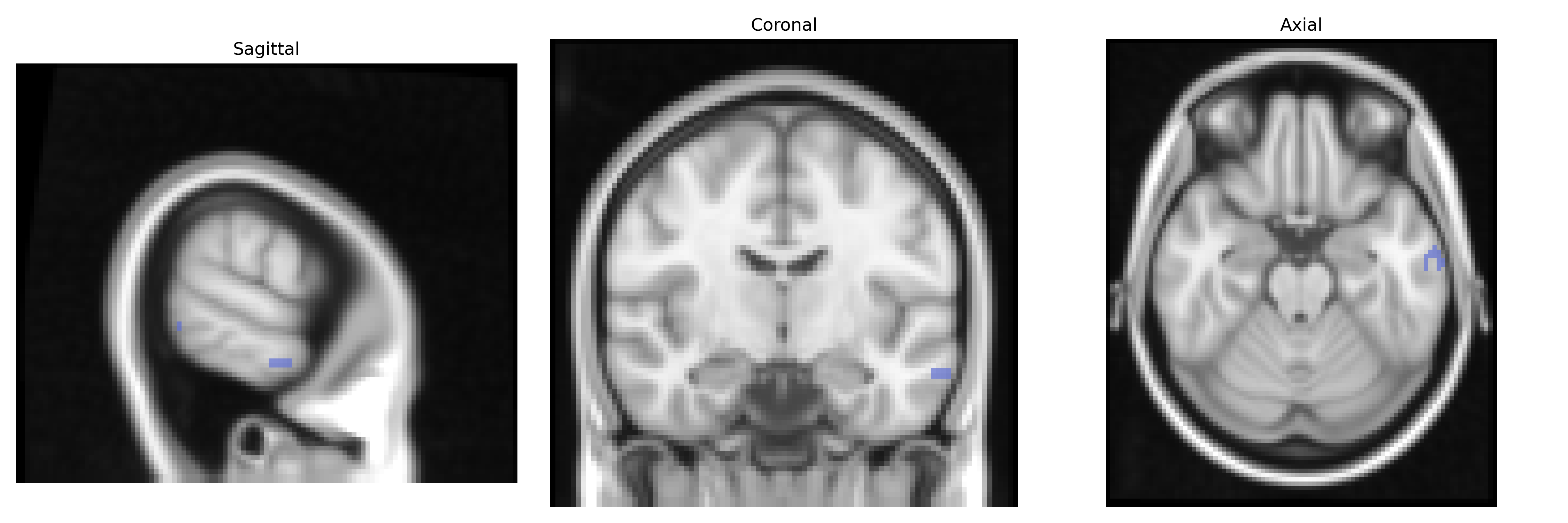
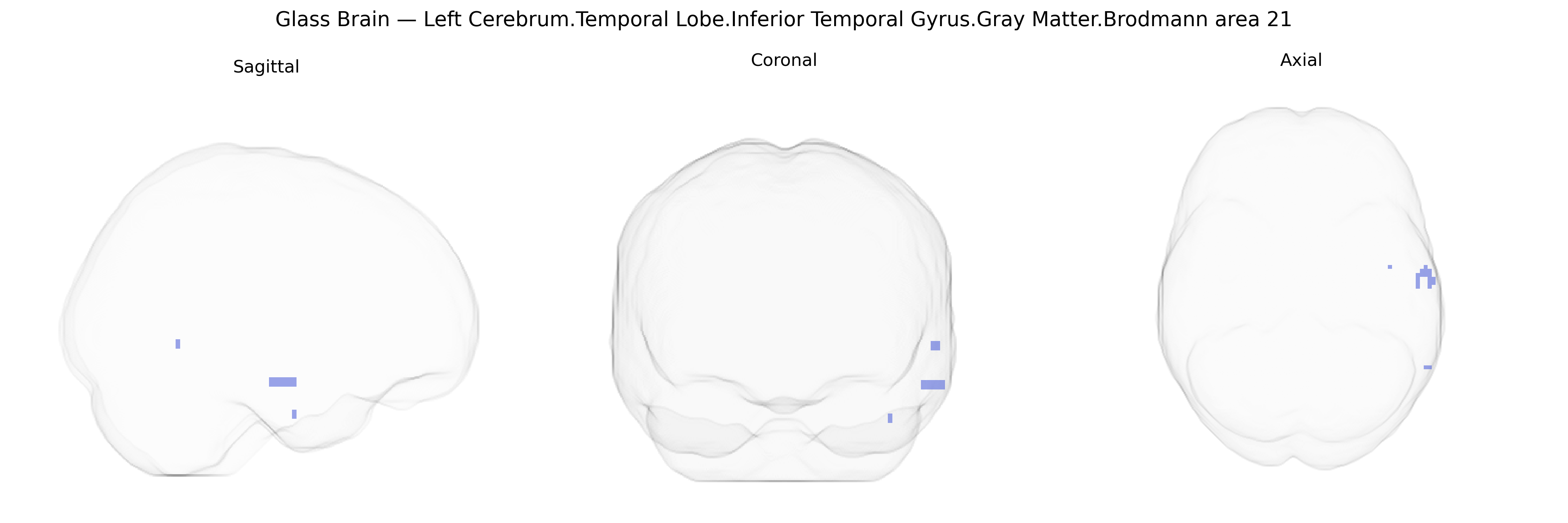
Bilateral Left Cerebrum.Temporal Lobe.Inferior Temporal Gyrus.Gray Matter.Brodmann area 21 corresponds to association cortex located on the middle and inferior aspects of the temporal lobe, involved in higher-order auditory and visual processing and multimodal integration. Cytoarchitectonically defined by its granular layer IV and differentiated pyramidal layers III and V, Brodmann area 21 participates in language comprehension, semantic processing, and aspects of social cognition, as well as in the recognition and interpretation of complex stimuli such as faces and objects. Functionally, this region forms part of the lateral temporal association network, with extensive reciprocal connections to other temporal areas, prefrontal cortex, and limbic structures, supporting memory retrieval, conceptual knowledge, and integration of sensory information into coherent perceptual and linguistic representations. There is no direct link for “Brodmann area 21” as a standalone article; a closely related structure is the Temporal lobe.
The inferior temporal gyrus (ITG) in Brodmann area 21, bilaterally in the left temporal lobe, has been implicated in genetic studies of language, social cognition, and neuropsychiatric disorders, although most findings involve broader temporal regions rather than this precise Talairach-defined parcel. GWAS and imaging–genetics studies of cortical thickness and surface area have linked common variants in genes such as TBR1, DACT1, and microtubule-associated and synaptic genes (e.g., MAPT, GRIN2B, CNTNAP2, SHANK3) to structural variability in lateral temporal cortex, including ITG, which is central to semantic processing and higher-order visual recognition. Risk loci for schizophrenia, major depressive disorder, and autism spectrum disorder have been associated with altered gray matter volume and functional activation in BA21/ITG, with polygenic risk scores for these disorders correlating with temporal lobe morphometry in ENIGMA and UK Biobank analyses. FOXP2-related language dysfunction and familial primary progressive aphasia show structural and functional changes in left BA21, and Alzheimer’s disease risk genes (APOE, CLU, BIN1) have been linked to atrophy and hypometabolism in temporal association cortex encompassing this region. Additionally, GWAS of face recognition, reading and dyslexia, and social communication traits have reported associations with genetic variants regulating synaptic plasticity and neurodevelopment that modulate activation patterns and gray matter features in inferior temporal and adjacent fusiform areas, underscoring a genetically influenced role of BA21 in semantic, visual, and social information processing across multiple cognitive and clinical phenotypes.
Overview generated by GPT-4o (2026).
Region ID: 97
Hemisphere: bilateral
Atlas: Talairach labels 2mm
Full Quality Version: Download MP4
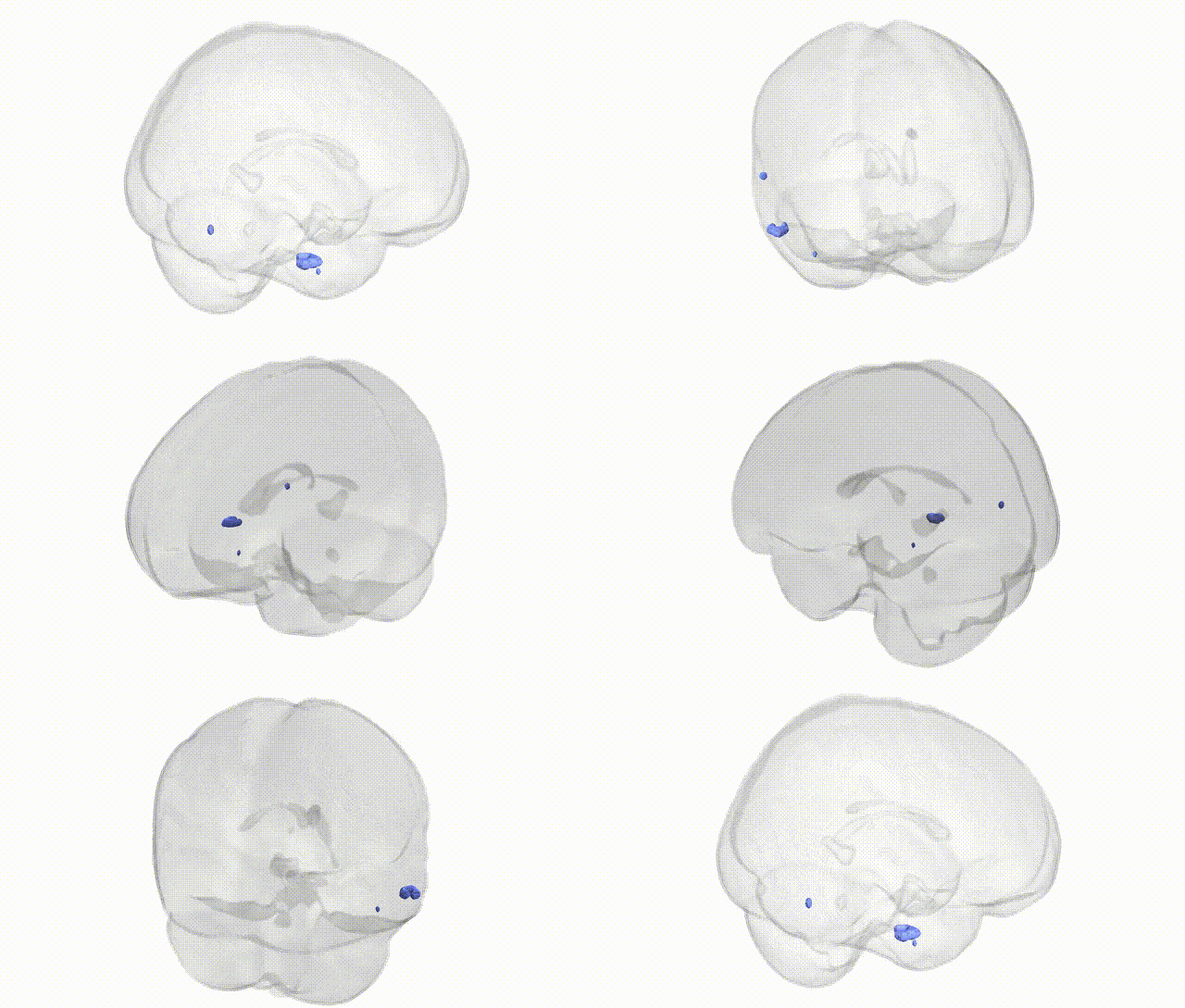
Full Quality Version: Download MP4
Wali Sidiqyar*, Gaurav Rudravaram*, Elyssa M. McMaster, Trent M. Schwartz, Adam M. Saunders, Kurt G. Schilling, Bennett A. Landman "Introducing SPINS: A Shared Public Visualization Library of Neuroanatomical Structures." Medical Imaging with Deep Learning- short paper
This resource is licensed under CC0 1.0 Universal (Public Domain).