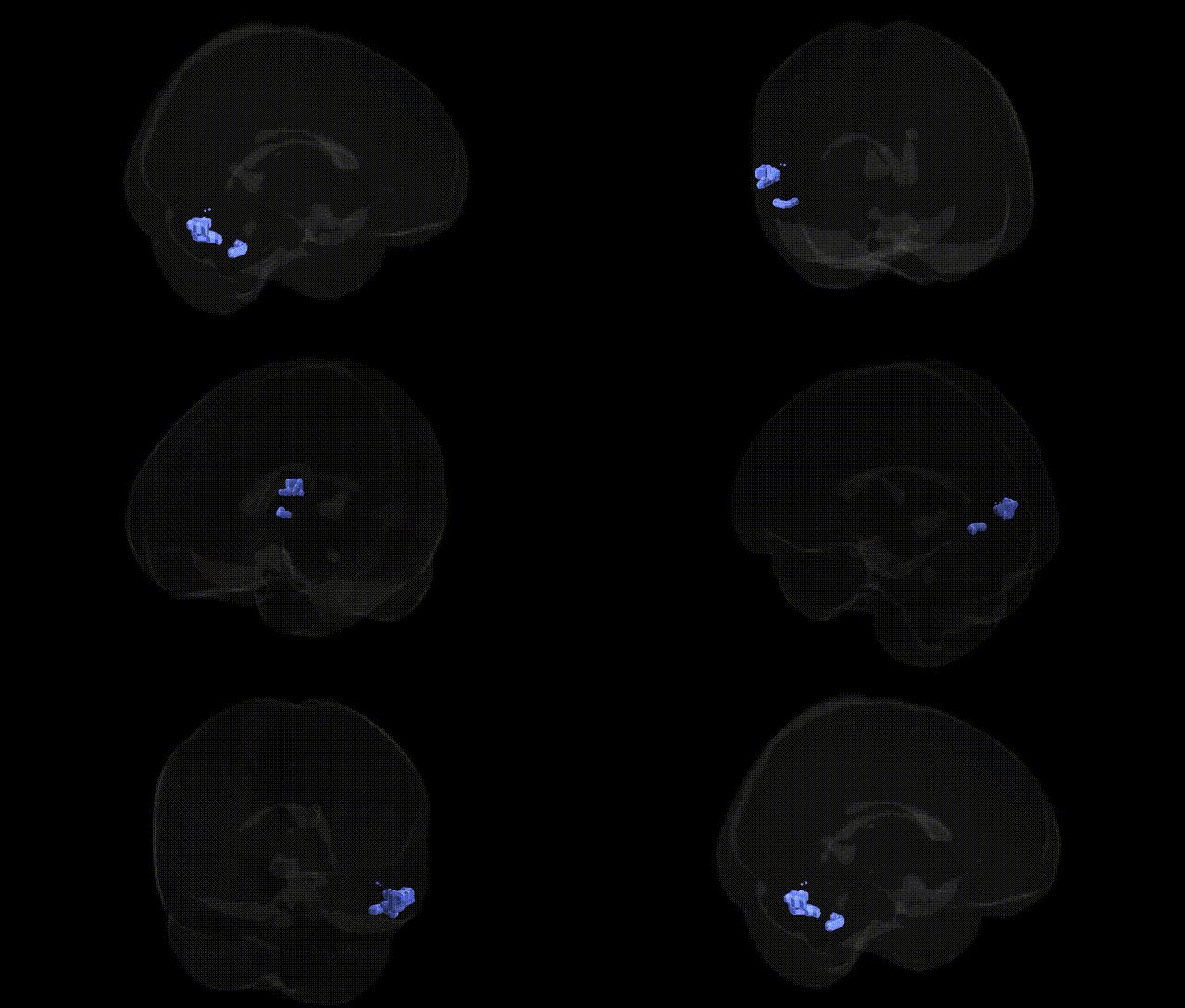
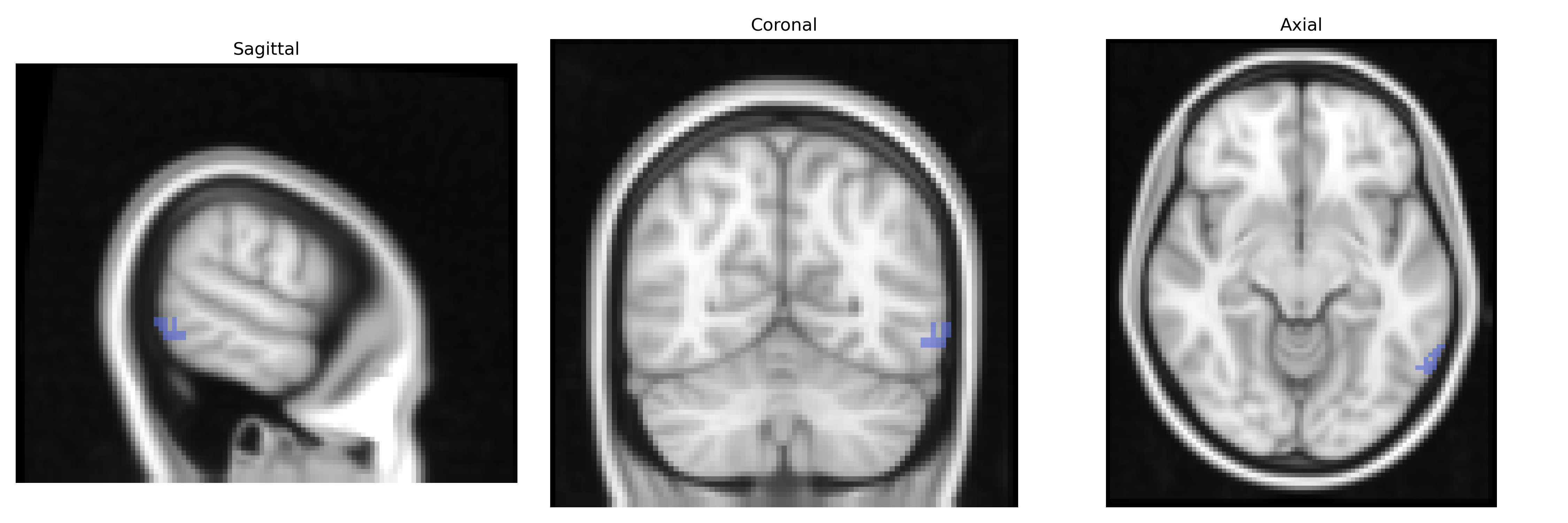
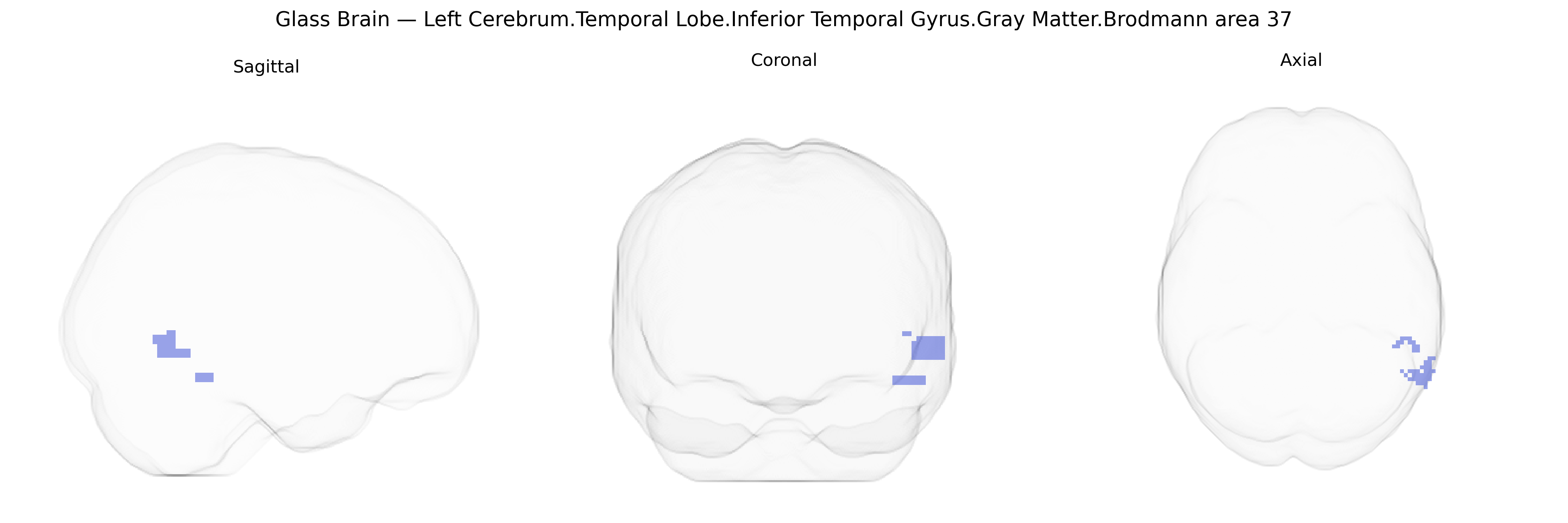
The bilateral Left Cerebrum.Temporal Lobe.Inferior Temporal Gyrus.Gray Matter.Brodmann area 37 corresponds to a higher-order visual association region located in the posterior-inferior temporal cortex, bordering the occipitotemporal junction. Brodmann area 37 is strongly implicated in complex visual processing, including object recognition, face and word-form perception, and the multimodal integration of visual stimuli with semantic memory. Neuronal populations in this area receive processed visual input from earlier extrastriate regions and contribute to the transformation of visual patterns into meaningful, language-related and identity-related representations. Functionally, it is part of the ventral visual stream (“what” pathway) and overlaps with regions often associated with the fusiform gyrus and adjacent inferior temporal cortex. There is no direct link for “Brodmann area 37” itself; a closely related structure is the Fusiform gyrus.
Brodmann area 37 in the inferior temporal gyrus, a key component of the ventral visual stream and language-related circuitry, has been implicated in multiple genetic and GWAS findings through imaging-genetics and disorder-focused studies. Variants in genes involved in synaptic plasticity, neurodevelopment, and glutamatergic signaling—such as BDNF (e.g., Val66Met), CNTNAP2, FOXP2, and DCDC2—have been associated with structural and functional differences in this region, particularly in relation to reading ability, developmental dyslexia, and language processing. Large-scale GWAS of brain morphology (e.g., ENIGMA and UK Biobank–based work) have identified polygenic influences on temporal lobe gray matter volume and cortical thickness, with BA37 contributing to loci linked to general cognitive ability, educational attainment, and schizophrenia risk. BA37 activation and structure have also been shown to vary with common variants in autism- and social cognition–related genes (such as those affecting oxytocin and serotonin pathways) in studies of face processing and fusiform gyrus function, reflecting the overlap between BA37 and fusiform regions. Additionally, imaging-genetic research in Alzheimer’s disease, frontotemporal dementia, and temporal lobe epilepsy has linked APOE and other neurodegeneration-related loci to atrophy patterns and connectivity changes encompassing this inferior temporal/Brodmann 37 territory, underscoring its role as a convergent substrate for genetic influences on visual recognition, language, and higher-order cognition.
Overview generated by GPT-4o (2026).
Region ID: 213
Hemisphere: bilateral
Atlas: Talairach labels 2mm
Full Quality Version: Download MP4
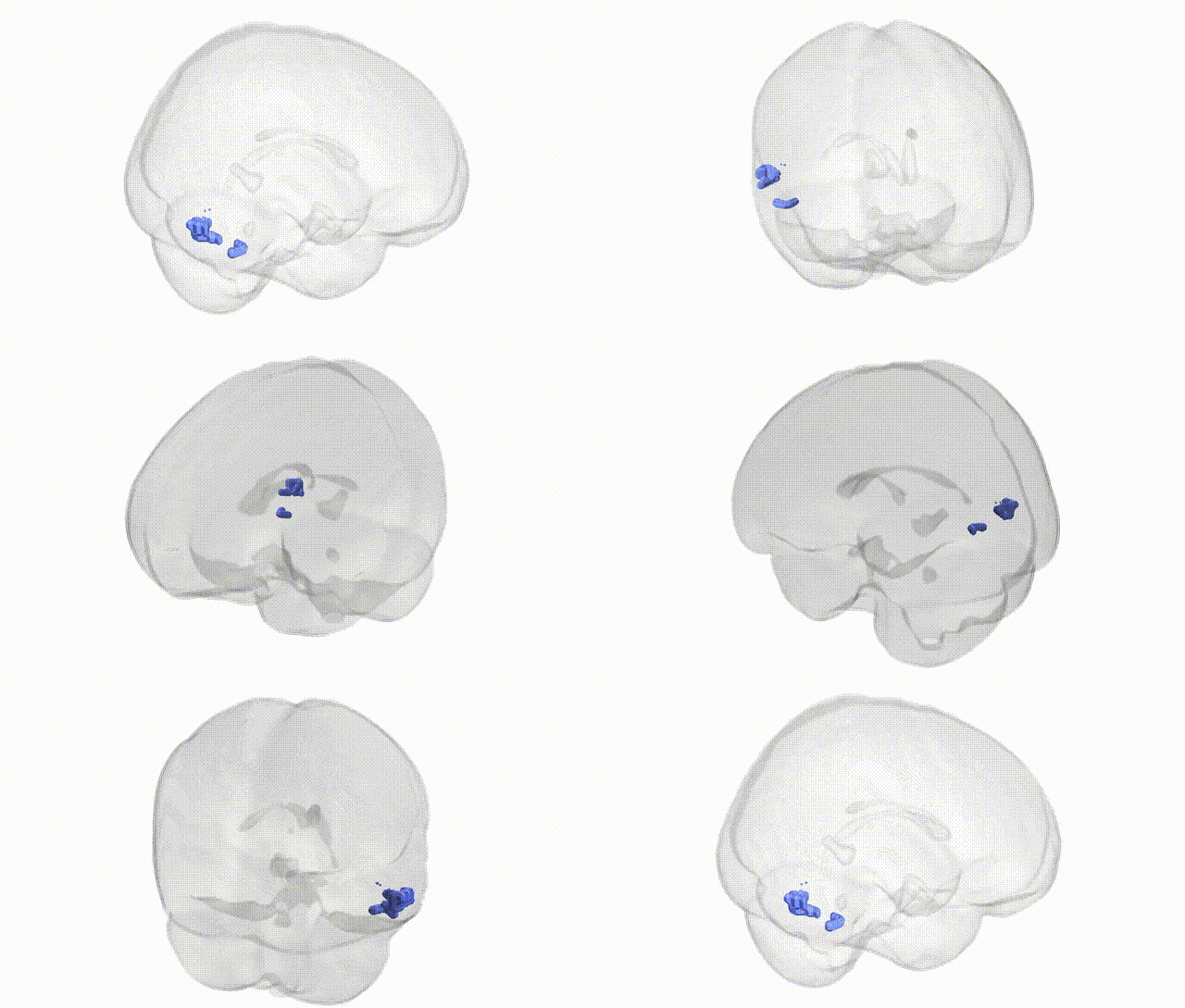
Full Quality Version: Download MP4
Wali Sidiqyar*, Gaurav Rudravaram*, Elyssa M. McMaster, Trent M. Schwartz, Adam M. Saunders, Kurt G. Schilling, Bennett A. Landman "Introducing SPINS: A Shared Public Visualization Library of Neuroanatomical Structures." Medical Imaging with Deep Learning- short paper
This resource is licensed under CC0 1.0 Universal (Public Domain).