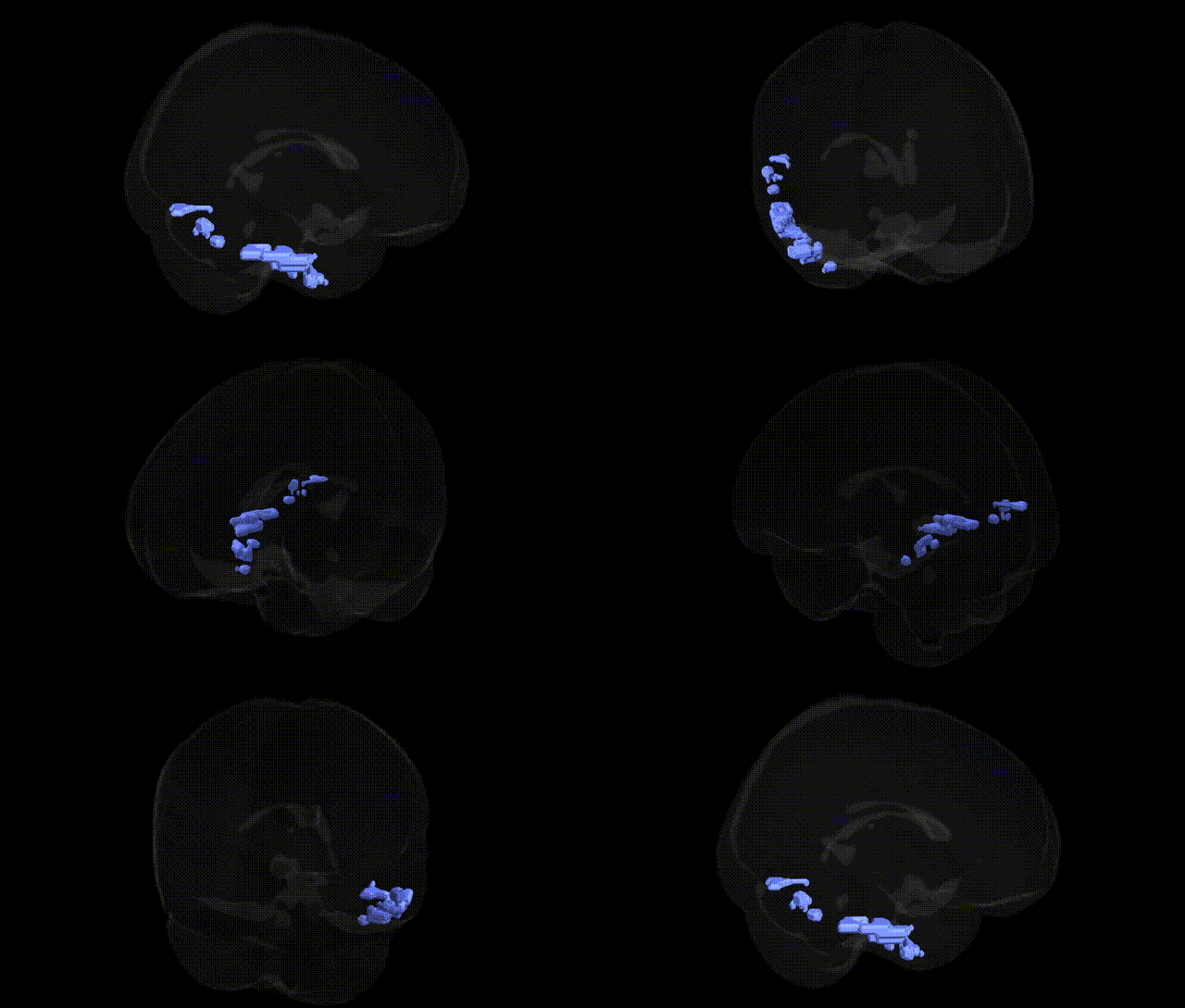
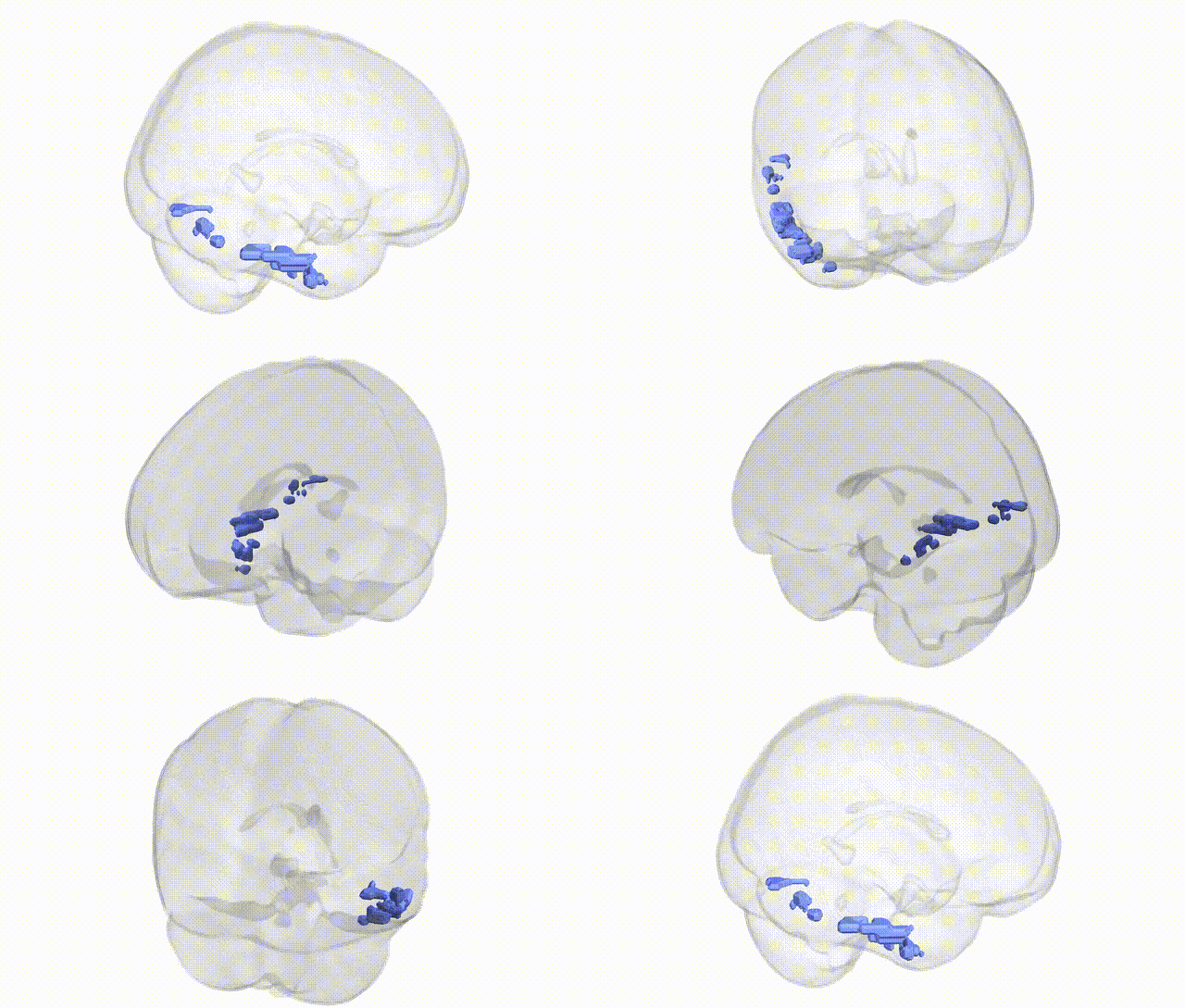
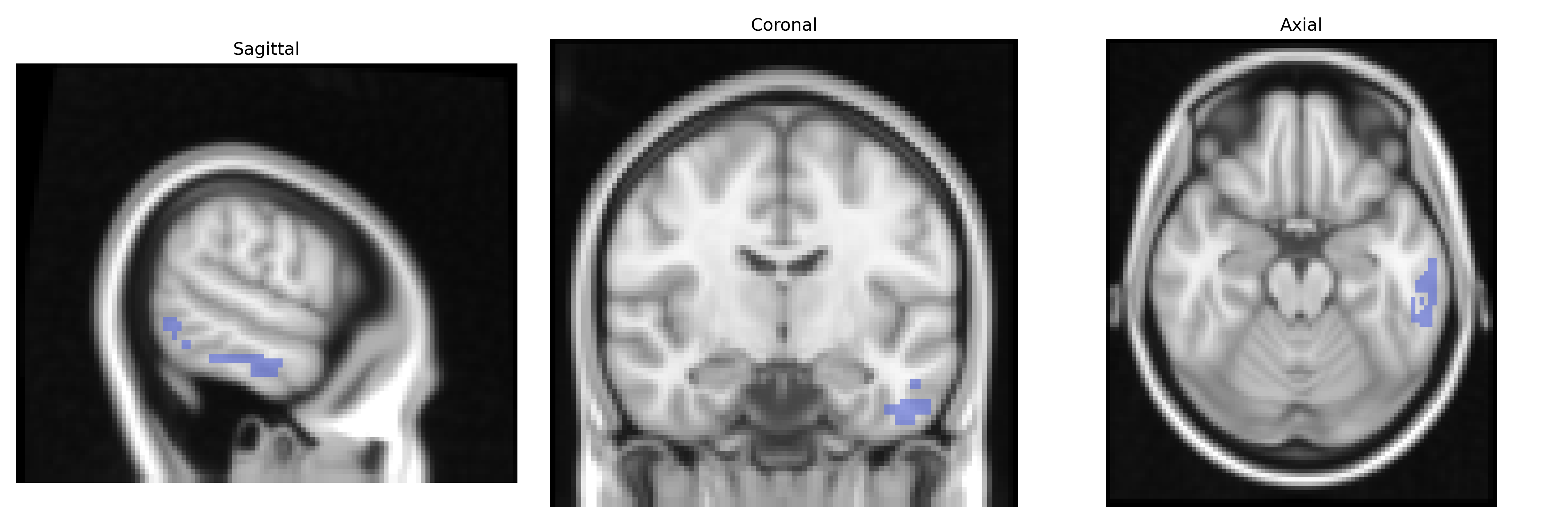
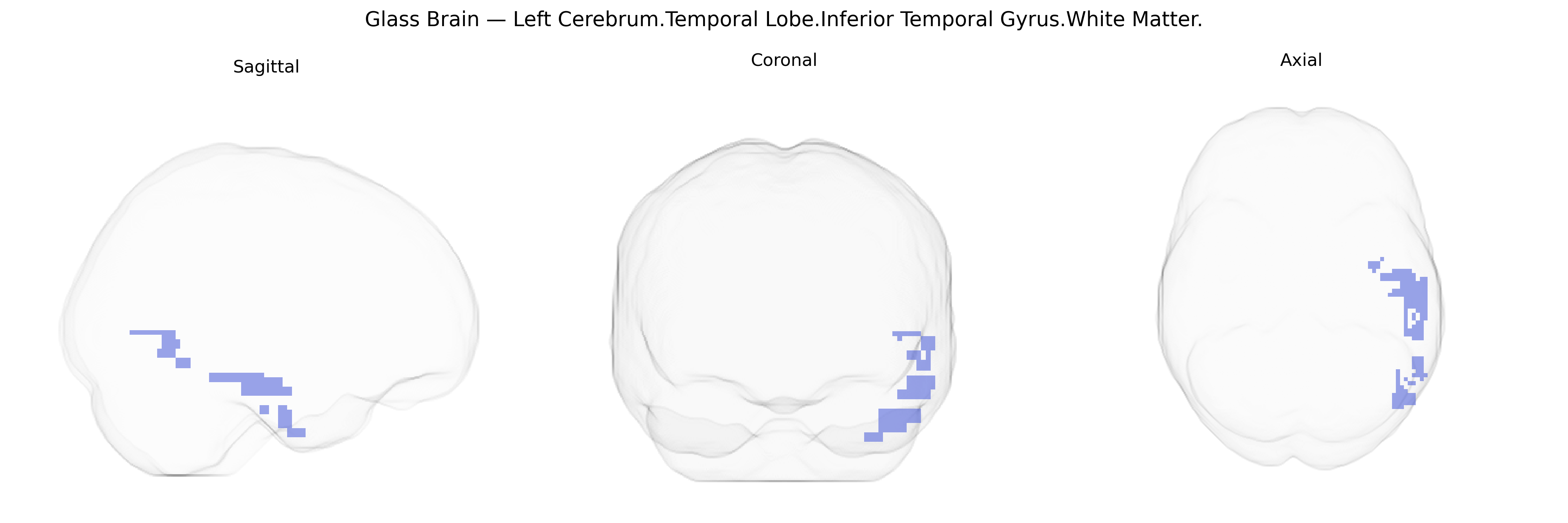
The bilateral Left Cerebrum.Temporal Lobe.Inferior Temporal Gyrus.White Matter corresponds to the deep myelinated fiber tracts underlying the inferior temporal gyrus in the left temporal lobe, serving as conduits for cortico-cortical and cortico-subcortical communication related to high-level visual processing. These fibers connect inferior temporal cortex—central to object recognition, complex visual feature analysis, and aspects of semantic processing—with adjacent temporal, occipital, and limbic regions, as well as long-range association pathways such as portions of the inferior longitudinal fasciculus and other ventral stream fibers. Functionally, this white matter supports integration and rapid transfer of visual and semantic information within the ventral visual stream, contributing to recognition of faces, objects, and visual categories, and disruptions may affect visual agnosia or related higher-order perceptual deficits. There is no direct link for the white matter of the inferior temporal gyrus; a related cortical structure is Inferior temporal gyrus.
The bilateral left cerebrum temporal lobe inferior temporal gyrus white matter, as defined in the Talairach 2 mm atlas, participates in visual object recognition and higher-order semantic processing, and its microstructural and volumetric variation has been implicated in numerous genetic studies, although few findings are specific to this exact parcel. Large neuroimaging GWAS consortia such as ENIGMA and UK Biobank have identified common variants in genes involved in neurodevelopment, axon guidance, and myelination (e.g., CNTNAP2, NRGN, BDNF, MAG, and multiple 3p, 6p, and 17q loci) that influence temporal lobe white matter integrity and cortical thickness, with diffusion MRI measures (FA, MD) in inferior and middle temporal tracts showing heritability and polygenic contributions. Temporal lobe white matter abnormalities encompassing or adjacent to the inferior temporal gyrus have been linked via genetic association to schizophrenia and psychosis risk (e.g., CACNA1C, ZNF804A, and other synaptic/neuronal signaling genes), autism spectrum disorder (genes such as SHANK3, NRXN1, and CNTNAP2, often affecting temporal connectivity), and major depressive disorder, where risk polygenic scores correlate with reduced temporal lobe white matter integrity. In Alzheimer’s disease and related dementias, APOE ε4, CLU, PICALM, and other GWAS hits are associated with widespread temporal lobe atrophy and white matter changes, including in tracts supporting inferior temporal regions, while language-related and reading traits show polygenic associations with temporal lobe microstructure in this territory, particularly in studies of dyslexia and language impairment implicating loci near DCDC2 and KIAA0319. Overall, genetic influences on this region are best characterized at the level of temporal lobe white matter and object/semantic processing networks rather than at the exact Talairach parcel, with convergent evidence that neurodevelopmental, synaptic, and myelination genes contribute to interindividual differences and vulnerability to psychiatric and neurodegenerative disorders affecting inferior temporal circuitry.
Overview generated by GPT-4o (2026).
Region ID: 14
Hemisphere: bilateral
Atlas: Talairach labels 2mm
Full Quality Version: Download MP4
Full Quality Version: Download MP4
Wali Sidiqyar*, Gaurav Rudravaram*, Elyssa M. McMaster, Trent M. Schwartz, Adam M. Saunders, Kurt G. Schilling, Bennett A. Landman "Introducing SPINS: A Shared Public Visualization Library of Neuroanatomical Structures." Medical Imaging with Deep Learning- short paper
This resource is licensed under CC0 1.0 Universal (Public Domain).