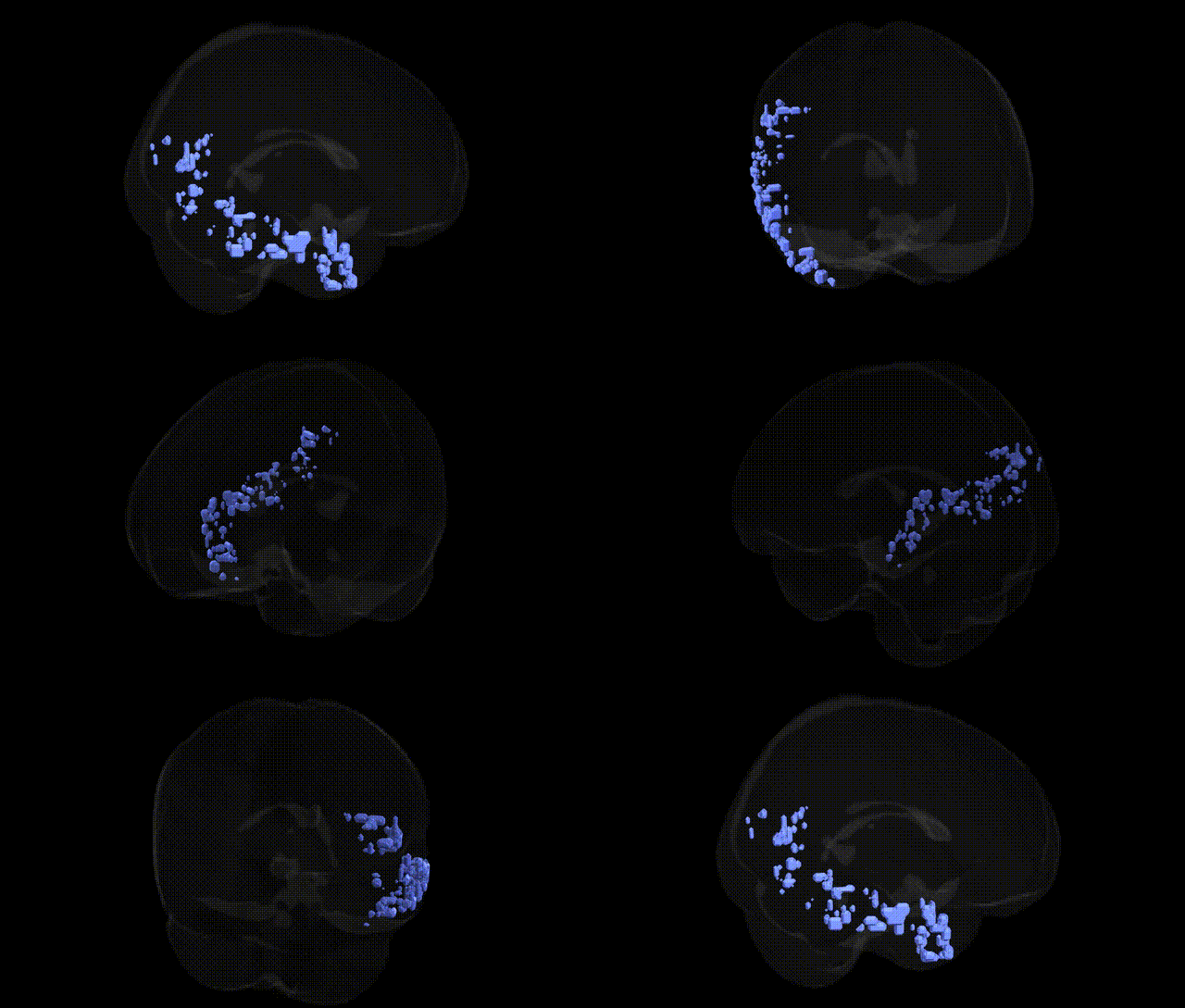
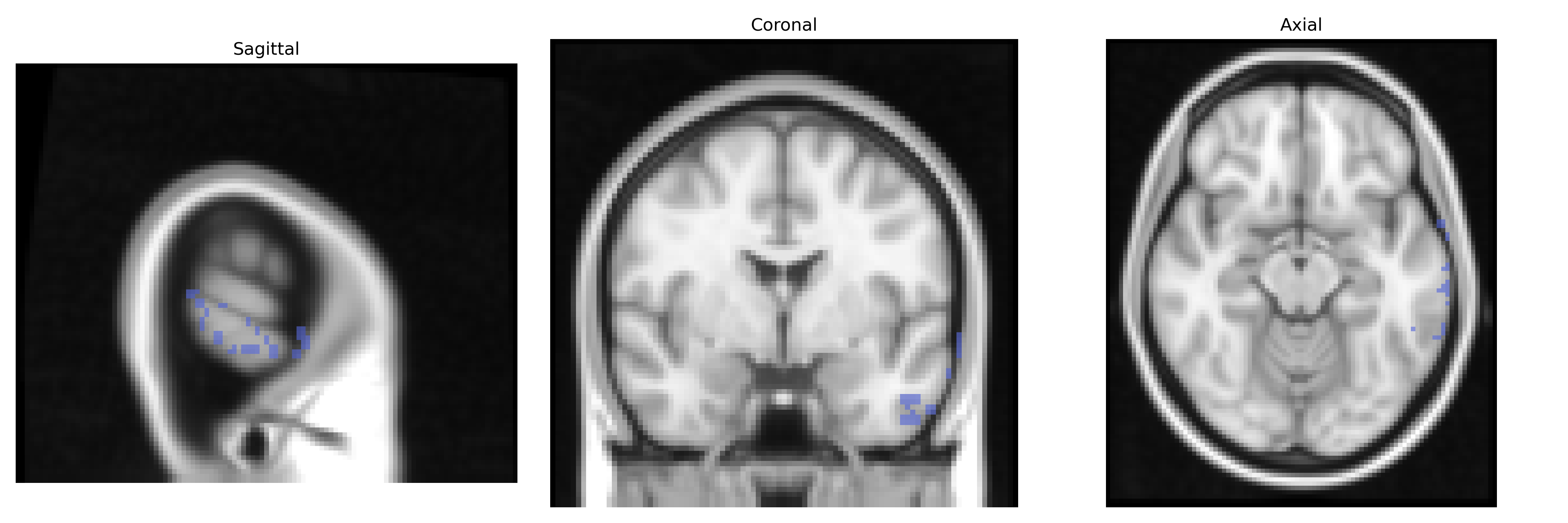
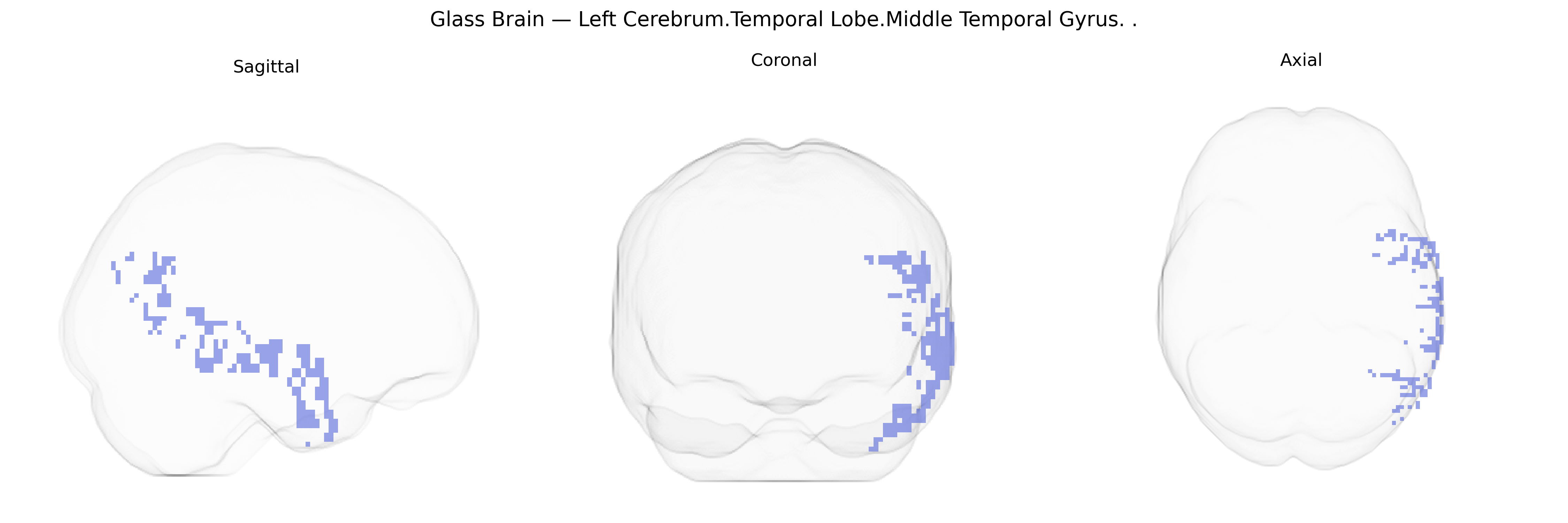
The bilateral Left Cerebrum.Temporal Lobe.Middle Temporal Gyrus corresponds to cortical tissue located on the lateral aspect of the temporal lobe, between the superior and inferior temporal gyri, and extending anteroposteriorly along the middle portion of the temporal cortex. This region participates in multimodal integration of auditory, visual, and linguistic information, including roles in semantic processing, word meaning, and aspects of language comprehension, as well as high-level visual perception such as motion and object-related processing. It forms part of distributed networks underpinning conceptual knowledge, social cognition, and some components of memory retrieval, with functional specializations that may differ between hemispheres but overall contribute to complex association functions of the temporal lobe. There is no direct link for the middle temporal gyrus; for a related structure see Temporal lobe.
The bilateral left middle temporal gyrus (MTG) of the temporal lobe, as defined in the Talairach 2 mm atlas, is a key language and semantic processing region that has been implicated in several genetic and genome-wide association (GWAS) findings. Structural MRI GWAS have identified variants in genes such as KIAA0586, LRP1B, and others associated with temporal lobe and MTG cortical thickness and surface area, reflecting heritable influences on its morphology. Functional and imaging-genetics studies link FOXP2, CNTNAP2, and other language-related genes to activity and connectivity in left MTG during speech, semantic, and reading tasks, and to disorders such as developmental language disorder, dyslexia, and autism spectrum disorder, in which left temporal regions are frequently altered. Schizophrenia and major depressive disorder GWAS and polygenic risk score studies show that genetic risk for these disorders is associated with volumetric and connectivity changes in the left temporal cortex, including MTG, often in relation to genes involved in synaptic function (e.g., GRIN2A, CACNA1C) and glutamatergic signaling. Large neuroimaging consortia (e.g., ENIGMA) have further demonstrated that common genetic variants influencing general brain development and neuropsychiatric risk contribute to interindividual differences in MTG structure and function, reinforcing its role as a genetically modulated hub for language, social cognition, and psychiatric vulnerability.
Overview generated by GPT-4o (2026).
Region ID: 32
Hemisphere: bilateral
Atlas: Talairach labels 2mm
Full Quality Version: Download MP4
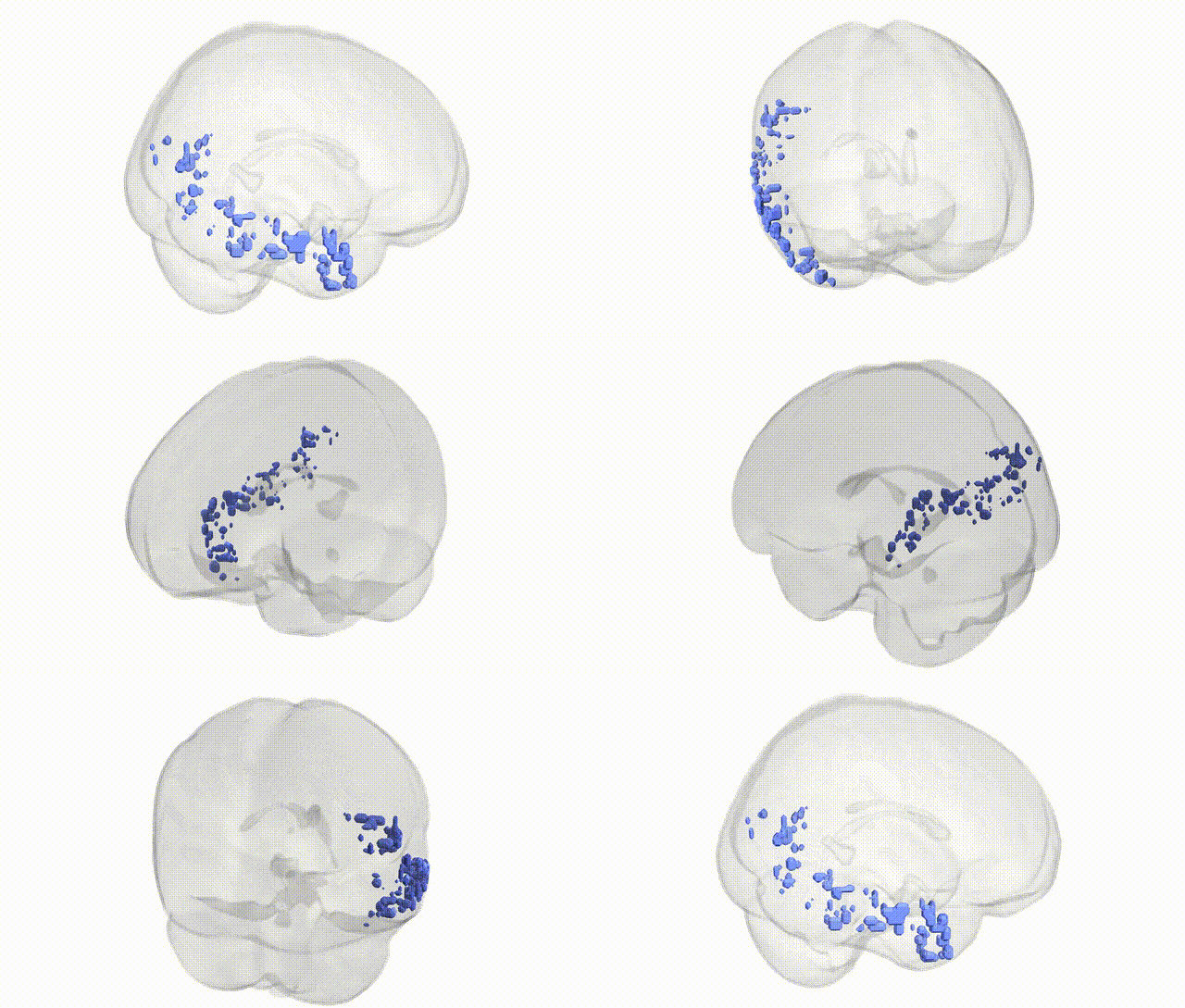
Full Quality Version: Download MP4
Wali Sidiqyar*, Gaurav Rudravaram*, Elyssa M. McMaster, Trent M. Schwartz, Adam M. Saunders, Kurt G. Schilling, Bennett A. Landman "Introducing SPINS: A Shared Public Visualization Library of Neuroanatomical Structures." Medical Imaging with Deep Learning- short paper
This resource is licensed under CC0 1.0 Universal (Public Domain).