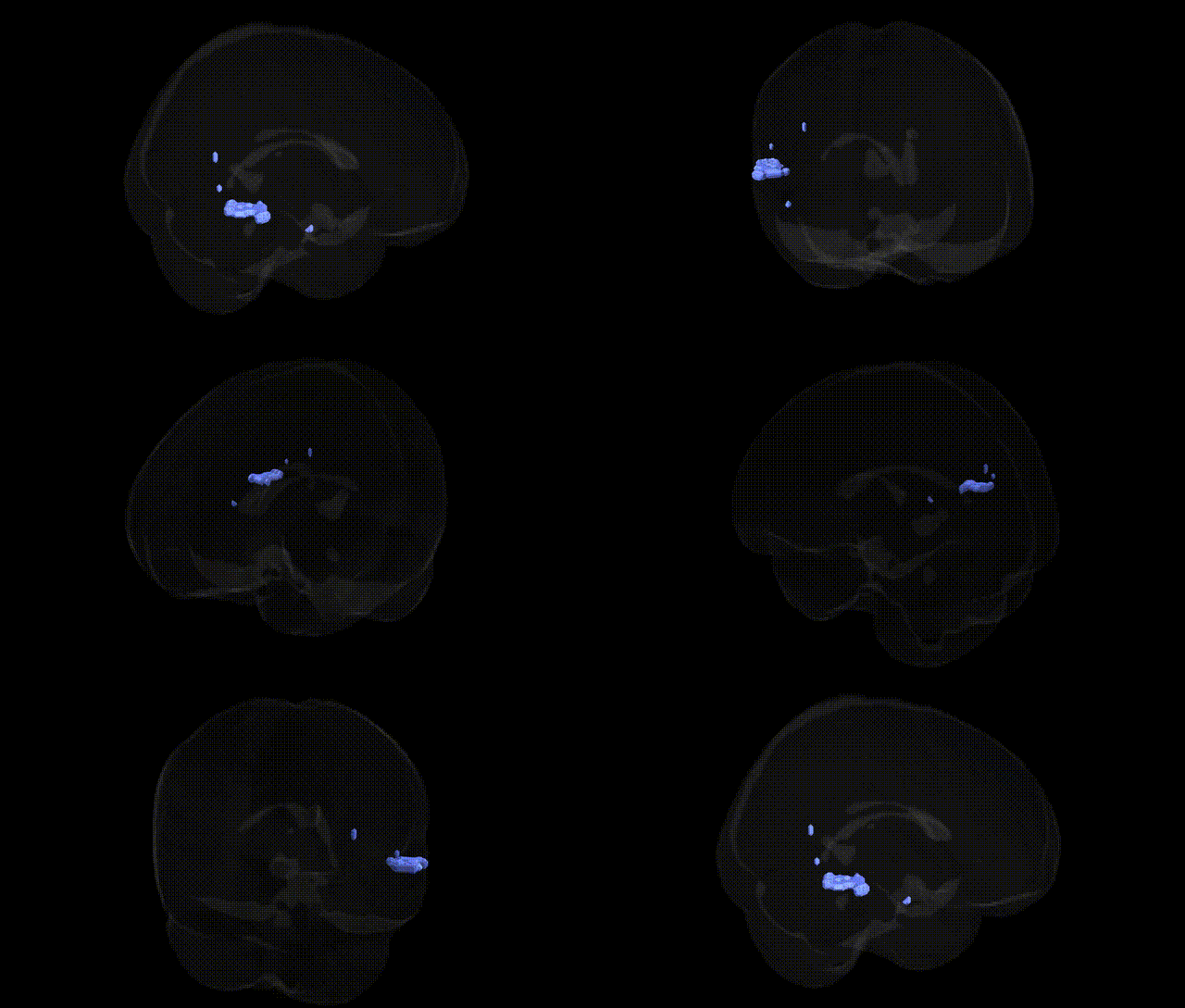
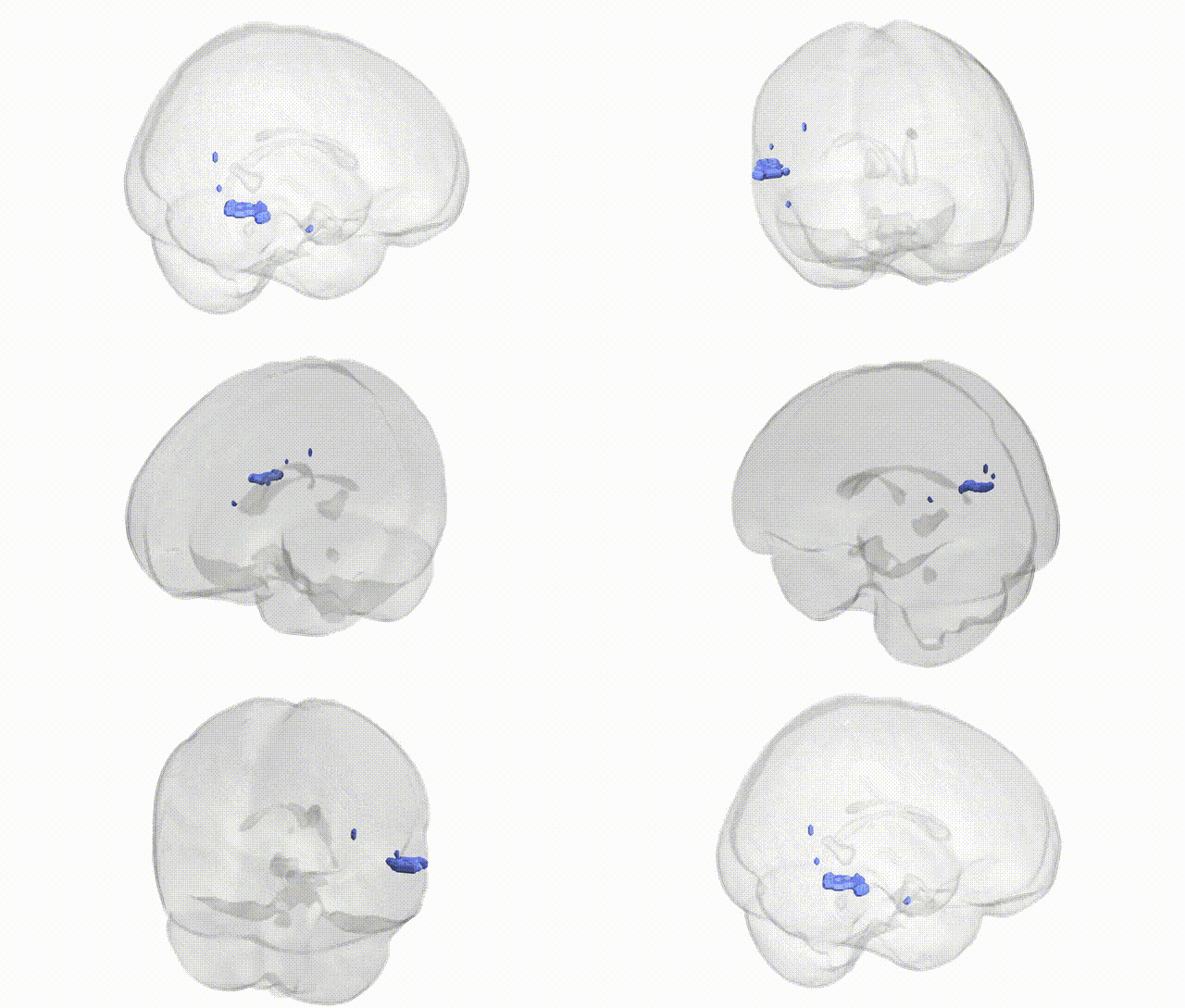
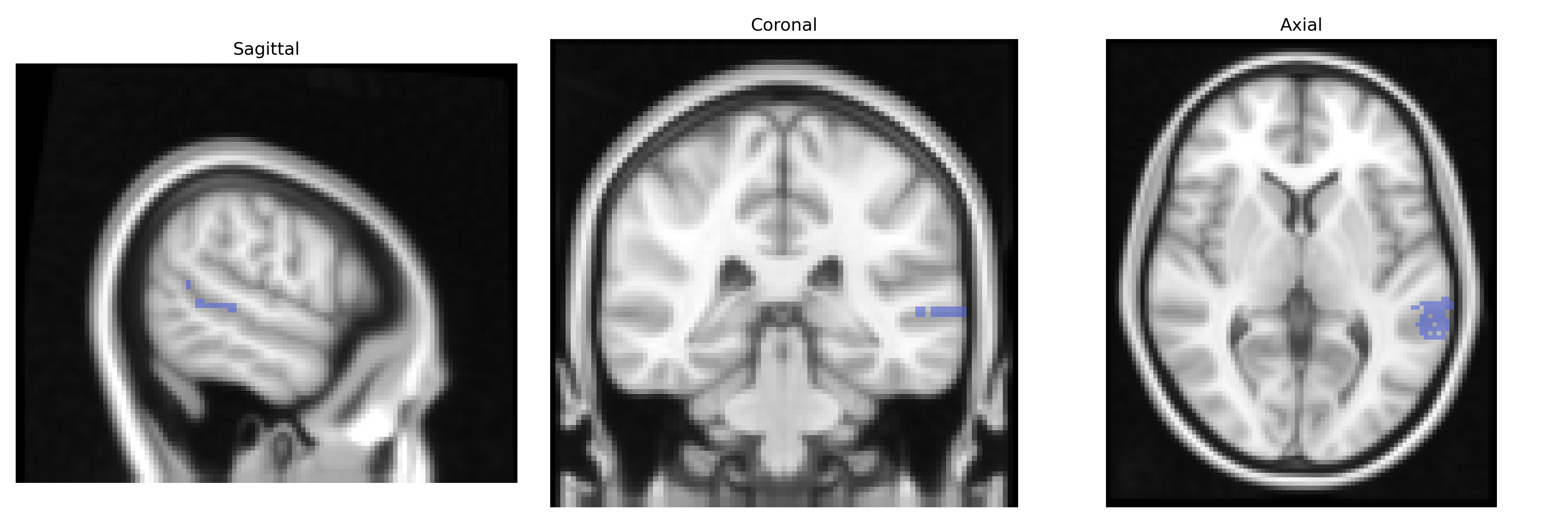
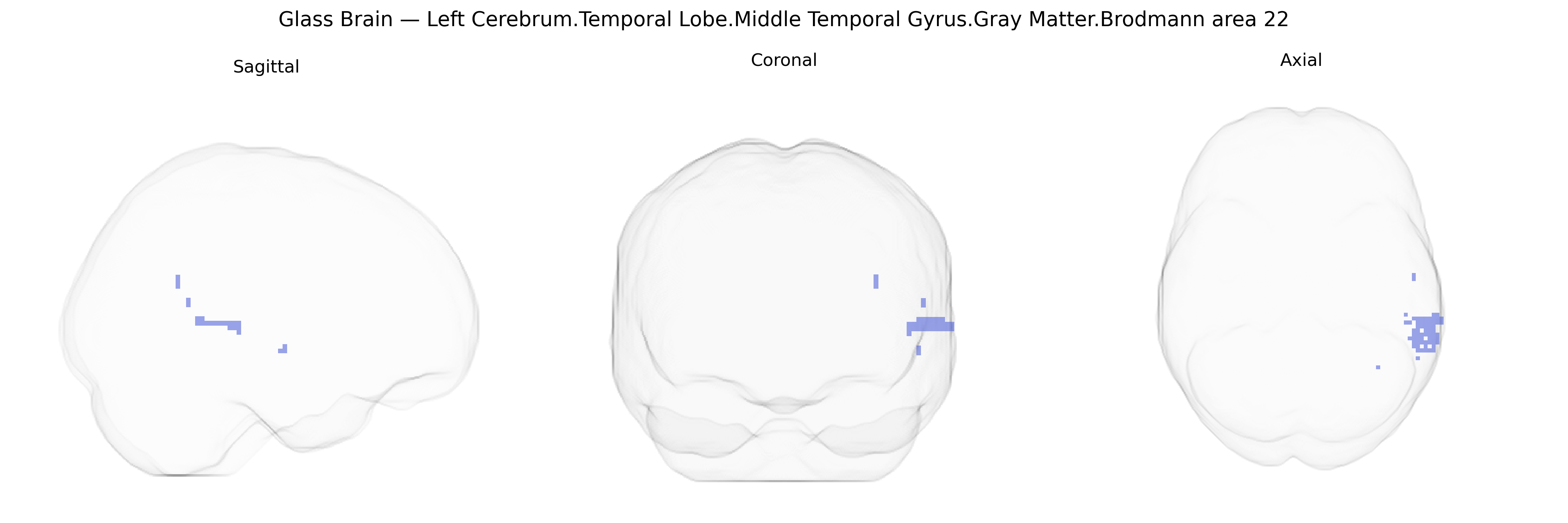
The bilateral Left Cerebrum.Temporal Lobe.Middle Temporal Gyrus.Gray Matter.Brodmann area 22 corresponds to a cortical territory in the posterior and middle portions of the superior and middle temporal regions that is heavily involved in auditory processing and language comprehension, particularly in the dominant (usually left) hemisphere. Brodmann area 22 encompasses what is classically known as Wernicke’s area in its posterior segment, playing a crucial role in the semantic and phonological analysis of spoken language, integration of auditory input with higher-order linguistic representations, and aspects of social cognition and narrative processing. Neuronal populations here exhibit complex receptive properties for speech sounds, vocalizations, and environmental auditory stimuli, and the region maintains dense reciprocal connections with primary and secondary auditory cortices, inferior parietal lobule, and frontal language areas, forming part of the dorsal and ventral language pathways. Lesions in left BA22 are characteristically associated with receptive aphasia and impairments in meaningful language comprehension, underscoring its specialization in transforming acoustic signals into interpretable linguistic content. There is no single dedicated Wikipedia article for “Brodmann area 22,” but it is closely related to Wernicke’s area.
The bilateral left middle temporal gyrus gray matter in Brodmann area 22, a core language and auditory processing region, has been implicated in multiple genetic and GWAS-based associations, particularly through imaging genetics studies linking common variants to cortical thickness, surface area, and functional activation in this region. Variants near genes such as FOXP2, CNTNAP2, DCDC2, KIAA0319, and ROBO1 have been associated with language-related phenotypes, dyslexia, and speech/language disorders, often showing structural or functional alterations in BA22 and adjacent superior/middle temporal cortices. Large-scale neuroimaging GWAS (e.g., ENIGMA, UK Biobank) have identified polygenic influences on temporal lobe gray matter measures, including this area, with loci involving neurodevelopmental and synaptic genes contributing to interindividual variability in temporal cortical volumes and thickness. In psychiatric genetics, BA22/MTG alterations have been reported in schizophrenia, autism spectrum disorder, and major depression, with risk variants in genes such as GRIN2A, NRXN1, and CACNA1C linked to abnormal temporal lobe structure or activation, although these associations often involve broader temporal networks rather than BA22 specifically. Additionally, GWAS of cognitive traits (e.g., verbal IQ, reading ability, educational attainment) frequently implicate genes involved in cortical development and synaptic plasticity that show expression in middle temporal gyrus, supporting a genetically mediated contribution of this region to language and higher-order cognitive functions, albeit with most findings reflecting distributed brain-wide polygenic effects rather than region-specific loci.
Overview generated by GPT-4o (2026).
Region ID: 458
Hemisphere: bilateral
Atlas: Talairach labels 2mm
Full Quality Version: Download MP4
Full Quality Version: Download MP4
Wali Sidiqyar*, Gaurav Rudravaram*, Elyssa M. McMaster, Trent M. Schwartz, Adam M. Saunders, Kurt G. Schilling, Bennett A. Landman "Introducing SPINS: A Shared Public Visualization Library of Neuroanatomical Structures." Medical Imaging with Deep Learning- short paper
This resource is licensed under CC0 1.0 Universal (Public Domain).