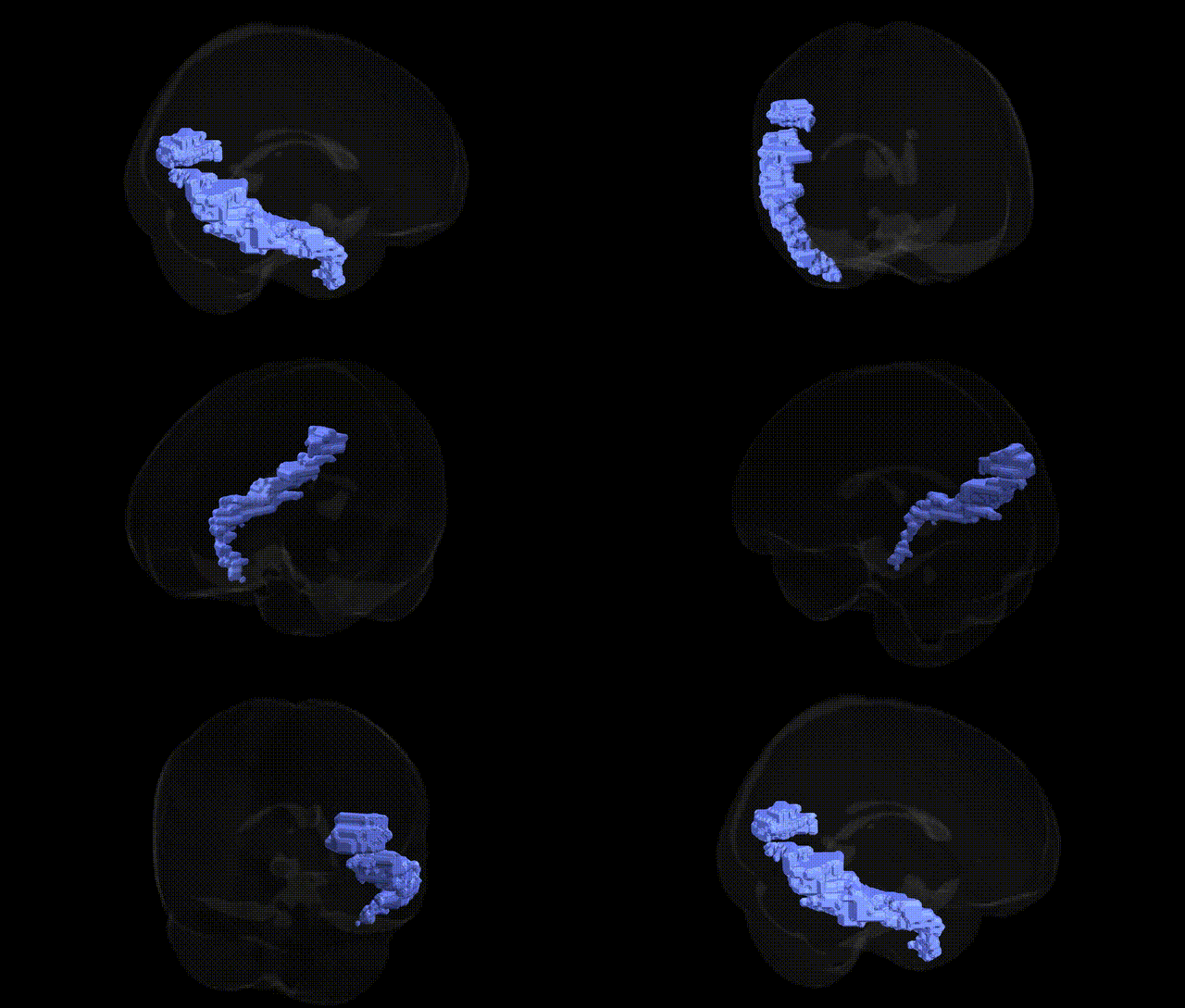
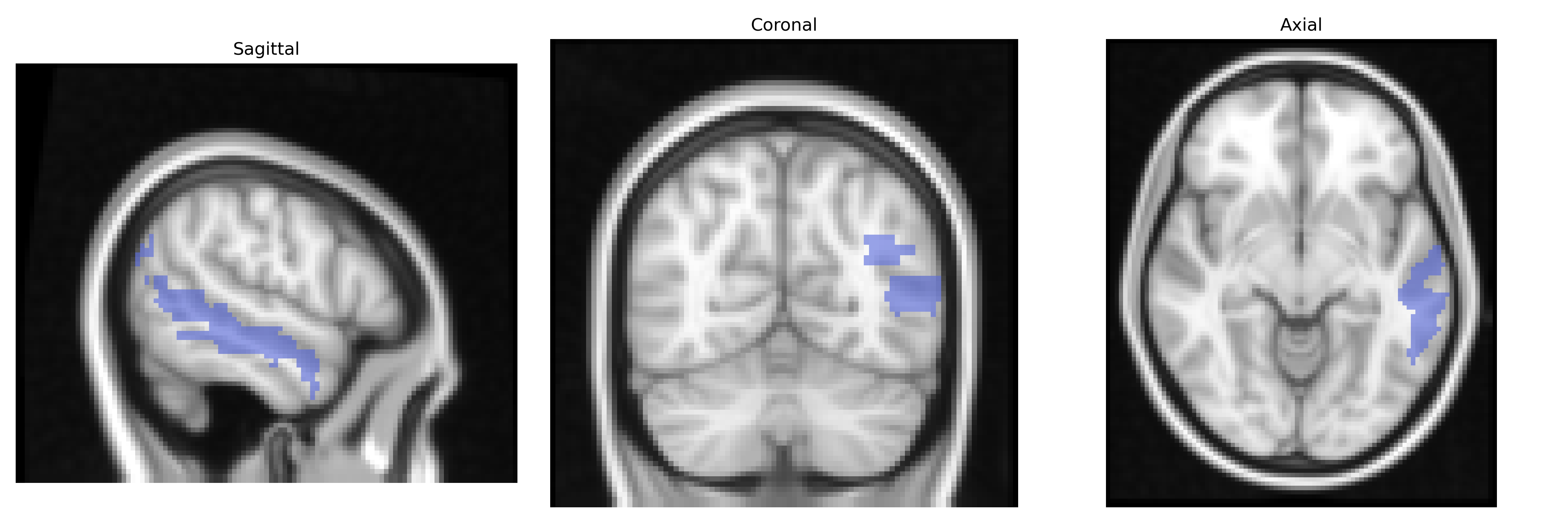
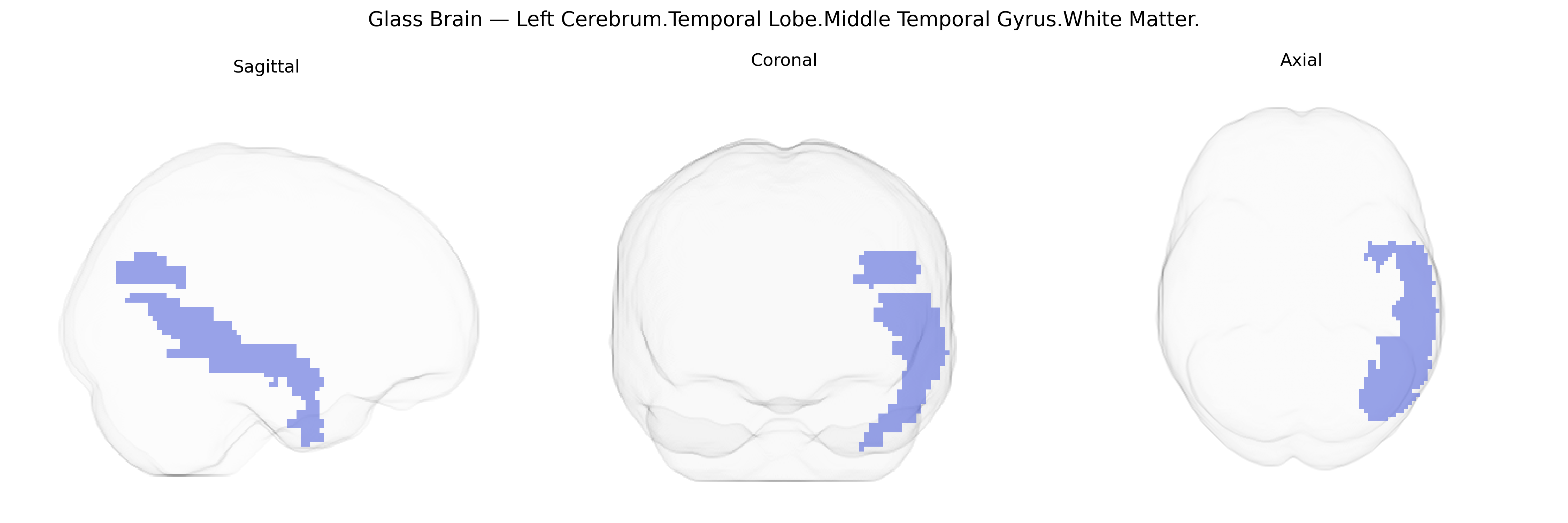
The bilateral Left Cerebrum.Temporal Lobe.Middle Temporal Gyrus.White Matter corresponds to the deep myelinated fiber tracts underlying the middle temporal gyrus in the left temporal lobe, serving as major intra- and inter-lobar conduits for information transfer between temporal association cortex and other cortical and subcortical regions. These fibers include components of long association pathways such as segments of the inferior longitudinal fasciculus and parts of the arcuate/superior longitudinal systems, which support higher-order auditory processing, semantic memory, language comprehension, and multimodal integration by linking lateral temporal cortex with occipital, parietal, and frontal areas. As a white matter compartment, this region is critical for maintaining efficient connectivity within the temporal lobe and between hemispheres, and disruptions here are implicated in language deficits, semantic processing disorders, and broader cognitive impairment. There is no direct link for the specific white matter of the middle temporal gyrus; a related cortical structure is the Middle temporal gyrus.
The bilateral left cerebrum temporal lobe middle temporal gyrus white matter region, as defined in the Talairach 2 mm atlas, is consistently implicated in genetic studies of language, reading, and psychiatric risk, though findings typically reference the gray-matter middle temporal gyrus with corresponding white-matter tracts (notably portions of the inferior longitudinal fasciculus and arcuate/superior longitudinal fasciculus). GWAS of cortical structure (e.g., ENIGMA consortium) have identified SNPs in and near genes involved in neurodevelopment and axon guidance (such as variants near KIAA0586, DACT1, and other loci regulating cortical thickness and surface area) that influence temporal lobe morphology, including middle temporal regions and adjacent white matter. Large GWAS of diffusion MRI measures have linked common variants in genes like CNTN4, CNTNAP2, and ROBO/SLIT pathway genes to temporal association fiber integrity, which would encompass white matter underlying the middle temporal gyrus. In psychiatric and neurodevelopmental disorders, polygenic risk for schizophrenia, autism spectrum disorder, and major depression is frequently associated (via imaging-genetics) with altered volume, thickness, and connectivity in the middle temporal gyrus and its temporal lobe white matter, while dyslexia and other reading/language-related traits show genetic correlations with left temporal white-matter microstructure and activation, implicating loci in FOXP2-related networks and broader synaptic/neurodevelopmental genes. Although no single “middle temporal gyrus white matter gene” is established, convergent GWAS and imaging-genetics studies indicate that common variants influencing temporal lobe cortical morphology, long-range association tract integrity, and neurodevelopmental risk collectively modulate structure and function in this region.
Overview generated by GPT-4o (2026).
Region ID: 24
Hemisphere: bilateral
Atlas: Talairach labels 2mm
Full Quality Version: Download MP4
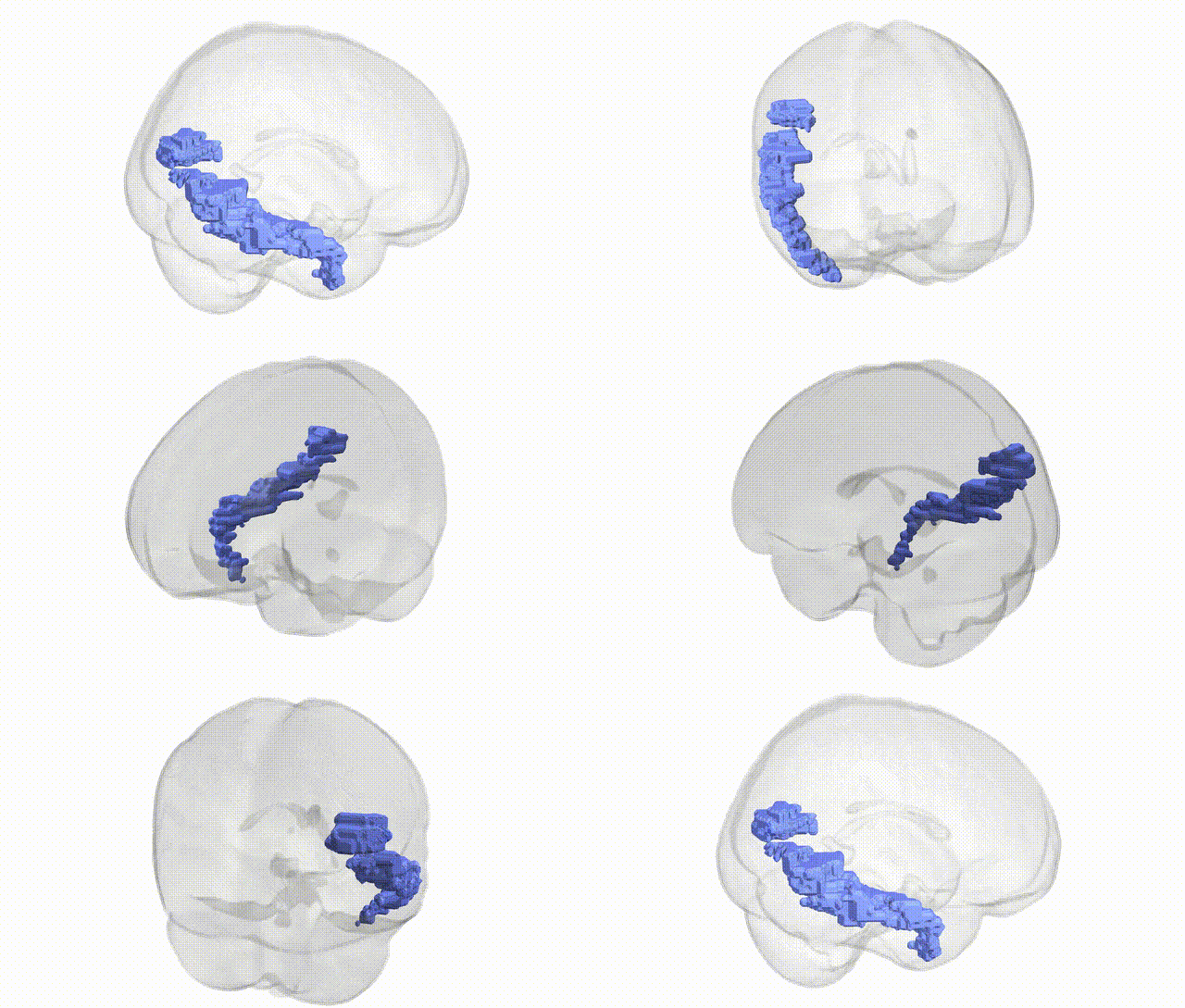
Full Quality Version: Download MP4
Wali Sidiqyar*, Gaurav Rudravaram*, Elyssa M. McMaster, Trent M. Schwartz, Adam M. Saunders, Kurt G. Schilling, Bennett A. Landman "Introducing SPINS: A Shared Public Visualization Library of Neuroanatomical Structures." Medical Imaging with Deep Learning- short paper
This resource is licensed under CC0 1.0 Universal (Public Domain).