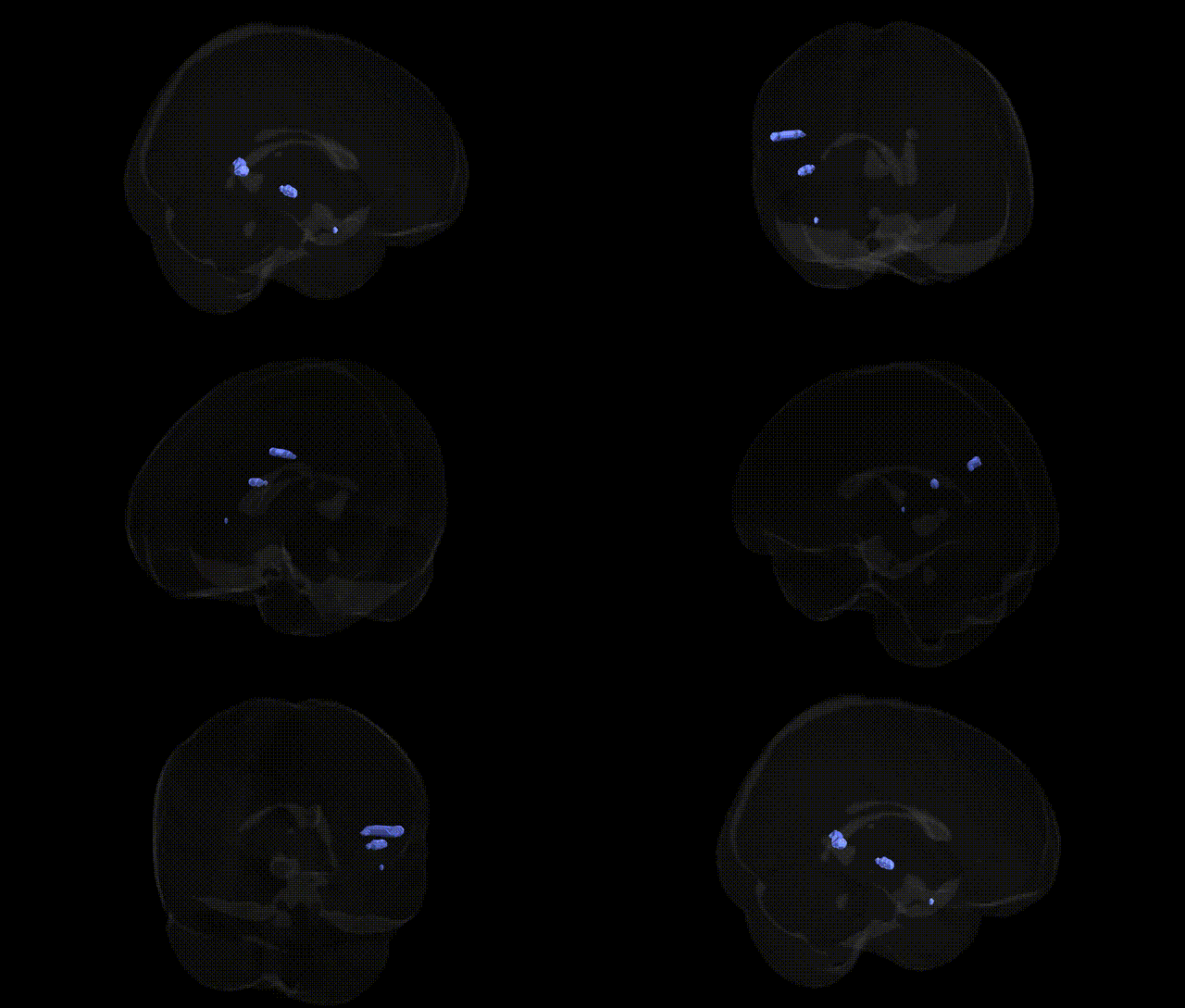
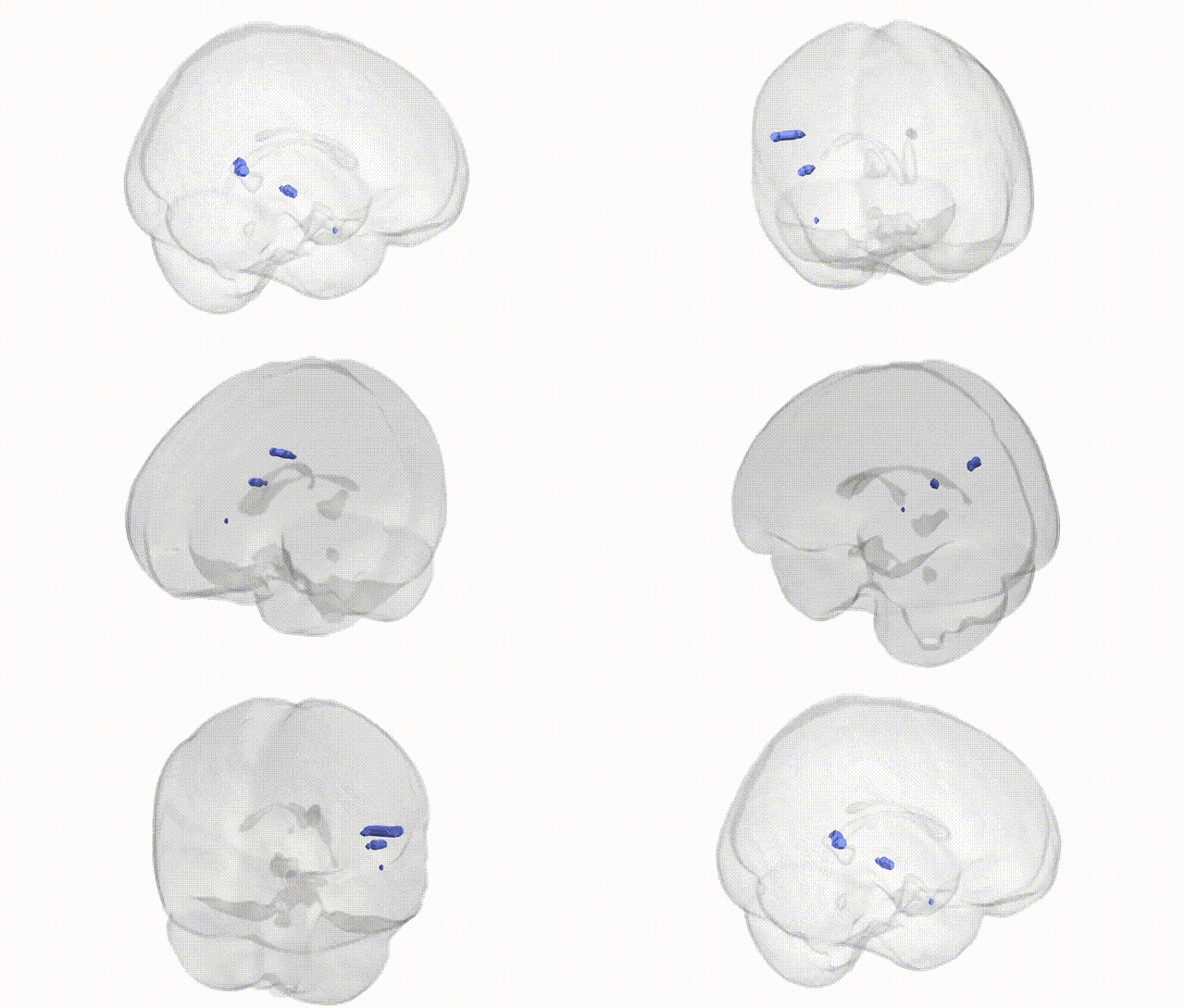
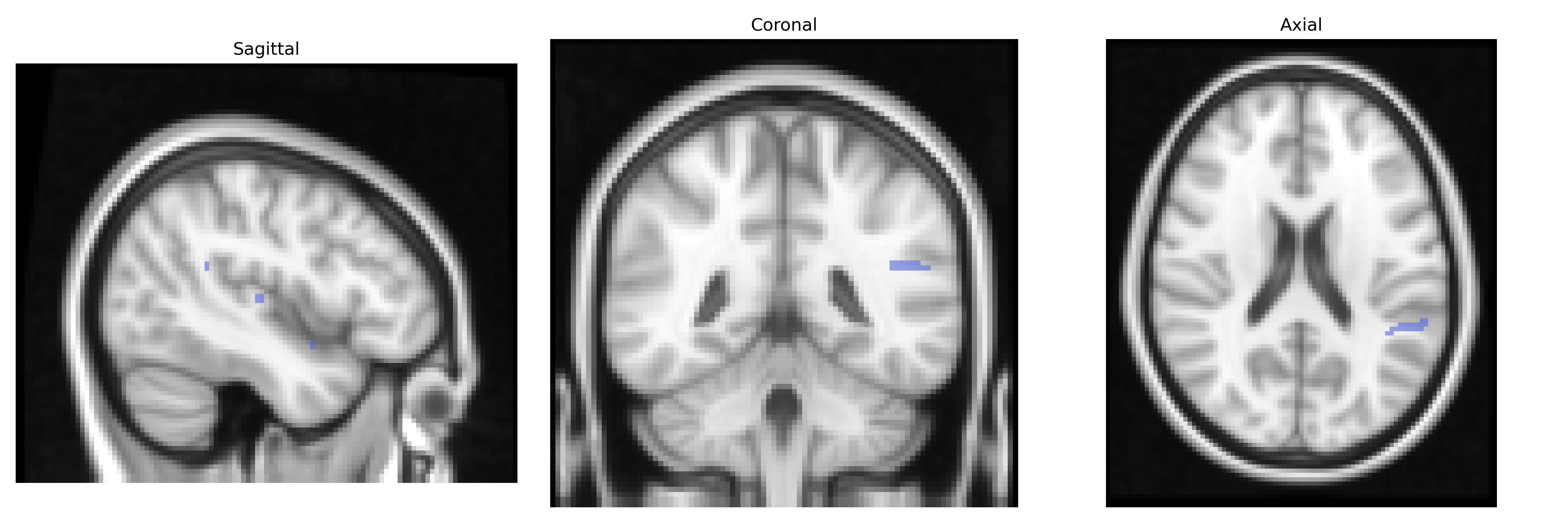
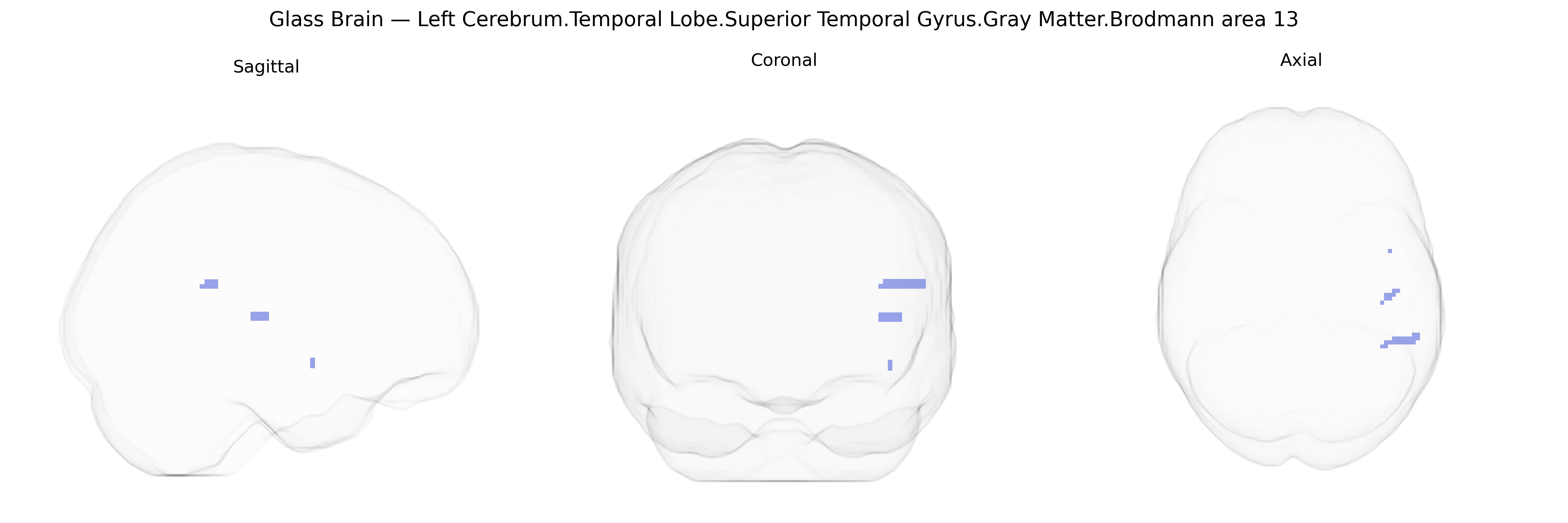
The bilateral Left Cerebrum.Temporal Lobe.Superior Temporal Gyrus.Gray Matter.Brodmann area 13 region, as defined in the Talairach 2 mm atlas, corresponds to agranular cortex within the insular area rather than the classical superior temporal gyrus, reflecting the atlas’s cytoarchitectonic mapping conventions. Brodmann area 13 is part of the insular cortex, deeply situated within the lateral sulcus, and is involved in multimodal integration of visceral, somatosensory, emotional, and autonomic information, contributing to interoceptive awareness, affective processing, and aspects of decision-making and social cognition. This region receives input from limbic, frontal, and sensory association areas and projects to widespread cortical and subcortical targets, supporting its role as a hub in networks related to salience detection and emotional valuation of stimuli. There is no direct link for Brodmann area 13; a closely related structure is the Insular cortex.
The bilateral left superior temporal gyrus (STG) gray matter region overlapping Brodmann area 13 in the Talairach 2 mm atlas sits at the interface of auditory, language, and socio-emotional processing networks, and has been repeatedly implicated in genetic and GWAS-based studies of neuropsychiatric and cognitive traits. Common variants in genes such as CNTNAP2, FOXP2, DCDC2, and KIAA0319 have been associated with structural and functional alterations in temporal language regions, including left STG, in relation to developmental language disorder, dyslexia, and speech–language phenotypes. Large-scale imaging-genetics consortia (e.g., ENIGMA, UK Biobank) have identified genome-wide significant associations between temporal lobe cortical thickness and surface area and loci near genes involved in neurodevelopment and synaptic function (such as PCDH family genes, GRIN2A, and several intergenic regulatory regions), with some effects showing left-lateralized or language-network enrichment. Left STG morphology and activation patterns have also been linked to schizophrenia, autism spectrum disorder, bipolar disorder, and major depression, with GWAS risk polygenic scores for these disorders correlating with reduced gray matter volume or altered functional connectivity in temporal association cortex, including this region. Additionally, GWAS of musical aptitude, pitch perception, and auditory processing show enrichment of associated variants in genes supporting cortical development and auditory pathway function, mapping to superior temporal auditory-language areas. Although Brodmann area 13 is traditionally associated with insular cortex, in this atlas the labeled region reflects a convergence zone where genetic influences on language, auditory processing, and social cognition intersect, and many risk variants for psychiatric and cognitive traits exert measurable effects on its gray matter structure and connectivity.
Overview generated by GPT-4o (2026).
Region ID: 365
Hemisphere: bilateral
Atlas: Talairach labels 2mm
Full Quality Version: Download MP4
Full Quality Version: Download MP4
Wali Sidiqyar*, Gaurav Rudravaram*, Elyssa M. McMaster, Trent M. Schwartz, Adam M. Saunders, Kurt G. Schilling, Bennett A. Landman "Introducing SPINS: A Shared Public Visualization Library of Neuroanatomical Structures." Medical Imaging with Deep Learning- short paper
This resource is licensed under CC0 1.0 Universal (Public Domain).