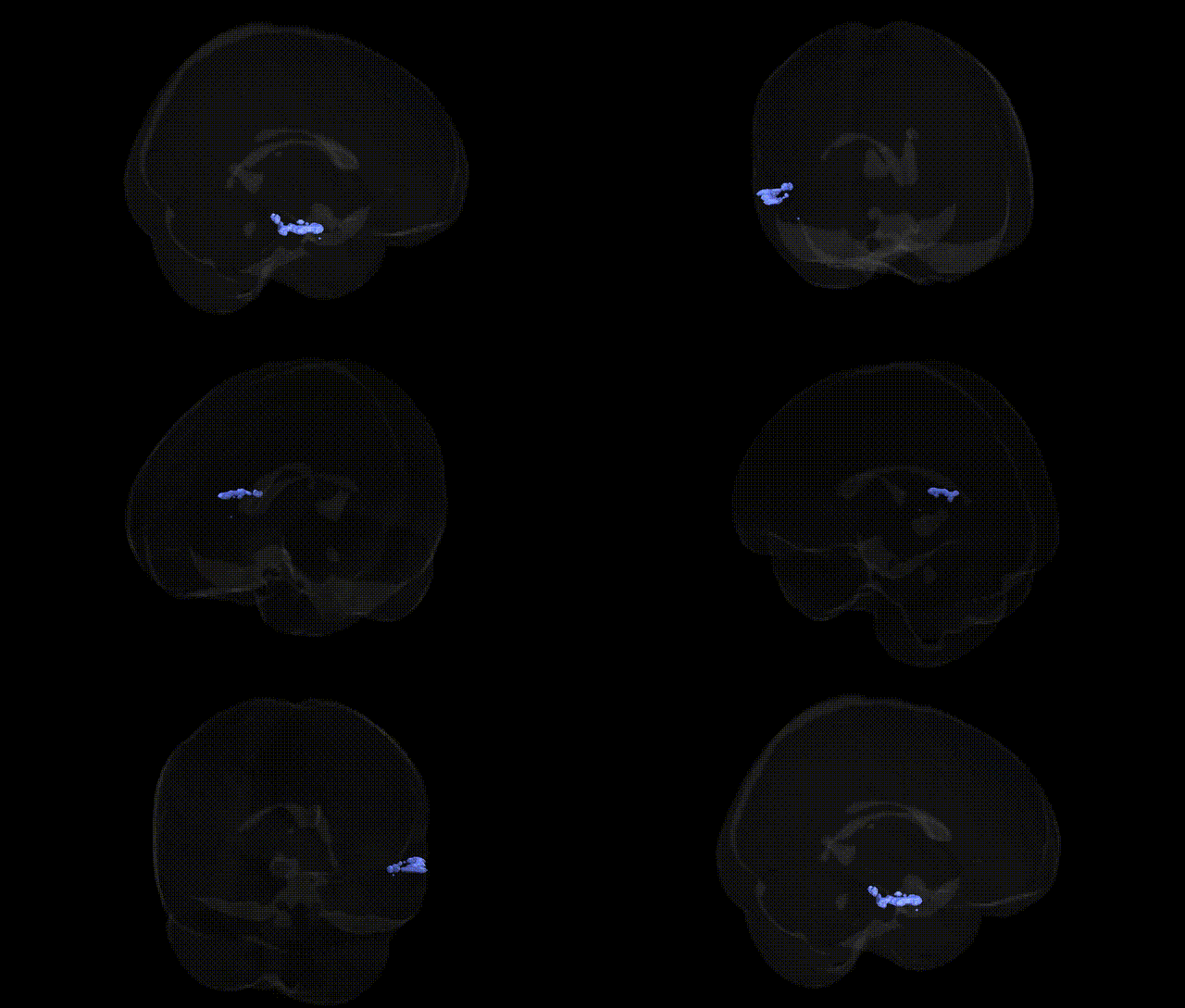
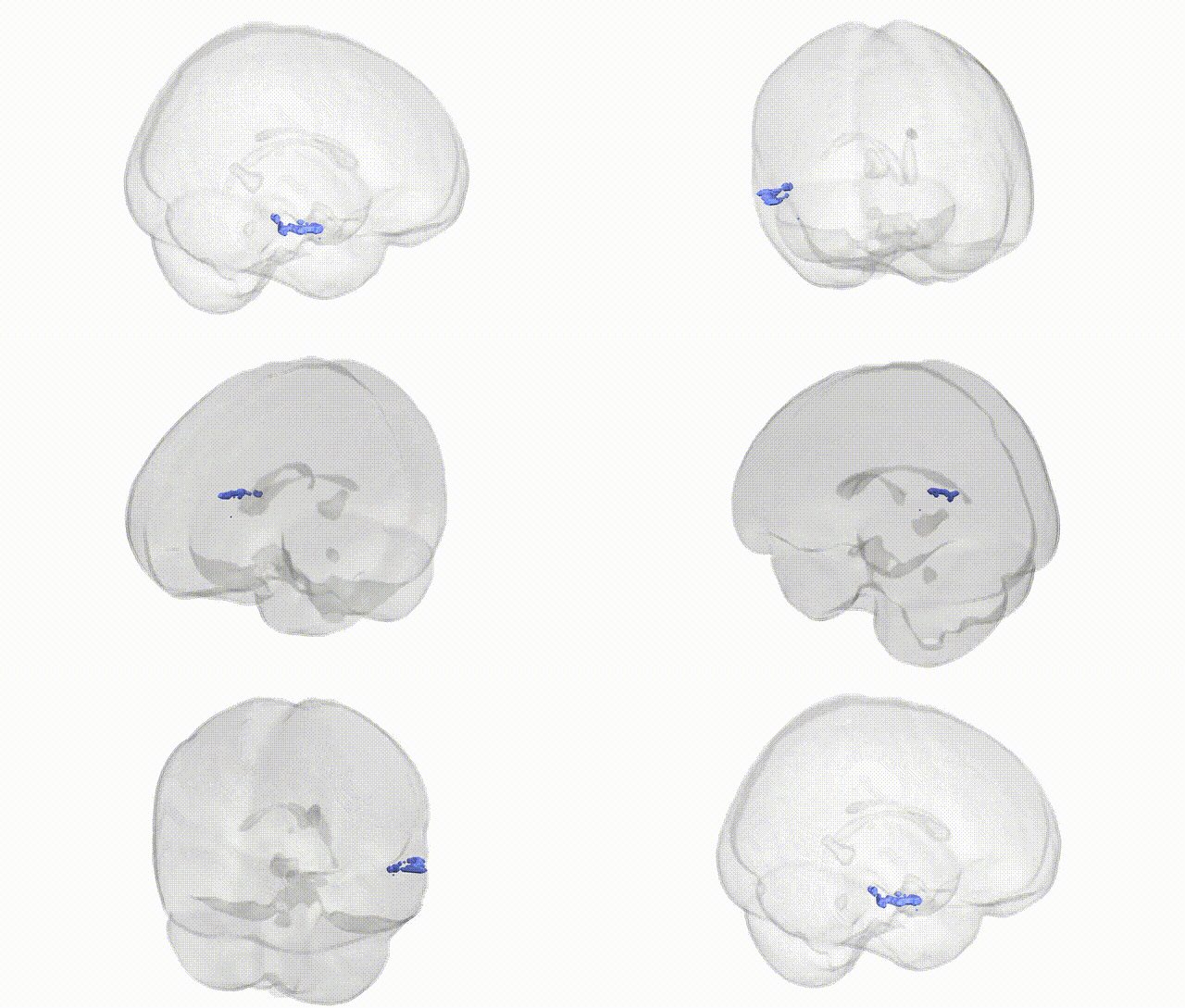
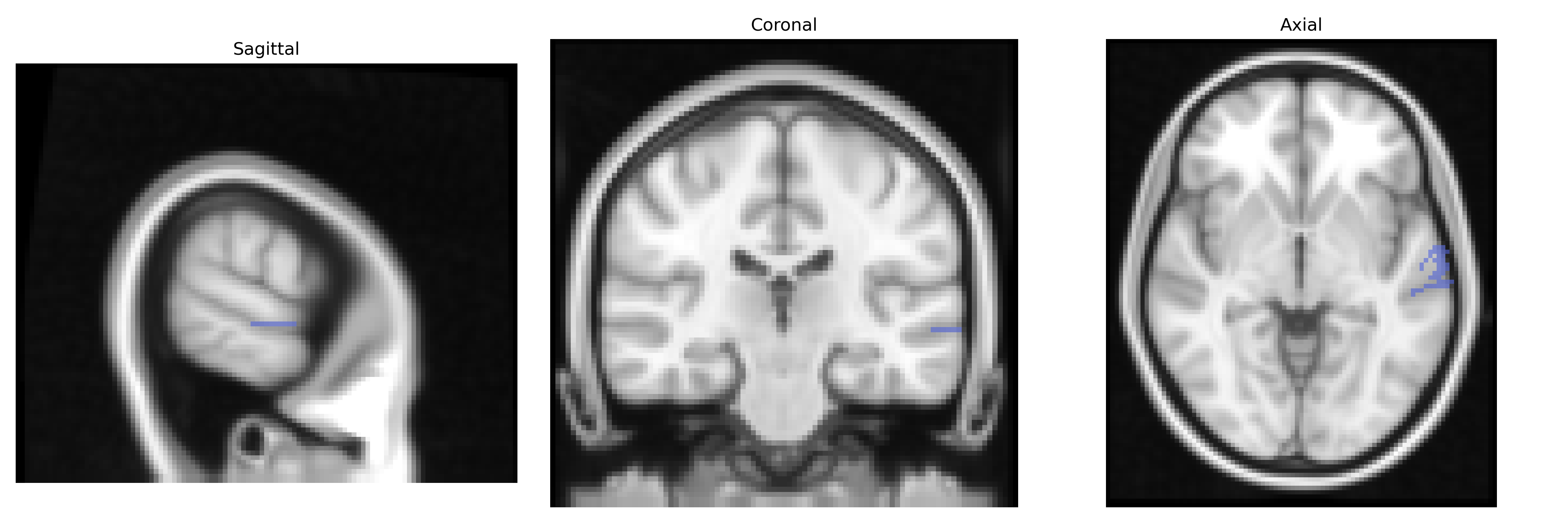
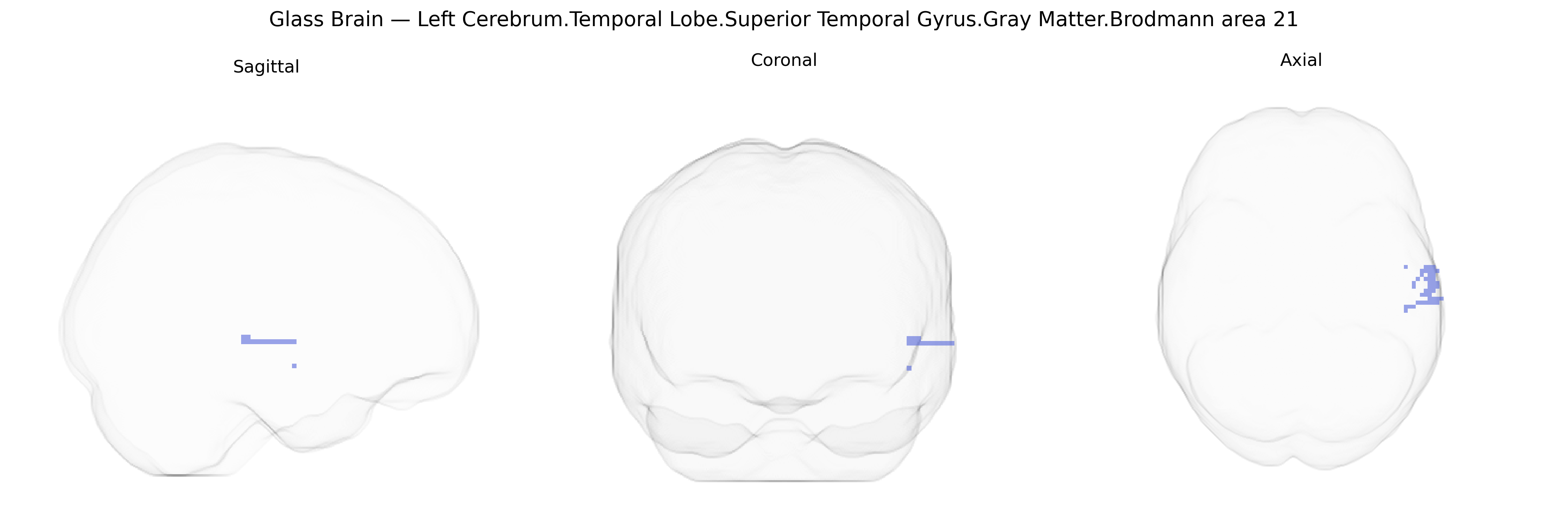
The bilateral left cerebrum temporal lobe superior temporal gyrus gray matter Brodmann area 21 corresponds to association cortex located in the middle portion of the temporal lobe, adjacent to primary and secondary auditory regions. BA21 is involved in higher-order auditory processing, semantic language functions, and multimodal integration of auditory, visual, and contextual information, contributing to comprehension of spoken and written language, lexical access, and aspects of social cognition. Neuronal populations here form part of the ventral “what” pathway for object and word recognition and interact strongly with neighboring temporal and frontal language areas. In the Talairach 2 mm Atlas, this label specifies gray matter within the superior temporal gyrus that functionally belongs to BA21, although anatomically BA21 is often described as occupying the middle temporal gyrus. There is no direct Wikipedia article for this exact compound label; a closely related article is Brodmann area 21.
The bilateral left superior temporal gyrus (STG, Brodmann area 21) gray matter has been implicated in numerous genetic and GWAS-based associations related to language, auditory processing, social cognition, and psychiatric risk. Variants in FOXP2, CNTNAP2, and related language-network genes have been linked to structural and functional differences in left STG/BA21, including altered gray matter volume and cortical thickness in this region, in studies of speech and language disorders and normal language ability. Large neuroimaging GWAS consortia (e.g., ENIGMA, UK Biobank) have identified polygenic influences on temporal lobe cortical thickness and surface area, with loci near genes involved in neurodevelopment (such as TESC, KIAA0586, DLG2 and others) contributing to variability in superior temporal regions, though often reported at lobar rather than fine-grained BA21 resolution. Psychiatric genetics has repeatedly implicated the left STG, including BA21, in schizophrenia, bipolar disorder, and major depression, where risk alleles and polygenic risk scores correlate with reduced gray matter, altered gyrification, or abnormal activation to language and auditory stimuli; complement pathway genes (e.g., C4), synaptic genes, and calcium-channel genes (e.g., CACNA1C) have been associated with temporal lobe structural changes in case–control and imaging-genetics studies. Autism spectrum disorder and social communication traits show genetic correlations with superior temporal regions, with variants in synaptic and neurodevelopmental genes (e.g., NRXN1, SHANK3, and polygenic ASD risk scores) linked to atypical temporal cortex morphology and connectivity, including BA21. GWAS of cognitive traits such as verbal IQ, reading ability, and educational attainment demonstrate polygenic effects that partially map onto left temporal language areas, including BA21, via imaging-genetics work connecting these polygenic scores to structural and functional measures in superior temporal cortex. Overall, genetic associations involving BA21 typically emerge as part of broader temporal or language networks rather than region-specific single-gene effects, reflecting highly polygenic architecture influencing gray matter variation and vulnerability to neuropsychiatric and neurodevelopmental disorders.
Overview generated by GPT-4o (2026).
Region ID: 286
Hemisphere: bilateral
Atlas: Talairach labels 2mm
Full Quality Version: Download MP4
Full Quality Version: Download MP4
Wali Sidiqyar*, Gaurav Rudravaram*, Elyssa M. McMaster, Trent M. Schwartz, Adam M. Saunders, Kurt G. Schilling, Bennett A. Landman "Introducing SPINS: A Shared Public Visualization Library of Neuroanatomical Structures." Medical Imaging with Deep Learning- short paper
This resource is licensed under CC0 1.0 Universal (Public Domain).