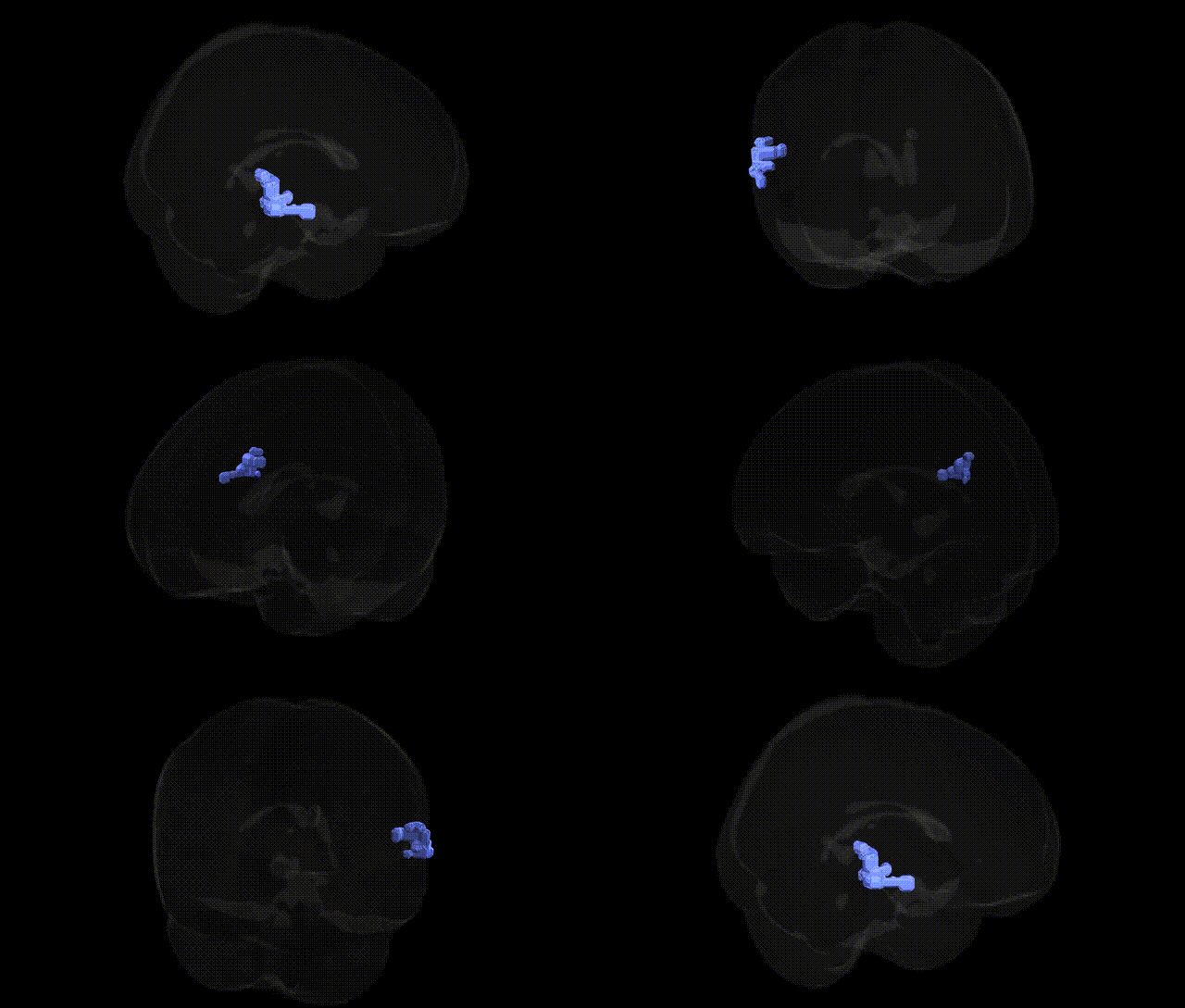
The bilateral Left Cerebrum.Temporal Lobe.Superior Temporal Gyrus.Gray Matter.Brodmann area 42 corresponds to the primary auditory association cortex located in the superior temporal gyrus of the temporal lobe, immediately adjacent to Heschl’s gyrus (BA41). This region plays a critical role in higher-order processing of acoustic information, including analysis of complex sounds, temporal patterns, and aspects of speech perception and auditory scene analysis. Cytoarchitectonically, Brodmann area 42 is characterized by a granular cortex typical of auditory areas, with dense thalamocortical input from the medial geniculate nucleus and rich interconnections to neighboring auditory and language-related regions such as Brodmann areas 41 and 22. There is no direct Wikipedia article for Brodmann area 42; a closely related structure is the Superior temporal gyrus.
Genetic associations involving the bilateral Left Cerebrum.Temporal Lobe.Superior Temporal Gyrus.Gray Matter.Brodmann area 42 (primary auditory association cortex) predominantly relate to language, speech perception, and auditory processing. GWAS and imaging-genetics studies have implicated common variants in genes influencing cortical thickness and surface area of the superior temporal gyrus (STG), including loci near KIAA0586, TBR1, and genes in neurodevelopmental pathways regulating cortical patterning and synaptogenesis, although these associations often span broader temporal lobe regions rather than BA42 specifically. Variants in FOXP2 and related language-network genes have been linked to altered activation and structure of the posterior STG and adjacent BA42 during speech and phonological tasks, supporting a genetic contribution to speech and language disorders such as specific language impairment and developmental speech dyspraxia. Large consortia (e.g., ENIGMA) have reported that polygenic risk for schizophrenia and autism spectrum disorder is associated with structural and functional alterations in the superior temporal cortex, including auditory and language-related areas encompassing BA42, consistent with genetic overlap between psychosis, social communication traits, and STG morphology. Additional GWAS findings connect temporal lobe auditory regions to tinnitus, musical aptitude, and general cognitive ability, with polygenic scores for intelligence and educational attainment showing correlations with STG thickness and volume. Overall, BA42 appears as a key node in genetically influenced networks for auditory and language processing, with loci implicated in neurodevelopment, synaptic function, and cortical organization contributing to individual variation and vulnerability to neuropsychiatric and communication-related disorders.
Overview generated by GPT-4o (2026).
Region ID: 674
Hemisphere: bilateral
Atlas: Talairach labels 2mm
Full Quality Version: Download MP4
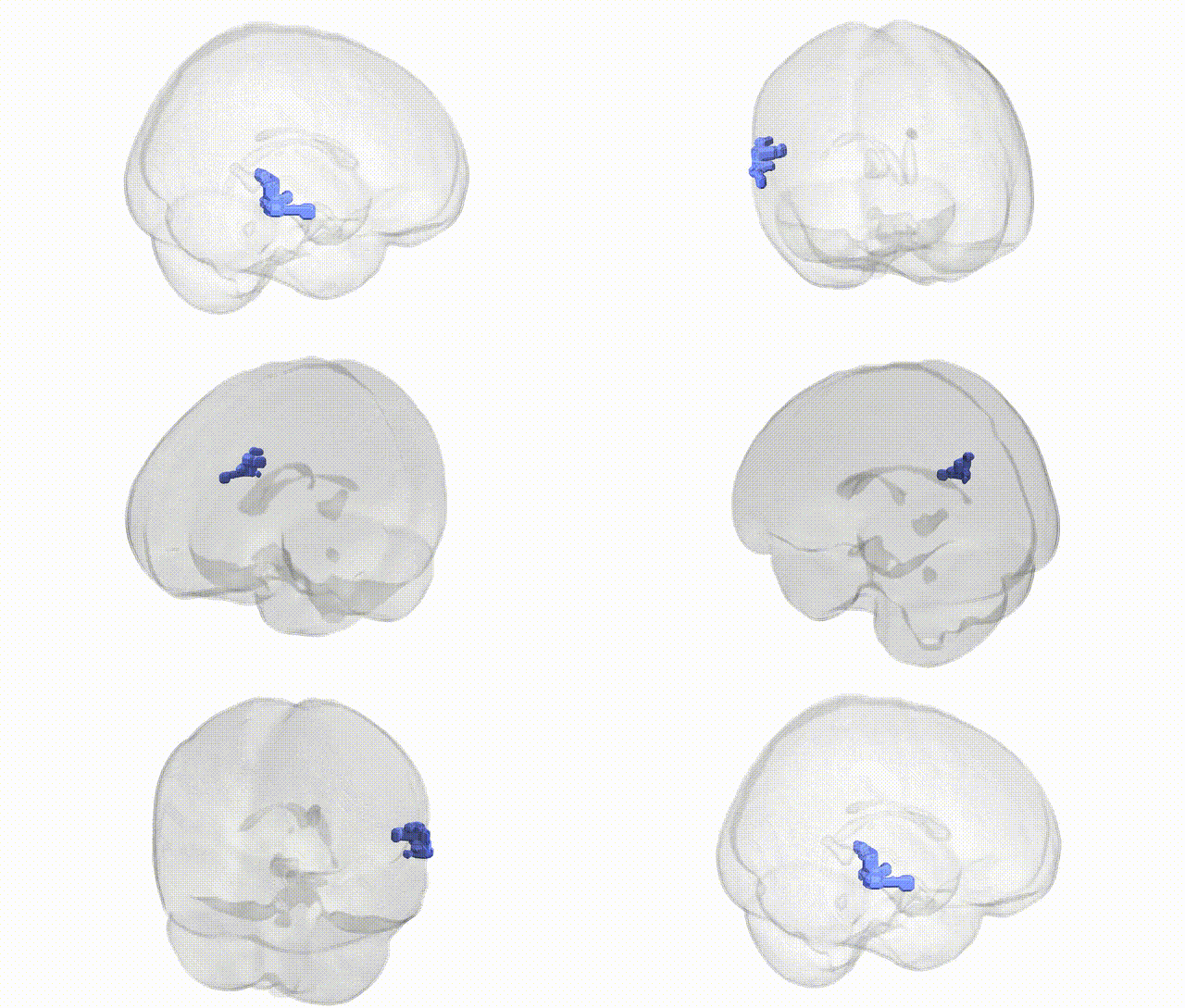
Full Quality Version: Download MP4
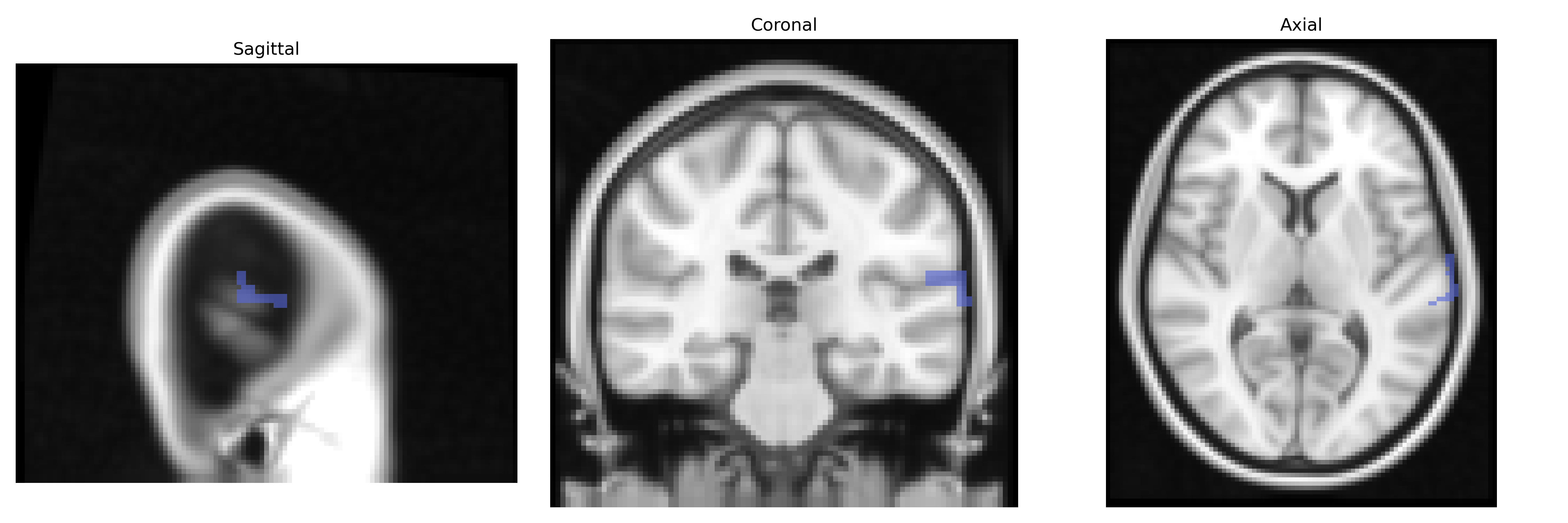
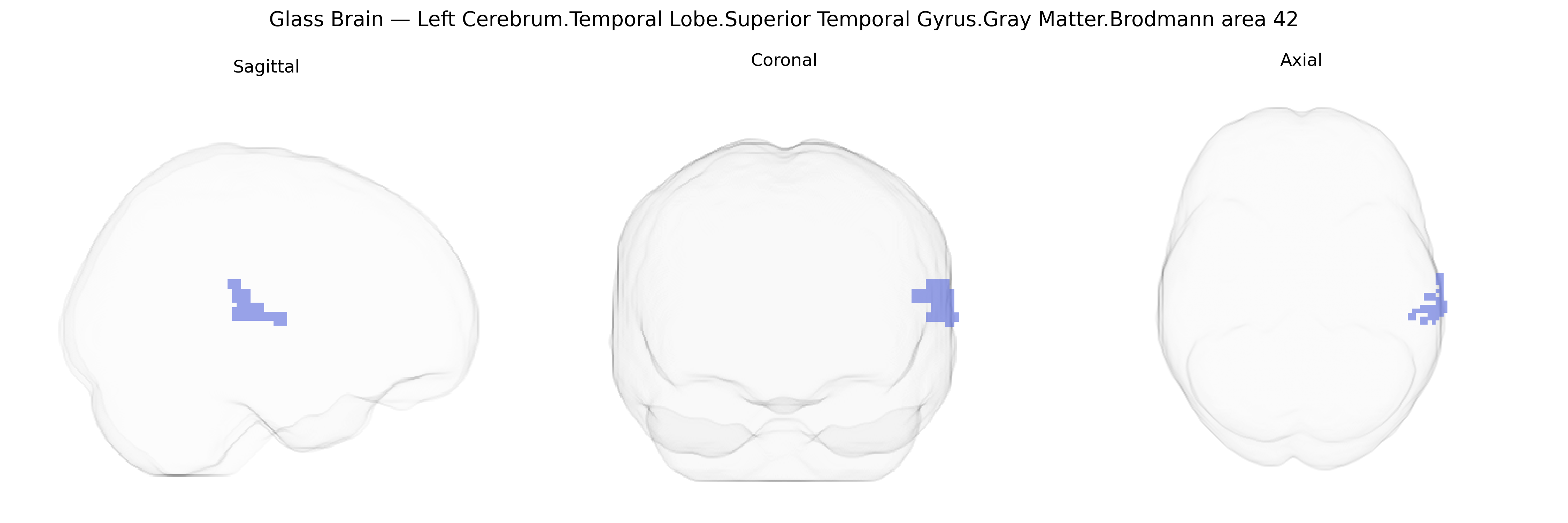
Wali Sidiqyar*, Gaurav Rudravaram*, Elyssa M. McMaster, Trent M. Schwartz, Adam M. Saunders, Kurt G. Schilling, Bennett A. Landman "Introducing SPINS: A Shared Public Visualization Library of Neuroanatomical Structures." Medical Imaging with Deep Learning- short paper
This resource is licensed under CC0 1.0 Universal (Public Domain).