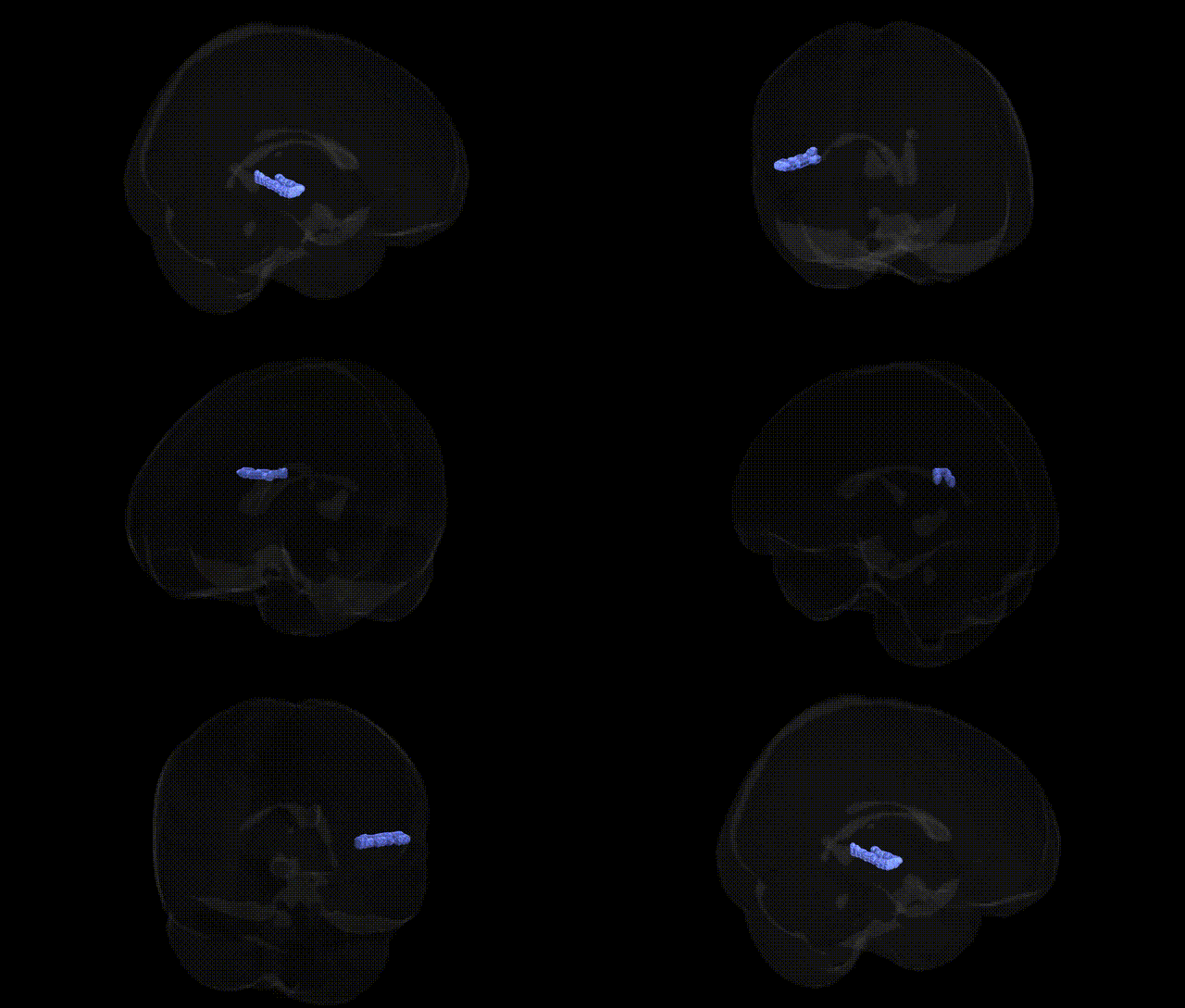
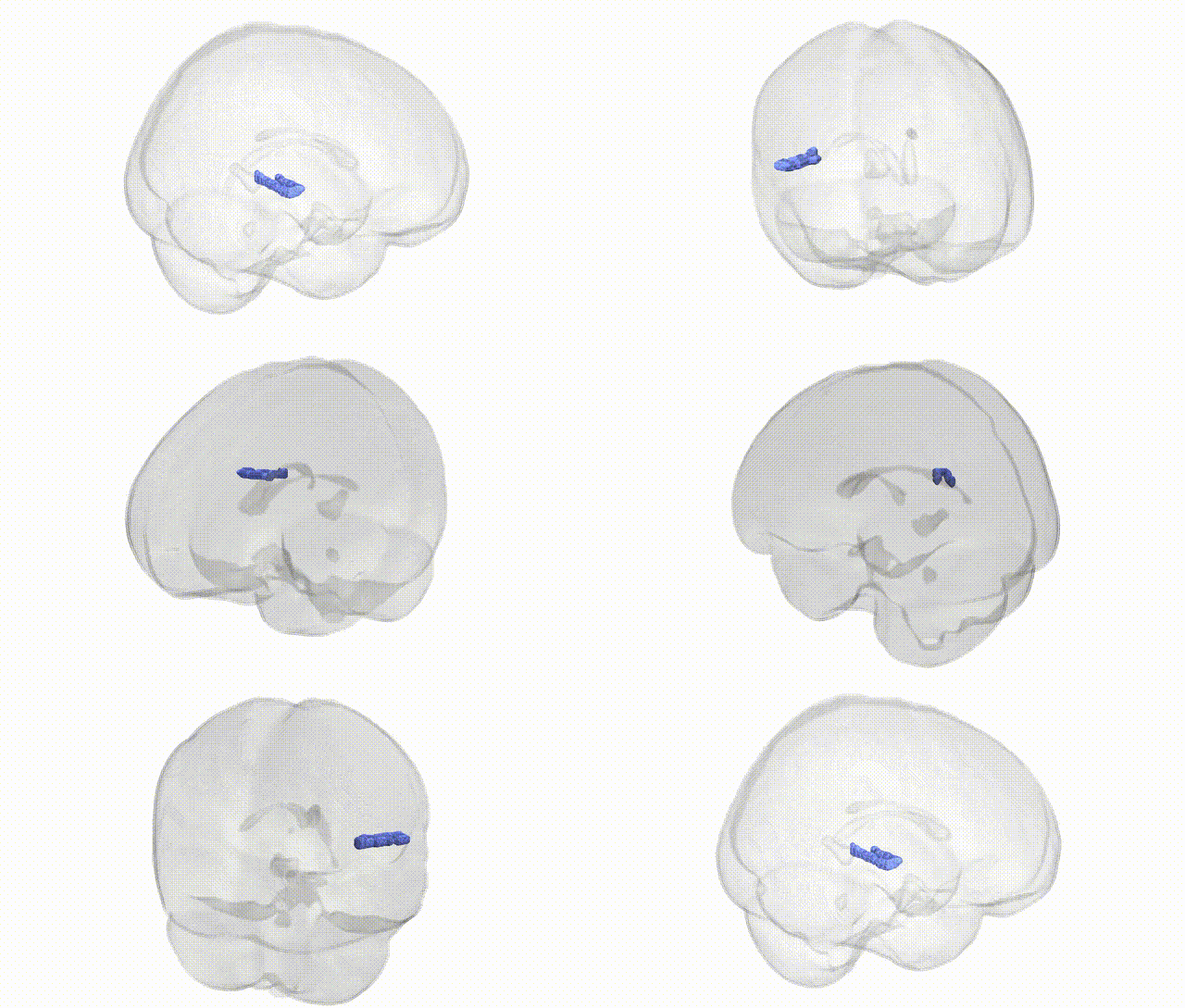
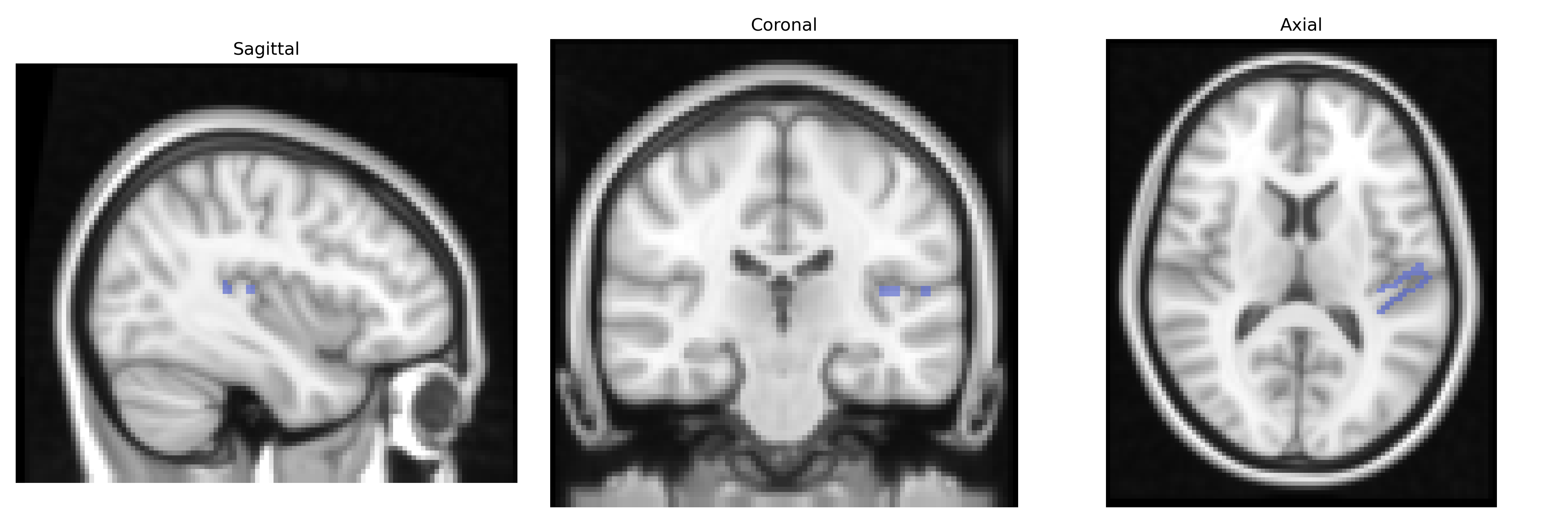
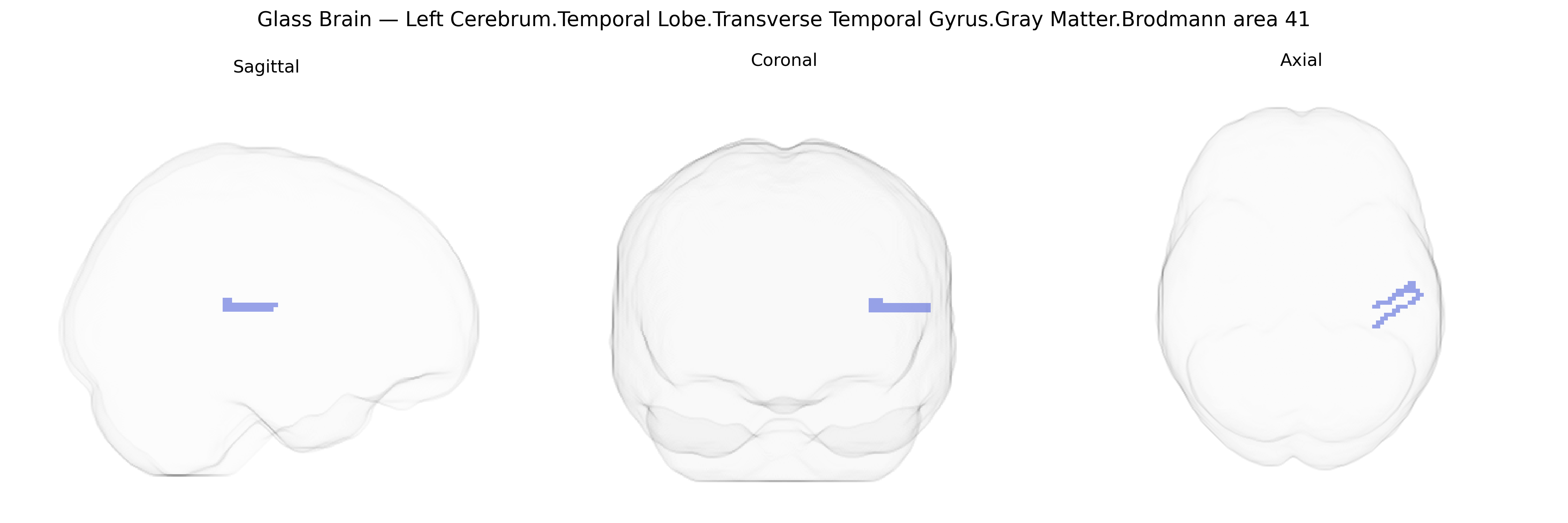
The bilateral Left Cerebrum.Temporal Lobe.Transverse Temporal Gyrus.Gray Matter.Brodmann area 41 corresponds to the primary auditory cortex located in Heschl’s gyrus of the temporal lobe, as defined in the Talairach 2 mm Atlas. This cortical region is cytoarchitectonically characterized by densely packed granular layers and is critically involved in the initial cortical processing of acoustic information, including sound frequency, intensity, and basic temporal features. Functionally, Brodmann area 41 supports perception of simple auditory stimuli and provides input to adjacent secondary auditory areas for more complex processing, such as speech and music analysis. As part of the auditory pathway, it receives thalamic projections from the medial geniculate nucleus and contributes to bilateral integration of sound in the cerebral cortex. There is no direct link for this exact composite label; a closely related structure is Primary auditory cortex.
The bilateral left transverse temporal gyrus (Heschl’s gyrus, Brodmann area 41), a primary auditory cortex region in the temporal lobe, has been implicated in genetic studies mainly through its role in language, auditory processing, and neuropsychiatric disorders rather than through region-specific GWAS hits in the Talairach 2 mm atlas framework. Twin and heritability studies show substantial genetic influence on Heschl’s gyrus surface area and cortical thickness, with variants in genes involved in synaptic function and brain development (e.g., CNTNAP2, FOXP2, DCDC2, KIAA0319, ROBO1) associated with structural and functional differences in perisylvian and temporal auditory-language cortices that include BA41. Imaging genetics work has linked common risk alleles for schizophrenia and bipolar disorder (such as those in CACNA1C, GRIN2A, and complement pathway genes including C4A) to gray matter volume and gyrification alterations in temporal auditory regions encompassing BA41, as well as to abnormal auditory hallucination-related activity. GWAS of musical aptitude and beat synchronization have identified loci near genes involved in neural connectivity and auditory pathway function (e.g., GATA2, PAX genes, and axon guidance pathways), with post hoc imaging evidence showing associations with structural variation in Heschl’s gyrus. Additionally, polygenic risk scores for autism spectrum disorder, developmental language disorder, and dyslexia correlate with atypical activation and morphology in primary and secondary auditory cortices, suggesting that common variation across neurodevelopmental genes exerts pleiotropic effects on BA41 anatomy and function, even though no large-scale GWAS has yet reported highly specific, reproducible SNP-level associations solely assigned to the bilateral left BA41 region in the Talairach 2 mm atlas.
Overview generated by GPT-4o (2026).
Region ID: 720
Hemisphere: bilateral
Atlas: Talairach labels 2mm
Full Quality Version: Download MP4
Full Quality Version: Download MP4
Wali Sidiqyar*, Gaurav Rudravaram*, Elyssa M. McMaster, Trent M. Schwartz, Adam M. Saunders, Kurt G. Schilling, Bennett A. Landman "Introducing SPINS: A Shared Public Visualization Library of Neuroanatomical Structures." Medical Imaging with Deep Learning- short paper
This resource is licensed under CC0 1.0 Universal (Public Domain).