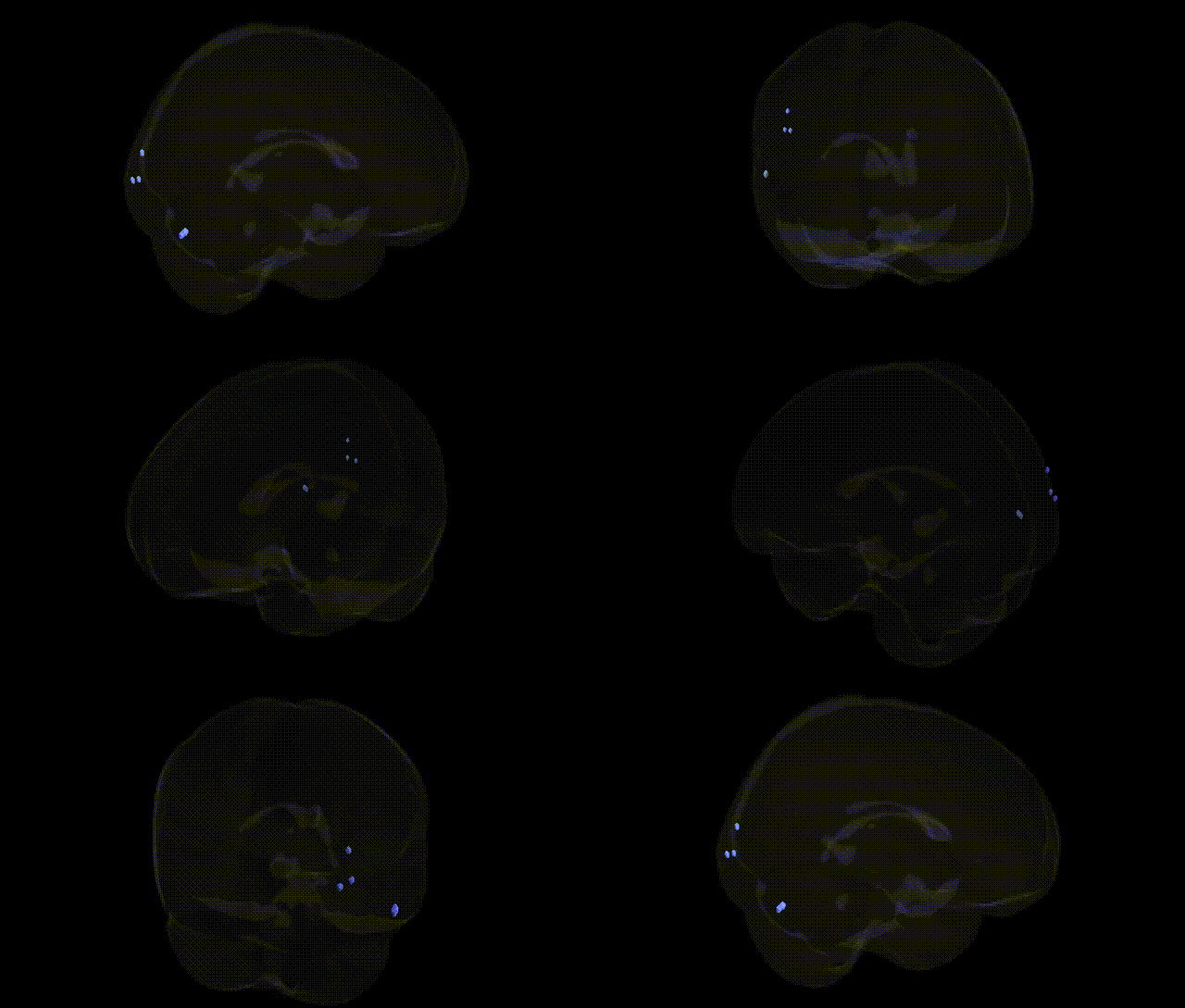
The bilateral Middle Occipital Gyrus is a cortical region located on the lateral aspect of the occipital lobe, lying between the superior and inferior occipital gyri and extending anteriorly toward the occipitotemporal junction. It is primarily involved in intermediate-level visual processing, including analysis of motion, form, and spatial relationships, and contributes to the integration of visual information for object recognition and visuospatial functions. The region receives input from earlier visual areas (such as V1 and V2) and interacts with dorsal and ventral visual streams, supporting tasks like visual attention, scene perception, and guidance of visually directed behavior. There is no direct link for the Middle Occipital Gyrus; see the related structure Occipital lobe.
The bilateral Middle Occipital Gyrus, a core component of the dorsal and ventral visual processing streams, has been implicated in genetic studies primarily through its role in visual perception, reading, and higher-order cognitive and psychiatric traits rather than through region-specific GWAS focused explicitly on the Talairach 2 mm atlas label. Large neuroimaging GWAS have shown that common variants influencing global and regional cortical surface area and thickness (for example in genes such as HMGA2, FOXP2, MIR137, and several loci in the 3p24–26, 6p22, and 17q regions) are associated with structural variability in occipital cortices, including middle occipital areas. Genetic risk for neurodevelopmental and psychiatric conditions—particularly schizophrenia, major depressive disorder, ADHD, and autism spectrum disorder—has been linked to altered activation and morphology of the middle occipital gyrus, often in the context of visual working memory, face and object processing, and attentional control, with polygenic risk scores for these disorders correlating with functional or structural occipital changes in some cohorts. GWAS of reading and language-related traits, dyslexia, and visual word form processing have also highlighted occipital and occipito-temporal regions, with variants near KIAA0319, DCDC2, and other neurodevelopmental genes associated with altered activation in middle occipital and adjacent visual regions during orthographic and phonological tasks. In addition, genetic influences on basic visual functions (such as contrast sensitivity and motion perception) and on general cognitive ability (g-factor) show downstream associations with occipital activation and connectivity, suggesting that the bilateral Middle Occipital Gyrus is a key intermediary of polygenic effects on visuocognitive phenotypes, even though there are few findings that uniquely and specifically isolate this Talairach-defined region as the primary locus of genetic association.
Overview generated by GPT-4o (2026).
Region ID: 317
Hemisphere: bilateral
Atlas: Talairach labels 2mm
Full Quality Version: Download MP4
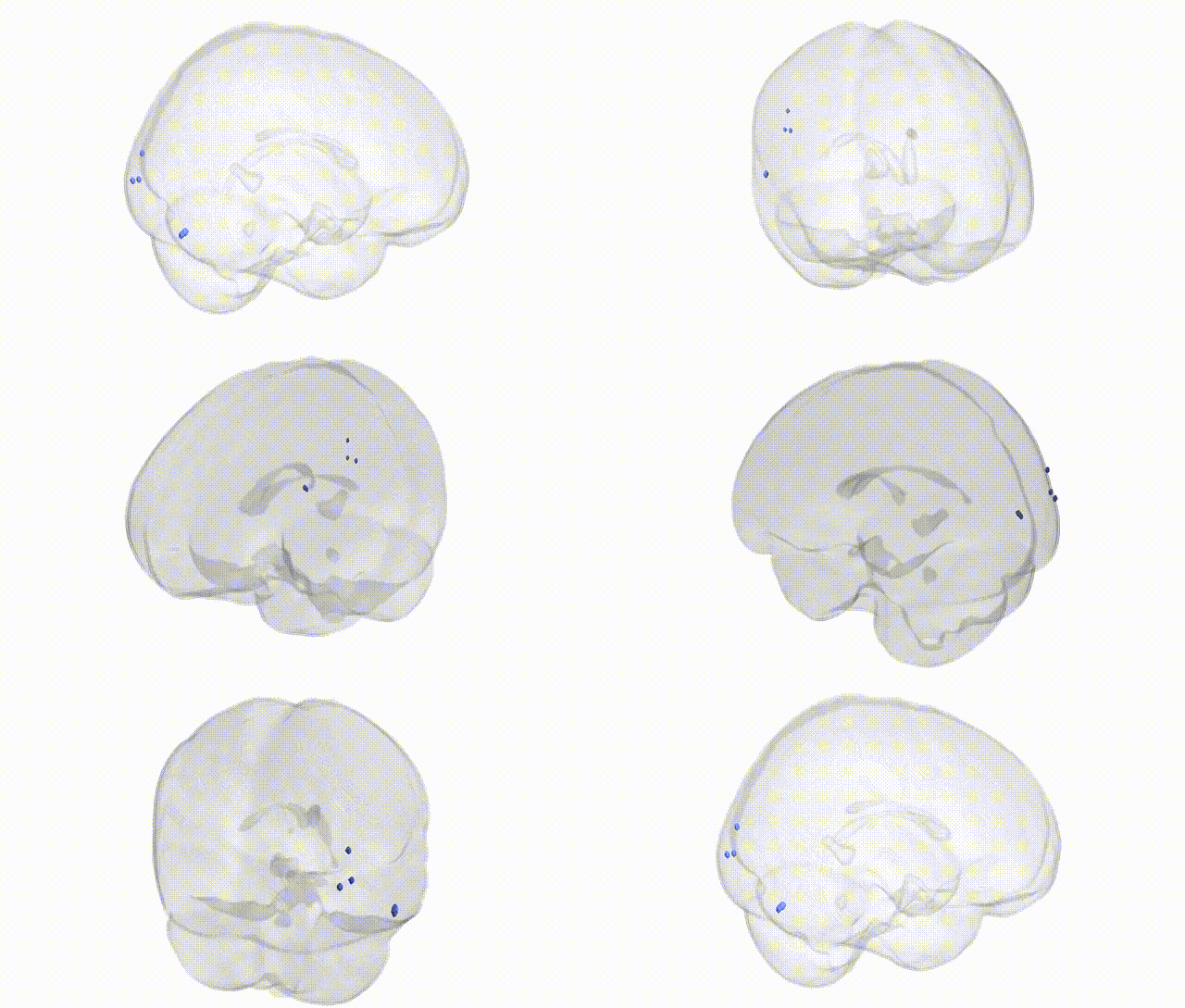
Full Quality Version: Download MP4
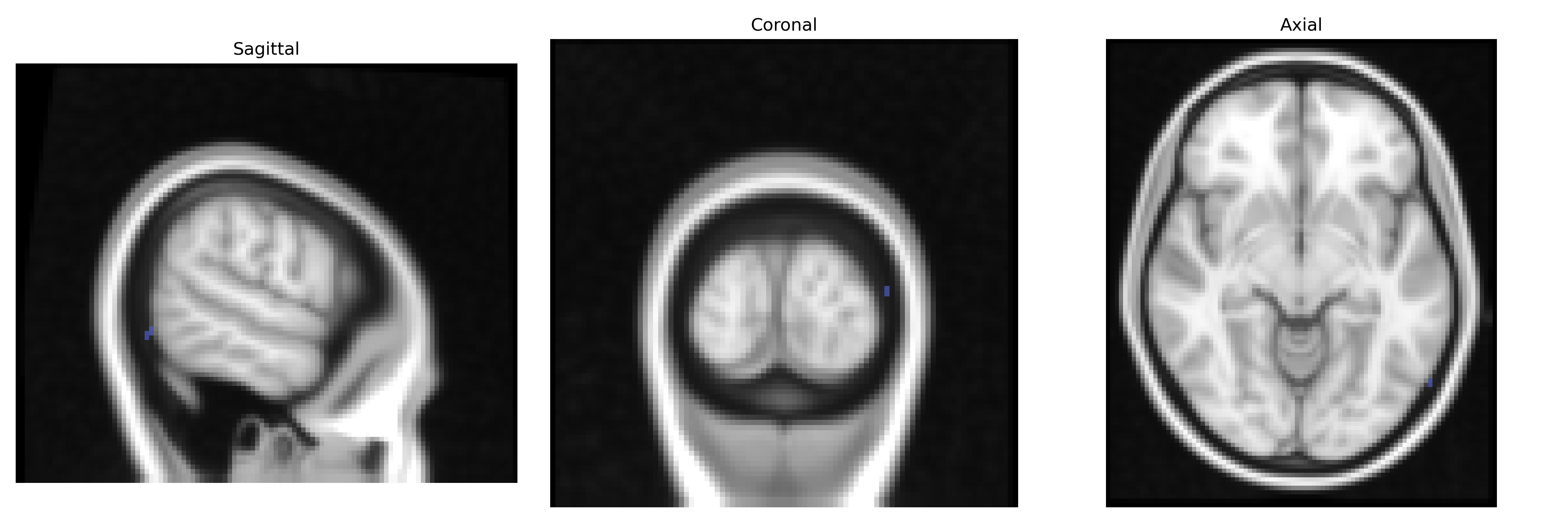
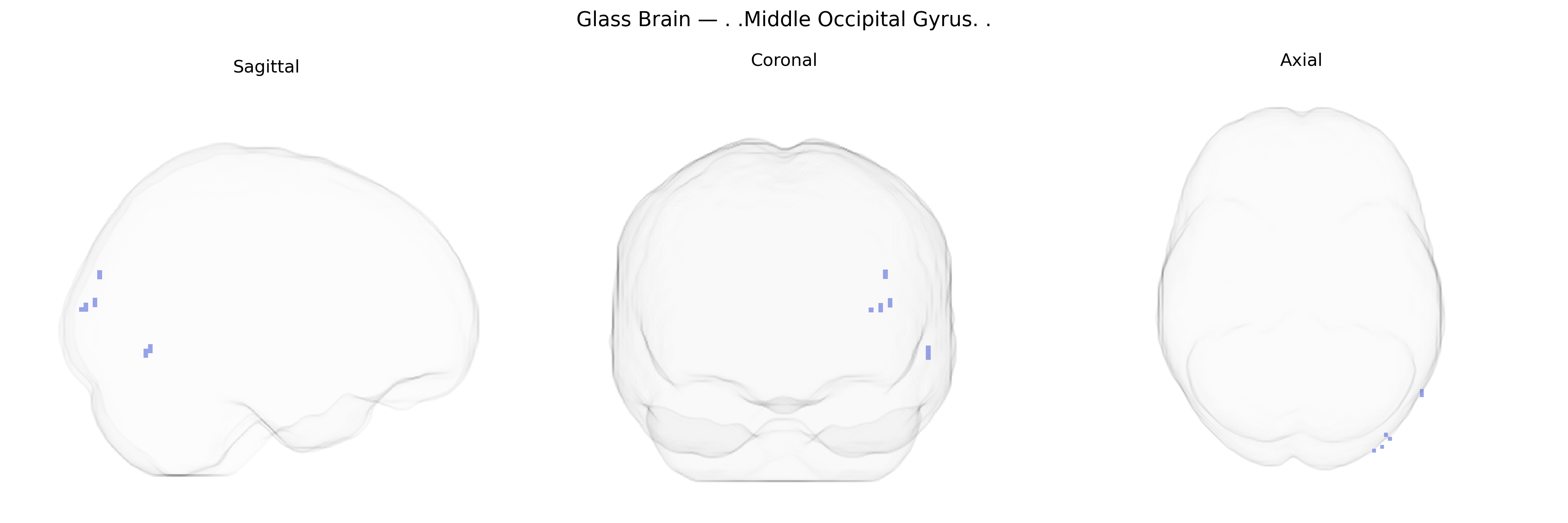
Wali Sidiqyar*, Gaurav Rudravaram*, Elyssa M. McMaster, Trent M. Schwartz, Adam M. Saunders, Kurt G. Schilling, Bennett A. Landman "Introducing SPINS: A Shared Public Visualization Library of Neuroanatomical Structures." Medical Imaging with Deep Learning- short paper
This resource is licensed under CC0 1.0 Universal (Public Domain).