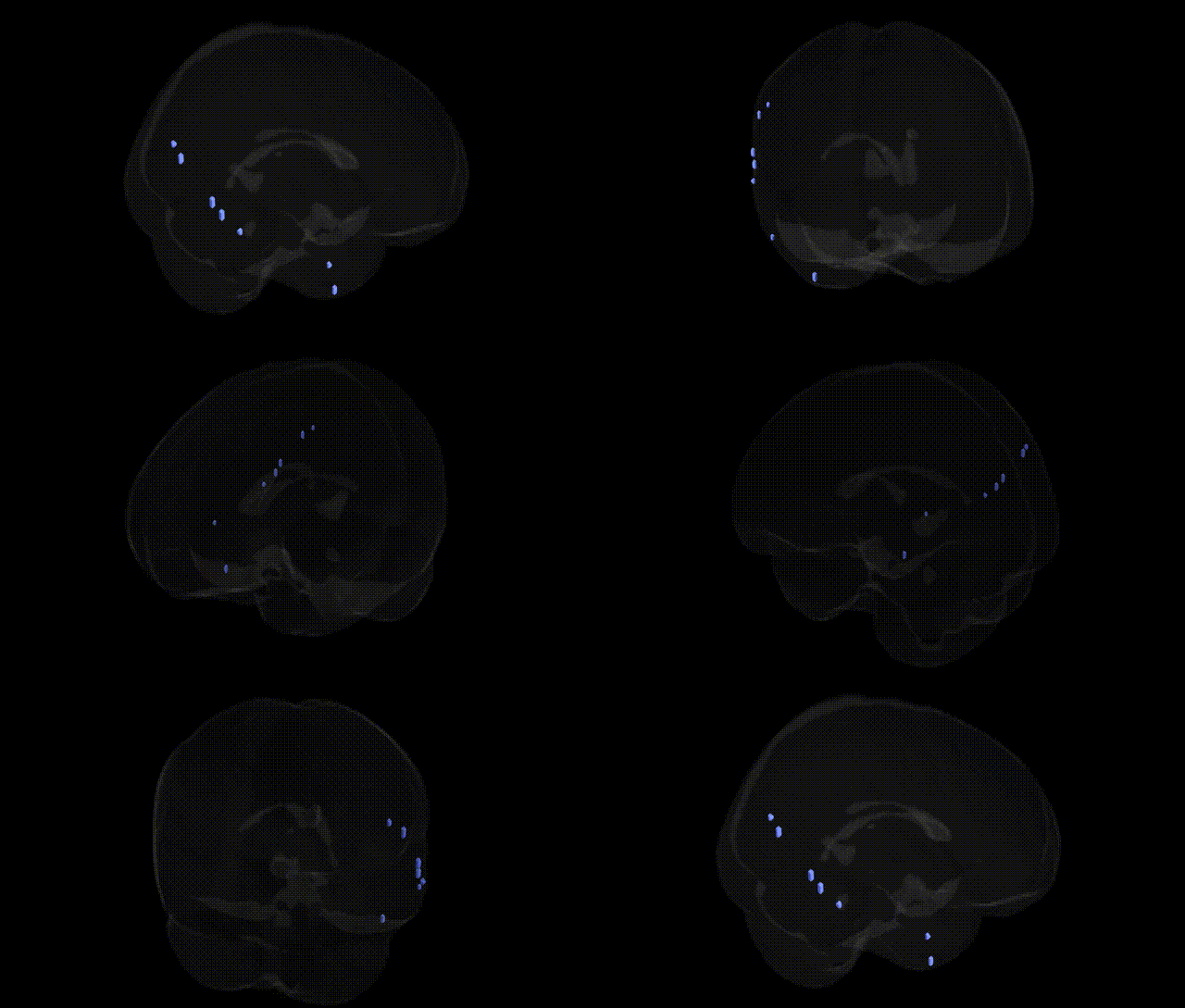
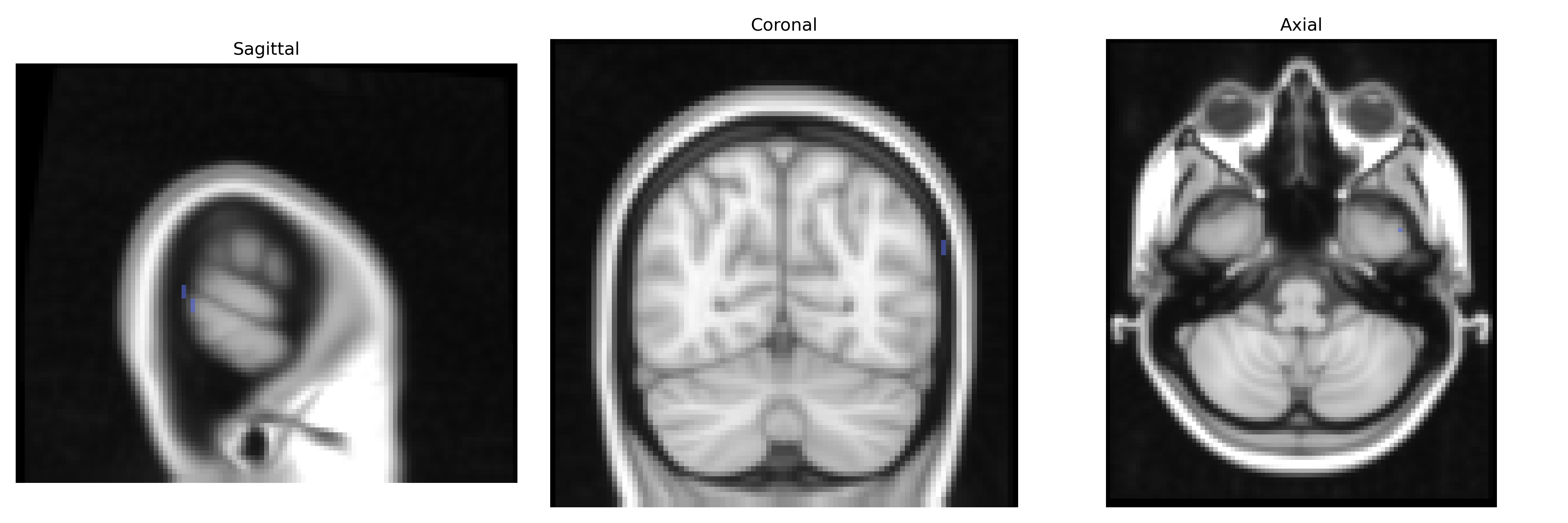
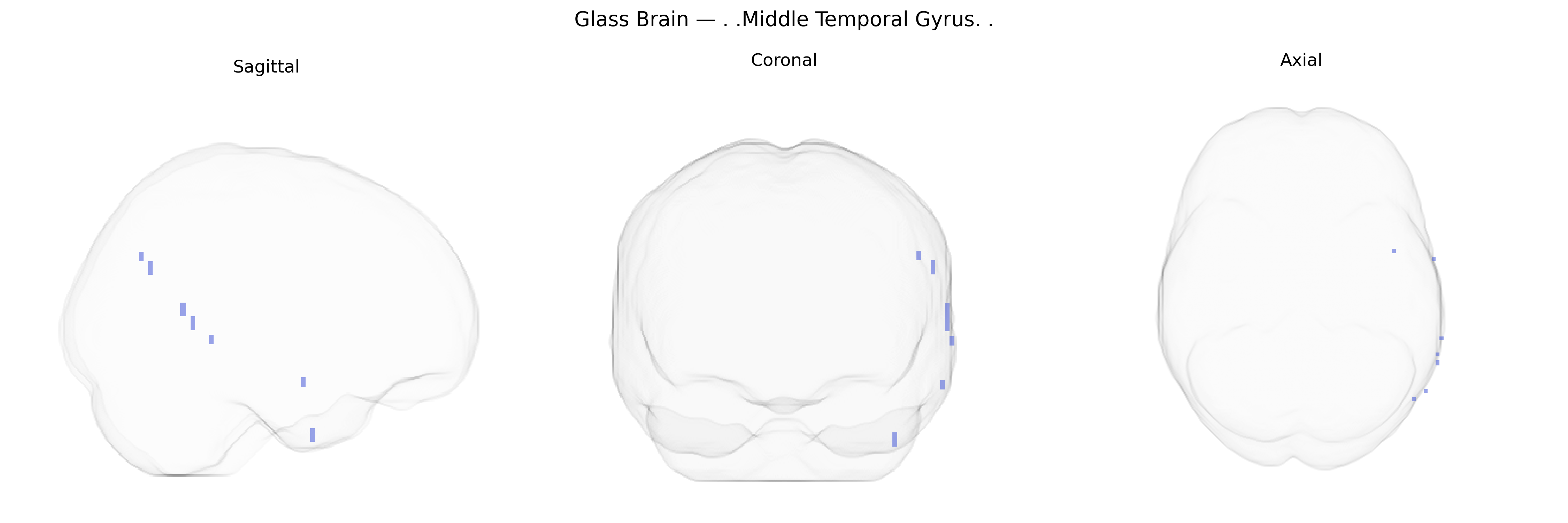
The bilateral Middle Temporal Gyrus is a cortical region located on the lateral aspect of the temporal lobe, between the superior and inferior temporal gyri, extending anteroposteriorly from the temporal pole toward the occipital lobe. It is involved in multimodal integration of auditory, visual, and semantic information, contributing to language comprehension, conceptual processing, social cognition, and aspects of memory retrieval. Functionally, it participates in networks supporting lexical-semantic access, narrative processing, and the interpretation of biological motion and social cues, with lateralization patterns often showing stronger language-related involvement in the left hemisphere. Cytoarchitectonically, it corresponds mainly to portions of Brodmann areas 21 and 37, and is interconnected with frontal, parietal, and limbic structures as part of large-scale association networks. Middle temporal gyrus
The bilateral Middle Temporal Gyrus (MTG), as defined in the Talairach labels 2mm Atlas, has been implicated in multiple genetic and GWAS findings through its roles in language, semantic processing, social cognition, and multimodal integration, with converging evidence from imaging-genetics and transcriptomic studies rather than MTG-specific locus tests. Variants in genes such as FOXP2 (language and speech), CNTNAP2 (language impairment, autism spectrum traits), and KIAA0319/DCDC2 (developmental dyslexia) have been associated with structural and functional alterations in temporal language regions that include the MTG, while common risk alleles for schizophrenia (e.g., in CACNA1C, GRM3, MIR137-related loci), major depressive disorder, bipolar disorder, and autism spectrum disorder have been linked in GWAS-based imaging studies to altered MTG cortical thickness, volume, and activation during language or social cognition tasks. Large-scale consortia (e.g., ENIGMA, UK Biobank) have identified polygenic influences on temporal lobe measures, with MTG morphometry and connectivity correlating with polygenic scores for educational attainment, cognitive performance, and neuropsychiatric risk, and spatial transcriptomic work shows MTG expression enrichment for synaptic and glutamatergic signaling genes implicated in GWAS of cognition and psychiatric disorders. Although individual GWAS rarely target the MTG in isolation, convergent genetic evidence supports its involvement as a key cortical hub in language-related disorders (aphasia, dyslexia), psychosis, autism spectrum conditions, and mood disorders through distributed polygenic effects on temporal cortical development and synaptic function.
Overview generated by GPT-4o (2026).
Region ID: 54
Hemisphere: bilateral
Atlas: Talairach labels 2mm
Full Quality Version: Download MP4
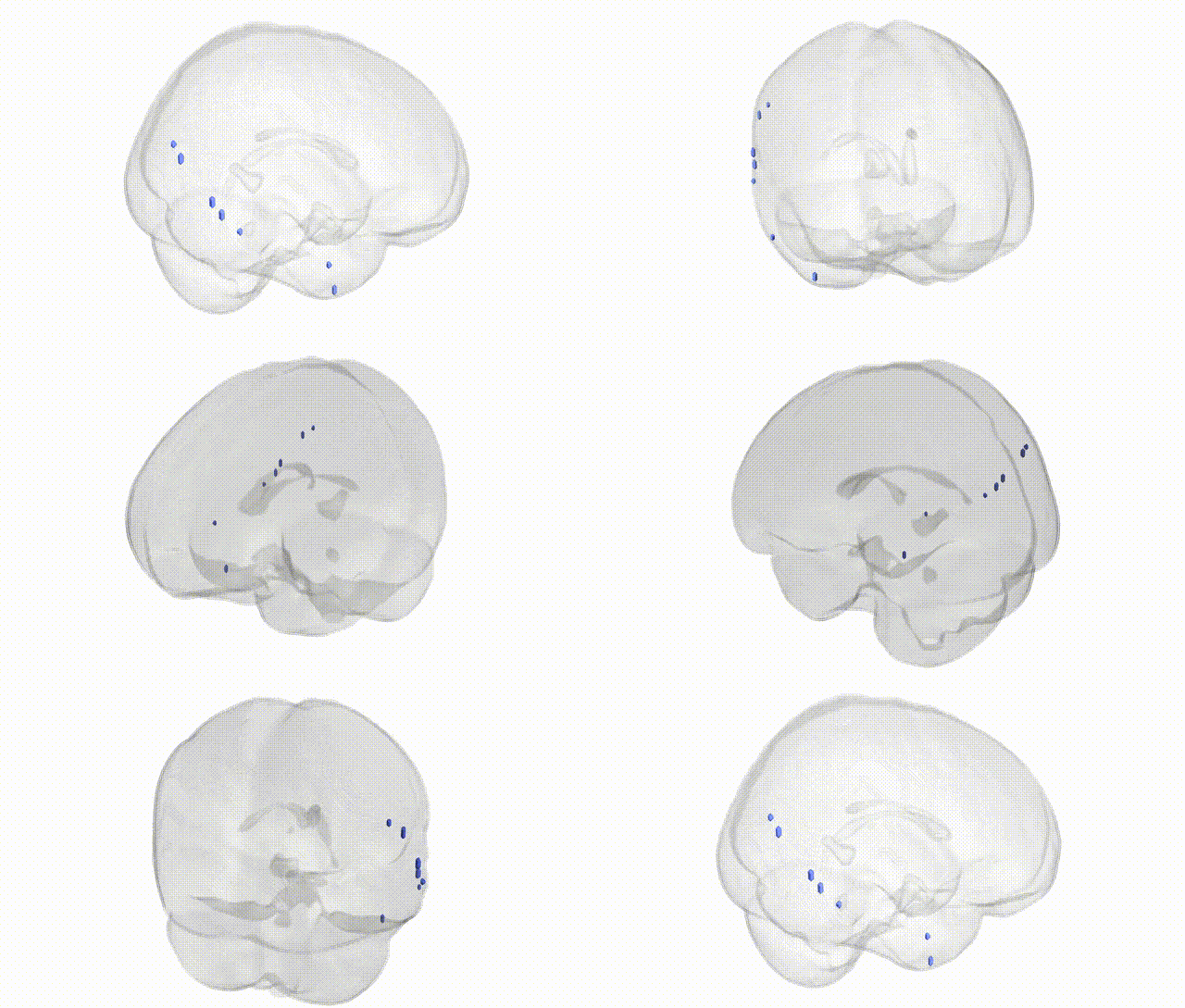
Full Quality Version: Download MP4
Wali Sidiqyar*, Gaurav Rudravaram*, Elyssa M. McMaster, Trent M. Schwartz, Adam M. Saunders, Kurt G. Schilling, Bennett A. Landman "Introducing SPINS: A Shared Public Visualization Library of Neuroanatomical Structures." Medical Imaging with Deep Learning- short paper
This resource is licensed under CC0 1.0 Universal (Public Domain).