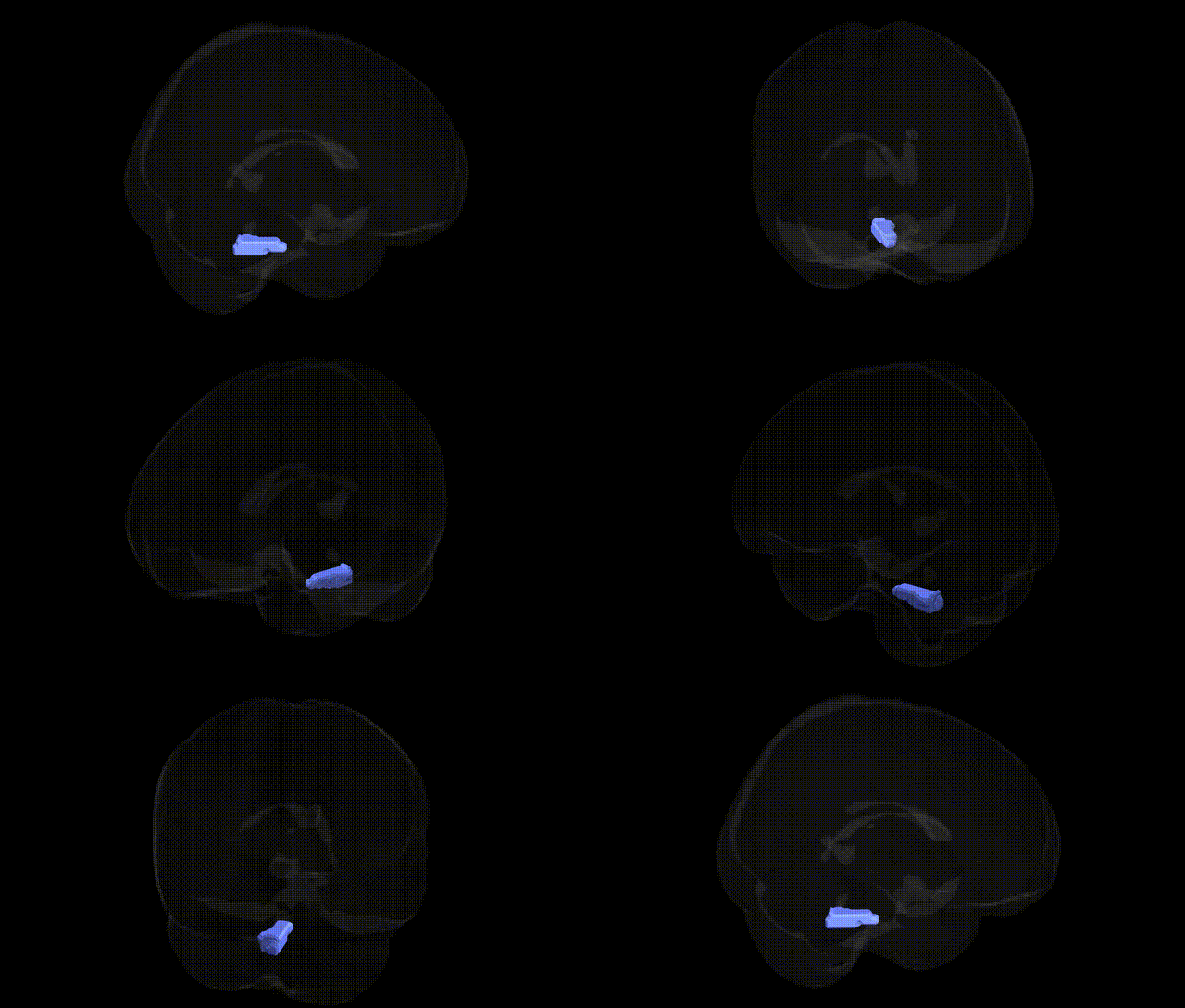
The bilateral right brainstem medulla refers to the right-sided portion of the medulla oblongata, the caudal segment of the brainstem that transitions into the spinal cord and is symmetrically represented across hemispheres. It contains essential autonomic nuclei and ascending/descending fiber tracts responsible for vital functions, including regulation of cardiovascular activity, respiration, and reflexes such as coughing, swallowing, and vomiting. Key structures within the medulla include the dorsal motor nucleus of the vagus, nucleus ambiguus, nucleus tractus solitarius, hypoglossal nucleus, inferior olivary nucleus, and components of the medial lemniscus and corticospinal tract, among others. The medulla also participates in sensorimotor integration for cranial nerves IX–XII and serves as an important conduit relaying sensory and motor information between the spinal cord, cerebellum, and higher brain centers. Medulla oblongata
Genetic associations for the bilateral Right Brainstem Medulla region, as defined in the Talairach 2 mm atlas, largely reflect its role in autonomic, respiratory, cardiovascular, and motor control circuits rather than direct region-specific GWAS signals, since most large-scale studies map variants to networks or traits rather than discrete brainstem nuclei. Variants in genes affecting serotonin, norepinephrine, and glutamate signaling (e.g., SLC6A4, MAOA, GRIN2B) have been implicated in functional and structural changes in medullary and broader brainstem circuits involved in mood, stress response, and pain modulation, often in the context of depression, anxiety, and pain disorders, though imaging-genetics studies typically report brainstem-wide or “brainstem/pons/medulla” effects. GWAS of blood pressure and cardiovascular traits implicate genes such as NOS3, ADRB2, and ACE that modulate autonomic and vascular regulation, consistent with medullary roles in baroreflex and sympathetic outflow, but region-specific imaging-genetic confirmation is limited. Neurodegenerative disease genetics—particularly variants in LRRK2, GBA, SNCA, and MAPT for Parkinson’s disease and related synucleinopathies—have been associated with pathology that prominently involves medullary structures (e.g., dorsal motor nucleus of the vagus) in early Braak stages, linking these genes indirectly to medulla-related dysfunction. Sleep and respiratory control traits, including obstructive sleep apnea and sudden infant death syndrome, have been linked to variants in genes regulating chemosensitivity and respiratory rhythm (e.g., PHOX2B in congenital central hypoventilation), which act through medullary respiratory centers. Overall, current genetic evidence connects the medulla to systemic traits and disorders via its integrative autonomic and motor functions, but high-resolution, medulla-specific GWAS or imaging-genetic maps are still sparse, and most findings remain network-level rather than uniquely tied to the Right Brainstem Medulla region in the Talairach atlas.
Overview generated by GPT-4o (2026).
Region ID: 6
Hemisphere: bilateral
Atlas: Talairach labels 2mm
Full Quality Version: Download MP4
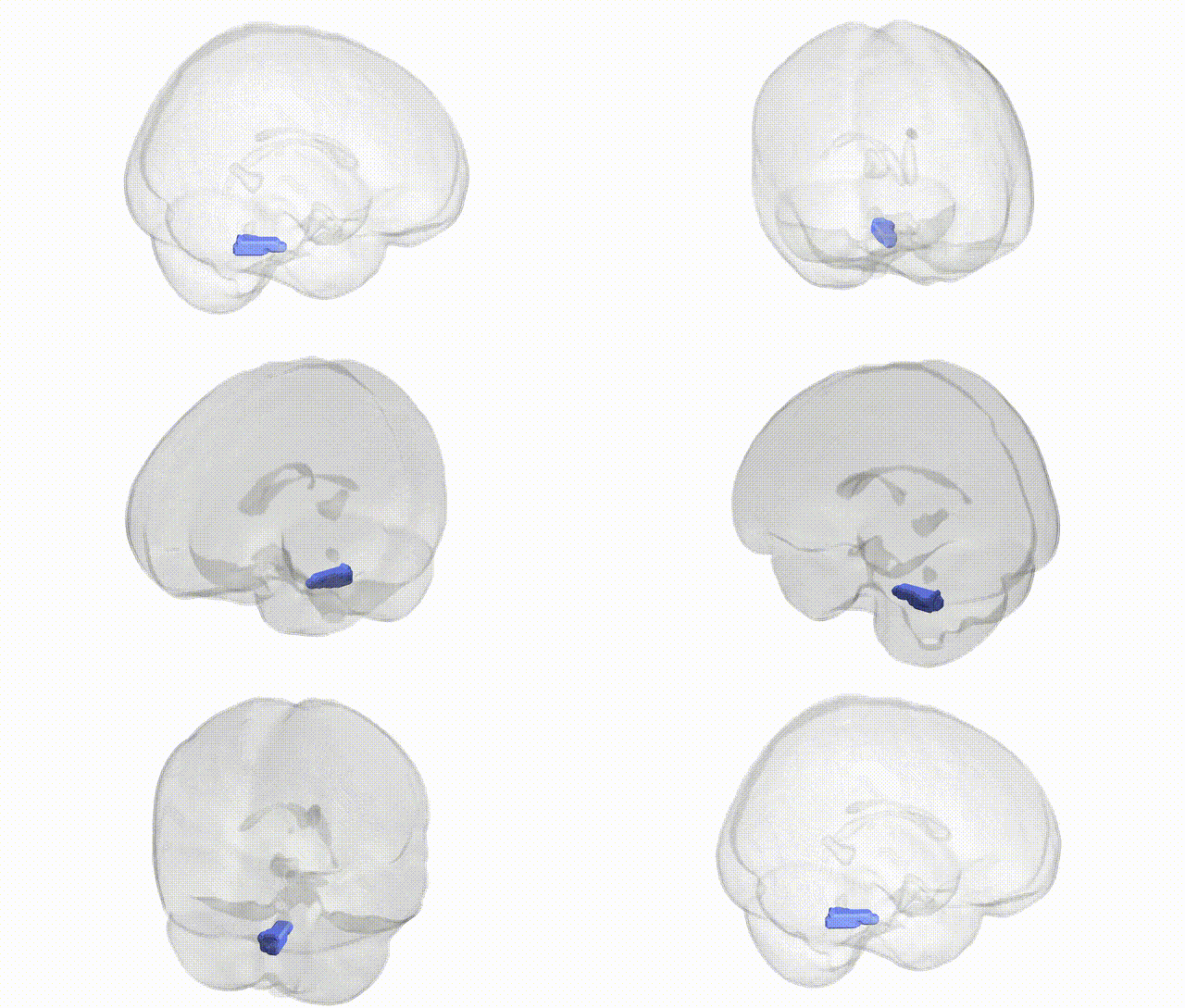
Full Quality Version: Download MP4
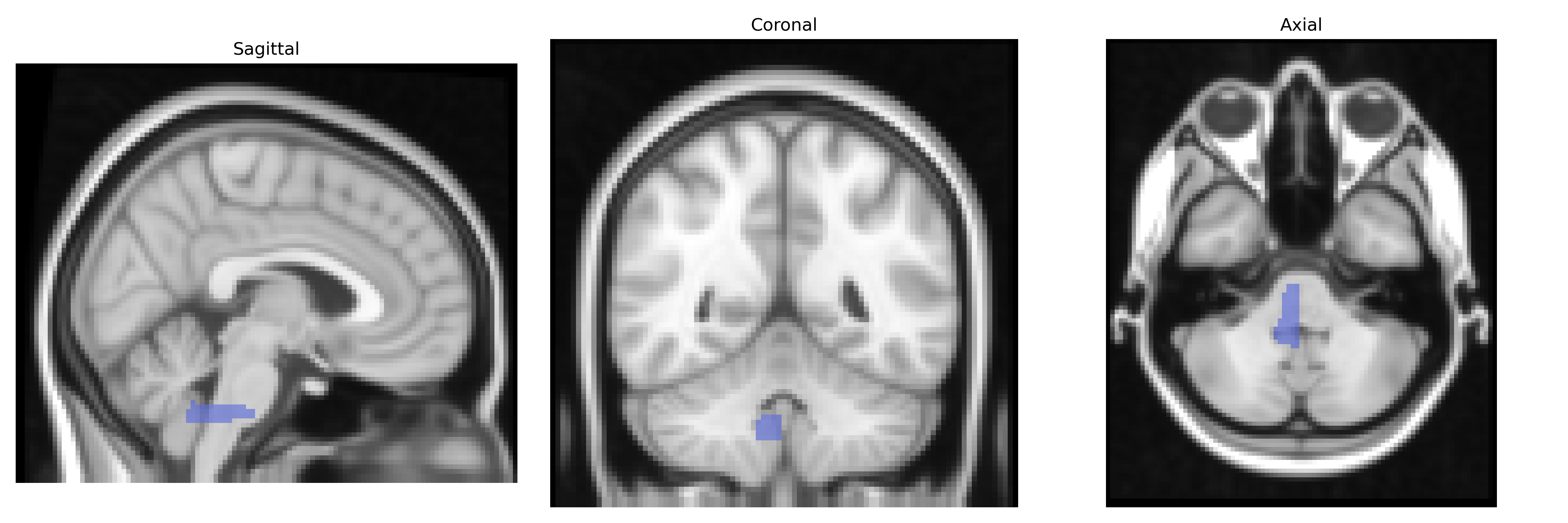
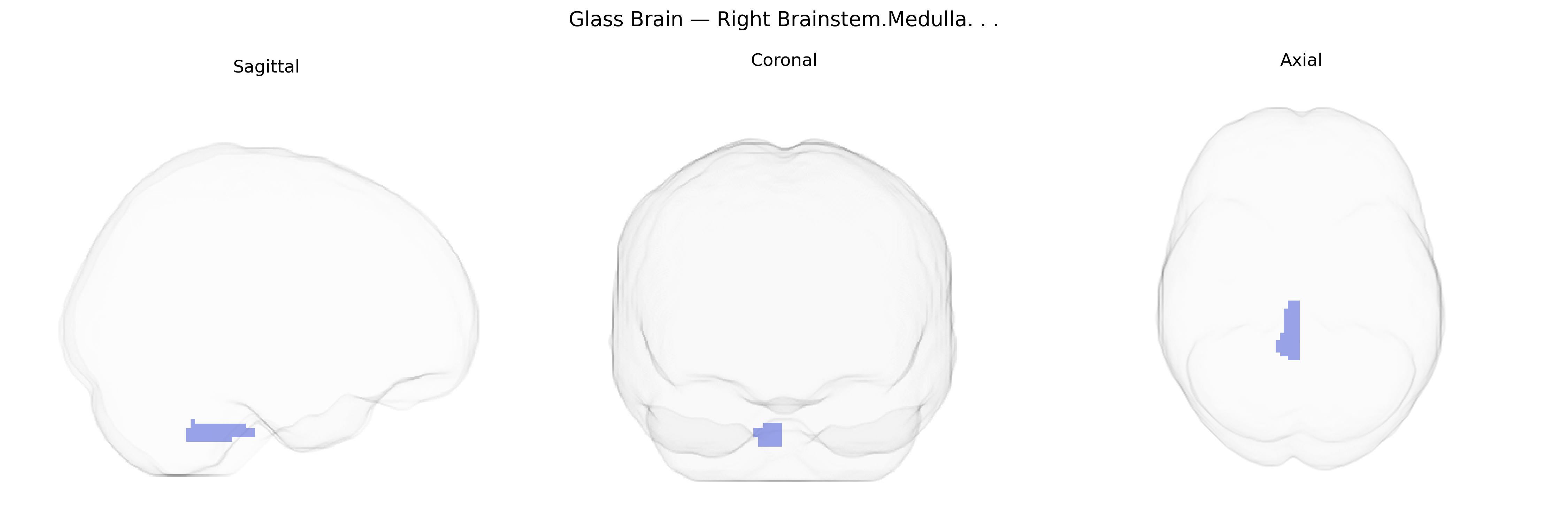
Wali Sidiqyar*, Gaurav Rudravaram*, Elyssa M. McMaster, Trent M. Schwartz, Adam M. Saunders, Kurt G. Schilling, Bennett A. Landman "Introducing SPINS: A Shared Public Visualization Library of Neuroanatomical Structures." Medical Imaging with Deep Learning- short paper
This resource is licensed under CC0 1.0 Universal (Public Domain).