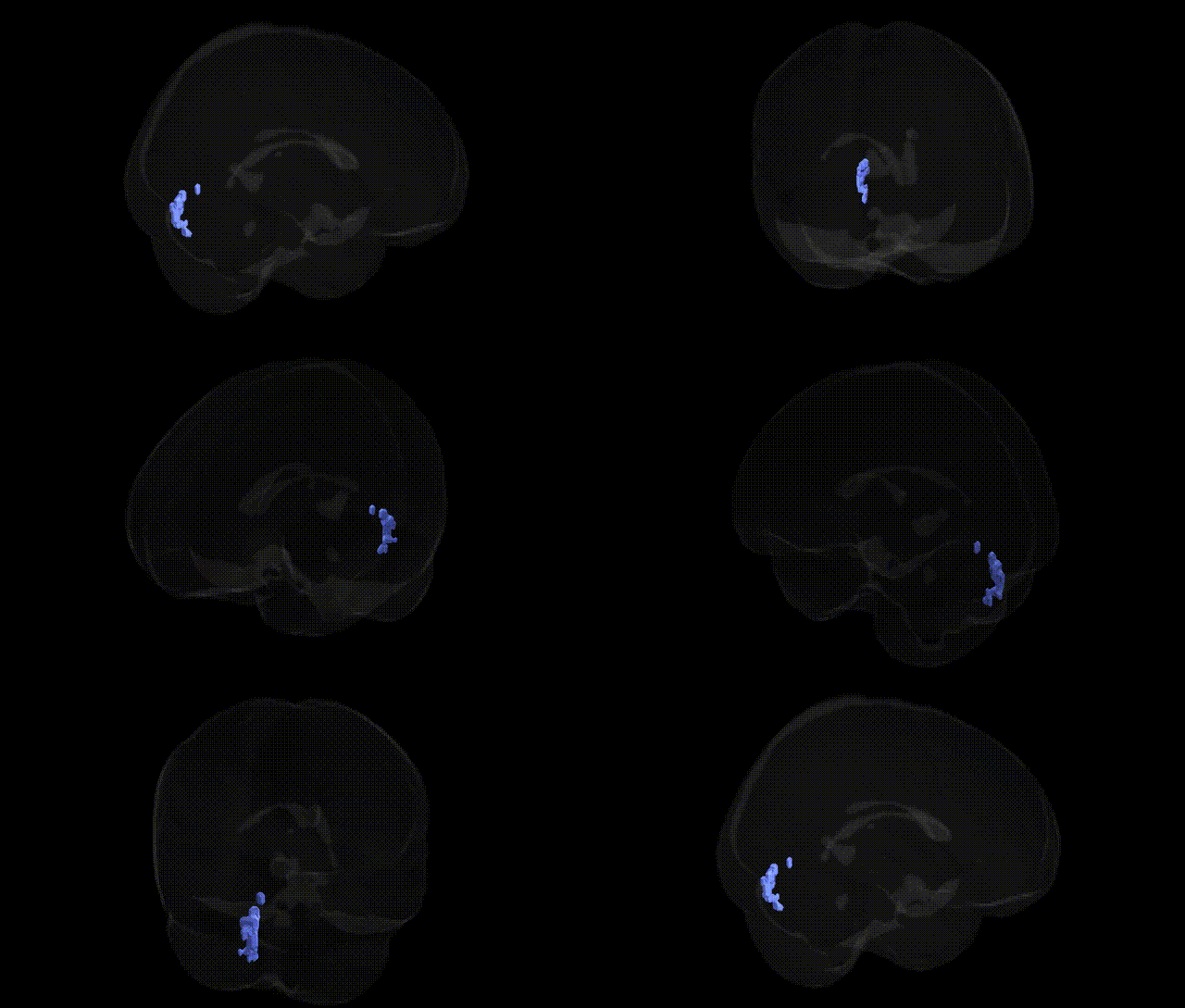
The bilateral Right Cerebellum gray matter corresponds to cortical tissue within the right cerebellar hemisphere, encompassing the foliated cerebellar cortex that overlies the deep cerebellar nuclei and white matter tracts. This region participates in fine-tuning motor activity, balance, posture, and coordination through integration of proprioceptive, vestibular, and cortical inputs, and it contributes to motor learning via adaptive modification of synaptic connections, particularly within Purkinje cell circuits. Beyond classical motor functions, the right cerebellar hemisphere is also implicated in aspects of cognition and language, including timing, procedural learning, and modulation of higher-order cortical networks through cerebello-thalamo-cortical pathways.
Cerebellum
The bilateral right cerebellar gray matter—though less frequently highlighted than cortical regions in GWAS—has been implicated in several genetic and neuropsychiatric contexts, particularly involving motor coordination, cognition, and affective regulation. Large imaging-genetics studies (e.g., ENIGMA, UK Biobank) have identified heritable variation in cerebellar volume and cortical thickness linked to common variants in genes related to neurodevelopment, synaptic function, and axon guidance (such as variants near KIAA0586, RORA, and genes involved in cerebellar patterning), with right-sided cerebellar measures showing modest but significant SNP-based heritability. Polygenic risk scores for schizophrenia, bipolar disorder, major depressive disorder, and autism spectrum disorder have been associated with altered cerebellar structure and connectivity, including right cerebellar regions, suggesting shared genetic influences on cortico-cerebellar circuits. GWAS of cognitive traits (educational attainment, general cognitive ability) and motor-related phenotypes (balance, gait, reaction time) have reported associations between risk variants and cerebellar morphology or activation patterns, with cerebellar gray matter—often including right lobules—correlating genetically and phenotypically with higher-order cognitive and language functions that are lateralized to the left cerebrum. Studies in neurodevelopmental and movement disorders (e.g., ADHD, dyslexia, ataxias, essential tremor) also report gene-by-brain associations involving the cerebellum; while these findings typically do not isolate the Talairach right cerebellum 2 mm region specifically, they support a broader pattern in which cerebellar gray matter morphology and function are shaped by common and rare variants affecting neural development, synaptic plasticity, and neuroimmune pathways, and contribute genetically to vulnerability for motor, cognitive, and psychiatric phenotypes.
Overview generated by GPT-4o (2026).
Region ID: 65
Hemisphere: bilateral
Atlas: Talairach labels 2mm
Full Quality Version: Download MP4
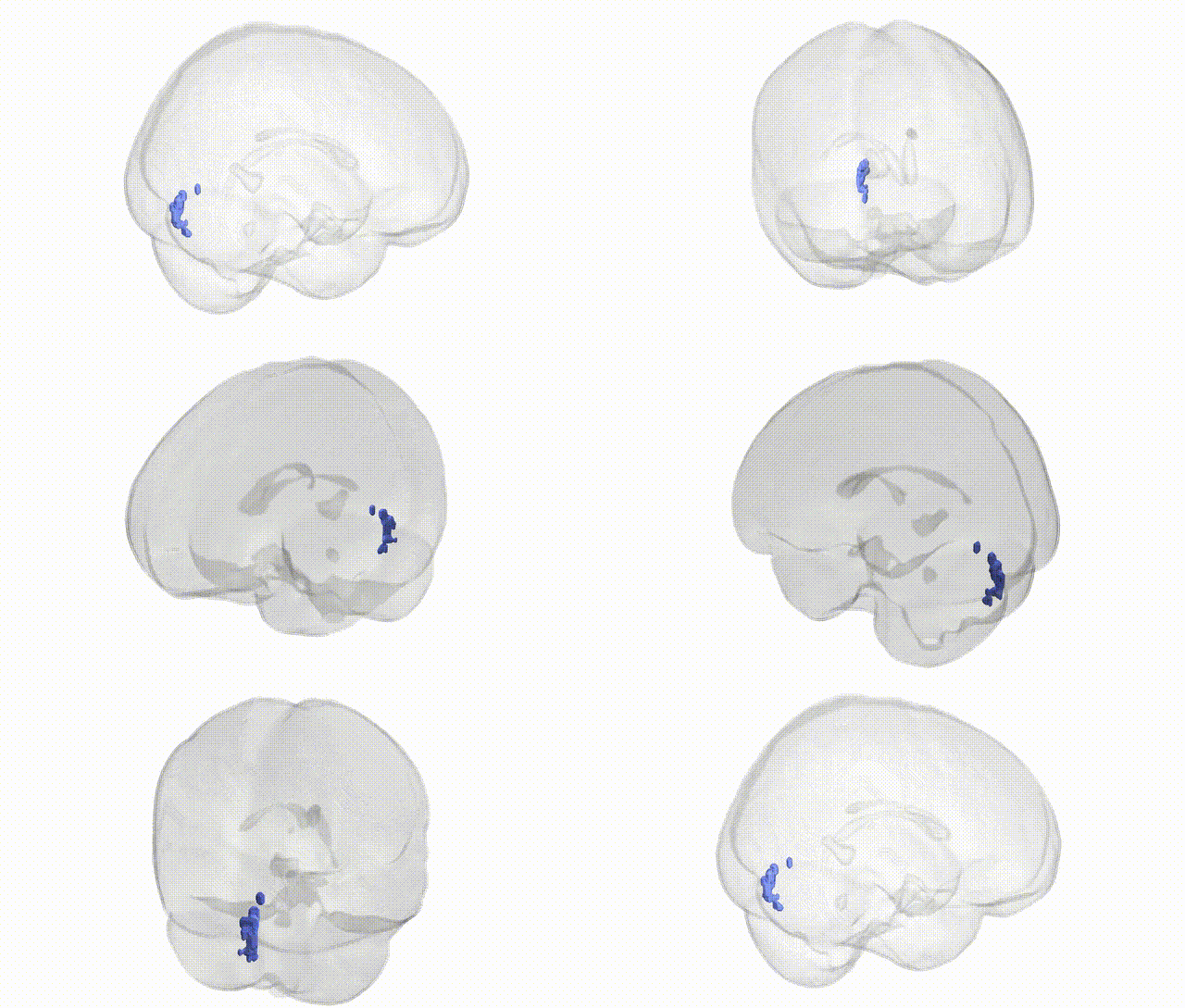
Full Quality Version: Download MP4
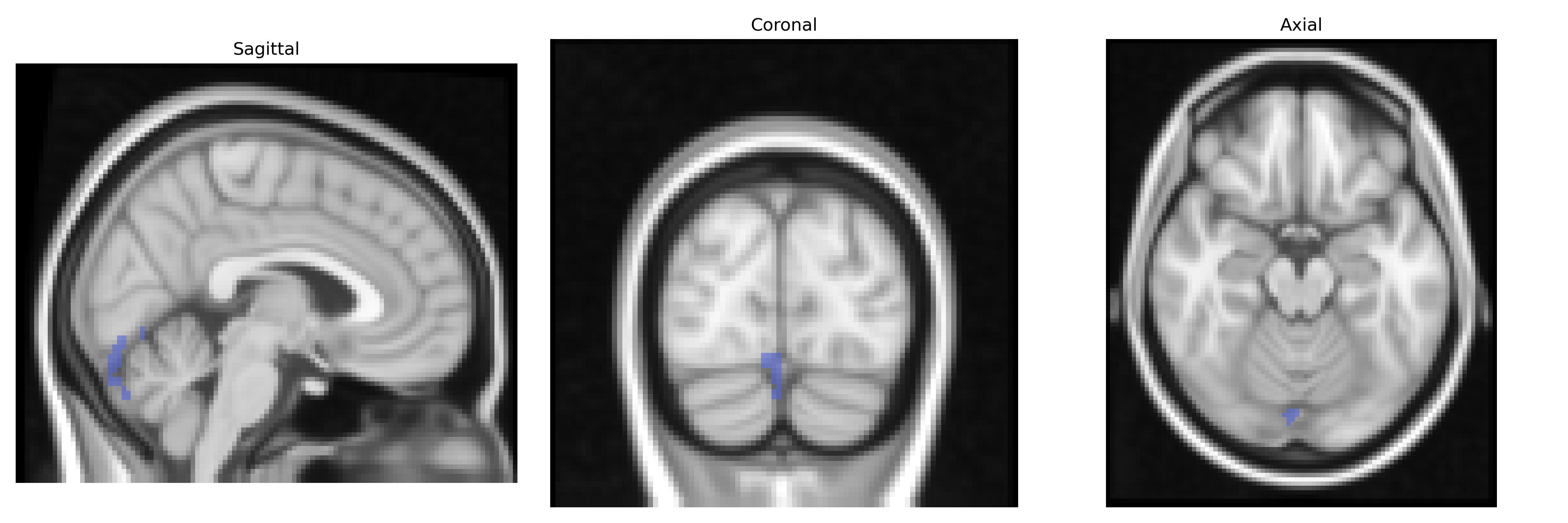
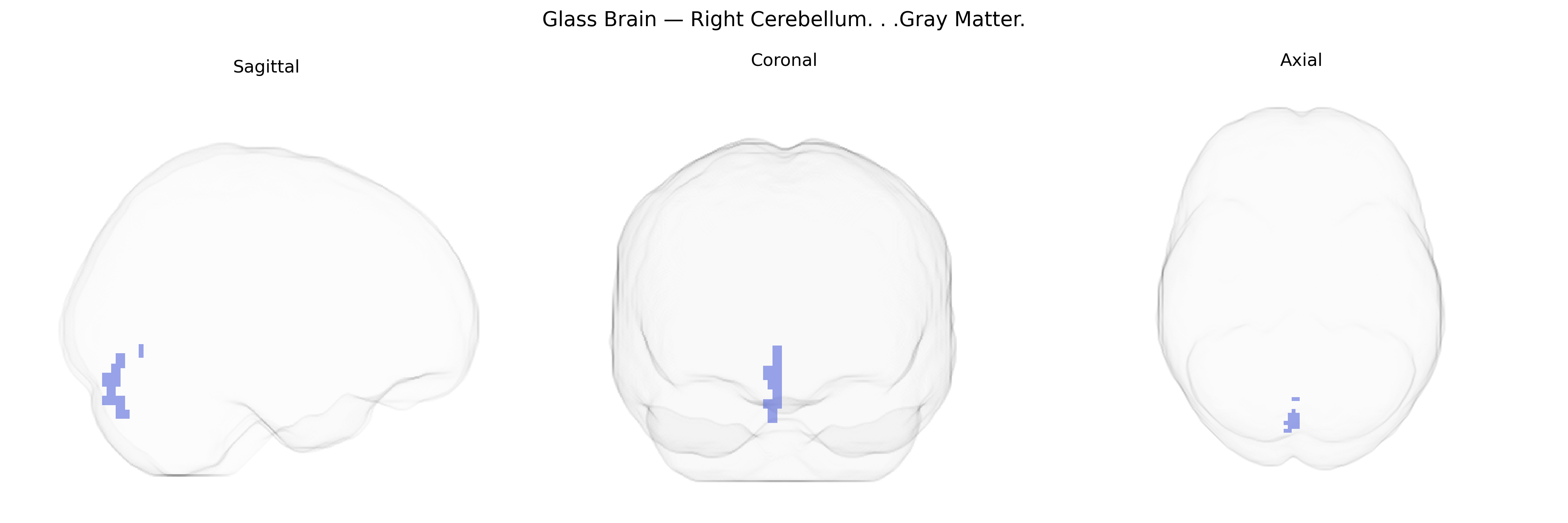
Wali Sidiqyar*, Gaurav Rudravaram*, Elyssa M. McMaster, Trent M. Schwartz, Adam M. Saunders, Kurt G. Schilling, Bennett A. Landman "Introducing SPINS: A Shared Public Visualization Library of Neuroanatomical Structures." Medical Imaging with Deep Learning- short paper
This resource is licensed under CC0 1.0 Universal (Public Domain).