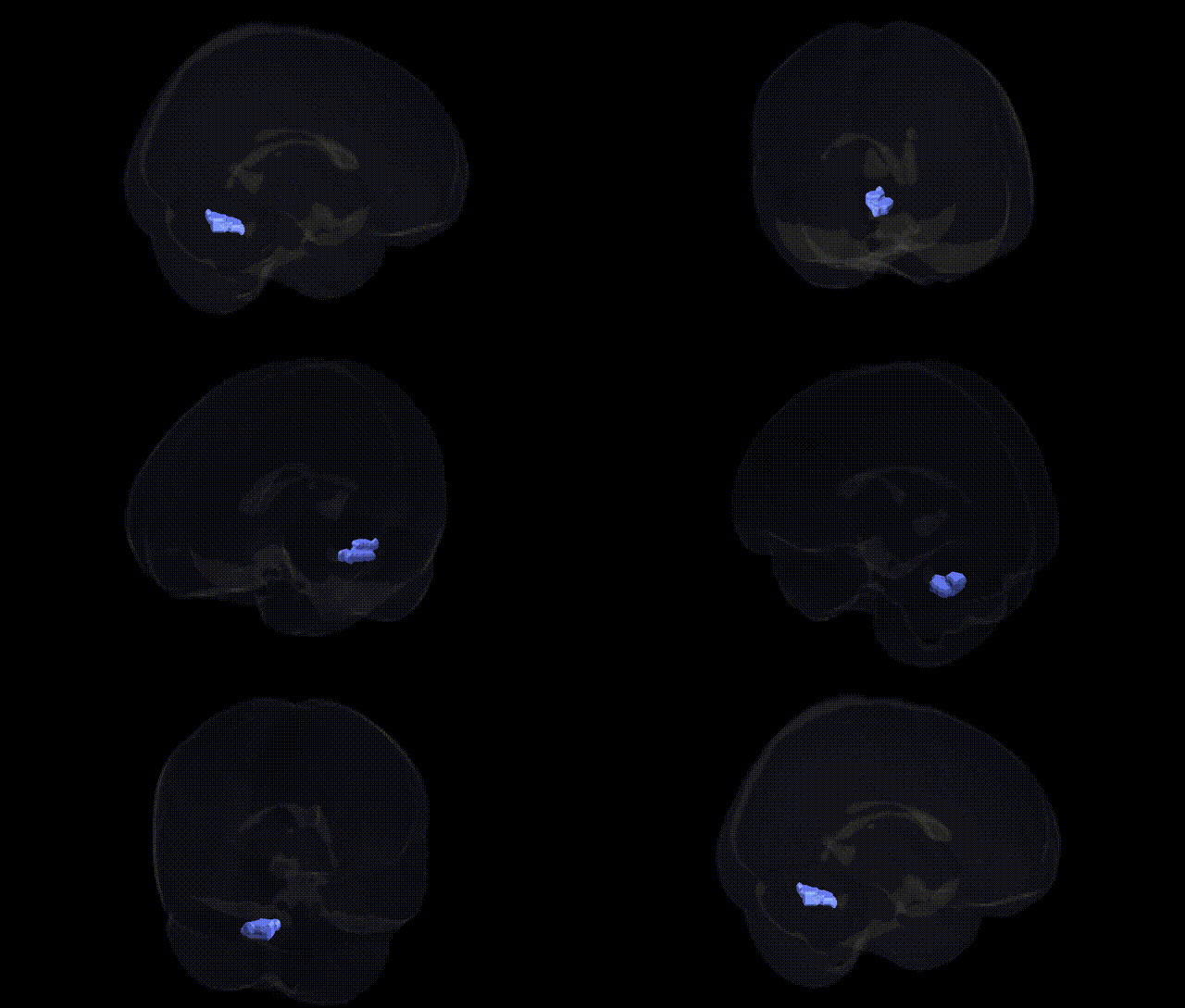
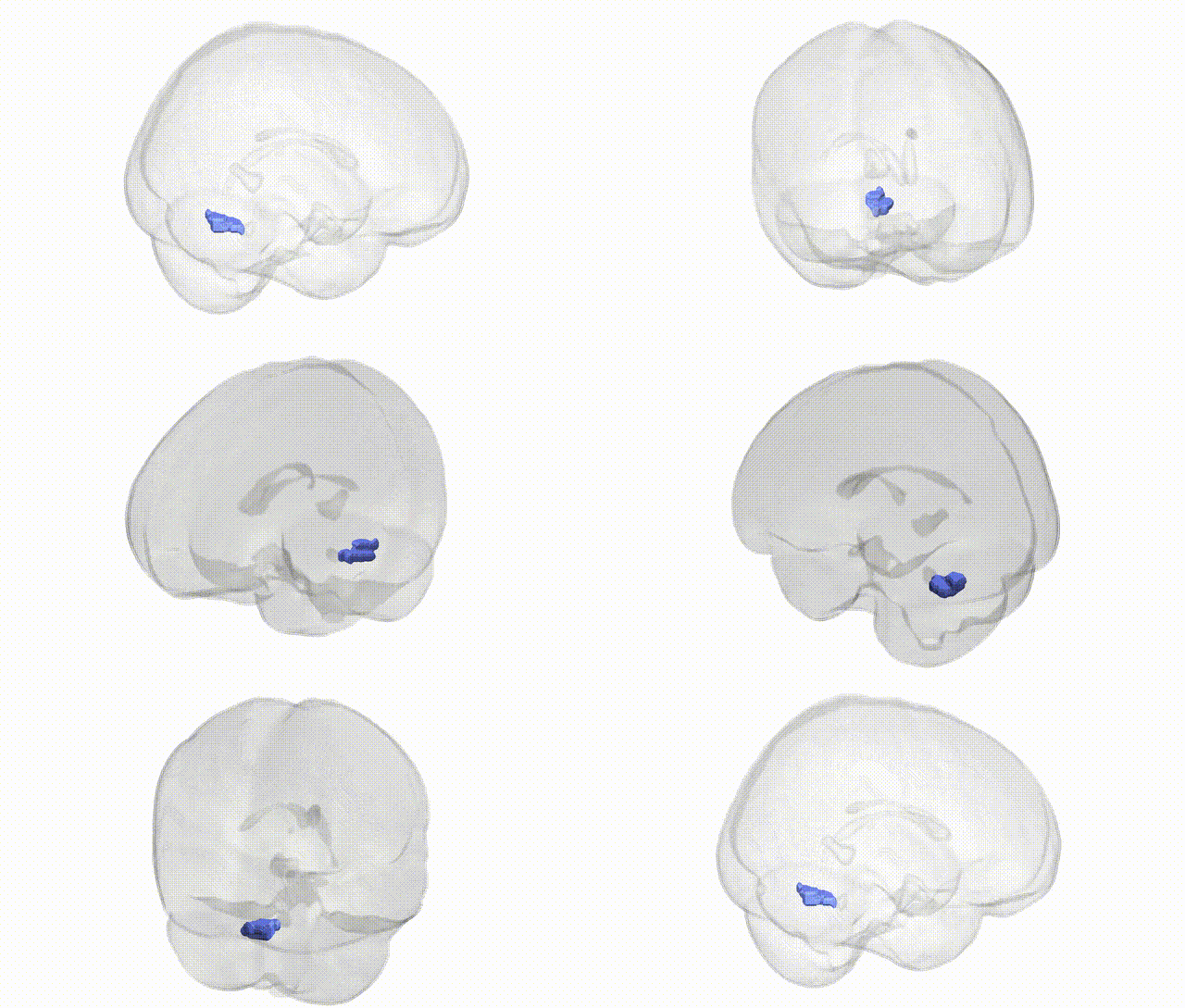
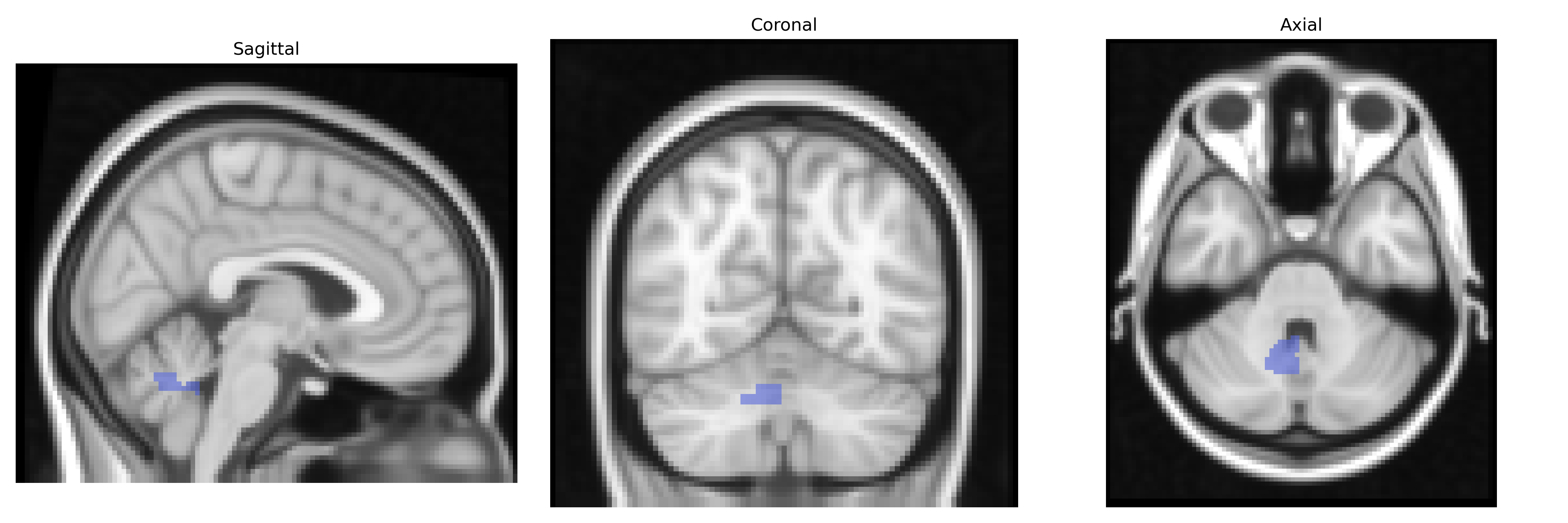
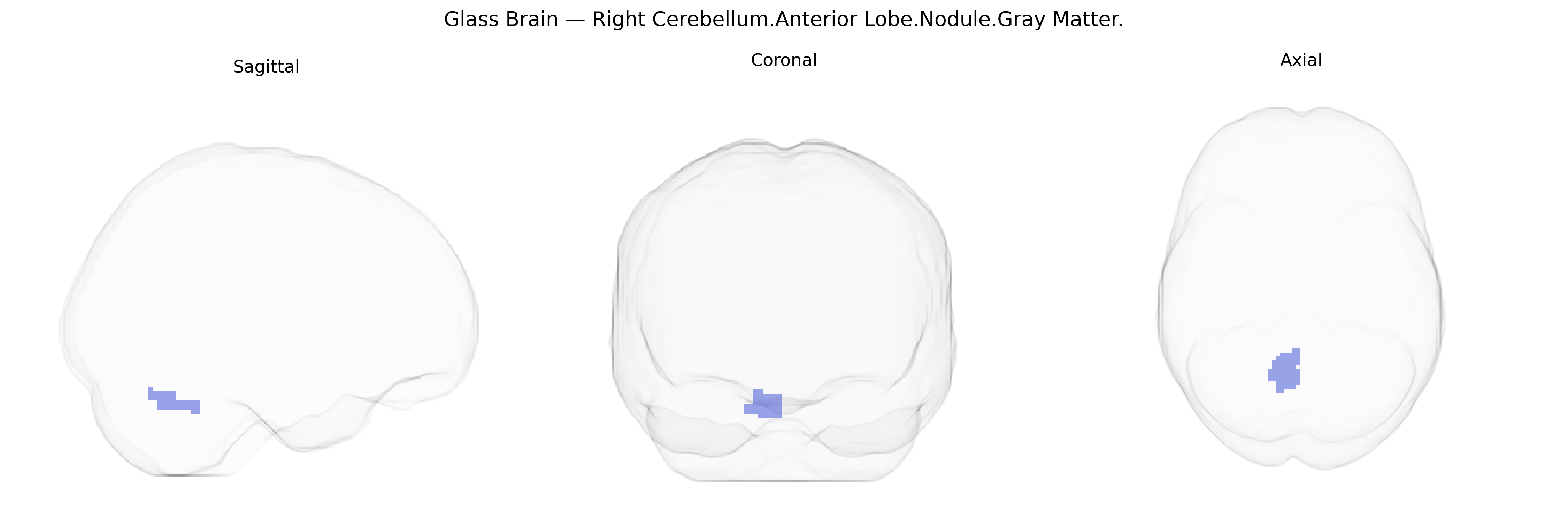
The bilateral Right Cerebellum.Anterior Lobe.Nodule.Gray Matter corresponds to the nodulus of the vermis within the anterior lobe of the cerebellum, a midline structure belonging to the vestibulocerebellum. This gray matter region plays a critical role in processing vestibular information and in regulating balance, posture, and ocular movements, particularly through its connections with the vestibular nuclei and brainstem circuits. Functionally, the nodulus contributes to the maintenance of equilibrium and coordination of eye–head movements by integrating signals about head position and motion. Pathology affecting this area can result in gait ataxia, vertigo, and oculomotor disturbances. There is no direct Wikipedia article for this specific Talairach-labeled region; a closely related structure is the Cerebellum.
The bilateral Right Cerebellum Anterior Lobe Nodule gray matter region, as defined in the Talairach 2mm atlas, lies within the cerebellar vermis and anterior cerebellar lobules, areas repeatedly implicated by imaging genetics and GWAS of brain structure and neuropsychiatric traits. Large-scale neuroimaging GWAS (e.g., ENIGMA and UK Biobank) have identified multiple common variants—particularly in genes involved in neurodevelopment, synaptic function, and axon guidance (such as variants near BDNF, CACNA1C, KIAA0319, and genes in the WNT and MAPK pathways)—that are associated with cerebellar volume and lobular morphology, including anterior cerebellar regions. Although most studies report global or lobule-level cerebellar measures rather than specifically the nodule, structural and functional abnormalities in this anterior vermal territory have been linked, via genetic risk scores and candidate gene analyses, to autism spectrum disorder, schizophrenia, bipolar disorder, ADHD, and mood and anxiety disorders, often in the context of altered cortico‑cerebellar circuitry. Genetic correlations from GWAS indicate shared heritable influences between cerebellar gray-matter metrics and cognitive performance, general intelligence, motor coordination, and neuroticism, consistent with the cerebellum’s role in motor and affective regulation. Rare variant and copy number variant studies in neurodevelopmental syndromes and ataxias further support the sensitivity of this region’s structure and connectivity to disruptions in genes governing neuronal migration, synaptogenesis, and cerebellar foliation, although precise, region-specific genetic associations for the Right Cerebellum Anterior Lobe Nodule remain inferred rather than directly mapped in current atlases.
Overview generated by GPT-4o (2026).
Region ID: 86
Hemisphere: bilateral
Atlas: Talairach labels 2mm
Full Quality Version: Download MP4
Full Quality Version: Download MP4
Wali Sidiqyar*, Gaurav Rudravaram*, Elyssa M. McMaster, Trent M. Schwartz, Adam M. Saunders, Kurt G. Schilling, Bennett A. Landman "Introducing SPINS: A Shared Public Visualization Library of Neuroanatomical Structures." Medical Imaging with Deep Learning- short paper
This resource is licensed under CC0 1.0 Universal (Public Domain).