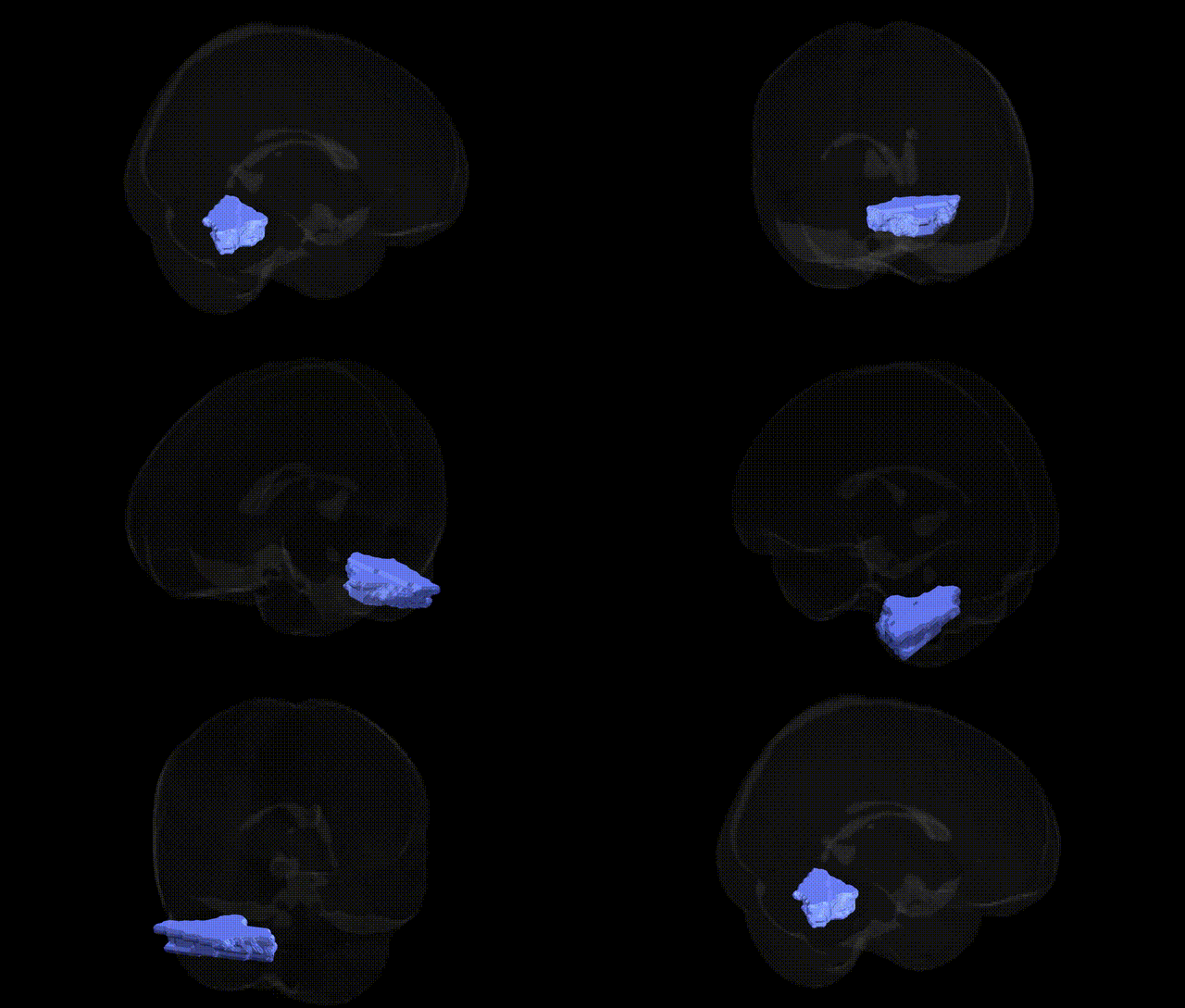
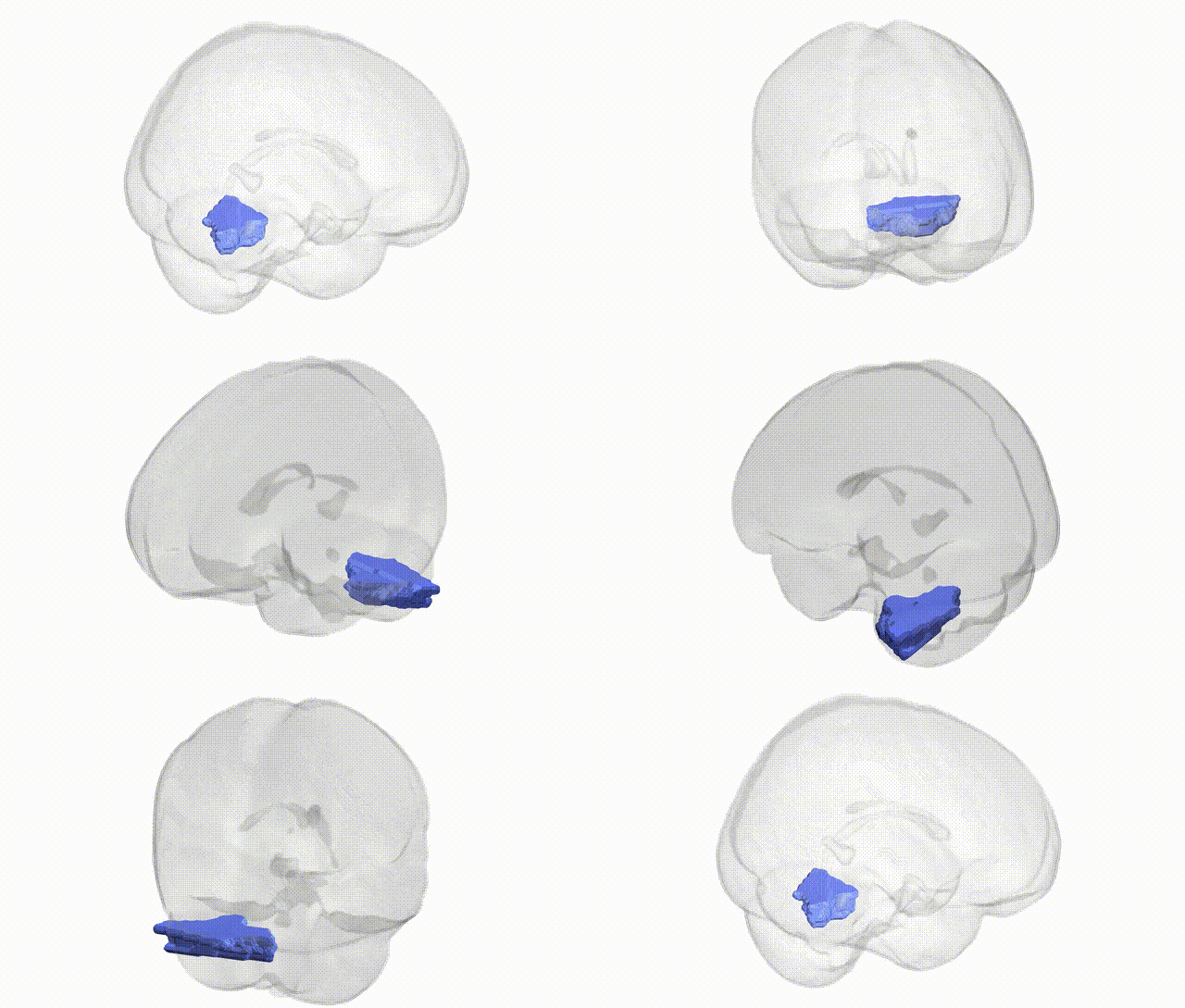
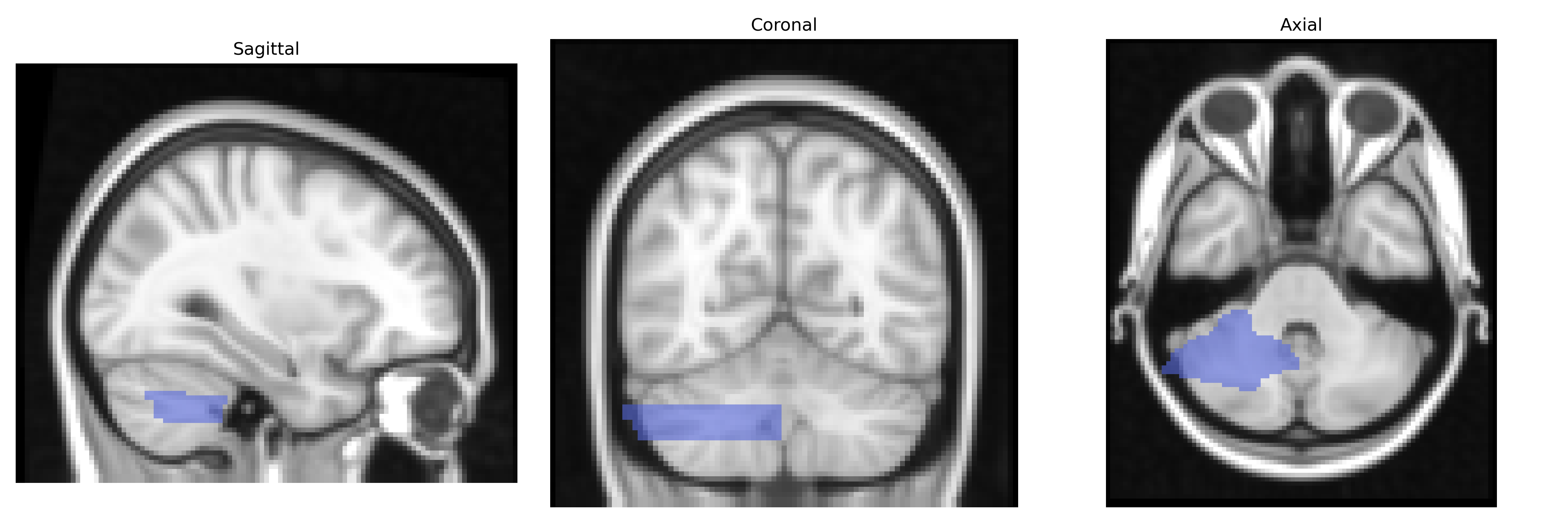
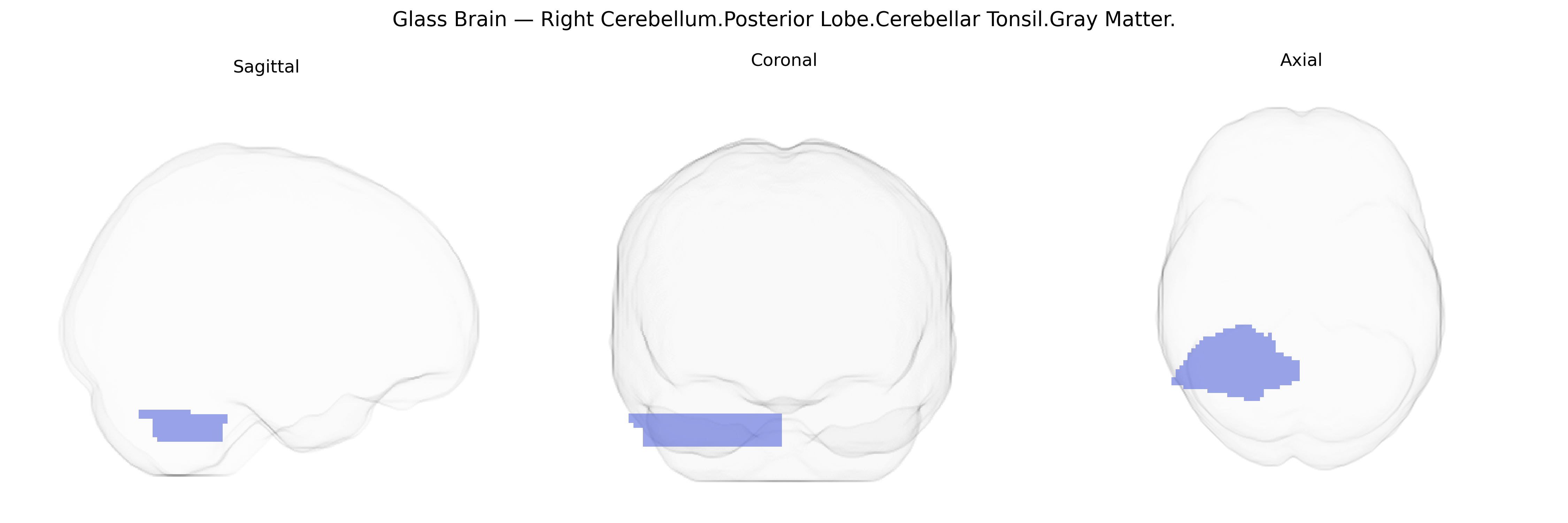
The bilateral Right Cerebellum, Posterior Lobe, Cerebellar Tonsil, Gray Matter corresponds to the paired cerebellar tonsils, small ovoid masses of gray matter located on the inferior surface of the cerebellar hemispheres within the posterior lobe, adjacent to the medulla and near the foramen magnum. Functionally, this region participates in the fine-tuning of motor coordination, balance, and postural control, integrating proprioceptive and vestibular input as part of the broader cerebellar circuitry. The tonsils are clinically notable because downward displacement (tonsillar herniation) can compress the brainstem and impair vital autonomic functions. There is no direct link, but this region is part of the Cerebellum.
The bilateral right cerebellar tonsil gray matter, part of the posterior lobe, has not typically been isolated as an individual target in genetic studies, but GWAS and imaging-genetics work implicating the cerebellum broadly provide relevant associations. Large-scale brain morphology GWAS (e.g., ENIGMA, UK Biobank) have identified common variants in genes involved in neurodevelopment, synaptic function, and cell signaling (such as KIAA0586, PAX6, RELN, and CADM2) that influence cerebellar volume and cortical thickness, including posterior lobule regions. Cerebellar gray matter in posterior lobes, encompassing the tonsil, has been structurally and functionally linked to motor coordination, language, affect regulation, and higher-order cognition, and genetic liability for disorders such as autism spectrum disorder, schizophrenia, bipolar disorder, major depression, and ADHD often shows downstream effects on cerebellar morphology. Polygenic risk scores for psychiatric and neurodevelopmental conditions, as well as traits like general cognitive ability, educational attainment, and neuroticism, have been associated with variability in cerebellar volumes, with posterior regions frequently implicated. Additionally, variants influencing vascular and structural integrity (such as those in COL4A1/COL4A2 and other extracellular matrix genes) contribute to risk for Chiari malformation and cerebellar tonsillar ectopia and may affect local gray matter properties. Overall, genetic influences on the right cerebellar tonsil gray matter appear to be part of distributed polygenic effects on cerebellar development and function rather than region-specific single-gene associations.
Overview generated by GPT-4o (2026).
Region ID: 4
Hemisphere: bilateral
Atlas: Talairach labels 2mm
Full Quality Version: Download MP4
Full Quality Version: Download MP4
Wali Sidiqyar*, Gaurav Rudravaram*, Elyssa M. McMaster, Trent M. Schwartz, Adam M. Saunders, Kurt G. Schilling, Bennett A. Landman "Introducing SPINS: A Shared Public Visualization Library of Neuroanatomical Structures." Medical Imaging with Deep Learning- short paper
This resource is licensed under CC0 1.0 Universal (Public Domain).