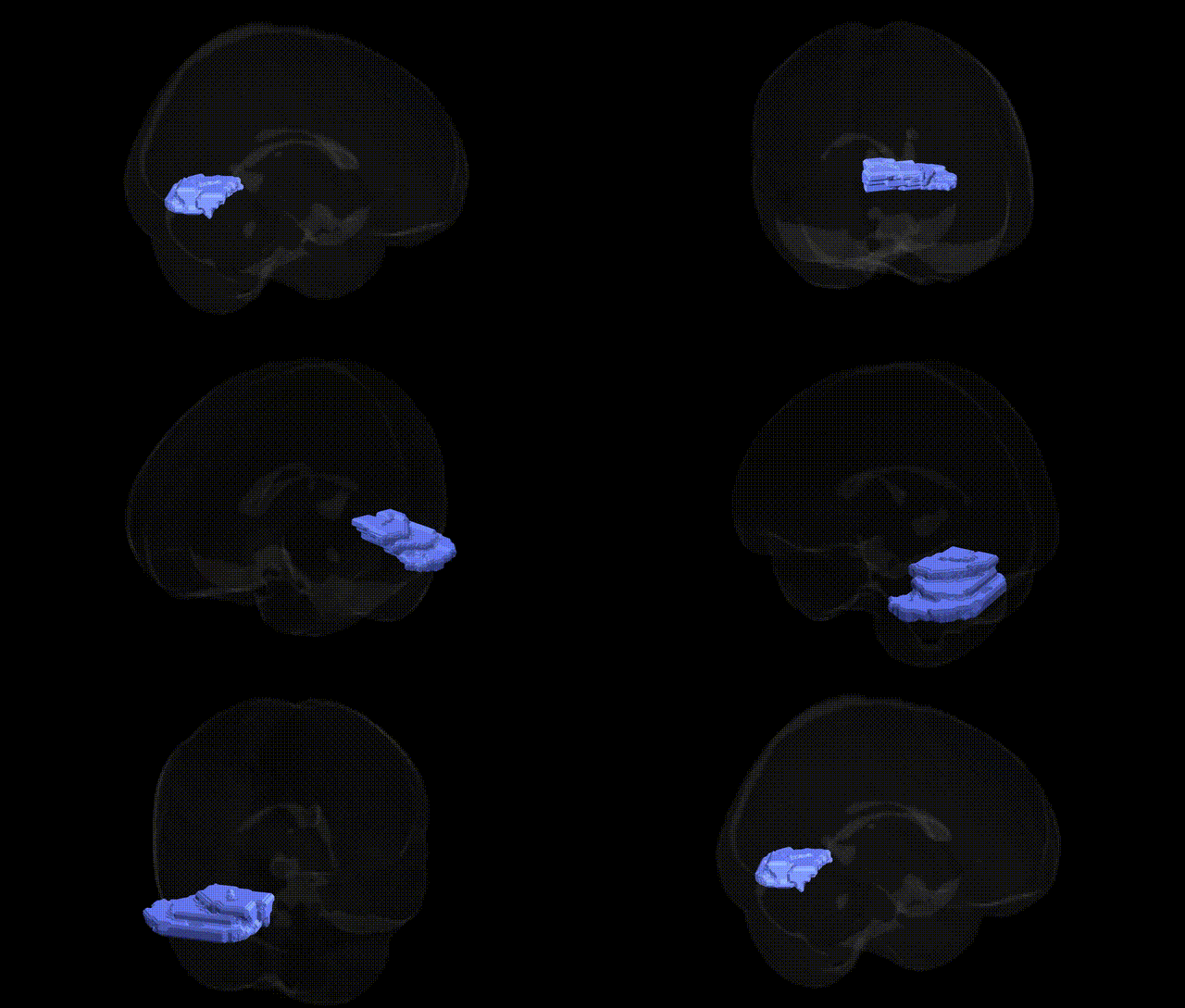
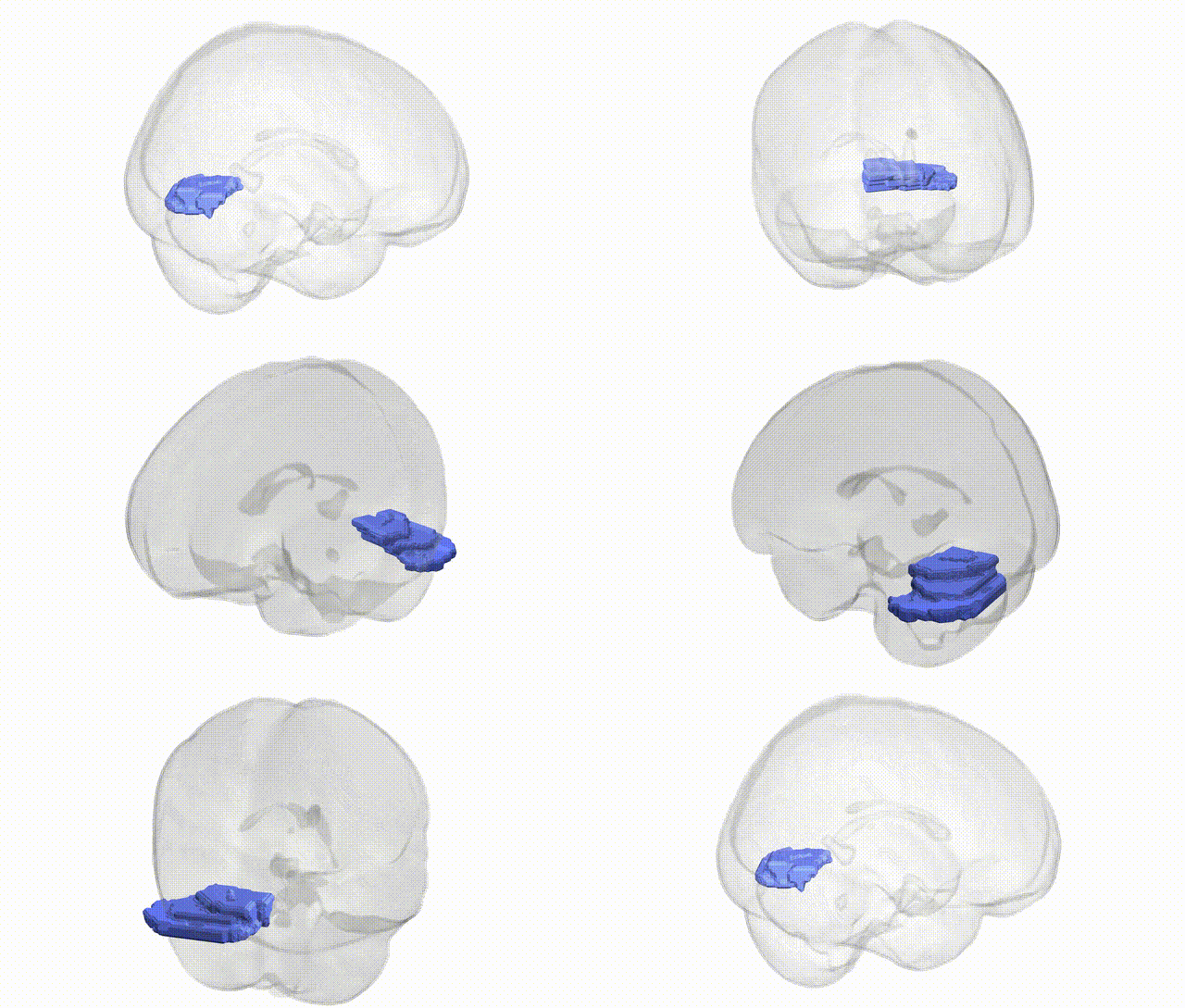
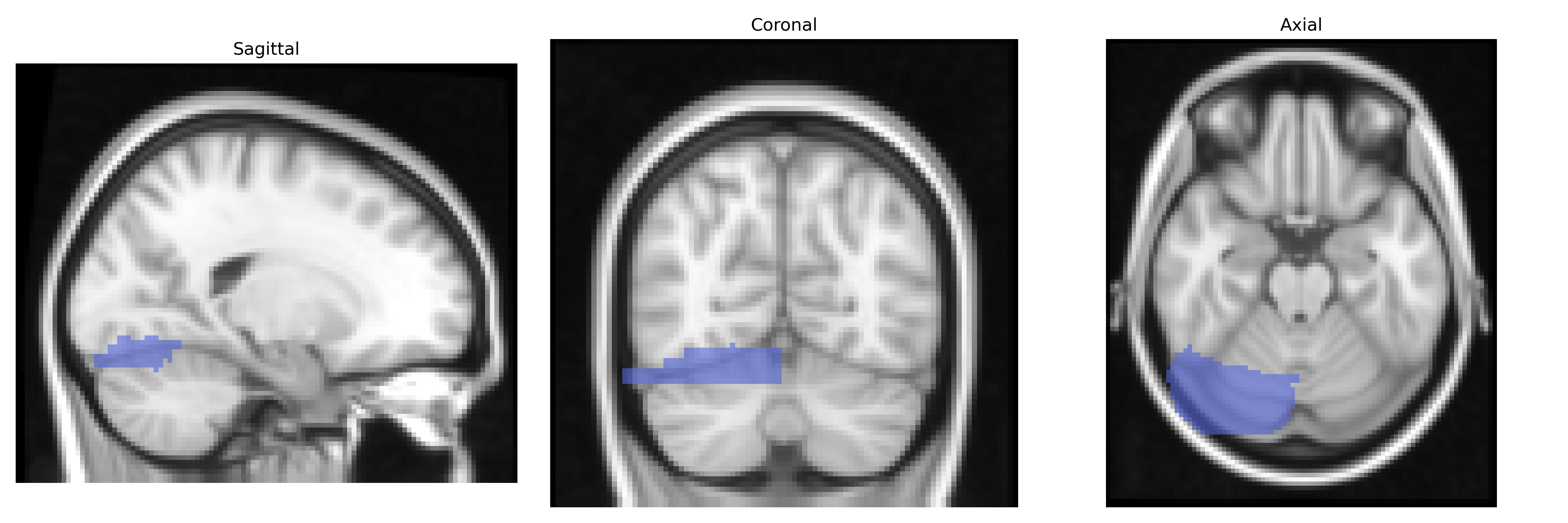
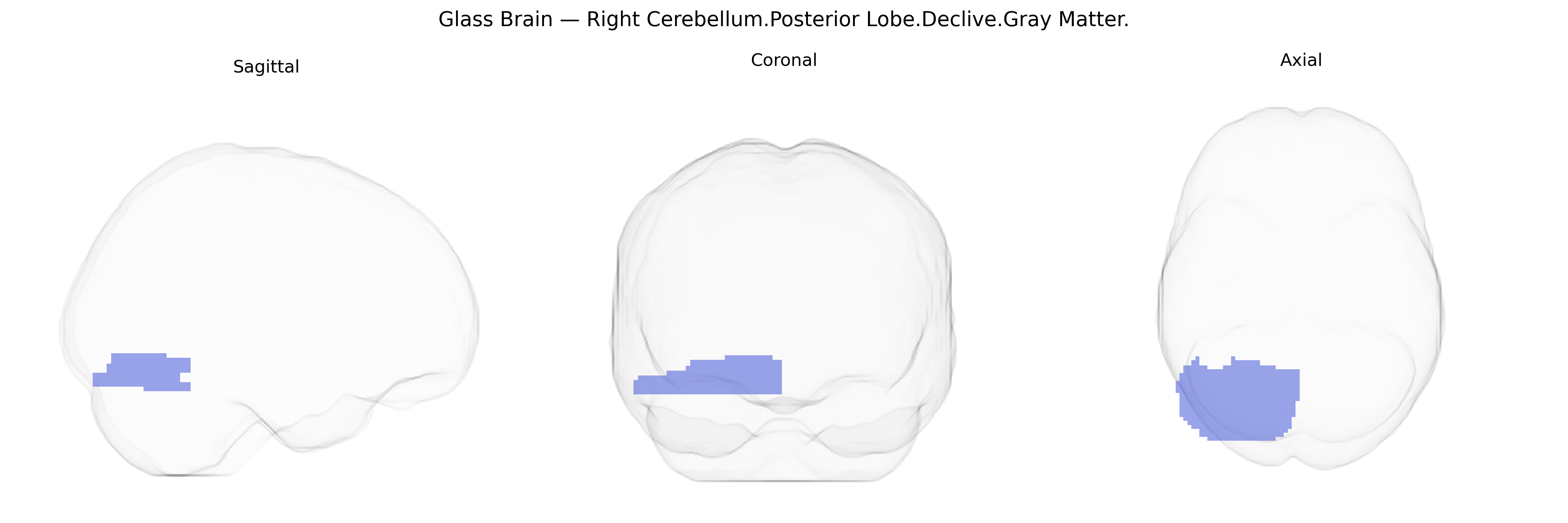
The bilateral Right Cerebellum Posterior Lobe Declive gray matter corresponds to a portion of lobule VI of the cerebellar vermis, extending into the right cerebellar hemisphere within the posterior lobe. This region is composed of cerebellar cortical gray matter with a characteristic folial architecture and Purkinje cell layers, and it plays an important role in fine-tuning motor coordination, postural control, and timing of movements. Functional imaging studies have also implicated the declive and adjacent posterior cerebellar regions in higher-order processes such as visuomotor integration, cognitive timing, and aspects of attention and language modulation, reflecting the cerebellum’s broader role beyond pure motor control. There is no specific Wikipedia page for this exact subregion; a related and encompassing structure is the cerebellar vermis: Cerebellar vermis.
The bilateral right cerebellar posterior lobe (declive, gray matter) has been implicated in genetic studies largely through its role in motor coordination, cognitive processing, and affective regulation, though few GWAS explicitly target this specific Talairach-defined subregion. Imaging genetics and brain-structure GWAS have linked common variants in genes involved in neurodevelopment, synaptic plasticity, and axonal guidance (such as BDNF, COMT, CACNA1C, and several schizophrenia-, bipolar disorder–, and autism spectrum disorder–associated loci) to volumetric and functional alterations in the posterior cerebellum, including right-sided lobular regions related to executive and language networks. Large-scale studies from ENIGMA and UK Biobank have identified heritable variation in cerebellar gray matter volume, with genome-wide significant loci near genes involved in neuronal migration and brain patterning (e.g., KIAA0319, DLG2 and other neurodevelopmental genes) that show associations with psychiatric disorders, intelligence, and educational attainment, suggesting pleiotropic genetic effects on cerebellar morphology and cognition. Additionally, polygenic risk scores for schizophrenia, major depression, ADHD, and autism have been associated with altered activity and connectivity in posterior cerebellar territories encompassing the declive, supporting a genetically influenced vulnerability of this region in neuropsychiatric and neurodevelopmental conditions, even though fine-grained GWAS mapping to the exact “Right Cerebellum.Posterior Lobe.Declive.Gray Matter” label remains limited.
Overview generated by GPT-4o (2026).
Region ID: 158
Hemisphere: bilateral
Atlas: Talairach labels 2mm
Full Quality Version: Download MP4
Full Quality Version: Download MP4
Wali Sidiqyar*, Gaurav Rudravaram*, Elyssa M. McMaster, Trent M. Schwartz, Adam M. Saunders, Kurt G. Schilling, Bennett A. Landman "Introducing SPINS: A Shared Public Visualization Library of Neuroanatomical Structures." Medical Imaging with Deep Learning- short paper
This resource is licensed under CC0 1.0 Universal (Public Domain).