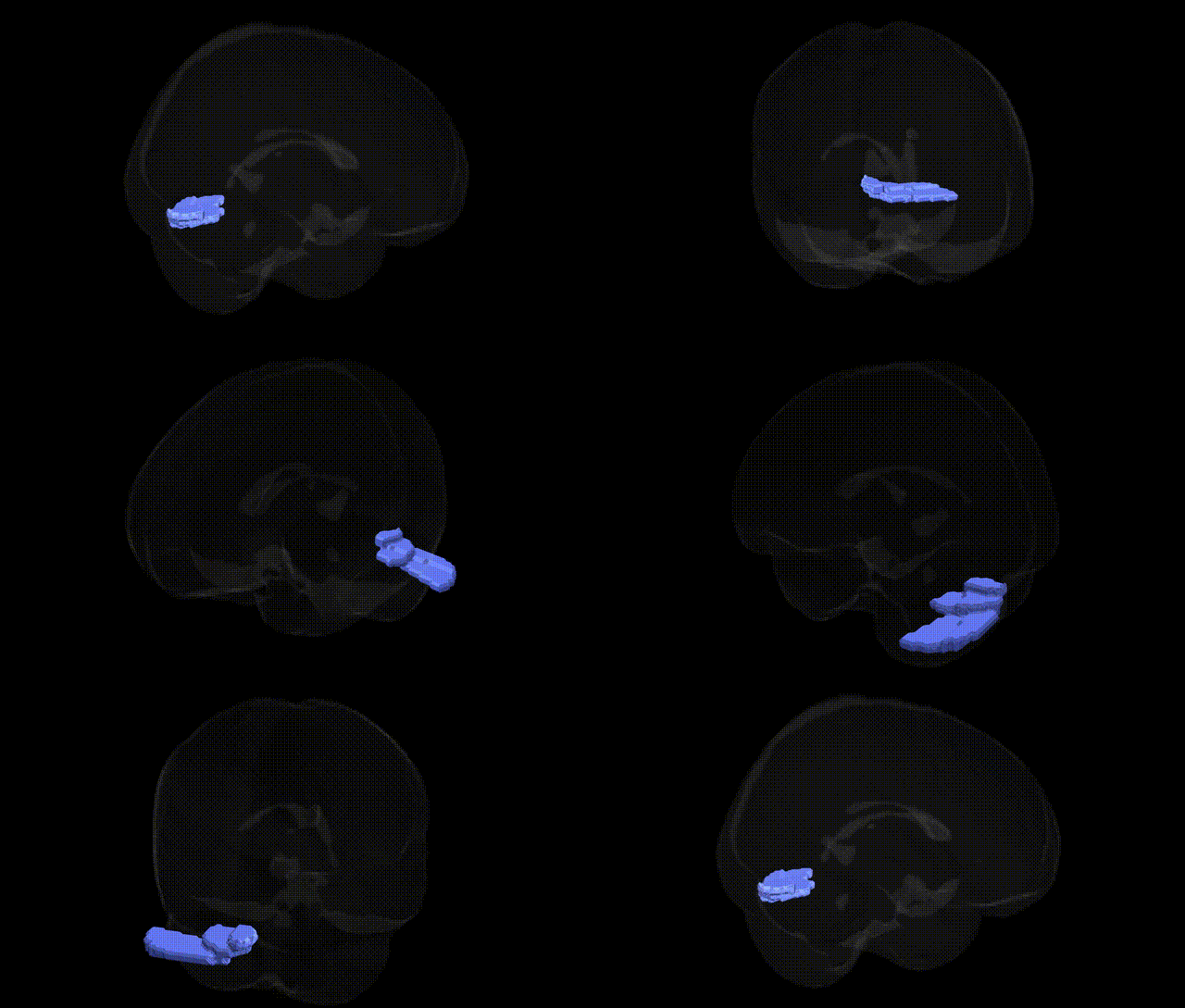
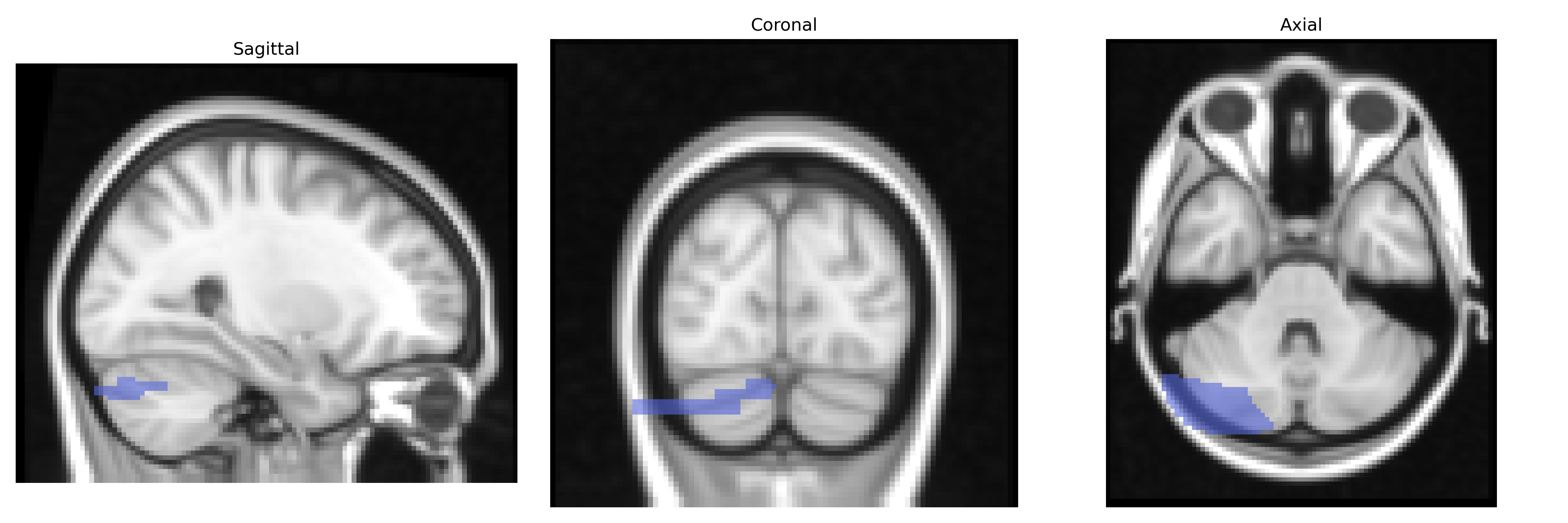
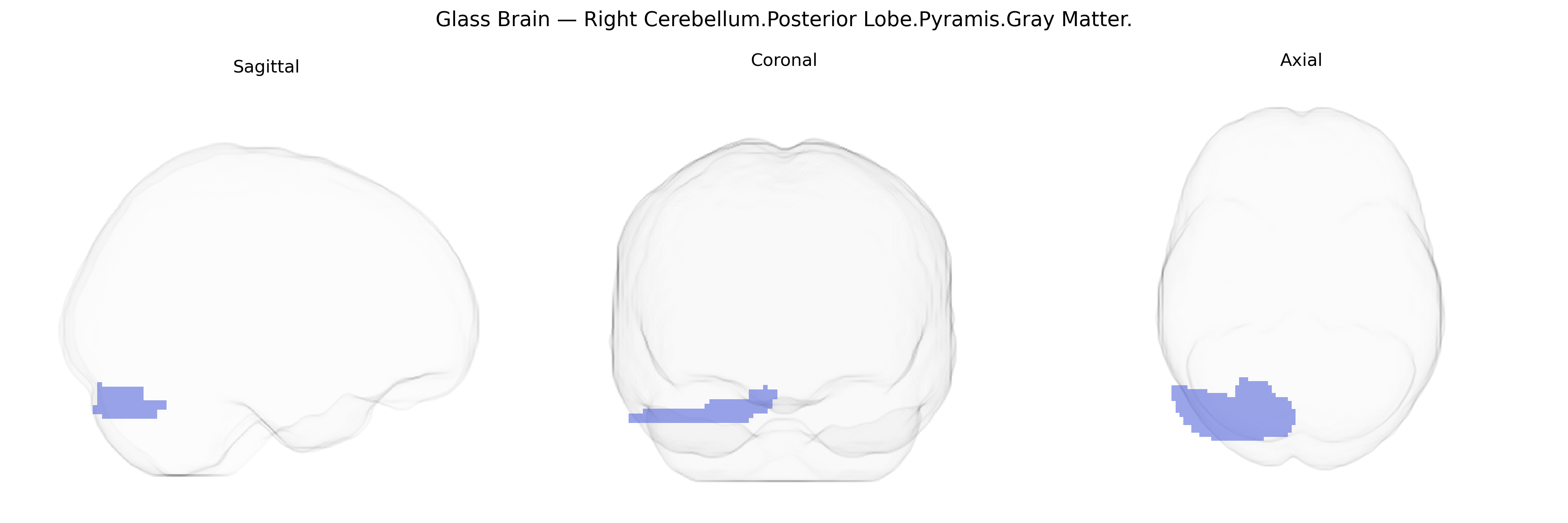
The bilateral Right Cerebellum.Posterior Lobe.Pyramis.Gray Matter corresponds to gray matter within the pyramis, a longitudinal lobule on the inferior surface of the cerebellar posterior lobe. The pyramis forms part of the vermis and is involved in the coordination and fine-tuning of motor activity, particularly in controlling posture, balance, and the timing of limb movements through cerebello-thalamo-cortical circuitry. As gray matter, it primarily consists of cerebellar cortex (including Purkinje cells, interneurons, and granule cells) and underlying deep cerebellar nuclei connections, integrating proprioceptive and vestibular inputs to modulate ongoing motor output. There is no direct Wikipedia article for the cerebellar pyramis; see the related structure Cerebellum.
Genetic associations specific to the bilateral Right Cerebellum Posterior Lobe Pyramis gray matter region, as defined in the Talairach 2 mm atlas, have not been characterized at fine-grained parcel or label level in current GWAS or imaging-genetics literature; instead, most evidence comes from studies of broader cerebellar volumes, lobular measures, or functional networks that encompass the posterior cerebellum. Large-scale brain imaging GWAS (e.g., UK Biobank–based studies) show that total and regional cerebellar gray matter volumes are highly polygenic and associated with loci in neurodevelopmental and synaptic genes (such as variants near KIAA0586, PAX3, and others), but they rarely resolve down to the pyramis label. The posterior cerebellum, including adjacent vermis and lobules VI–VII, has been implicated via genetic and imaging studies in several traits and disorders—most notably autism spectrum disorder, schizophrenia, bipolar disorder, major depression, and ADHD—where risk variants in genes involved in synaptic plasticity, neuronal migration, and cerebellar development (e.g., CACNA1C, RELN, CNTNAP2, and multiple polygenic risk scores) are associated with altered cerebellar structure or connectivity patterns that may include the pyramis region. In addition, cerebellar posterior lobe morphology and activity have been linked through genetic and imaging studies to cognitive performance (general intelligence, working memory), motor coordination, and affective regulation, indicating that the genetic architecture of these traits partly operates via cerebellar circuits that overlap the pyramis, even though no GWAS currently isolates this specific Talairach-defined region as a distinct genetic target.
Overview generated by GPT-4o (2026).
Region ID: 62
Hemisphere: bilateral
Atlas: Talairach labels 2mm
Full Quality Version: Download MP4
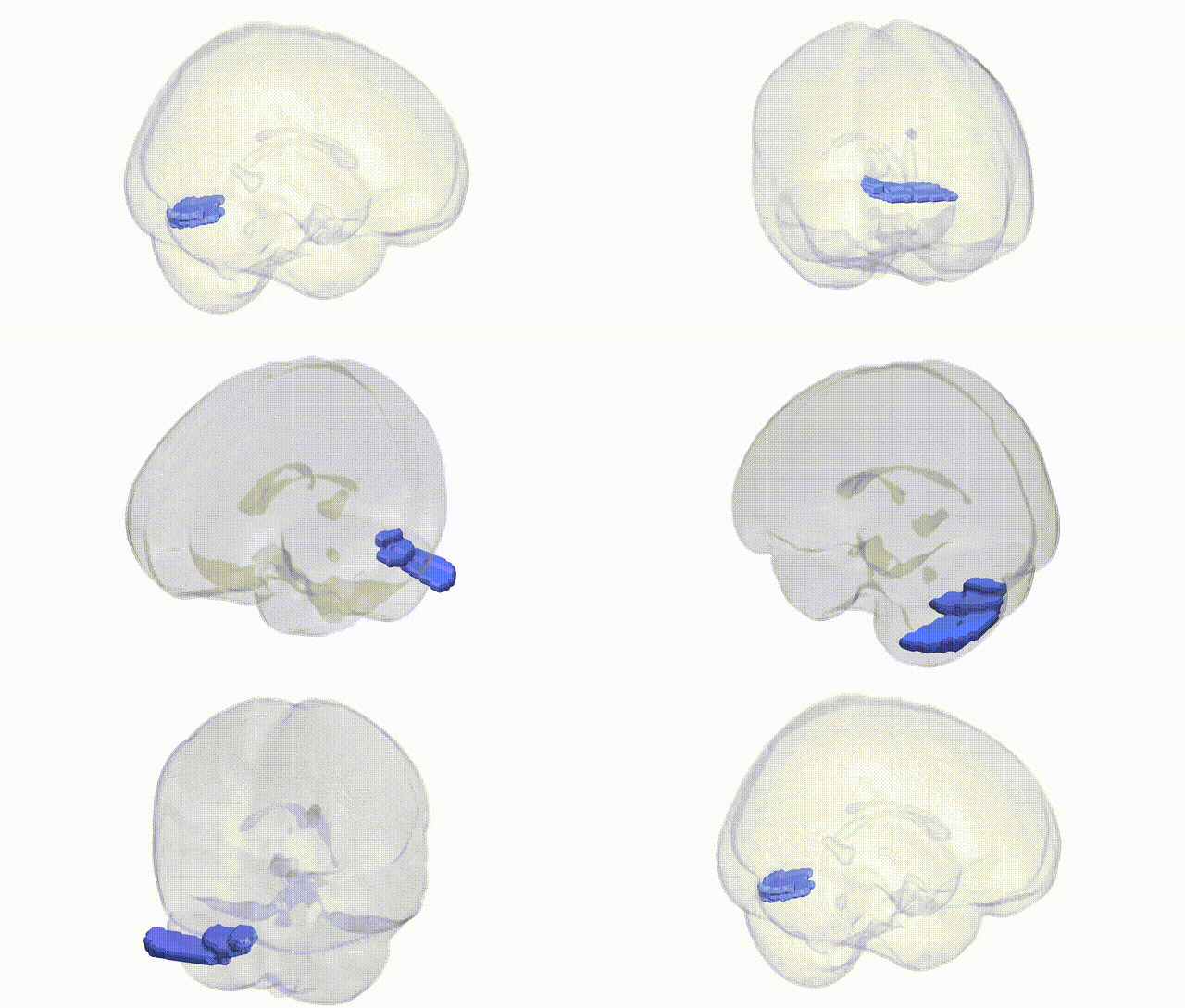
Full Quality Version: Download MP4
Wali Sidiqyar*, Gaurav Rudravaram*, Elyssa M. McMaster, Trent M. Schwartz, Adam M. Saunders, Kurt G. Schilling, Bennett A. Landman "Introducing SPINS: A Shared Public Visualization Library of Neuroanatomical Structures." Medical Imaging with Deep Learning- short paper
This resource is licensed under CC0 1.0 Universal (Public Domain).