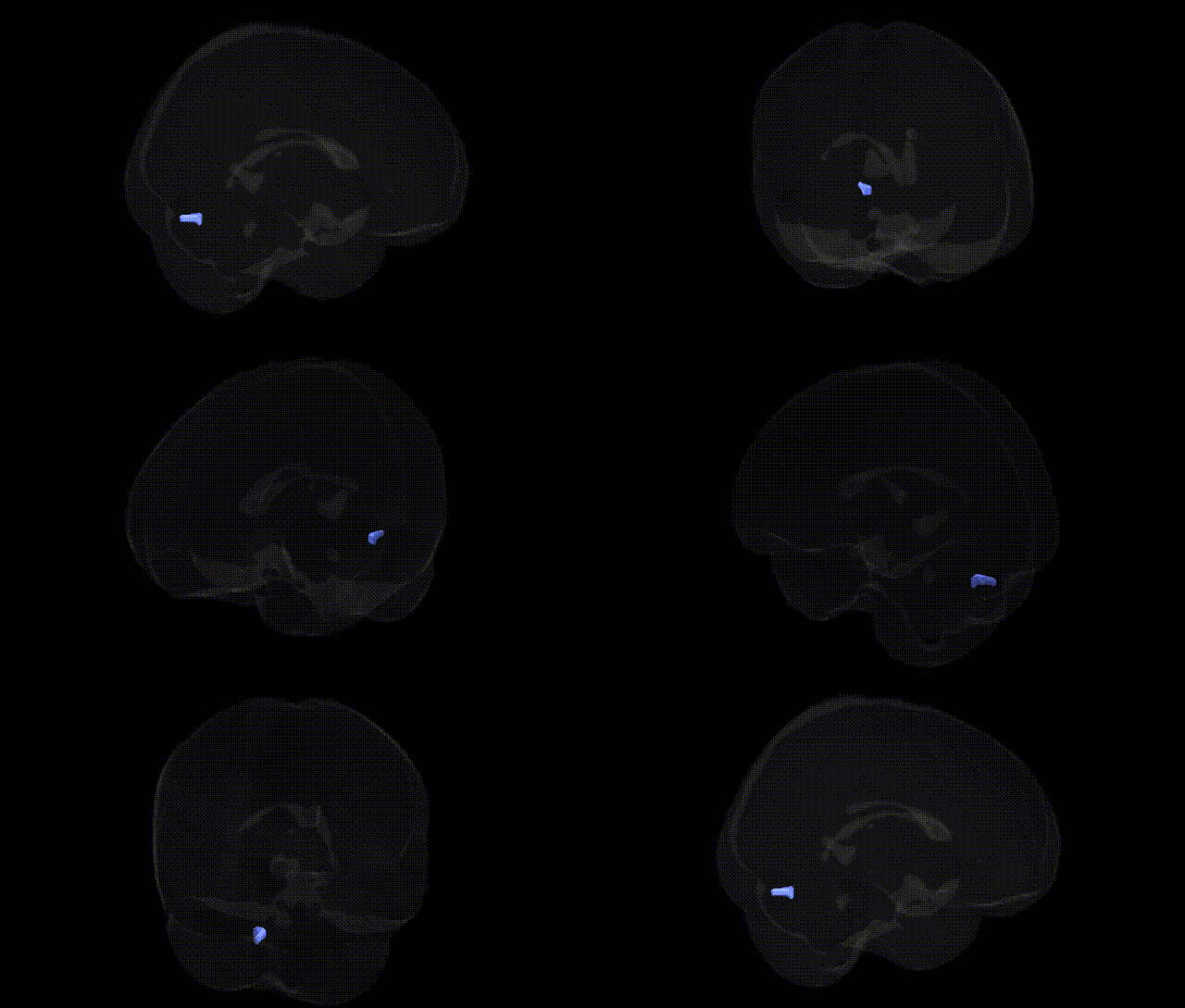
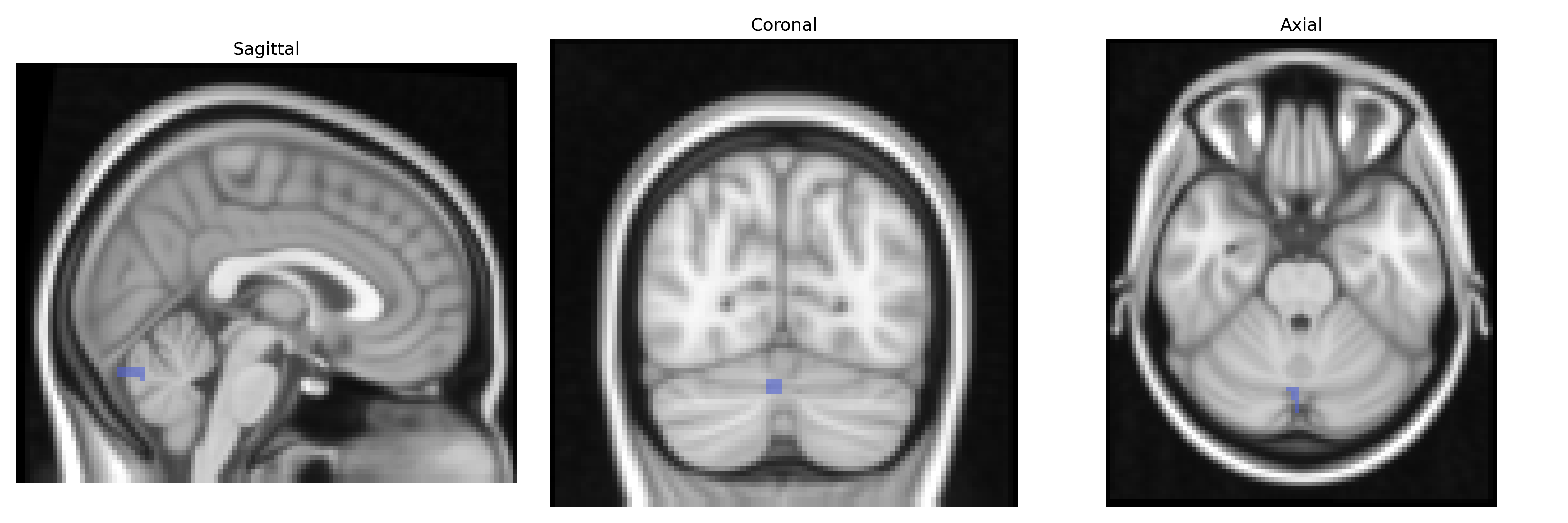
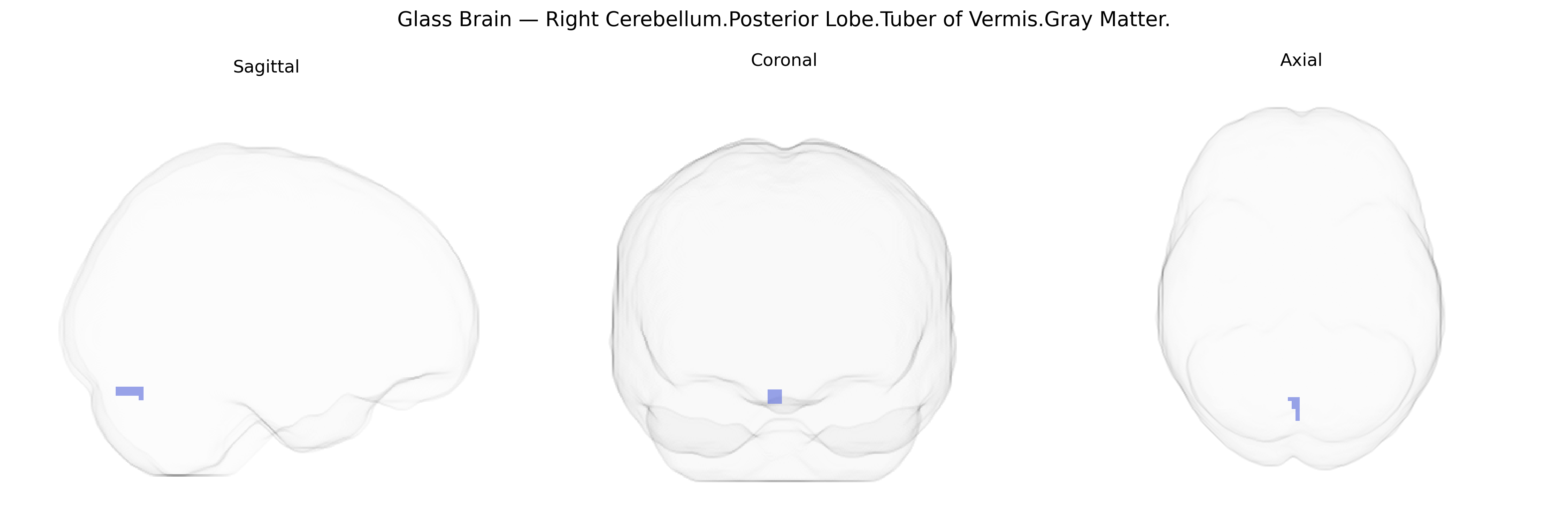
The bilateral Right Cerebellum, Posterior Lobe, Tuber of Vermis, Gray Matter refers to a midline cortical region of the cerebellar vermis located within the posterior lobe and represented here in the right hemisphere label of the Talairach 2 mm atlas. The tuber of the vermis forms part of the lobular architecture of the cerebellar vermis and is composed of cerebellar cortex (gray matter) overlying the deep cerebellar white matter and nuclei. Functionally, this region is implicated in the modulation of motor coordination, balance, and posture, and—together with other posterior vermal lobules—contributes to the integration of vestibular, proprioceptive, and visual information for fine-tuning ongoing movements. Although there is no specific Wikipedia article for the “tuber of vermis,” it is part of the cerebellar vermis within the posterior lobe of the cerebellum: Cerebellar vermis
The bilateral right cerebellum posterior lobe, particularly the tuber of the vermis gray matter, is implicated in genetic studies that link cerebellar structure and function to neurodevelopmental, psychiatric, and cognitive traits, although most GWAS do not isolate this subregion with high specificity. Large-scale brain MRI GWAS (e.g., ENIGMA and UK Biobank studies) have identified numerous common variants—across genes involved in neurodevelopment, synaptic signaling, and neuronal migration (such as variants near KIAA0586, RELN, and genes in Wnt and Notch pathways)—that influence cerebellar volume and cortical thickness, including midline vermis and posterior lobe measures. The cerebellar vermis has been repeatedly associated with autism spectrum disorder, ADHD, and mood disorders, where reduced or altered vermis volume shows partial genetic correlation with polygenic risk scores for these conditions, and cerebellar morphological GWAS demonstrate shared heritable architecture with psychiatric and cognitive traits. In addition, alcohol use disorder, schizophrenia, and bipolar disorder GWAS show modest but significant enrichment of associated variants in cerebellar-expressed genes, and cerebellar posterior lobe morphology, including vermis regions, shows genetic overlap with general cognitive ability and educational attainment. While no single locus has been uniquely and consistently tied to the “tuber of vermis” label from the Talairach 2 mm atlas, convergent genetic evidence supports a heritable contribution to its structure and function, with polygenic influences spanning neurodevelopmental, psychiatric, and cognitive domains.
Overview generated by GPT-4o (2026).
Region ID: 115
Hemisphere: bilateral
Atlas: Talairach labels 2mm
Full Quality Version: Download MP4
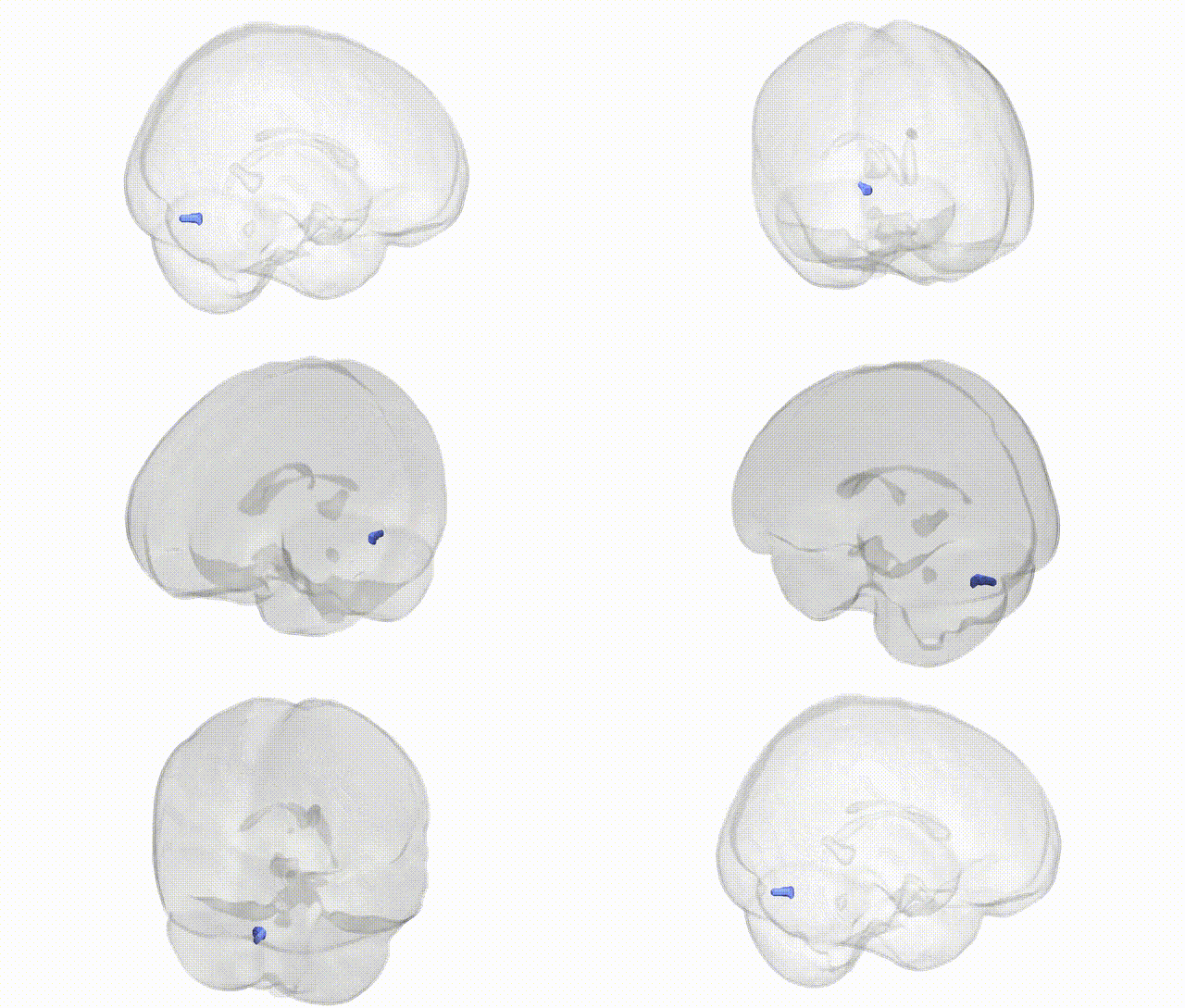
Full Quality Version: Download MP4
Wali Sidiqyar*, Gaurav Rudravaram*, Elyssa M. McMaster, Trent M. Schwartz, Adam M. Saunders, Kurt G. Schilling, Bennett A. Landman "Introducing SPINS: A Shared Public Visualization Library of Neuroanatomical Structures." Medical Imaging with Deep Learning- short paper
This resource is licensed under CC0 1.0 Universal (Public Domain).