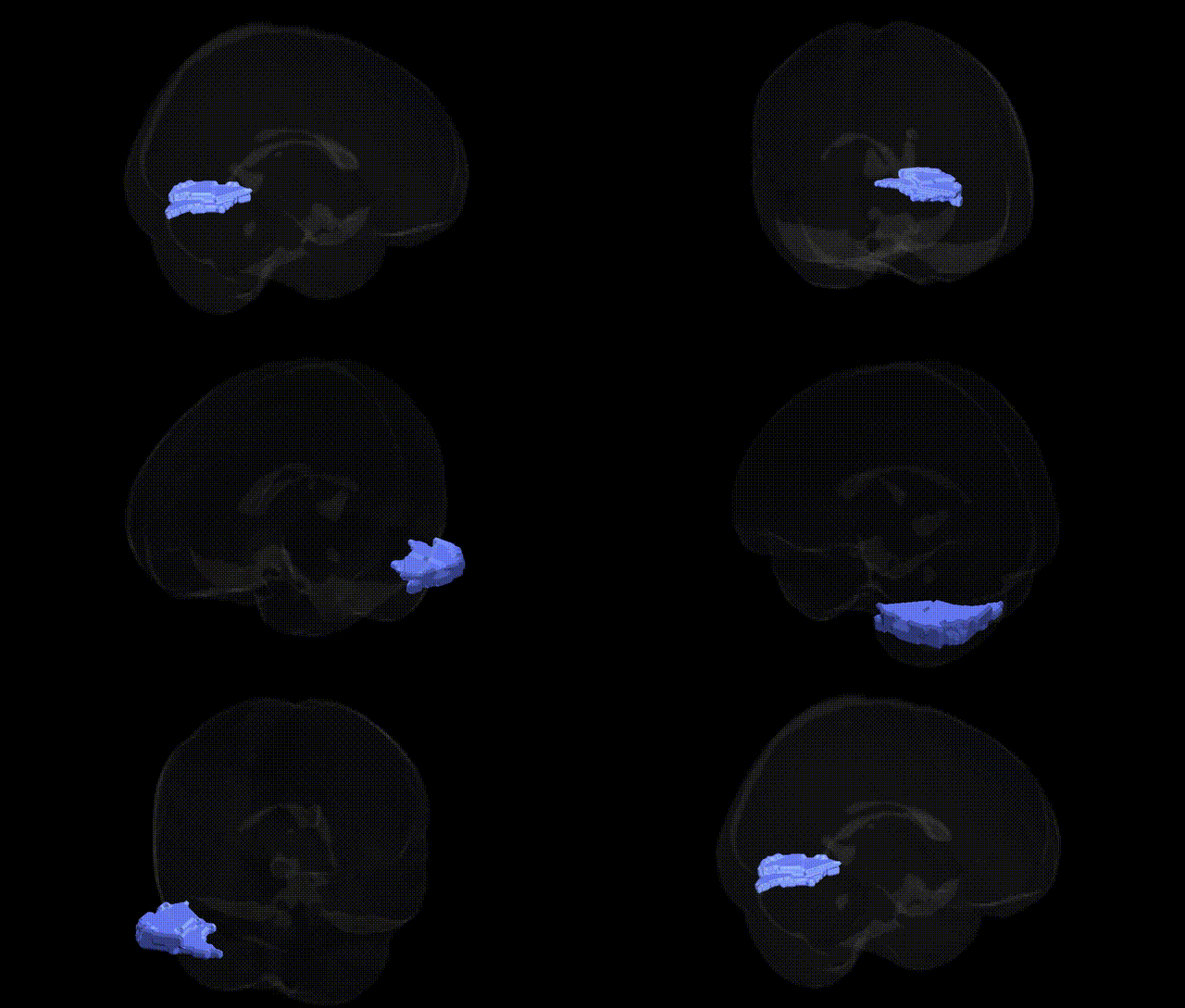
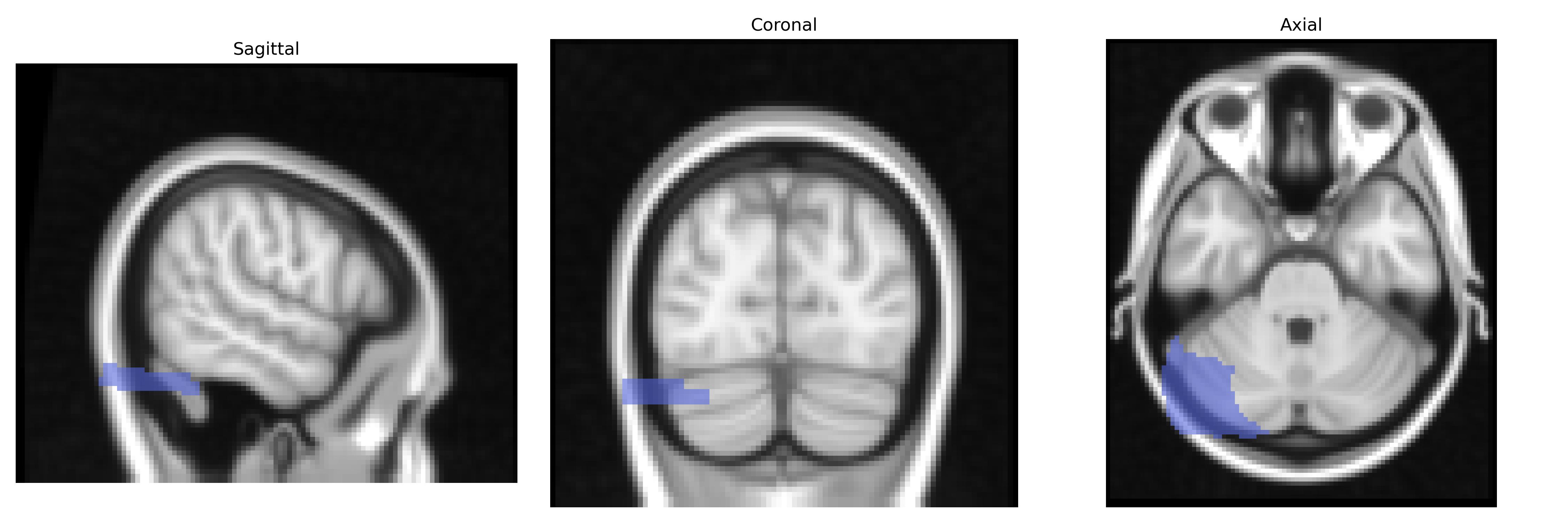
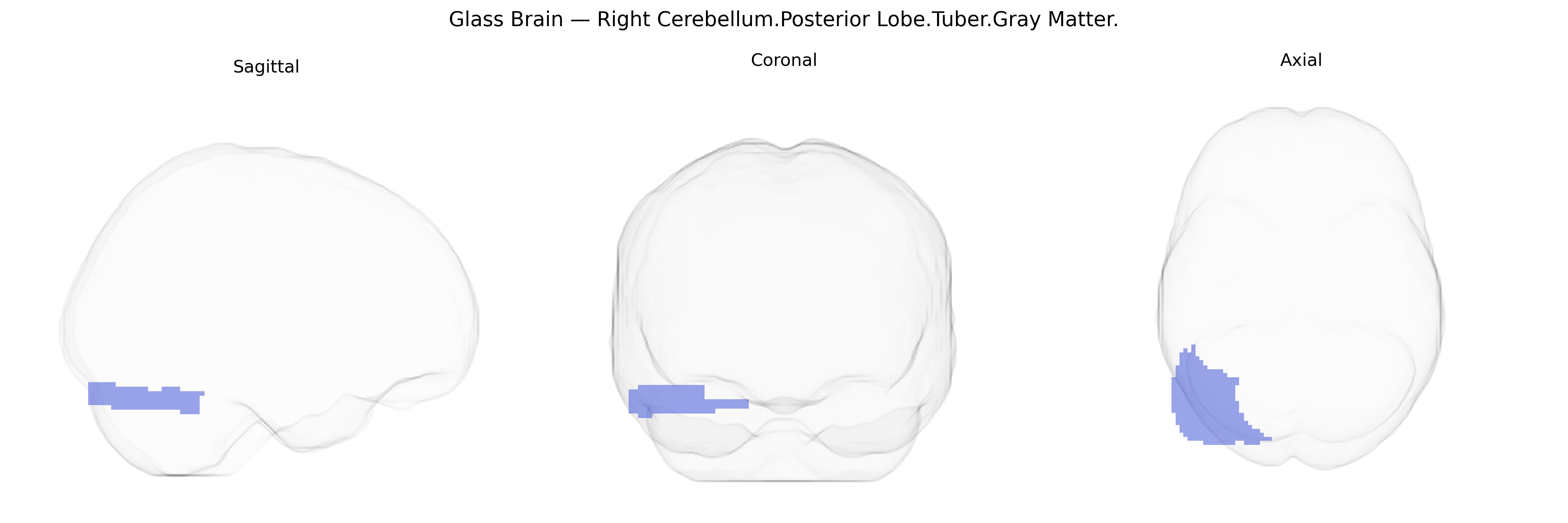
The bilateral Right Cerebellum Posterior Lobe Tuber Gray Matter corresponds to a cortical region on the inferior surface of the cerebellar hemisphere, situated within the posterior lobe and forming part of lobule VI of the cerebellar vermis and adjacent hemisphere. This gray matter zone contains densely packed cerebellar cortex (molecular, Purkinje cell, and granular layers) and contributes to the fine-tuning of motor coordination, balance, and postural control, as well as to higher-order functions such as motor learning and aspects of cognitive processing via its connections with the deep cerebellar nuclei and thalamocortical pathways. Functionally, it participates in the modulation of voluntary movement and the integration of sensory input required for precise motor execution. There is no direct link for this specific subregion; see the related structure Cerebellum.
The bilateral right cerebellar posterior lobe tuber (gray matter) is part of the broader posterior cerebellum, which has been implicated in genetic studies of motor coordination, cognition, and neuropsychiatric disorders, although few GWAS or imaging‑genetics studies target this specific Talairach subregion. Large-scale brain MRI GWAS (e.g., ENIGMA, UK Biobank) have identified multiple loci affecting cerebellar volume and morphology—particularly in posterior regions—with genes related to neurodevelopment (such as variants near KIAA0586, RELN, and FOXP genes), synaptic function, and neuronal signaling contributing to inter-individual variation. Rare and common variants in genes involved in cerebellar development and function (e.g., CACNA1A, ITPR1, GRID2) are associated with hereditary ataxias and cerebellar malformations that can involve the posterior lobe, while polygenic risk for disorders like schizophrenia, autism spectrum disorder, and ADHD has been linked to structural and functional alterations in posterior cerebellar territories in imaging-genetics work. Neurodevelopmental and cognitive GWAS have also connected cerebellar measures to general intelligence, educational attainment, and working memory, aligning with the known role of the posterior cerebellum in higher-order cognitive and affective processing. However, current genetic evidence generally refers to coarse regional measures (total or lobular cerebellar volumes) rather than the highly localized “Right Cerebellum.Posterior Lobe.Tuber.Gray Matter” label, so associations at this exact subregion are inferred from broader posterior cerebellar findings rather than directly established.
Overview generated by GPT-4o (2026).
Region ID: 81
Hemisphere: bilateral
Atlas: Talairach labels 2mm
Full Quality Version: Download MP4
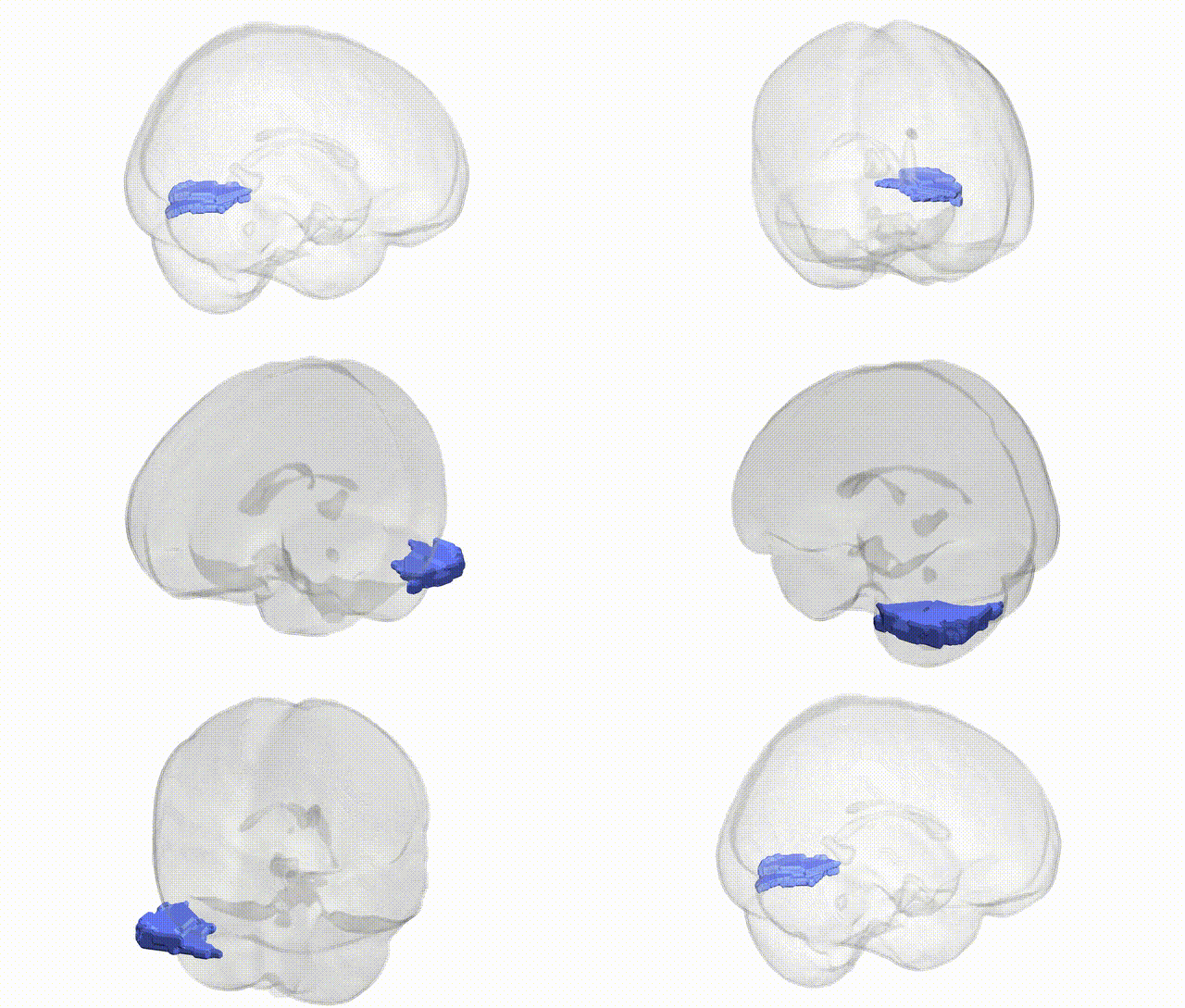
Full Quality Version: Download MP4
Wali Sidiqyar*, Gaurav Rudravaram*, Elyssa M. McMaster, Trent M. Schwartz, Adam M. Saunders, Kurt G. Schilling, Bennett A. Landman "Introducing SPINS: A Shared Public Visualization Library of Neuroanatomical Structures." Medical Imaging with Deep Learning- short paper
This resource is licensed under CC0 1.0 Universal (Public Domain).