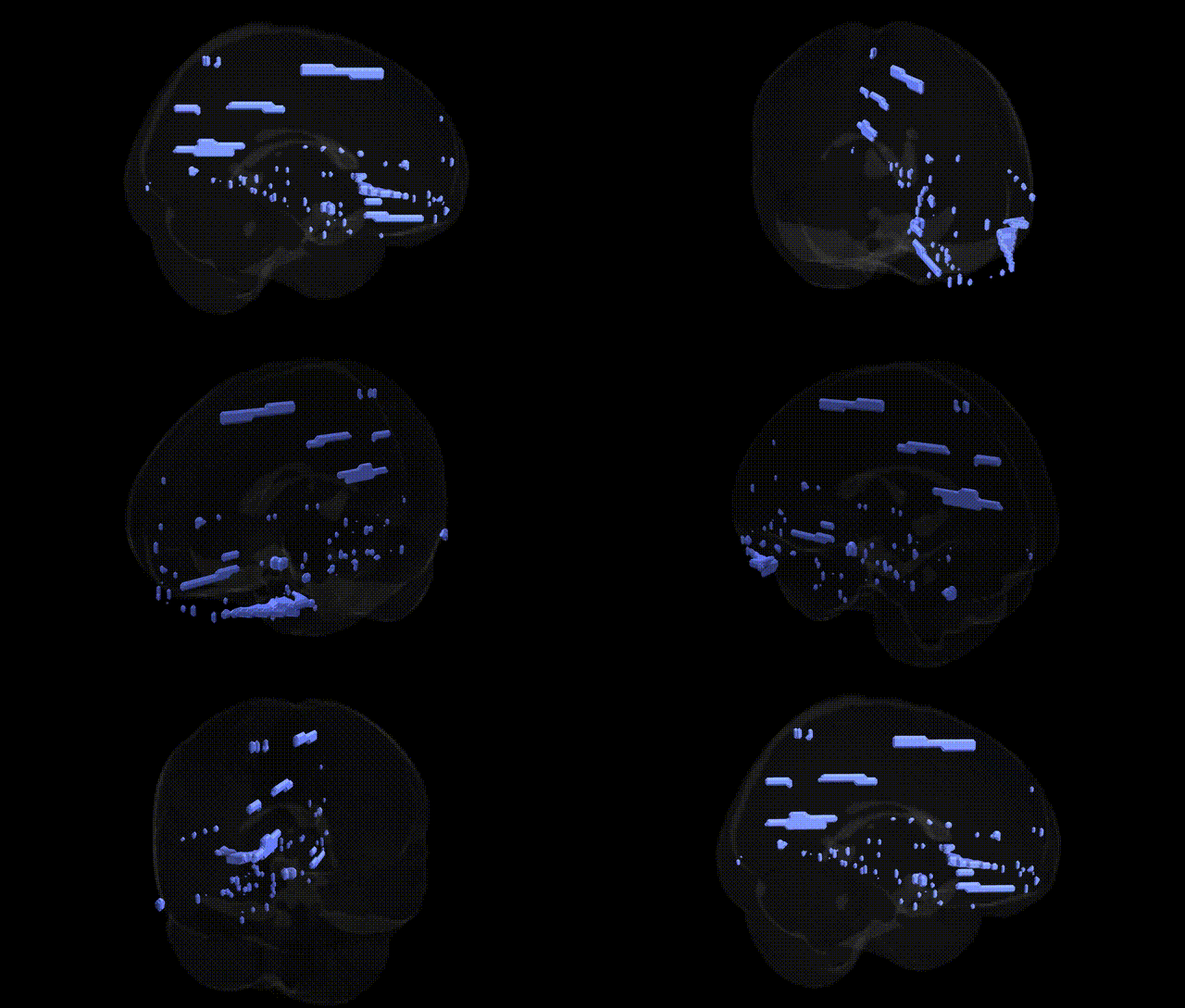
The bilateral Right Cerebrum, as referenced in the Talairach 2 mm Atlas, encompasses the right hemispheric half of the telencephalon, including cortical and subcortical structures such as the frontal, parietal, temporal, and occipital lobes, along with deep nuclei embedded in the cerebral white matter. Functionally, the right cerebrum is broadly associated with visuospatial processing, attentional control, certain aspects of social and emotional cognition, and nonverbal or holistic information integration, while also contributing to sensory, motor, and higher-order associative networks that are distributed across both hemispheres. Its cytoarchitecture consists of layered neocortex overlying older allocortical regions, with extensive reciprocal connections via association fibers, commissural fibers through the corpus callosum, and projection pathways to subcortical structures. There is no direct Wikipedia link for “Right Cerebrum”; see instead Cerebrum.
Genetic associations involving the bilateral right cerebrum, as labeled in the Talairach 2mm atlas, primarily reflect findings from genome-wide association studies (GWAS) of global and regional brain volumes rather than this coarse anatomical designation itself. Large neuroimaging genetic consortia such as ENIGMA and UK Biobank have shown that numerous common variants—particularly within or near genes involved in neurodevelopment, synaptic function, and axon guidance (e.g., HMGA2, MAPT, KIAA0586, IGF1, and loci near WNT pathway genes)—are associated with total brain volume, cerebral white matter volume, and specific cortical thickness or surface measures, often demonstrating hemispheric asymmetries including right-lateralized effects in frontal, temporal, and parietal regions. These genetic influences are also linked to a range of neuropsychiatric and cognitive phenotypes: variants affecting right-hemispheric cortical morphology and connectivity have been implicated in risk for schizophrenia, bipolar disorder, major depressive disorder, autism spectrum disorder, attention-deficit/hyperactivity disorder, and Alzheimer’s disease, as well as in general cognitive ability, educational attainment, and language-related traits. However, “bilateral right cerebrum” in the Talairach atlas is a broad macroanatomical label, and current GWAS typically resolve associations at the level of specific cortical or subcortical parcels, so genetic findings relate to more fine-grained right-hemisphere structures rather than to this entire region as a single unit.
Overview generated by GPT-4o (2026).
Region ID: 48
Hemisphere: bilateral
Atlas: Talairach labels 2mm
Full Quality Version: Download MP4
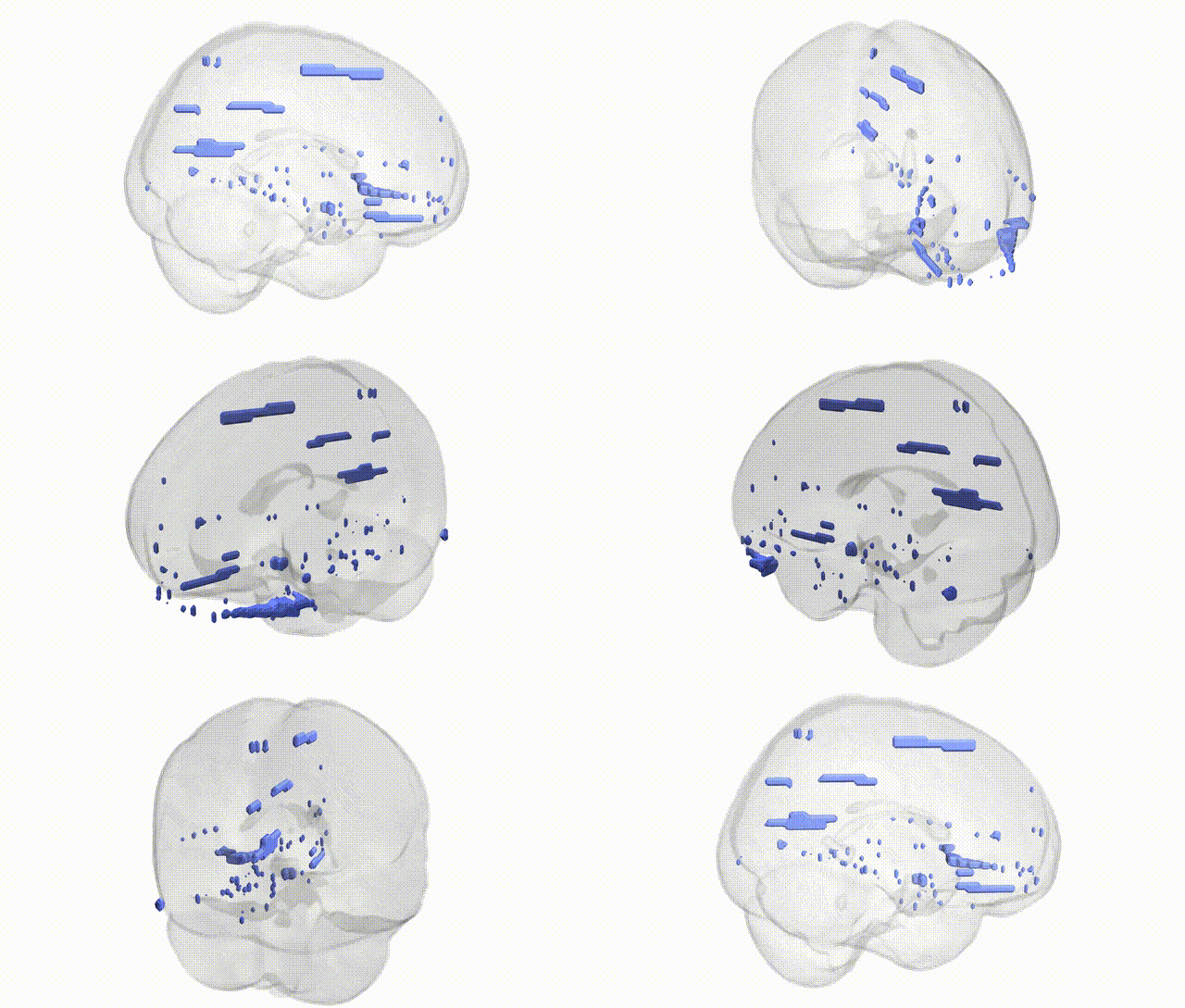
Full Quality Version: Download MP4
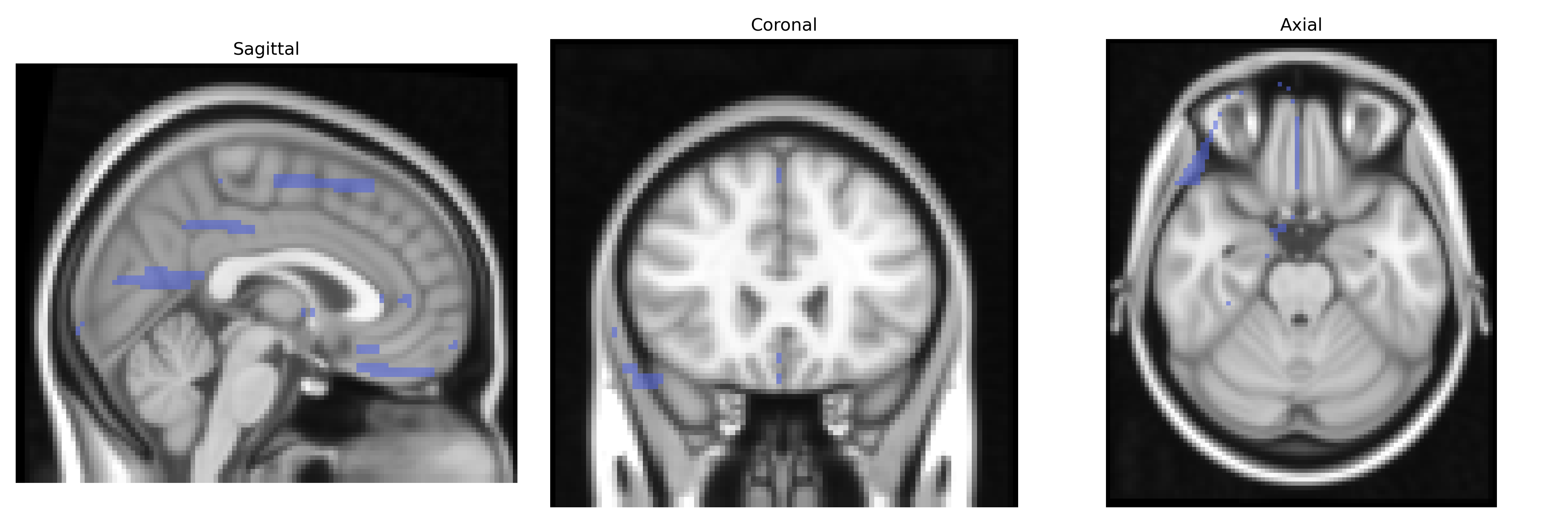
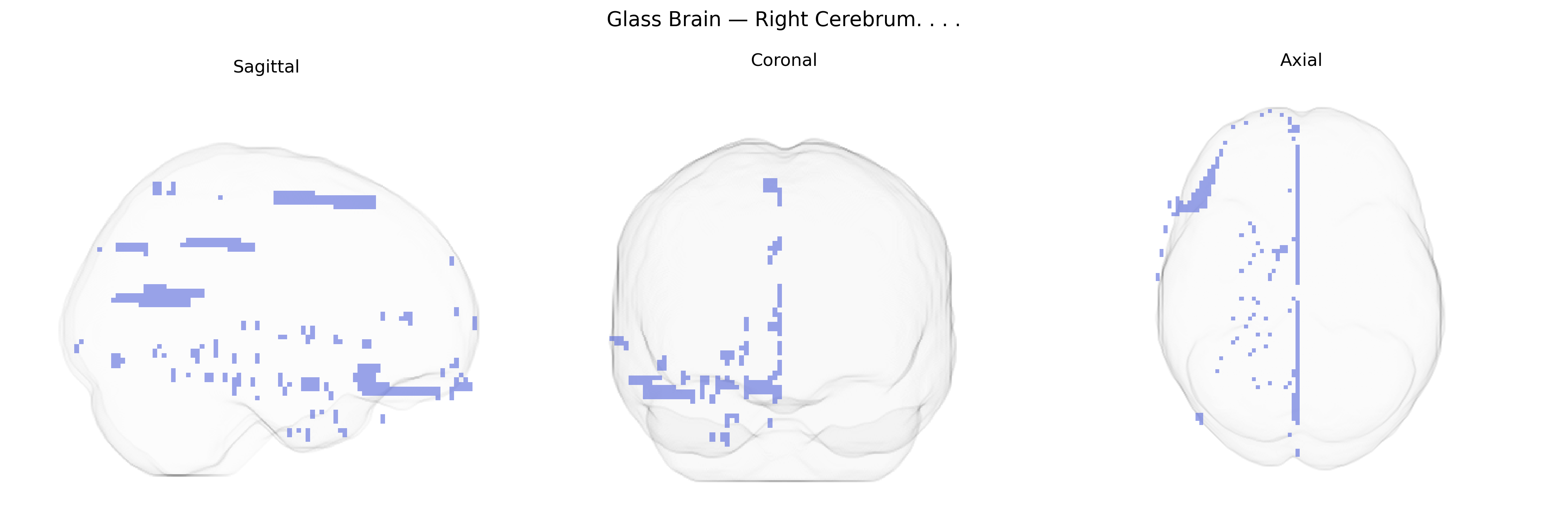
Wali Sidiqyar*, Gaurav Rudravaram*, Elyssa M. McMaster, Trent M. Schwartz, Adam M. Saunders, Kurt G. Schilling, Bennett A. Landman "Introducing SPINS: A Shared Public Visualization Library of Neuroanatomical Structures." Medical Imaging with Deep Learning- short paper
This resource is licensed under CC0 1.0 Universal (Public Domain).