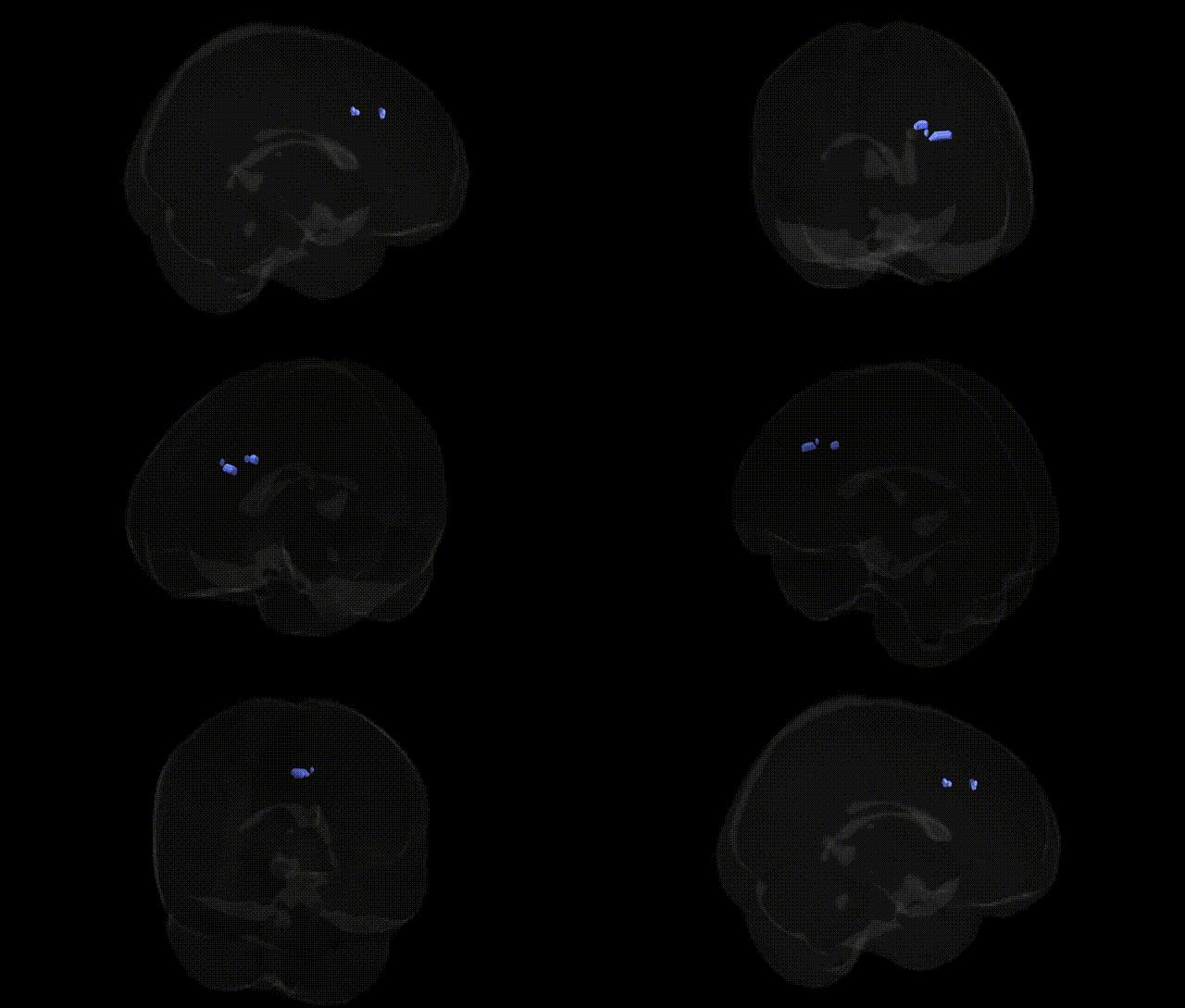
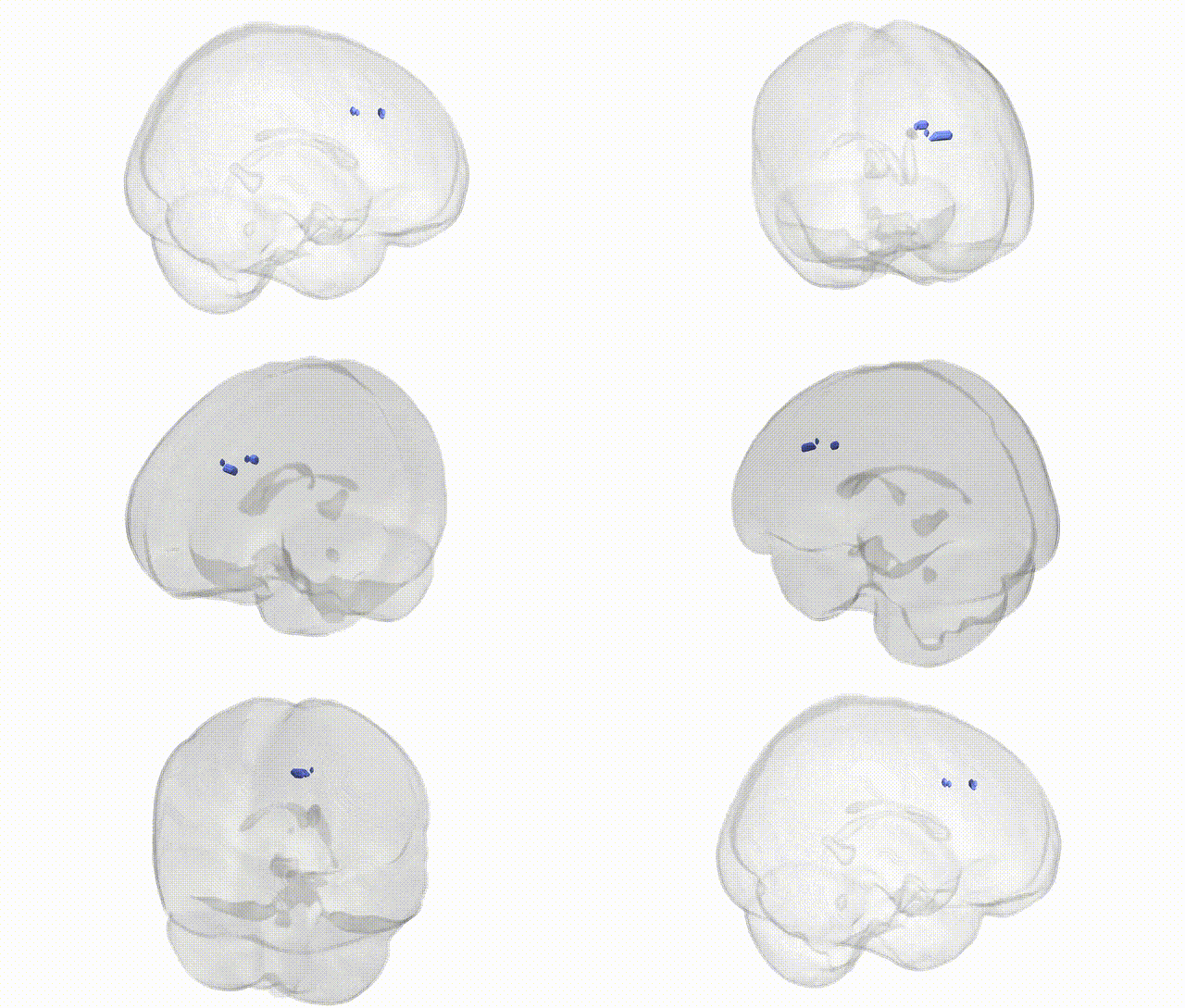
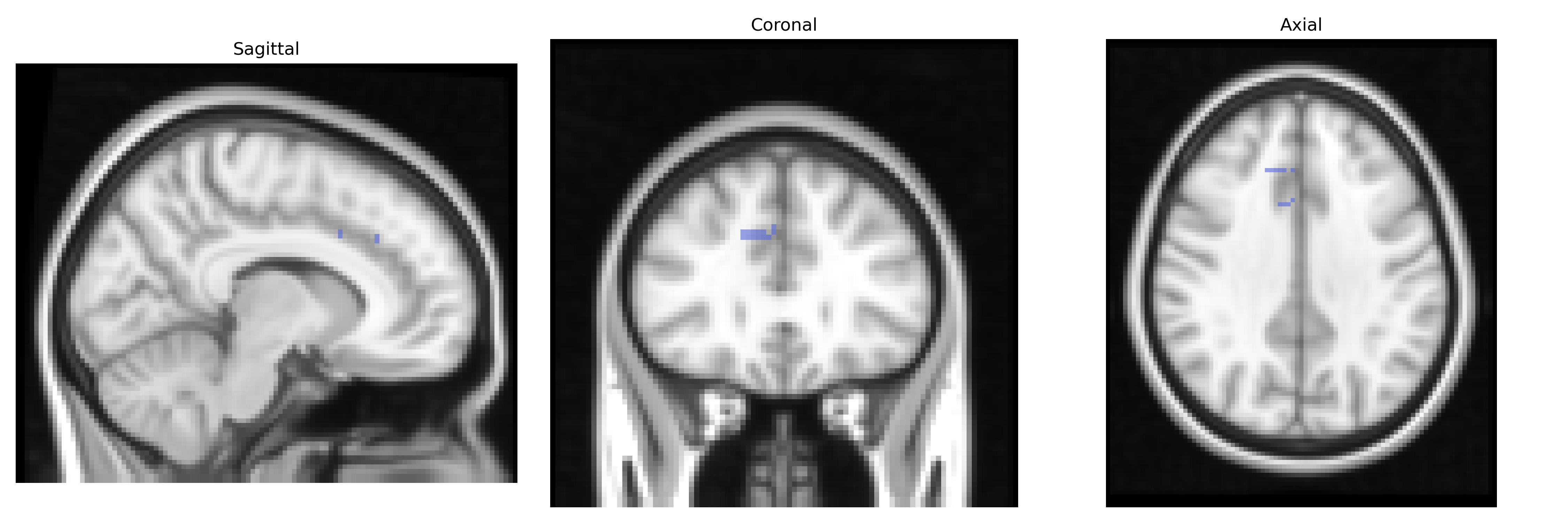
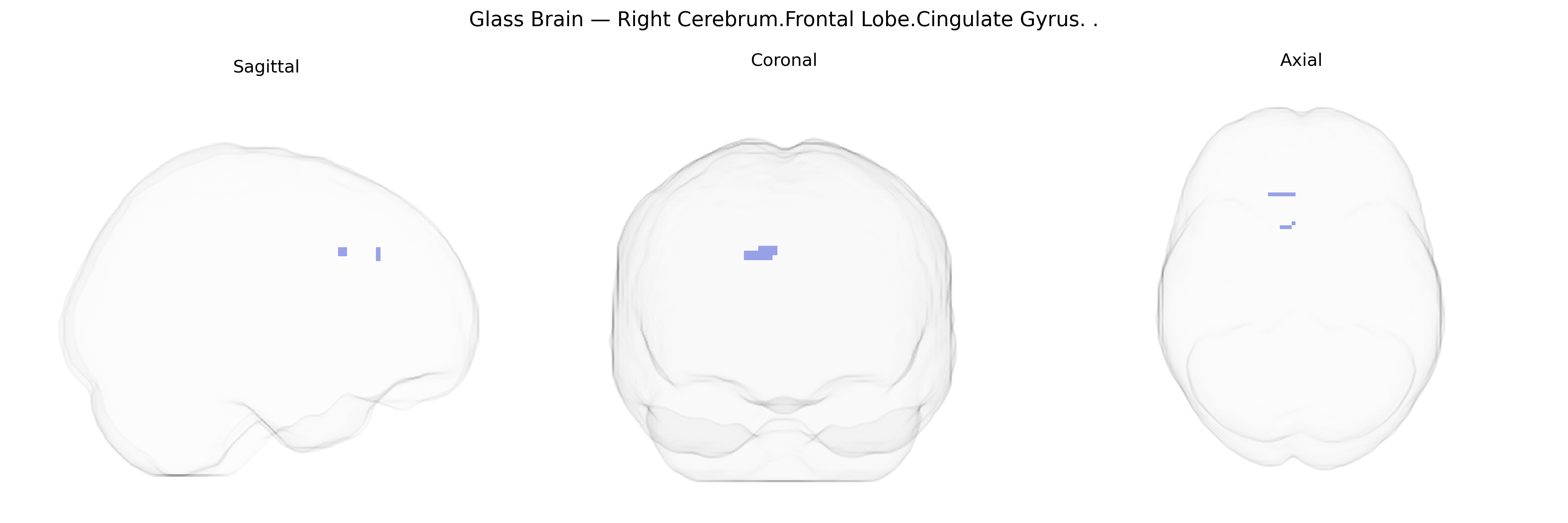
The bilateral Right Cerebrum.Frontal Lobe.Cingulate Gyrus, as defined in the Talairach 2 mm atlas, corresponds to portions of the anterior and mid-cingulate cortex located within the frontal lobe, arching over the corpus callosum along the medial wall of the hemisphere. This region is composed predominantly of agranular to dysgranular cortex and is heavily interconnected with prefrontal, premotor, limbic, and parietal areas, as well as subcortical structures including the thalamus and basal ganglia. Functionally, it plays key roles in cognitive control, performance monitoring, error detection, motivation, and the integration of affective and autonomic information with goal-directed behavior; it is also implicated in pain processing, decision-making under conflict, and aspects of social and emotional regulation. There is no direct link for this exact Talairach label; see the related structure Cingulate gyrus.
The bilateral right frontal lobe cingulate gyrus, encompassing portions of anterior, mid, and posterior cingulate cortex, has been implicated in numerous genetic associations through neuroimaging genetics and GWAS of brain structure and function. Large-scale imaging GWAS (e.g., ENIGMA, UK Biobank) have identified heritable variation in cortical thickness, volume, and surface area within cingulate regions linked to common variants in genes involved in synaptic function, neurodevelopment, and myelination, including but not limited to loci near SMARCA4, MIR137, and genes in glutamatergic and GABAergic pathways. Polygenic risk scores for major depressive disorder, schizophrenia, bipolar disorder, attention-deficit/hyperactivity disorder, and autism spectrum disorder have been associated with structural and functional alterations in the cingulate gyrus, particularly anterior and midcingulate sectors implicated in emotion regulation and cognitive control. GWAS of resting-state networks and task-based activation show associations between genetic variants (for example in CACNA1C, GRM3, and dopaminergic signaling genes) and cingulate activity within default mode and salience networks. Moreover, genetic studies of traits such as neuroticism, impulsivity, pain sensitivity, and stress reactivity consistently implicate cingulate structure and connectivity, with overlapping polygenic architecture for internalizing disorders and chronic pain conditions. Although most findings arise from region-of-interest or network-based analyses rather than Talairach-specific labels, convergent evidence supports a robust, polygenic influence on morphology and function of the right frontal cingulate gyrus in relation to mood and psychotic disorders, cognitive control, and affect-related personality traits.
Overview generated by GPT-4o (2026).
Region ID: 1007
Hemisphere: bilateral
Atlas: Talairach labels 2mm
Full Quality Version: Download MP4
Full Quality Version: Download MP4
Wali Sidiqyar*, Gaurav Rudravaram*, Elyssa M. McMaster, Trent M. Schwartz, Adam M. Saunders, Kurt G. Schilling, Bennett A. Landman "Introducing SPINS: A Shared Public Visualization Library of Neuroanatomical Structures." Medical Imaging with Deep Learning- short paper
This resource is licensed under CC0 1.0 Universal (Public Domain).