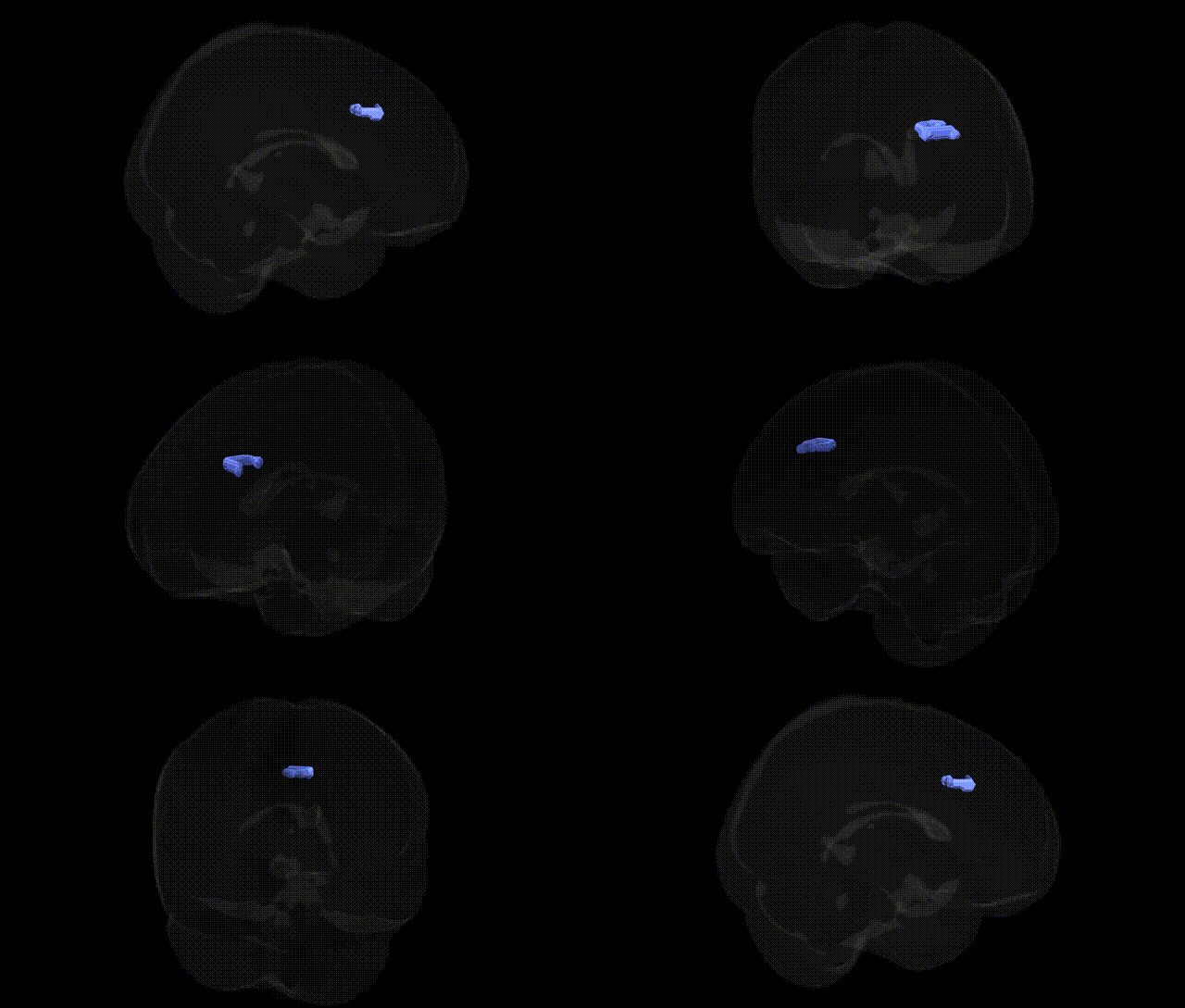
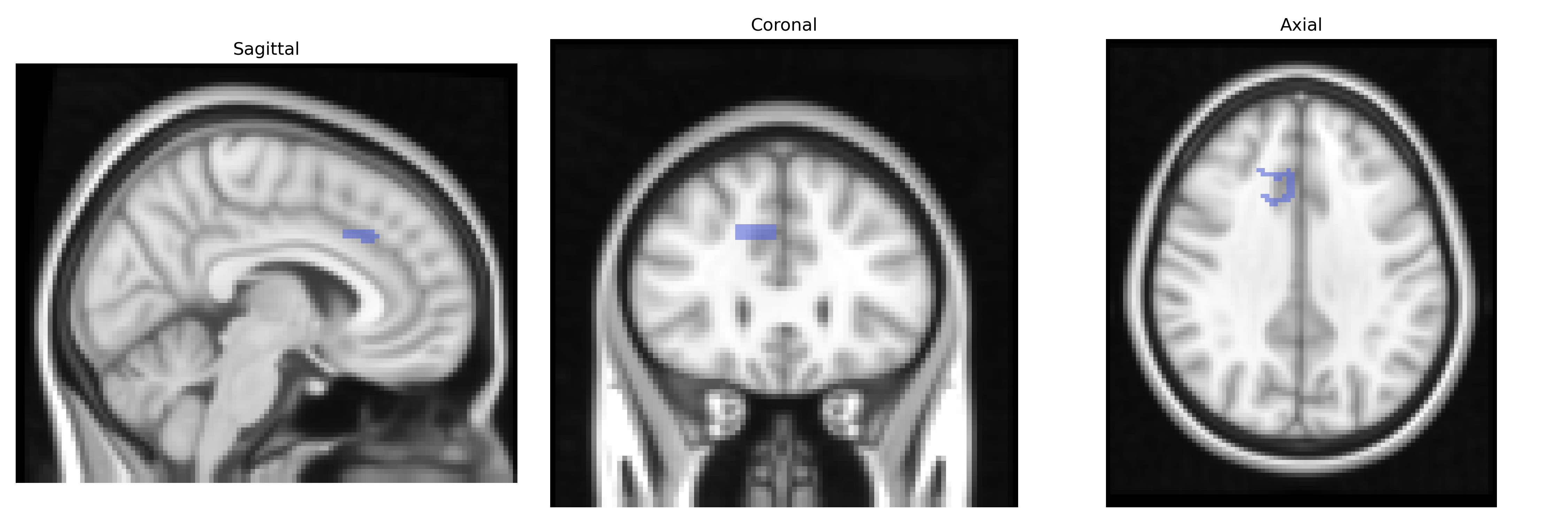
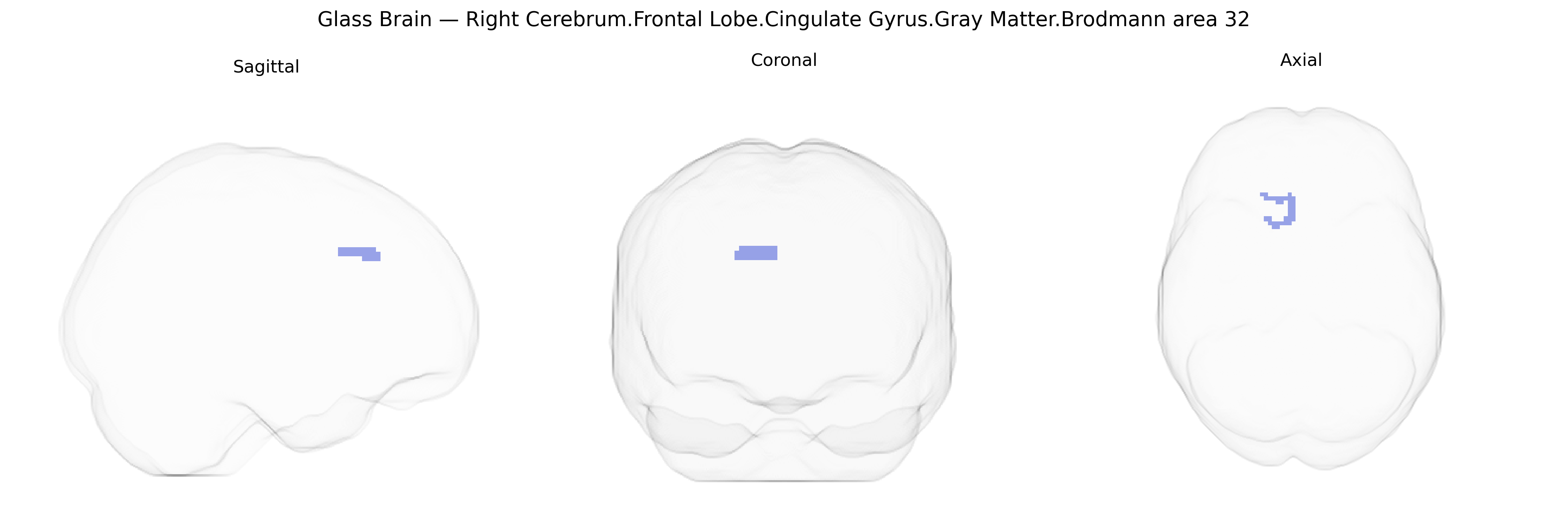
Bilateral Right Cerebrum.Frontal Lobe.Cingulate Gyrus.Gray Matter.Brodmann area 32 corresponds to a medial frontal cortical region within the dorsal anterior cingulate cortex, involved in high-level cognitive control, conflict monitoring, decision-making, and the regulation of emotional and autonomic responses. Cytoarchitectonically, BA32 is characterized by its agranular to dysgranular laminar organization and forms part of the medial prefrontal and limbic networks that integrate motivational and cognitive information, contributing to goal-directed behavior and adaptive responses to changing environmental demands. There is no direct link for this exact BA32 label; a closely related structure is the Anterior cingulate cortex.
The bilateral right Brodmann area 32 (dorsal anterior cingulate / medial prefrontal segment of the cingulate gyrus) has been repeatedly implicated in genetic and genome‑wide association studies through its role in cognitive control, emotion regulation, and salience processing. Imaging‑genetics work shows that common variants in genes such as COMT, SLC6A4 (serotonin transporter), BDNF, DRD2/DRD4, and those involved in glutamatergic signaling (e.g., GRIN2B) modulate gray matter volume, cortical thickness, and task‑evoked activation in BA32, often in association with traits like impulsivity, anxiety, neuroticism, and executive function. Large GWAS and polygenic risk score studies in major depressive disorder, bipolar disorder, schizophrenia, and anxiety disorders have linked higher genetic risk to structural and functional alterations in the dorsal anterior cingulate/BA32 region, including reduced volume and abnormal connectivity within fronto‑limbic circuits. Variants in immune and synaptic plasticity pathways (e.g., complement system genes such as C4 and broader synaptic scaffolding genes) show convergent effects on ACC/BA32 morphology in schizophrenia and psychosis‑risk samples. GWAS of cognitive traits, educational attainment, and general intelligence also report that polygenic scores for cognition correlate with BA32 cortical measures, consistent with its role in performance monitoring and conflict resolution. Additionally, genetic studies of pain sensitivity, obsessive–compulsive traits, and substance use disorders have associated their polygenic profiles with altered BA32 activity or structure, further supporting this region as a key anatomical locus where distributed genetic risk influences higher‑order control, affective processing, and vulnerability to psychiatric and behavioral disorders.
Overview generated by GPT-4o (2026).
Region ID: 1008
Hemisphere: bilateral
Atlas: Talairach labels 2mm
Full Quality Version: Download MP4
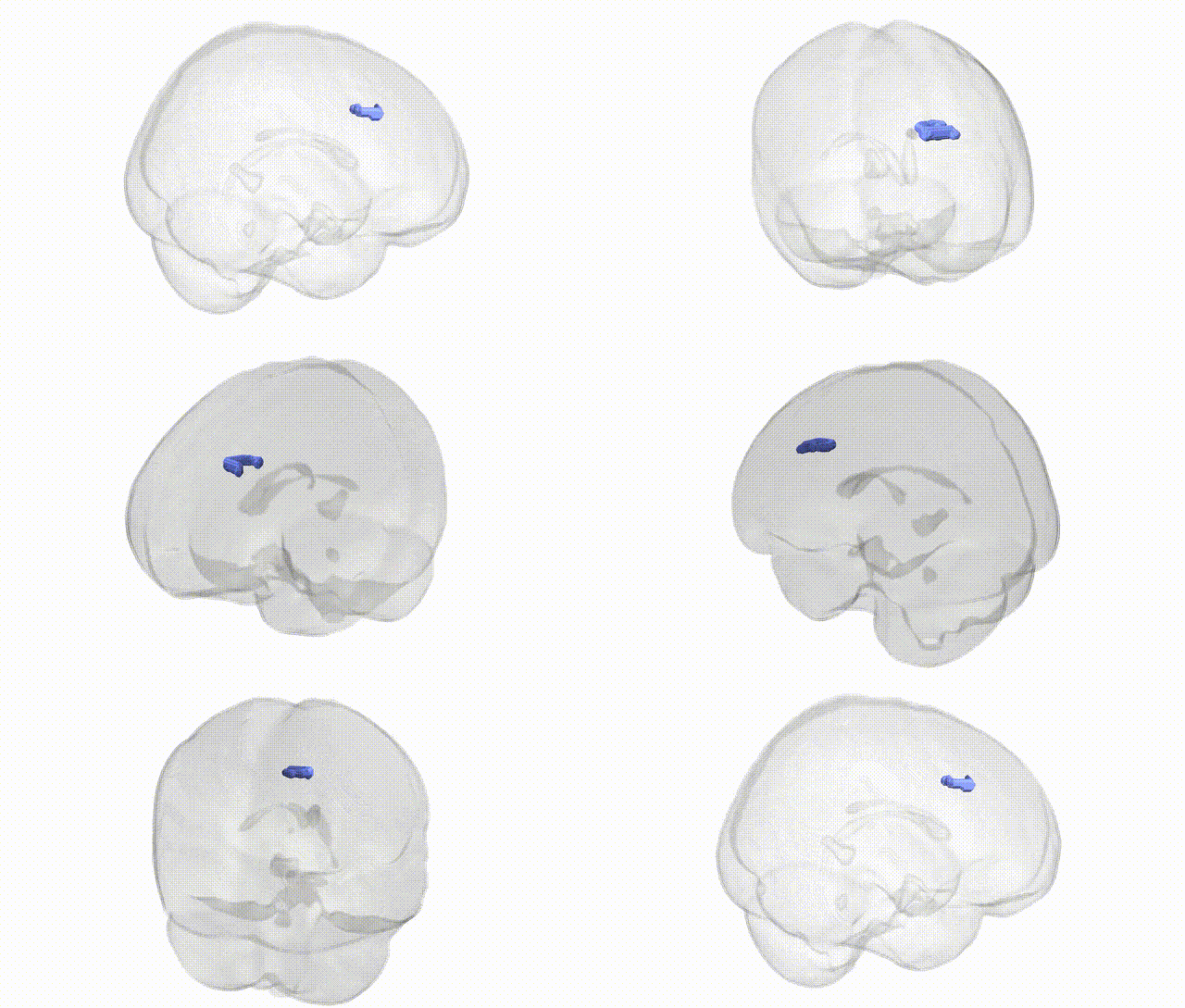
Full Quality Version: Download MP4
Wali Sidiqyar*, Gaurav Rudravaram*, Elyssa M. McMaster, Trent M. Schwartz, Adam M. Saunders, Kurt G. Schilling, Bennett A. Landman "Introducing SPINS: A Shared Public Visualization Library of Neuroanatomical Structures." Medical Imaging with Deep Learning- short paper
This resource is licensed under CC0 1.0 Universal (Public Domain).