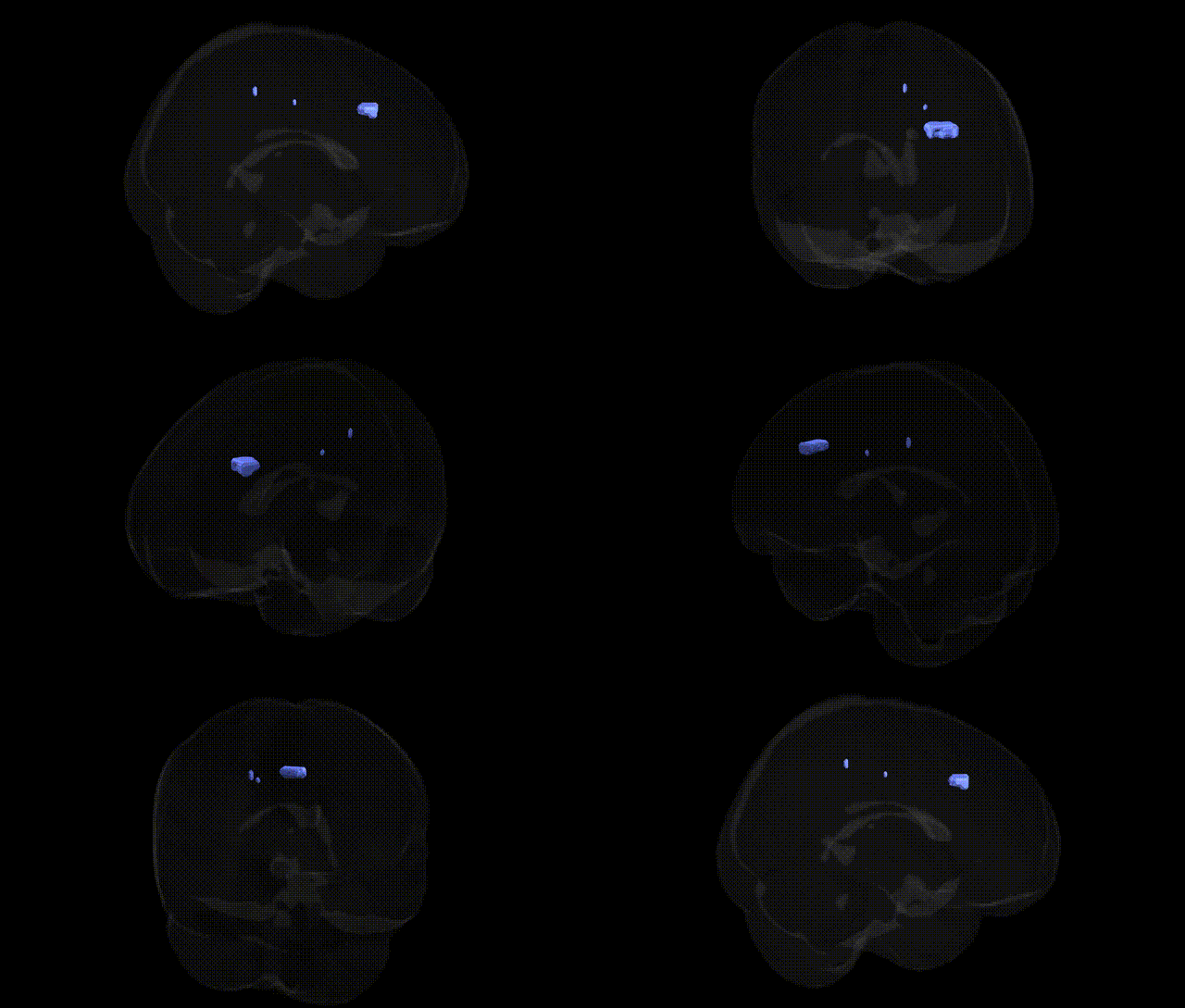
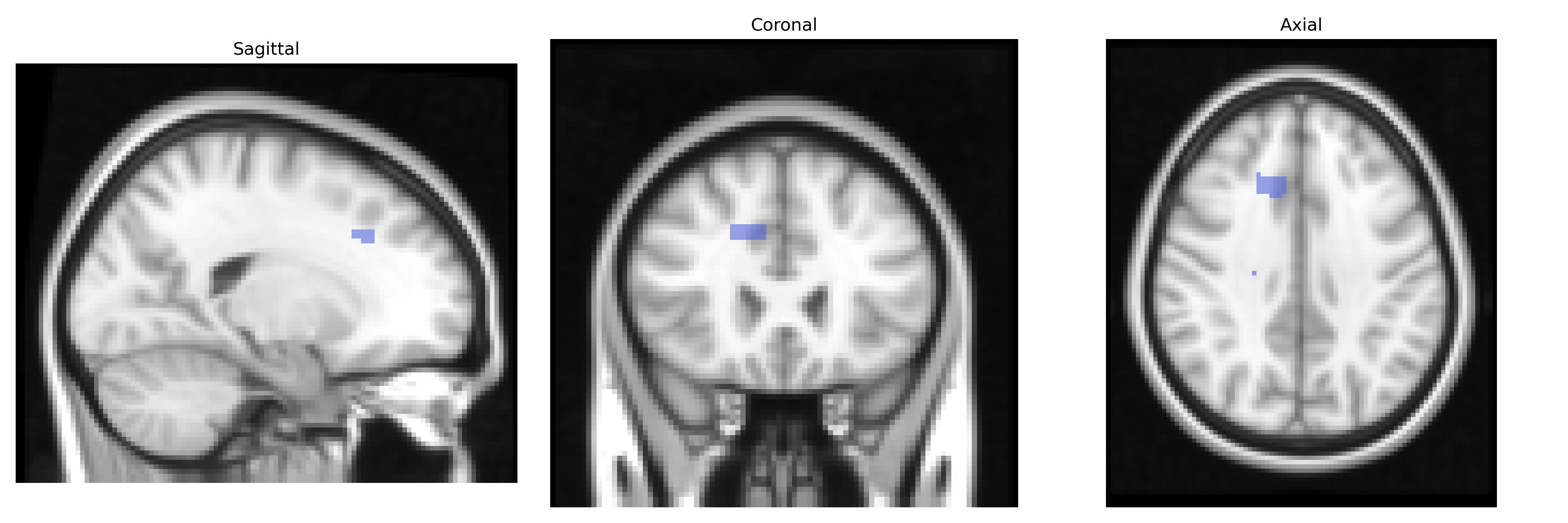
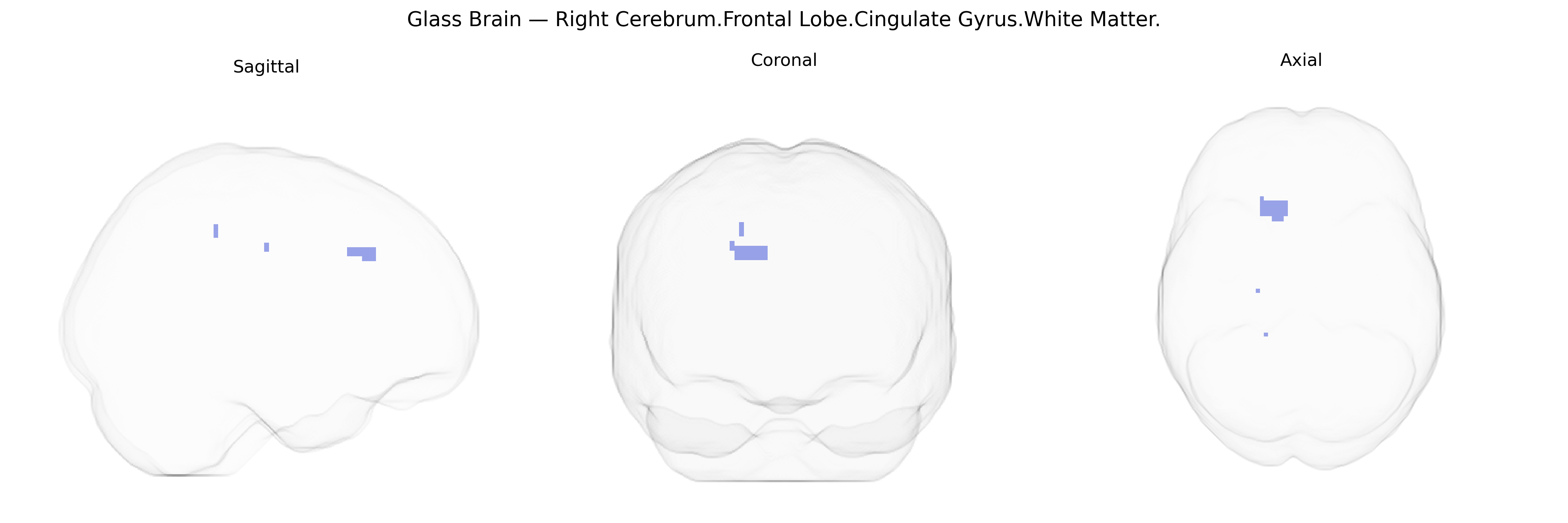
The bilateral Right Cerebrum.Frontal Lobe.Cingulate Gyrus.White Matter corresponds to the subcortical fiber pathways coursing beneath the cingulate gyrus in the frontal lobe, forming part of the cingulum bundle and associated frontal white matter tracts. These fibers interconnect regions of the medial prefrontal cortex, anterior cingulate cortex, and other limbic and association areas, supporting integration of cognitive control, emotion regulation, attention, and autonomic functions. As a component of the limbic white matter system, this region contributes to networks involved in decision-making, error monitoring, motivation, and affective processing, and is commonly implicated in functional and structural neuroimaging studies of psychiatric and neurological disorders. There is no direct link for this exact white matter subdivision; a related structure is the Cingulate Gyrus.
Genetic associations involving white matter in the cingulate region of the frontal lobe (corresponding to the bilateral Right Cerebrum.Frontal Lobe.Cingulate Gyrus.White Matter in Talairach 2mm space) largely emerge from imaging genetics and GWAS of structural connectivity, rather than from this exact label per se. Variants in genes related to myelination, axonal guidance, and synaptic plasticity—including but not limited to NTRK1/2, CNTNAP2, DISC1, and oligodendrocyte-related genes such as MAG and MBP—have been implicated in individual differences in cingulum bundle integrity, fractional anisotropy, and overall frontal-cingulate white-matter microstructure. Large-scale neuroimaging GWAS (e.g., ENIGMA and UK Biobank-based studies) have identified common variants influencing cingulate and frontal white-matter metrics, with some loci overlapping those associated with schizophrenia, major depressive disorder, attention-deficit/hyperactivity disorder, and bipolar disorder, suggesting that genetic risk for these conditions may partly operate through altered fronto-cingulate connectivity. Polygenic scores for cognitive performance, educational attainment, and general intelligence have shown correlations with cingulate and frontal white-matter properties, supporting a role for genetically influenced structural connectivity in executive function and emotion regulation. Additionally, risk alleles in genes such as CACNA1C, GRM3, and those within the major histocompatibility complex (MHC) have been linked both to psychiatric disorders and to cingulate or frontal connectivity measures in imaging-genetic studies, although these associations vary by sample and analytic method and often do not localize precisely to the Talairach-defined region. Overall, genetic findings point to a polygenic architecture in which numerous common variants affecting neurodevelopmental and glial processes contribute to inter-individual variation in the structural integrity and connectivity of this fronto-cingulate white-matter region, with downstream relevance for mood, cognition, and psychiatric vulnerability.
Overview generated by GPT-4o (2026).
Region ID: 1002
Hemisphere: bilateral
Atlas: Talairach labels 2mm
Full Quality Version: Download MP4
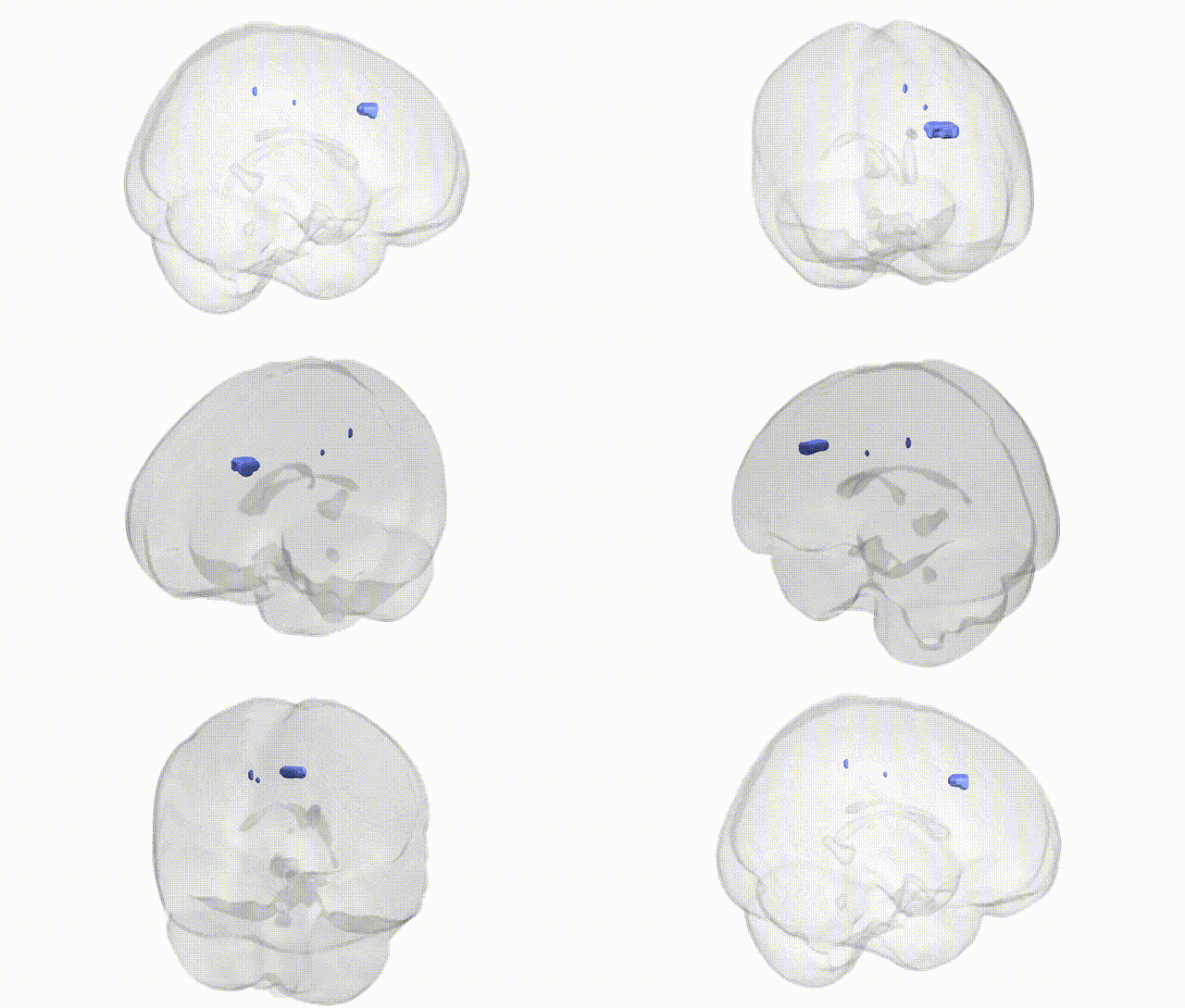
Full Quality Version: Download MP4
Wali Sidiqyar*, Gaurav Rudravaram*, Elyssa M. McMaster, Trent M. Schwartz, Adam M. Saunders, Kurt G. Schilling, Bennett A. Landman "Introducing SPINS: A Shared Public Visualization Library of Neuroanatomical Structures." Medical Imaging with Deep Learning- short paper
This resource is licensed under CC0 1.0 Universal (Public Domain).