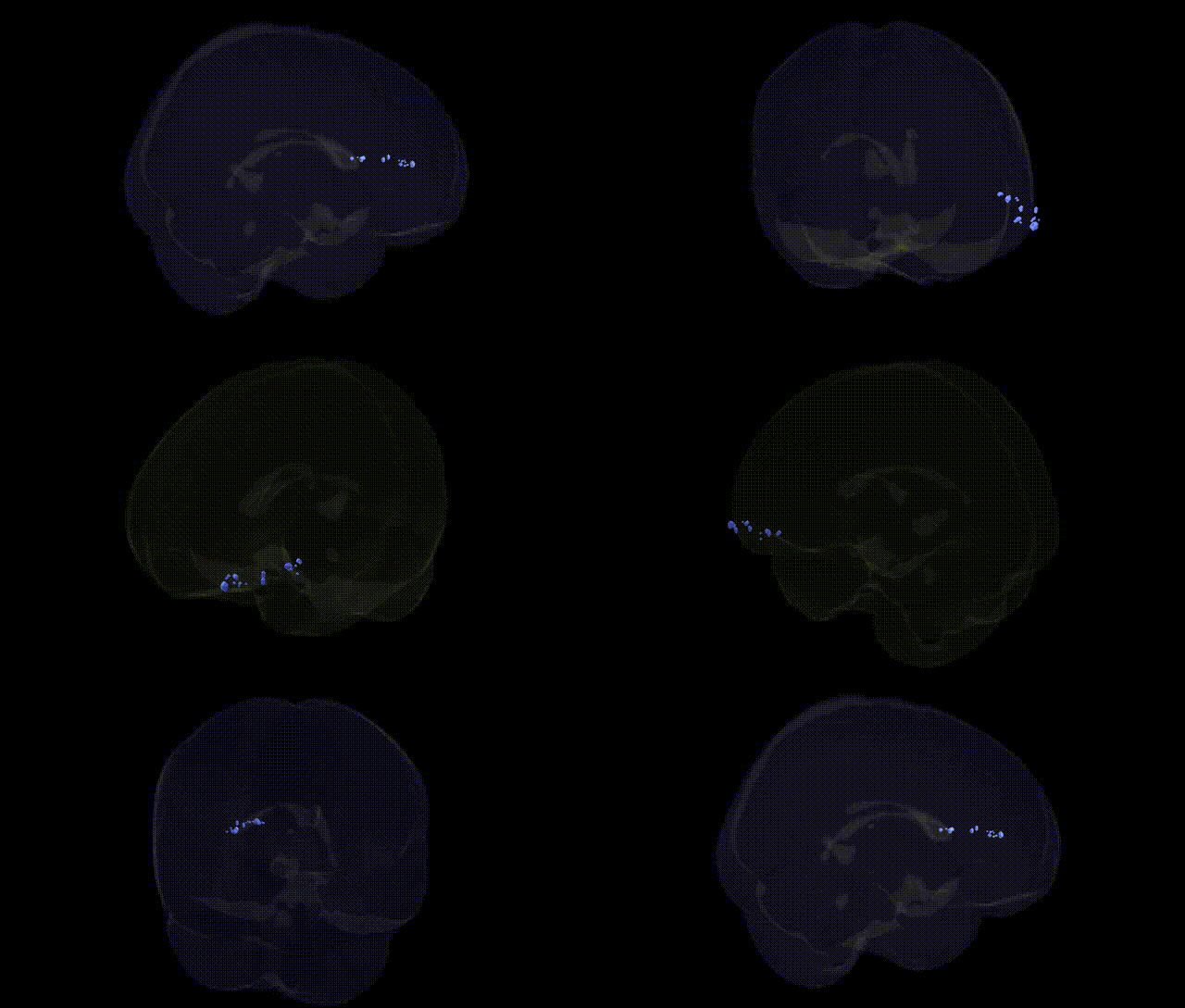
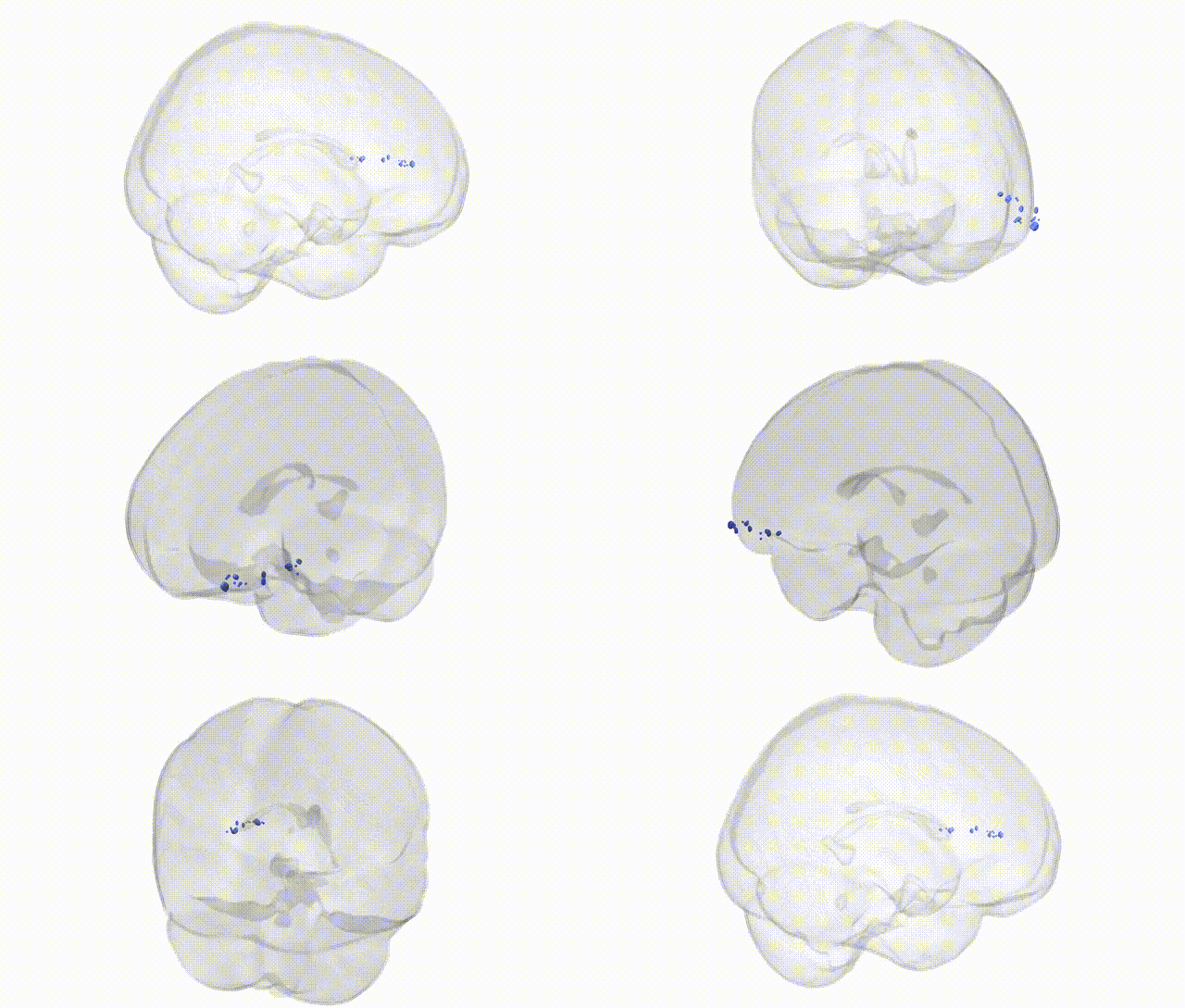
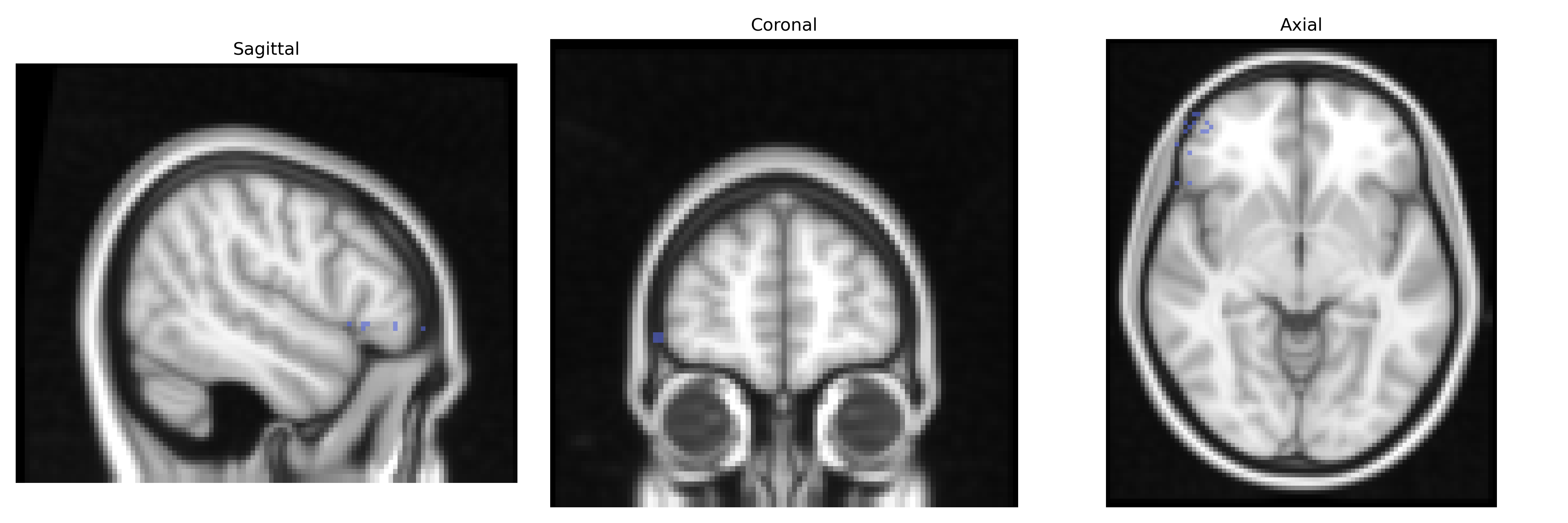
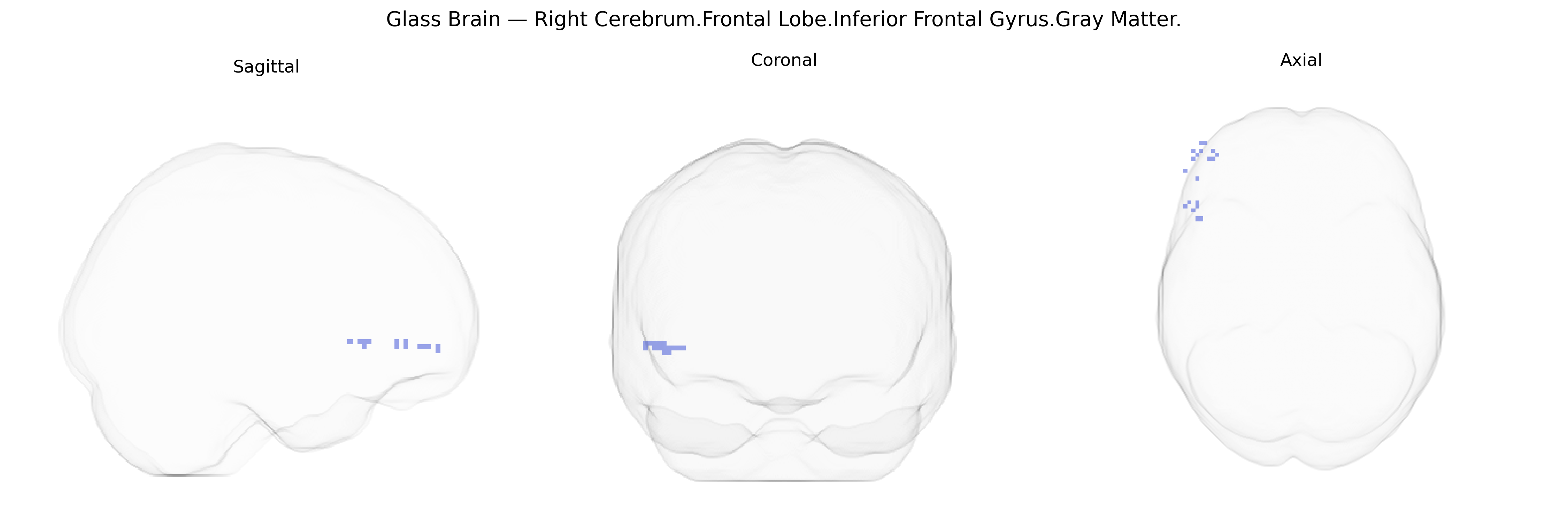
The bilateral Right Cerebrum.Frontal Lobe.Inferior Frontal Gyrus.Gray Matter corresponds to cortical tissue within the inferior frontal gyrus of the frontal lobe in the right hemisphere, a region implicated in higher-order cognitive control, language processing, and aspects of social cognition. This area includes portions of Brodmann areas 44, 45, and adjacent regions, which are involved in syntactic processing, semantic retrieval, and the regulation of speech production, as well as inhibitory control and working memory operations. Functionally, the right inferior frontal gyrus contributes to response inhibition (e.g., stopping or suppressing actions), modulation of emotional and social behavior, and prosodic aspects of language (such as intonation and emphasis), integrating information across prefrontal networks and connecting to subcortical structures and other cortical association areas. There is no direct link for this specific Talairach label; a related structure is the inferior frontal gyrus: Inferior frontal gyrus.
The bilateral right inferior frontal gyrus (IFG) gray matter, as defined in the Talairach 2 mm atlas, has been repeatedly implicated in imaging genetics and GWAS studies of cognitive and psychiatric traits, particularly those involving inhibitory control, language-related functions, and social cognition. Variants in genes influencing synaptic plasticity and cortical development—such as BDNF, COMT, and DISC1—have been associated with structural and functional variation in IFG, often through voxel-based morphometry or task-based fMRI endophenotypes. Large-scale brain MRI GWAS (e.g., ENIGMA, UK Biobank) have identified common variants near loci involved in neurodevelopment (including regions harboring genes such as HMGA2, MAPT, and several chromatin regulators) that are associated with regional cortical thickness or surface area in frontal regions overlapping the IFG. The right IFG has been linked via genetic and imaging studies to disorders characterized by impaired response inhibition and social-emotional processing, including attention-deficit/hyperactivity disorder, obsessive–compulsive disorder, and autism spectrum disorder, with risk alleles in genes such as DRD4, SLC6A3 (DAT1), and serotonin-related genes modulating activation or gray matter volume in this region during inhibitory control tasks. Additionally, polygenic risk scores for schizophrenia, bipolar disorder, and major depressive disorder have been associated with altered IFG morphology and connectivity, suggesting that shared psychiatric risk architecture partially converges on this frontal control region. While most GWAS identify loci for broader frontal lobe metrics rather than highly focal IFG gray matter volumes, converging evidence indicates that genetic variation in neurodevelopmental, dopaminergic, glutamatergic, and synaptic genes contributes to individual differences in the structure and function of the right inferior frontal gyrus and its involvement in cognitive control and psychopathology.
Overview generated by GPT-4o (2026).
Region ID: 600
Hemisphere: bilateral
Atlas: Talairach labels 2mm
Full Quality Version: Download MP4
Full Quality Version: Download MP4
Wali Sidiqyar*, Gaurav Rudravaram*, Elyssa M. McMaster, Trent M. Schwartz, Adam M. Saunders, Kurt G. Schilling, Bennett A. Landman "Introducing SPINS: A Shared Public Visualization Library of Neuroanatomical Structures." Medical Imaging with Deep Learning- short paper
This resource is licensed under CC0 1.0 Universal (Public Domain).