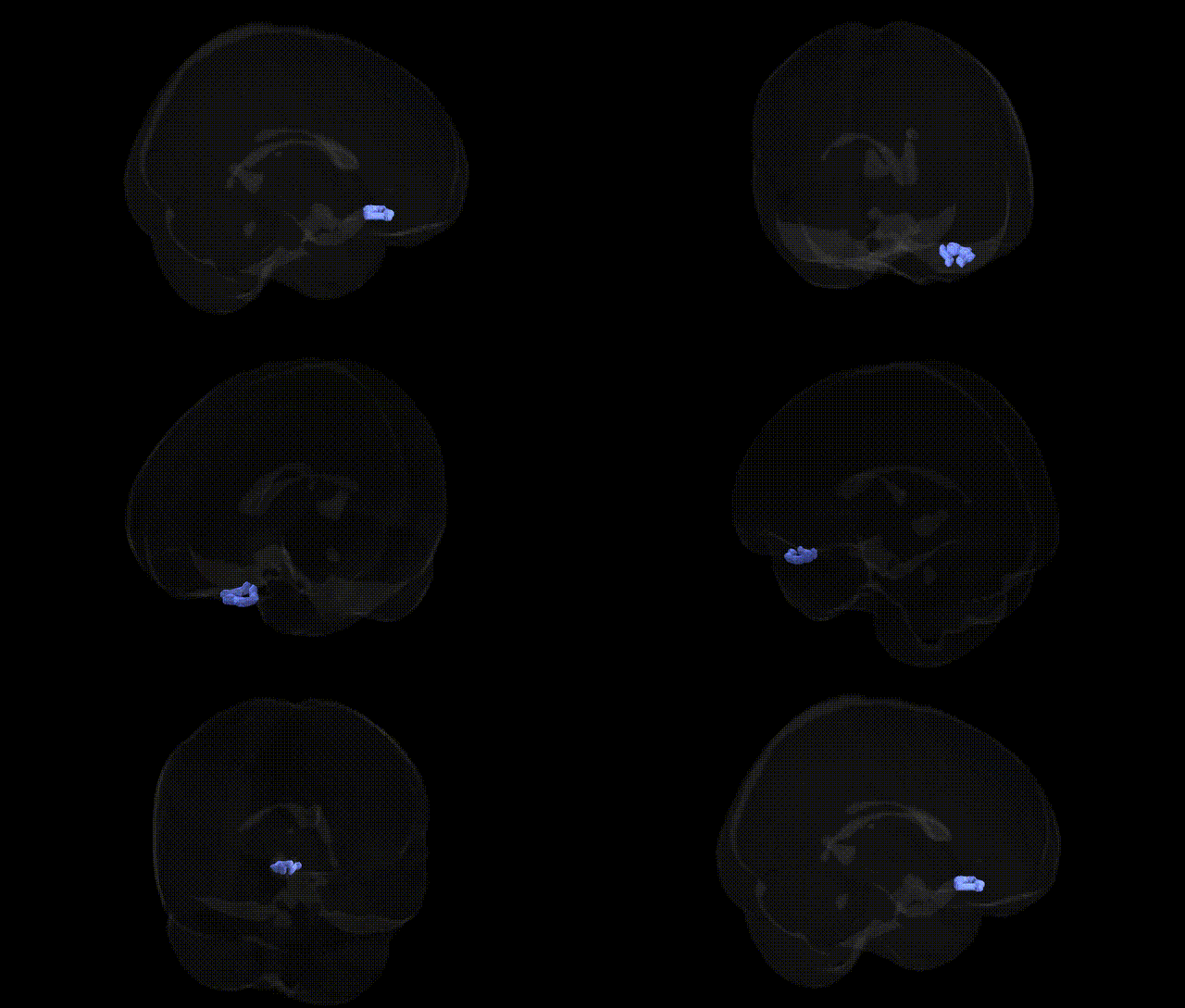
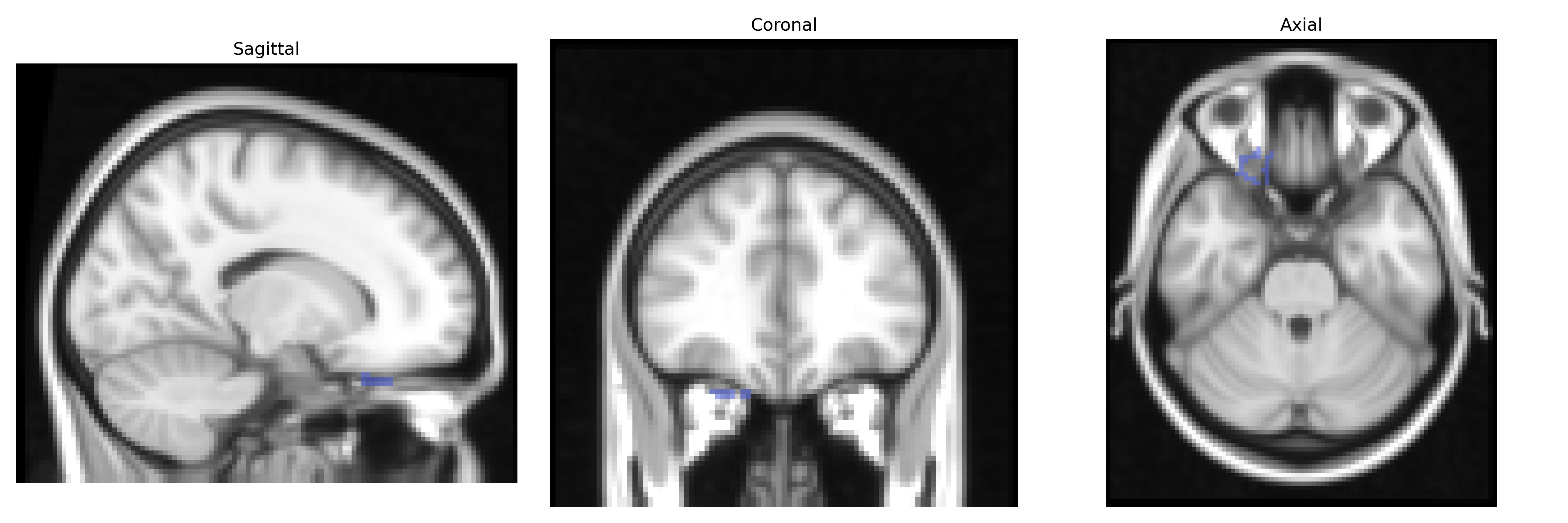
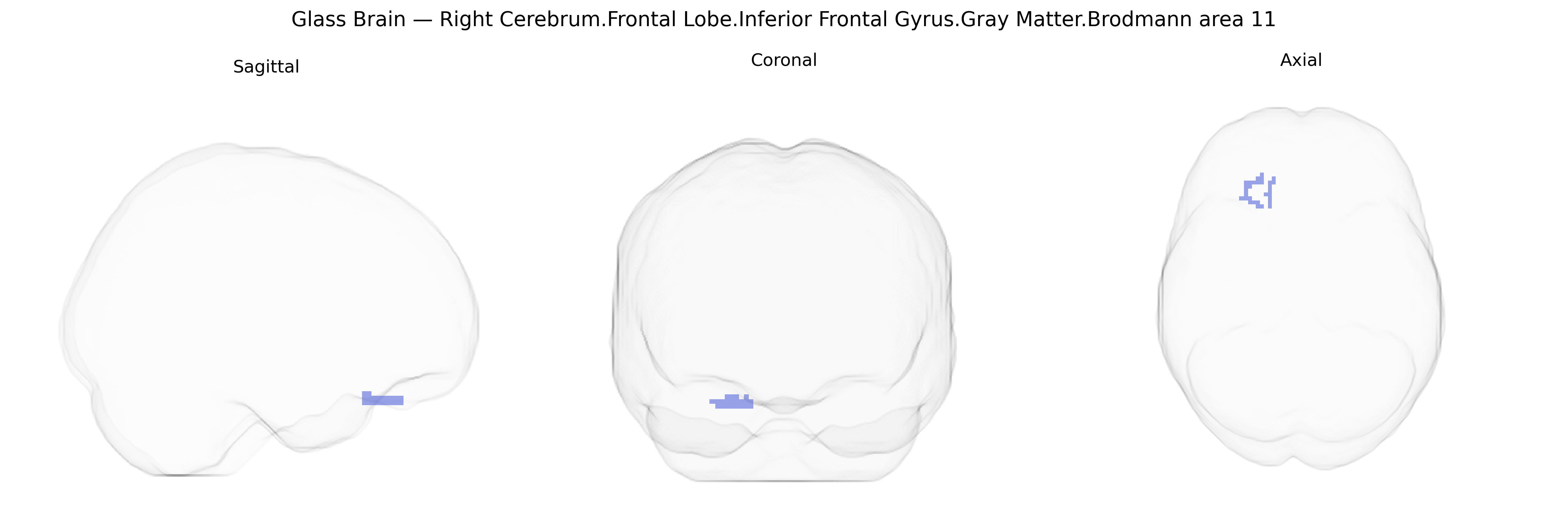
The bilateral Right Cerebrum.Frontal Lobe.Inferior Frontal Gyrus.Gray Matter.Brodmann area 11 corresponds to a ventral prefrontal (orbitofrontal) subdivision involved in high-level integration of affective, reward-related, and social information. Situated on the orbital surface of the frontal lobe within the inferior frontal gyrus, this region forms part of the orbitofrontal cortex and is heavily interconnected with limbic structures such as the amygdala and hippocampus, as well as sensory association areas and other prefrontal territories. Functionally, Brodmann area 11 contributes to evaluation of stimulus value, decision-making under uncertainty, adaptive behavioral control, and modulation of emotional responses, integrating internal states with external contingencies to guide flexible, goal-directed behavior. There is no direct link specifically for “Brodmann area 11” in the inferior frontal gyrus; a closely related structure is the orbitofrontal cortex: Orbitofrontal cortex.
The bilateral right inferior frontal gyrus (IFG) gray matter in Brodmann area 11—though BA11 is classically orbitofrontal, some Talairach-based parcellations extend it dorsally—falls within a broader right frontal network repeatedly implicated in genetic studies of cognitive control, impulsivity, and psychiatric risk. GWAS of brain structure have shown that cortical thickness and surface area in inferior frontal and orbitofrontal regions are moderately heritable and associated with common variants in neurodevelopmental and synaptic genes (e.g., variants near genes such as HMGA2, TCF4, and those involved in Wnt and glutamatergic signaling), although findings are typically reported at lobar or frontal-subregion scales rather than Talairach BA11 specifically. Polygenic risk scores for attention-deficit/hyperactivity disorder, schizophrenia, and major depressive disorder have been associated with altered gray matter or activation in right IFG and orbitofrontal territories in imaging–genetics work, supporting a role for this region in genetically influenced vulnerability to impaired inhibition, reward processing, and affect regulation. GWAS of traits like response inhibition, delay discounting, and substance use (including alcohol and nicotine dependence) often implicate frontal regulatory circuits, and convergent fMRI–genetic studies link risk alleles in dopaminergic (e.g., DRD2/ANKK1), serotonergic (e.g., SLC6A4), and glutamatergic genes to functional differences in right IFG during tasks requiring suppression of prepotent responses. In autism spectrum disorder and obsessive–compulsive disorder, rare variants and polygenic risk have also been associated with structural and functional abnormalities in inferior frontal and adjacent orbitofrontal cortex, though again these are reported at regional rather than precise BA11 resolution. Overall, genetic associations to this Talairach-defined bilateral right IFG/BA11 region are indirect, emerging from GWAS and imaging–genetics studies of frontal morphology, cognitive control, impulsivity, and psychiatric liability, rather than from studies targeting that specific atlas parcel.
Overview generated by GPT-4o (2026).
Region ID: 192
Hemisphere: bilateral
Atlas: Talairach labels 2mm
Full Quality Version: Download MP4
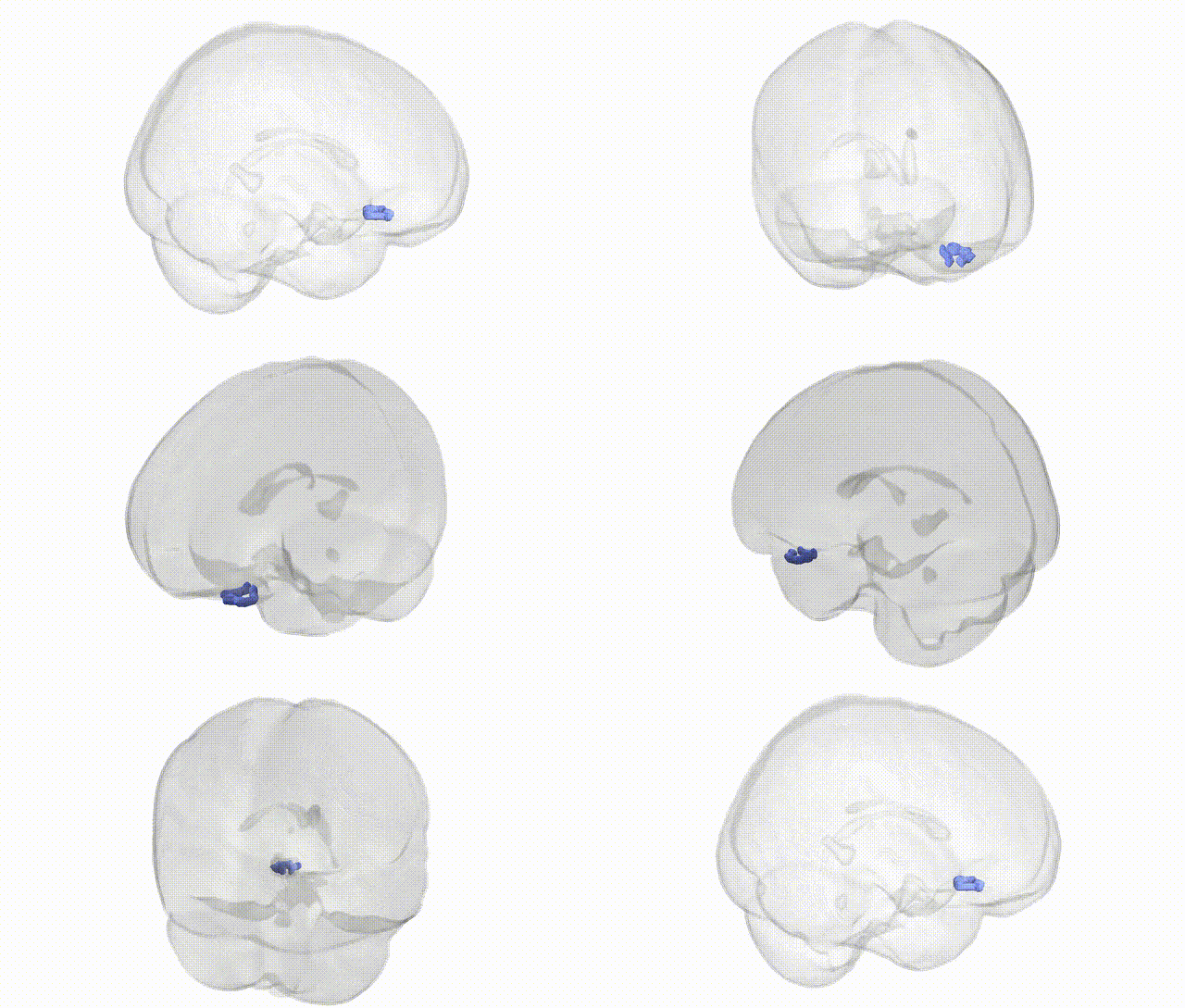
Full Quality Version: Download MP4
Wali Sidiqyar*, Gaurav Rudravaram*, Elyssa M. McMaster, Trent M. Schwartz, Adam M. Saunders, Kurt G. Schilling, Bennett A. Landman "Introducing SPINS: A Shared Public Visualization Library of Neuroanatomical Structures." Medical Imaging with Deep Learning- short paper
This resource is licensed under CC0 1.0 Universal (Public Domain).