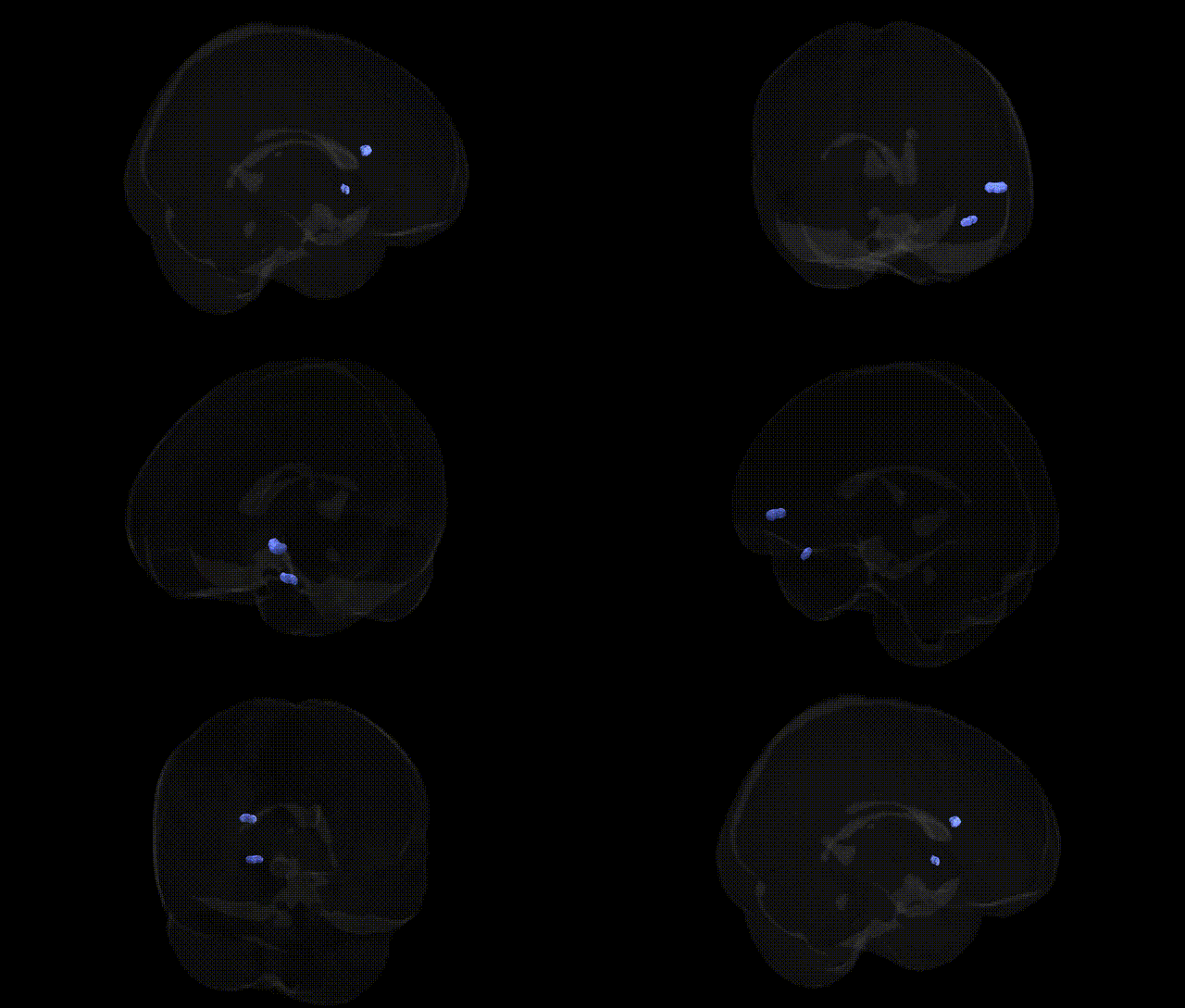
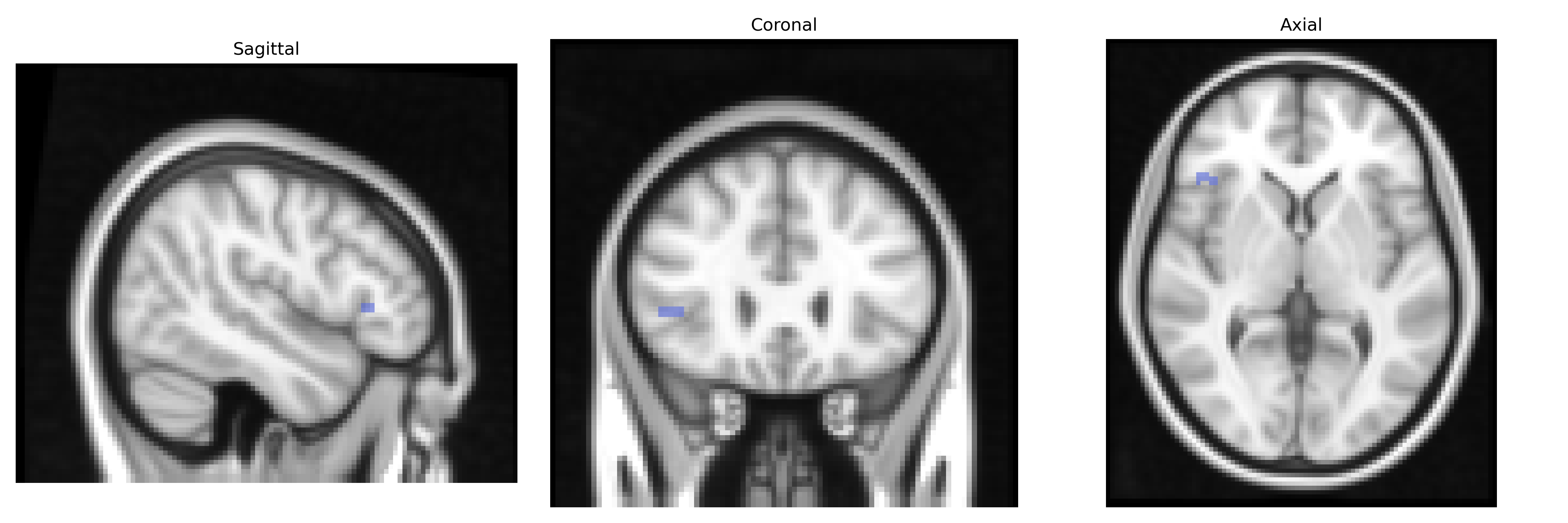
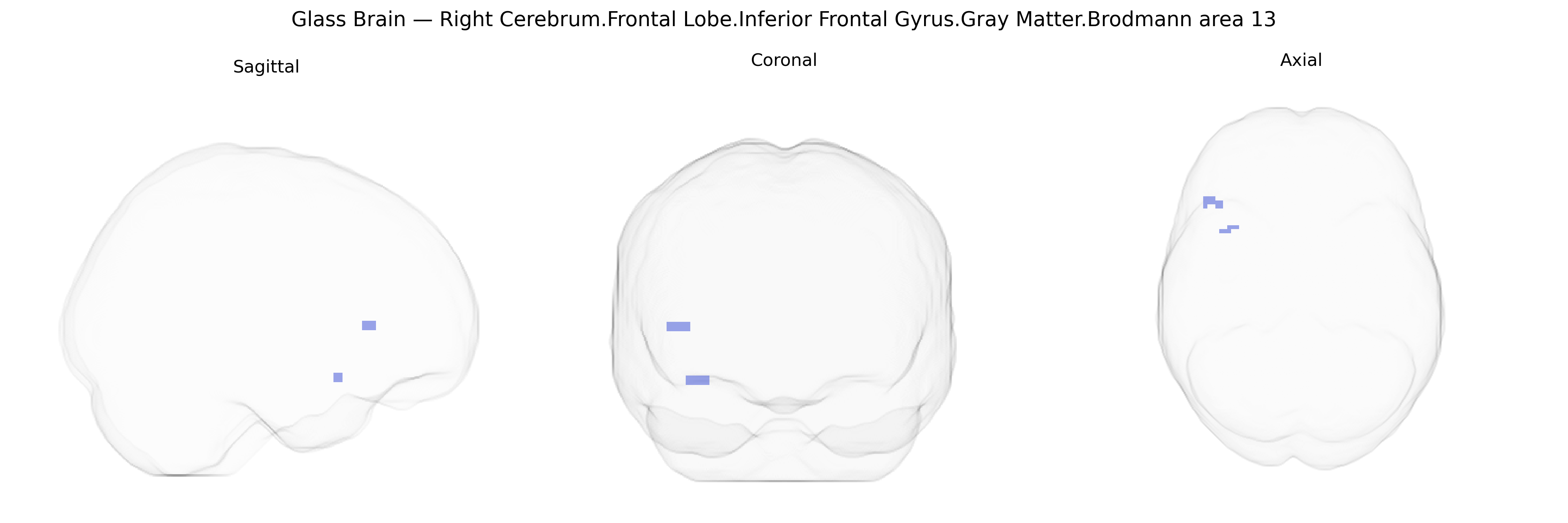
The bilateral Right Cerebrum.Frontal Lobe.Inferior Frontal Gyrus.Gray Matter.Brodmann area 13, as labeled in the Talairach 2 mm Atlas, corresponds to a portion of the frontal opercular and insular region involved in complex integrative functions including visceral-autonomic processing, affective evaluation, and higher-order multimodal association. Brodmann area 13 is classically considered part of the insular cortex and adjacent frontal operculum rather than the canonical lateral frontal gyri, and it participates in networks related to emotion, interoception, and decision-making that integrate sensory, limbic, and cognitive information. This region shows strong connectivity with limbic structures such as the amygdala and orbitofrontal cortex, and contributes to the modulation of autonomic responses and subjective feeling states. There is no direct link for “Brodmann area 13”; a closely related structure is the insular cortex: Insular cortex.
The inferior frontal gyrus (IFG), particularly right frontal lobe gray matter including Brodmann area 13 in insula–orbitofrontal territory, has been implicated in multiple genetic and GWAS findings through its roles in cognitive control, emotion, and risk-related decision-making. Large neuroimaging genetics consortia such as ENIGMA and UK Biobank have linked common variants in genes influencing cortical thickness and surface area (e.g., HMGA2, IGF1, loci near KCNK2 and CAMK2A) to structural measures in frontal and insular cortices that overlap this region. GWAS of addiction-related traits (alcohol, nicotine, and substance use disorders) and impulsivity have identified variants in dopaminergic and glutamatergic genes (e.g., DRD2, ANKK1, GRM3) that show downstream effects on IFG/insula activation or volume, consistent with this area’s role in inhibitory control and craving. Psychiatric genetics studies in major depressive disorder, bipolar disorder, and schizophrenia have repeatedly observed disease-associated polygenic risk scores predicting reduced gray matter or altered functional connectivity in right IFG–insula circuits, with contributing loci including synaptic and calcium-channel genes such as CACNA1C, ZNF804A, and GRIN2A. GWAS of anxiety traits, neuroticism, and pain sensitivity have also mapped polygenic effects onto right frontal–insula regions, and several studies of eating disorders and obesity link variants in reward and interoception pathways (FTO, MC4R and dopaminergic genes) to structural and functional differences encompassing Brodmann area 13. Overall, genetic influences on this Talairach-defined region are distributed and highly polygenic, emerging primarily through large-scale imaging genetics studies that connect multi-locus risk for psychiatric, addictive, and personality traits to variation in right inferior frontal/insula gray matter structure and function.
Overview generated by GPT-4o (2026).
Region ID: 295
Hemisphere: bilateral
Atlas: Talairach labels 2mm
Full Quality Version: Download MP4
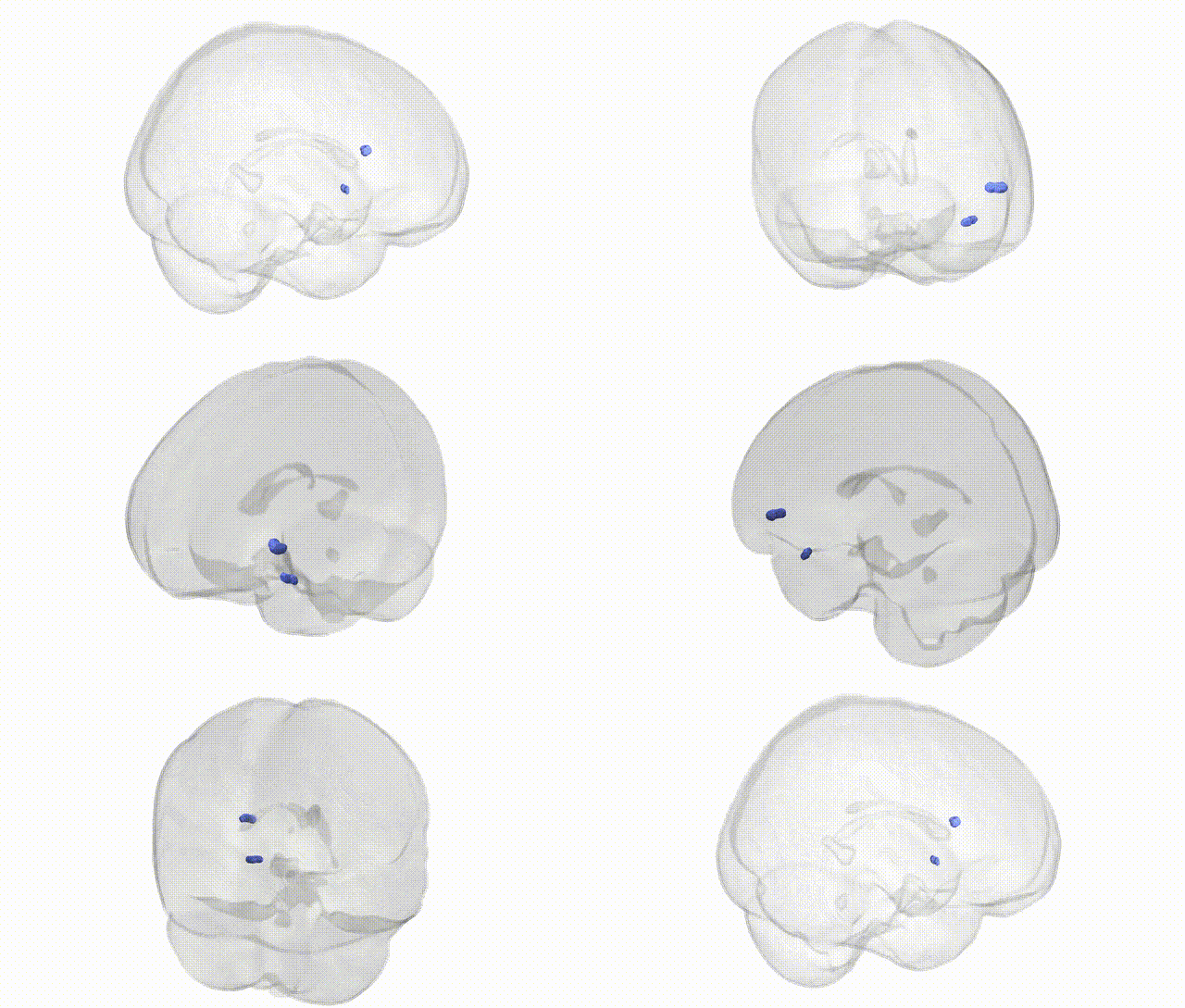
Full Quality Version: Download MP4
Wali Sidiqyar*, Gaurav Rudravaram*, Elyssa M. McMaster, Trent M. Schwartz, Adam M. Saunders, Kurt G. Schilling, Bennett A. Landman "Introducing SPINS: A Shared Public Visualization Library of Neuroanatomical Structures." Medical Imaging with Deep Learning- short paper
This resource is licensed under CC0 1.0 Universal (Public Domain).