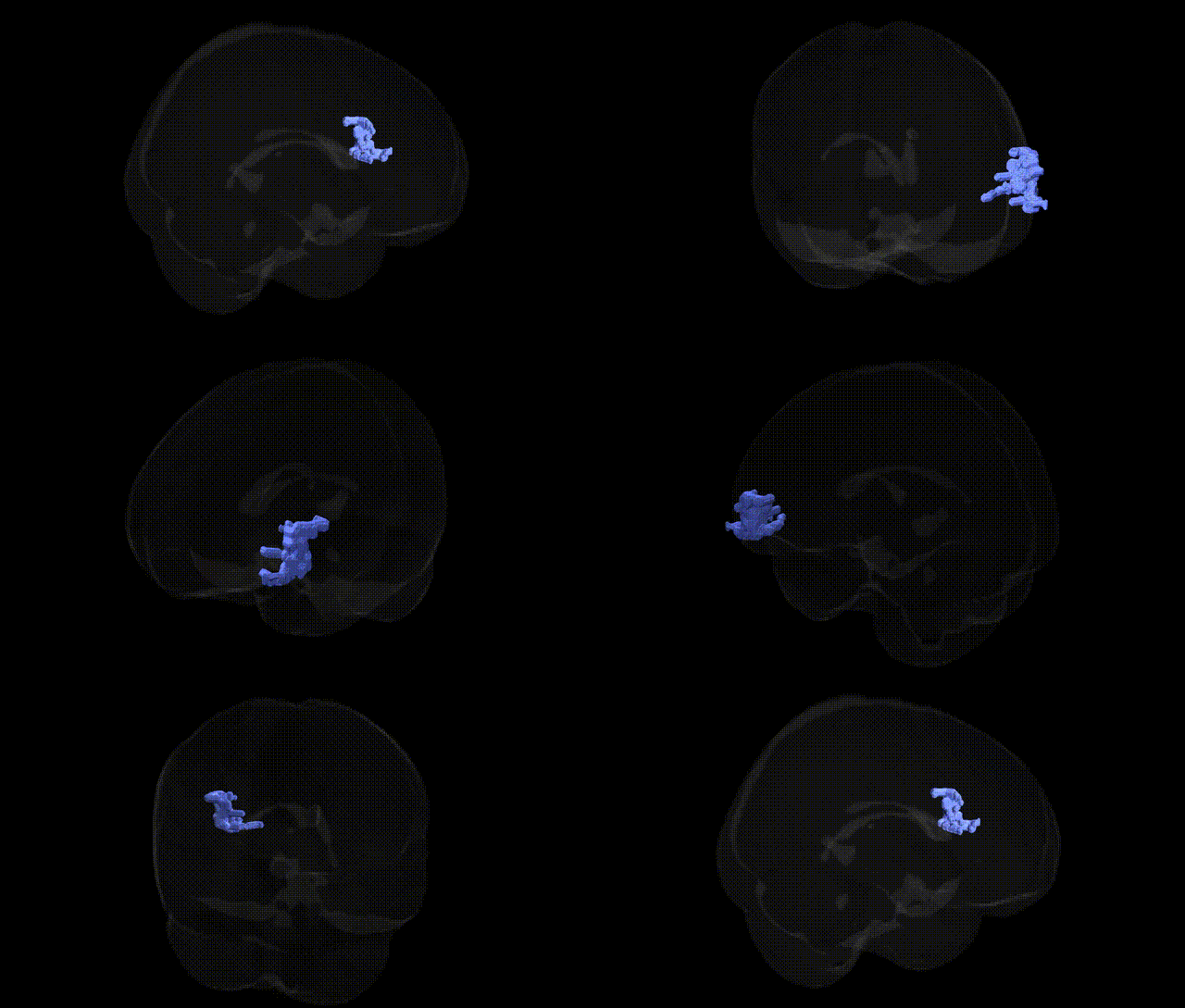
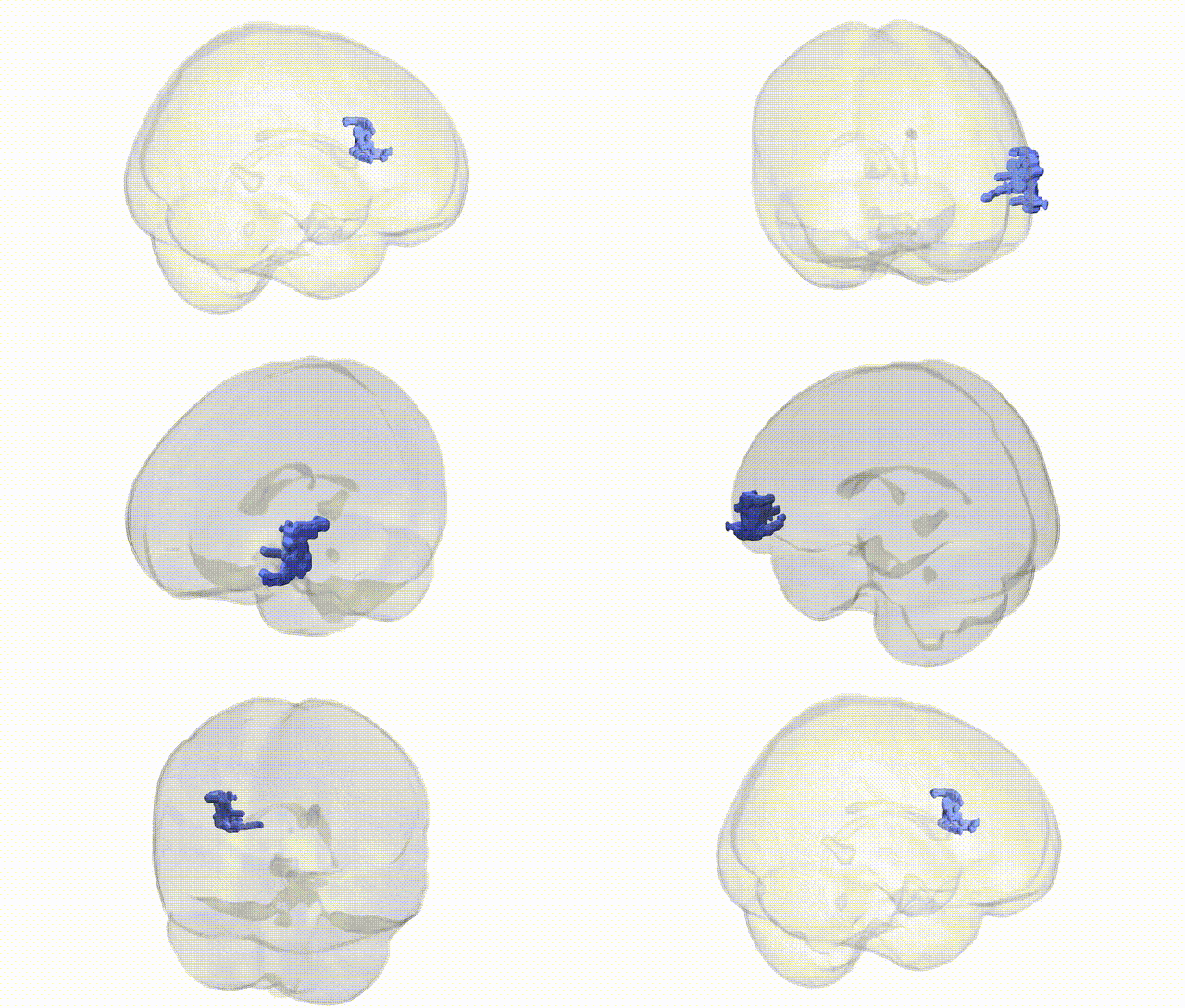
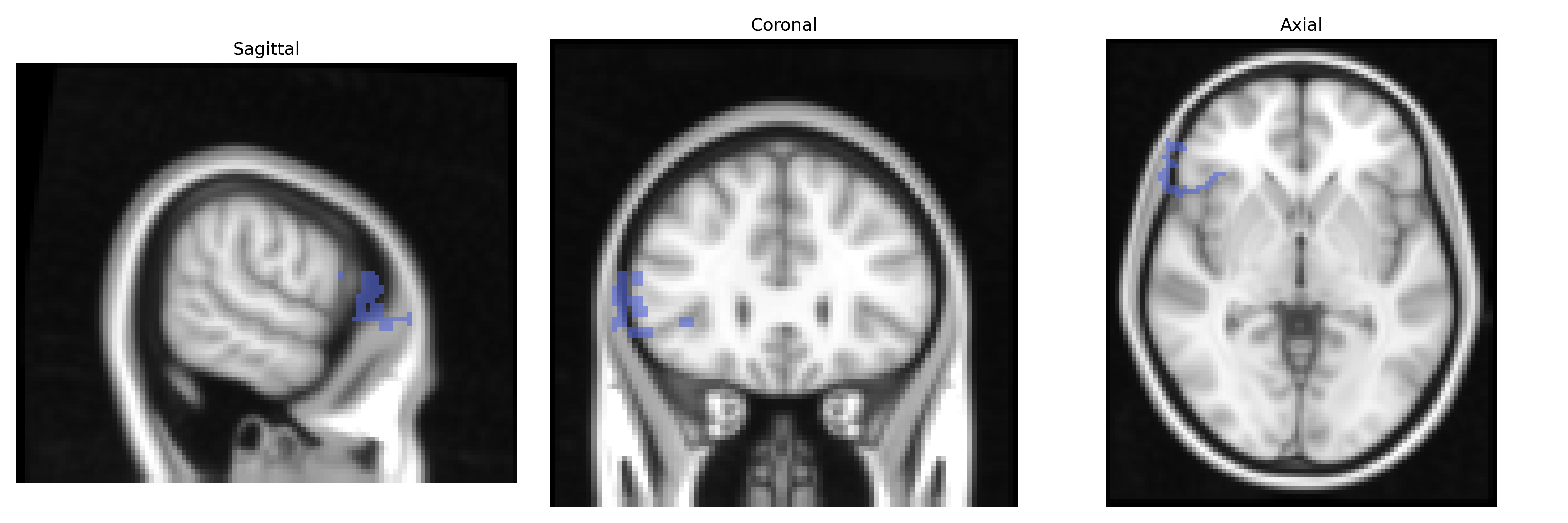
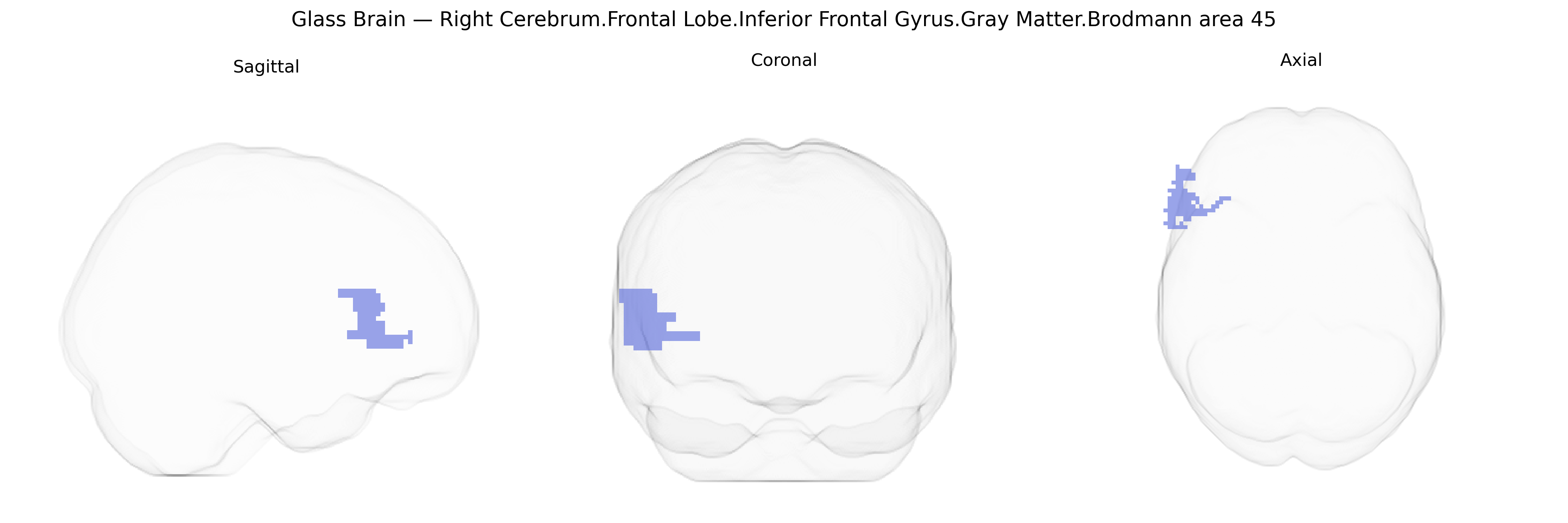
The bilateral Right Cerebrum.Frontal Lobe.Inferior Frontal Gyrus.Gray Matter.Brodmann area 45 corresponds to the pars triangularis of the inferior frontal gyrus, a key component of the ventrolateral prefrontal cortex implicated in language, cognitive control, and semantic processing. Brodmann area 45 is part of the classical Broca’s region in the dominant hemisphere, contributing to speech production, syntactic processing, and controlled retrieval of verbal information, while also participating in executive functions such as response inhibition and task switching. Cytoarchitectonically, BA45 is characterized by granular frontal cortex with distinct layering that supports integration of multimodal inputs from temporal and parietal association areas and projection to motor and premotor regions. Clinically, damage or dysfunction in this area has been associated with expressive aphasia, impaired verbal fluency, and deficits in higher-order language comprehension. Brodmann area 45
The bilateral right inferior frontal gyrus (IFG), Brodmann area 45, is a key node in language, cognitive control, and inhibitory networks, and genetic associations with structure and function in this region have emerged from neuroimaging and GWAS studies. Large-scale brain morphology GWAS (e.g., ENIGMA and UK Biobank) have identified loci near genes involved in neurodevelopment and synaptic function (such as FOXP2, CNTNAP2, DCDC2, KIAA0319, and other language/reading-related genes) that influence cortical thickness and surface area in inferior frontal regions, though many findings are more robust in left-hemisphere homologs and are often reported at the lobar or frontal gyral level rather than BA45 specifically. Polygenic risk for schizophrenia, major depressive disorder, ADHD, and bipolar disorder has been associated with altered gray matter volume and activation in the IFG, including right BA45, in case–control and imaging–genetics studies, implicating common variants in glutamatergic (e.g., GRM, GRIN family), GABAergic, and synaptic plasticity pathways. Variants linked to impulsivity and response inhibition (e.g., in DRD2/ANKK1, COMT, and SLC6A3) show correlations with IFG activation during Go/No-Go and stop-signal tasks, reflecting the region’s role in inhibitory control. GWAS of cognitive traits—including verbal fluency, educational attainment, and general intelligence—have reported enrichment of associated loci in gene sets highly expressed in frontal association cortex, with imaging–genetics follow-ups demonstrating that polygenic scores for these traits predict IFG structure and function. In neurodevelopmental disorders such as autism spectrum disorder and specific language impairment, risk variants in genes regulating cortical development and corticocortical connectivity have been linked to atypical IFG activation and morphology, further supporting a genetically mediated vulnerability of BA45-related networks, even though current evidence is largely at the level of frontal language/inhibition circuits rather than this Talairach-defined subregion alone.
Overview generated by GPT-4o (2026).
Region ID: 603
Hemisphere: bilateral
Atlas: Talairach labels 2mm
Full Quality Version: Download MP4
Full Quality Version: Download MP4
Wali Sidiqyar*, Gaurav Rudravaram*, Elyssa M. McMaster, Trent M. Schwartz, Adam M. Saunders, Kurt G. Schilling, Bennett A. Landman "Introducing SPINS: A Shared Public Visualization Library of Neuroanatomical Structures." Medical Imaging with Deep Learning- short paper
This resource is licensed under CC0 1.0 Universal (Public Domain).