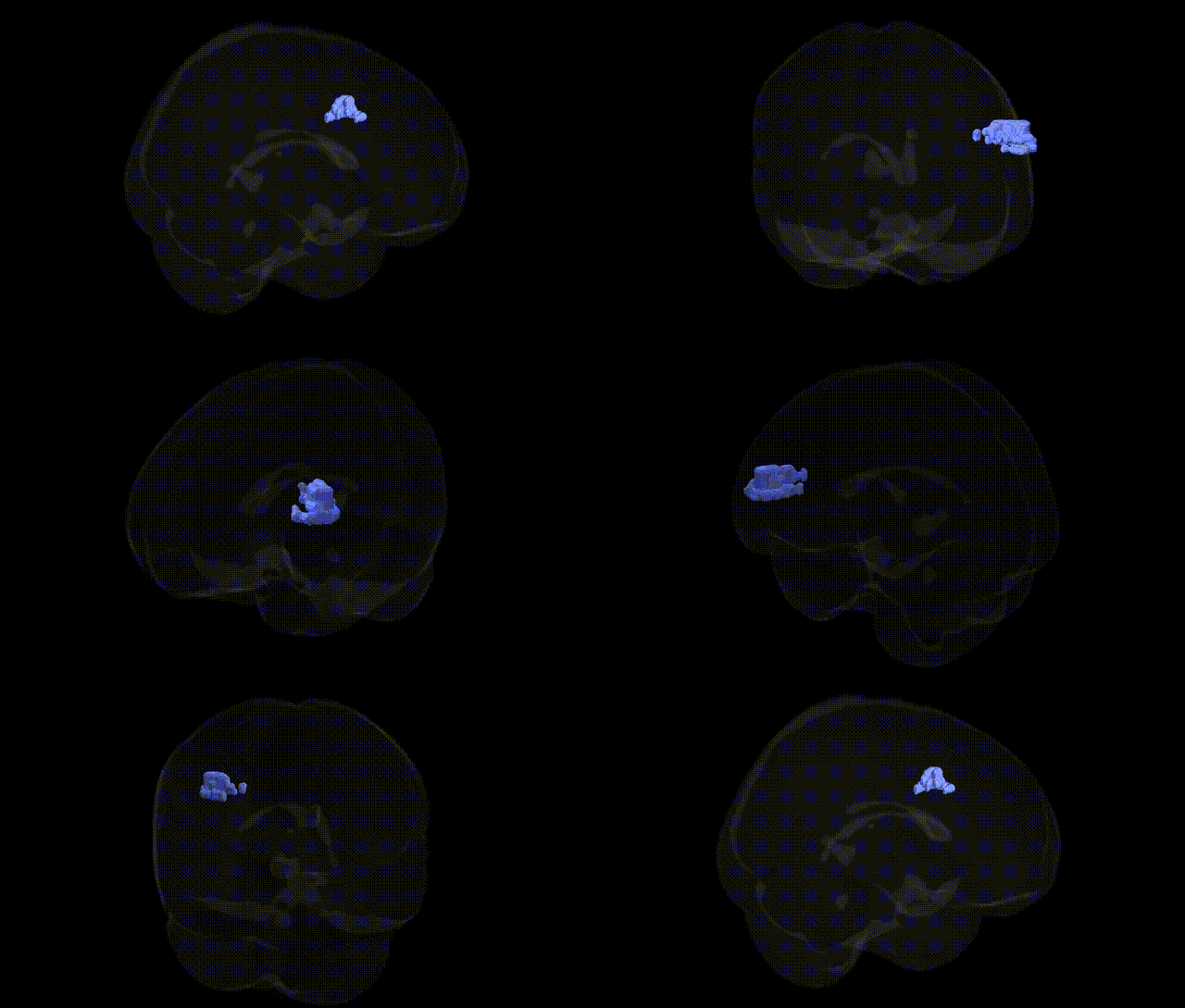
The bilateral Right Cerebrum.Frontal Lobe.Inferior Frontal Gyrus.Gray Matter.Brodmann area 9 corresponds to a dorsal portion of the lateral prefrontal cortex implicated in higher-order cognitive control and executive functions. Structurally, Brodmann area 9 occupies part of the superior and middle frontal regions bordering the inferior frontal gyrus, with dense reciprocal connections to other prefrontal areas, parietal association cortices, limbic structures, and subcortical nuclei. Functionally, this area contributes to working memory, sustained attention, planning, abstract reasoning, and the regulation of goal-directed behavior, integrating internal goals with external stimuli to guide flexible decision-making. In the right hemisphere, BA9 is often associated with aspects of cognitive control, monitoring, and inhibitory processes that modulate behavior and emotional responses. There is no direct Wikipedia article for this specific Talairach label; a closely related structure is Brodmann area 9.
The bilateral right inferior frontal gyrus (IFG) gray matter in Brodmann area 9, as defined in the Talairach 2 mm atlas, has been implicated in genetic studies primarily through its roles in executive control, response inhibition, working memory, and social–emotional regulation, although most GWAS target functional traits rather than this precise anatomical parcel. Variants in genes influencing frontocortical development and synaptic plasticity—such as COMT (dopamine metabolism), BDNF (neurotrophic signaling), DRD2/DRD4 (dopamine receptors), and CNTNAP2 and FOXP2 (language and frontotemporal circuitry)—have been associated with differences in frontal gray matter volume and activation patterns overlapping BA9/IFG. Large-scale psychiatric GWAS for schizophrenia, bipolar disorder, major depression, ADHD, and autism have identified risk loci that affect frontal cortical structure and connectivity, with imaging-genetics studies linking polygenic risk scores to reduced gray matter volume or altered activation in right IFG/BA9 during tasks involving cognitive control, emotion regulation, and social cognition. Inhibitory control and impulsivity GWAS, as well as imaging-derived phenotype GWAS from consortia like ENIGMA and UK Biobank, have connected common variants in neurodevelopmental and synaptic genes (e.g., linked to glutamatergic signaling, cell adhesion, and cortical thickness) with morphological variation in lateral prefrontal regions that include BA9. Additionally, genetic influences on language, stuttering, and speech production and on traits such as neuroticism and conscientiousness show convergent imaging-genetic evidence involving frontal regions that encompass the right IFG/BA9, suggesting a polygenic basis for structural and functional variability in this area across cognitive, affective, and psychiatric domains, even though highly specific GWAS framed strictly at the level of “Talairach bilateral Right Cerebrum.Frontal Lobe.Inferior Frontal Gyrus.Gray Matter.Brodmann area 9” are not yet standard in the literature.
Overview generated by GPT-4o (2026).
Region ID: 900
Hemisphere: bilateral
Atlas: Talairach labels 2mm
Full Quality Version: Download MP4
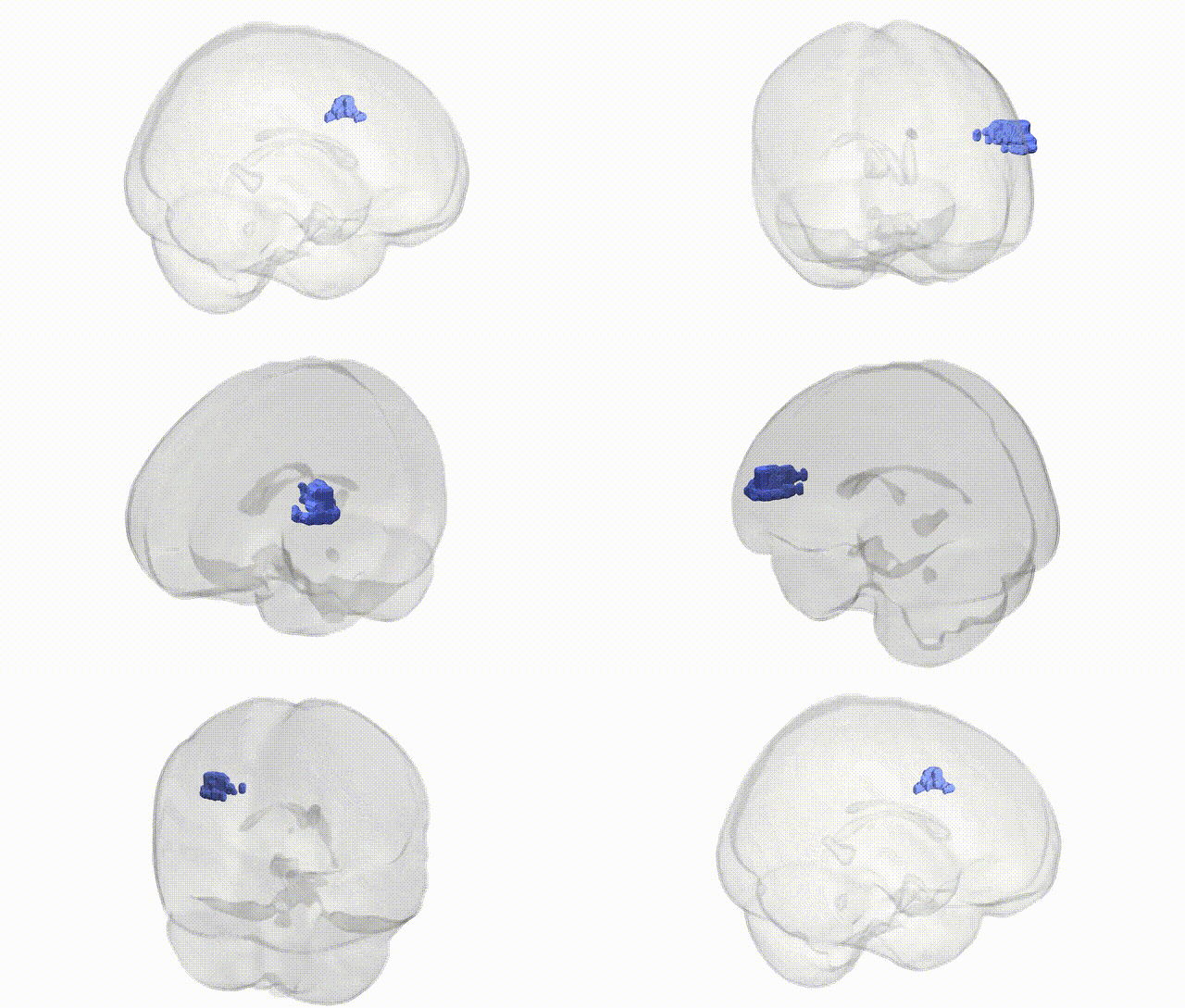
Full Quality Version: Download MP4
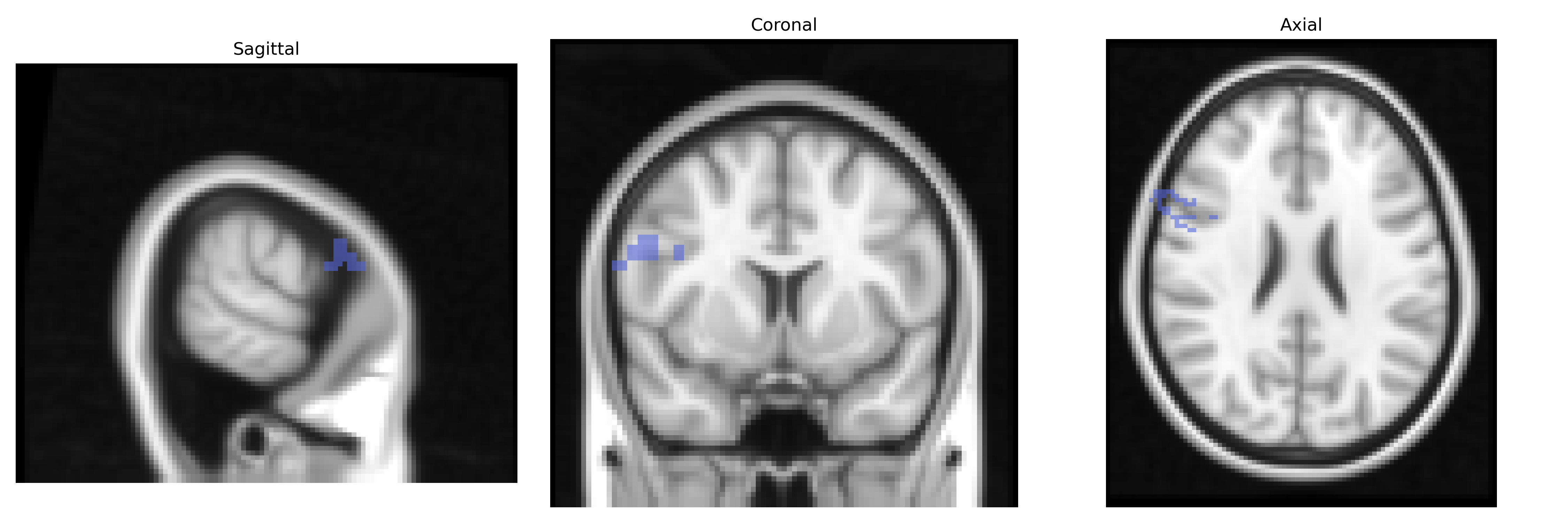
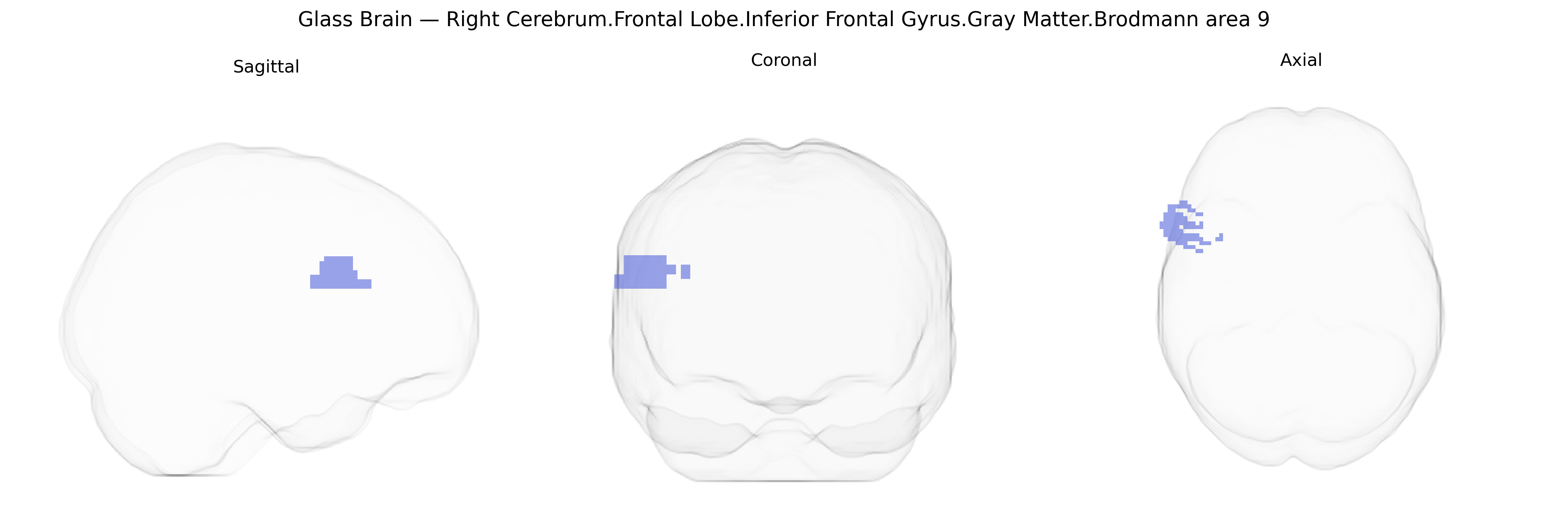
Wali Sidiqyar*, Gaurav Rudravaram*, Elyssa M. McMaster, Trent M. Schwartz, Adam M. Saunders, Kurt G. Schilling, Bennett A. Landman "Introducing SPINS: A Shared Public Visualization Library of Neuroanatomical Structures." Medical Imaging with Deep Learning- short paper
This resource is licensed under CC0 1.0 Universal (Public Domain).